San Diego State Indian Law Conference Highlights

Many thanks to the San Diego State American Indian studies community for hosting today’s panel. Here are some pics.

David Kamper giving last minutes instructions:

20121130-153722.jpg

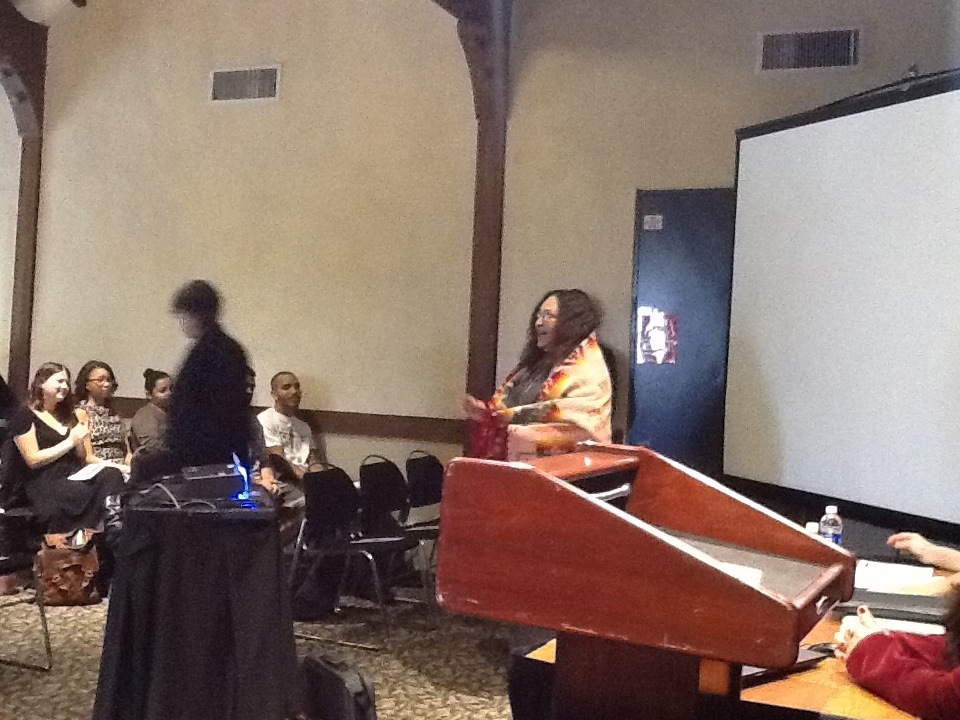
Wenona giving her talk, “From Power Politics to Legal Duties: The Anatomy of Tribal-State Relations.”

20121130-153824.jpg

The honoring of Linda Lockear:

20121130-153913.jpg

The other panelists, Devon Lomayesva, Michele Fahley, and Linda Parker:

20121130-154031.jpg

No pics of me, but here are my notes, including my intentionally unfunny joke:

20121130-154113.jpg

And finally, the bravest audience in the world, the people who sat underneath the scariest medieval chandelier in the Southern California:

20121130-154220.jpg

Spring Speakers Series Event: Labor Law in Indian Country

Join us if you can:

February 21, 2012, 2:00 pm (Castle Board Room, 3rd Floor of the Law College Building)

Coffee and snacks provided

Authors:

Kaighn Smith Jr.

Labor and Employment Law in Indian Country

David Kamper

The Work of Sovereignty: Tribal-Labor Relations and Self-Determination at the Navajo Nation

Commentators:

Prof. Wenona T. Singel (MSU Law)

New Book on Navajo Tribal Labor Relations

David Kamper has published “The Work of Sovereignty: Tribal Labor Relations and Self-Determination at the Navajo Nation.” Here is the book’s website.

And the description:

Who is shaping the future of economic development in Indian Country? Who has a say in tribal economic growth and who benefits? What role do American Indian workers play in shaping how tribal economies and enterprises work? What would it mean to conceive of indigenous self-determination from the vantage point of work and workers? The Work of Sovereignty addresses these vital questions. It explores the political, economic, and cultural forces that structure and influence indigenous economic development, giving special attention to the perspectives and priorities of the indigenous working people who build tribal futures with their everyday labor. Kamper argues for the importance of recognizing tribal labor relations as a factor in indigenous economic enterprises from gaming to health care and beyond. Although most research on tribal sovereignty and economic development focuses on legal theory and governmental operations, The Work of Sovereignty centers on the people who make sovereignty work. It presents a thoughtful, in-depth look at the ways labor relations play out in Indian Country, how tribal employees view their relationships with their bosses and tribal enterprises, and how this view connects to their enactment of indigenous self-determination.