The Indigenous Peoples’ Journal of Law, Culture & Resistance (IPJLCR) is currently accepting submissions for Volume 12, which has a target publication date of Spring 2027. Submissions are being accepted until Sun., March 15, 2026. Email submissions and any questions to: ipjlcr@lawnet.ucla.edu.
IPJLCR is an interdisciplinary law journal housed at the University of California, Los Angeles School of Law that focuses on Indigenous legal issues and publishes scholarly articles, legal commentary, poetry, songs, stories, artwork, and other media. We are soliciting scholarly articles, student comments, and art that centers on or relates to legal issues important to Indigenous communities in the United States and throughout the world. We also seek works on issues or aspects of life in Native communities that are impacted by law, whether tribal law or the laws of nation-states. To access past issues, please visit https://escholarship.org/uc/uclalaw_ipjlcr.
Requirements:
Here:
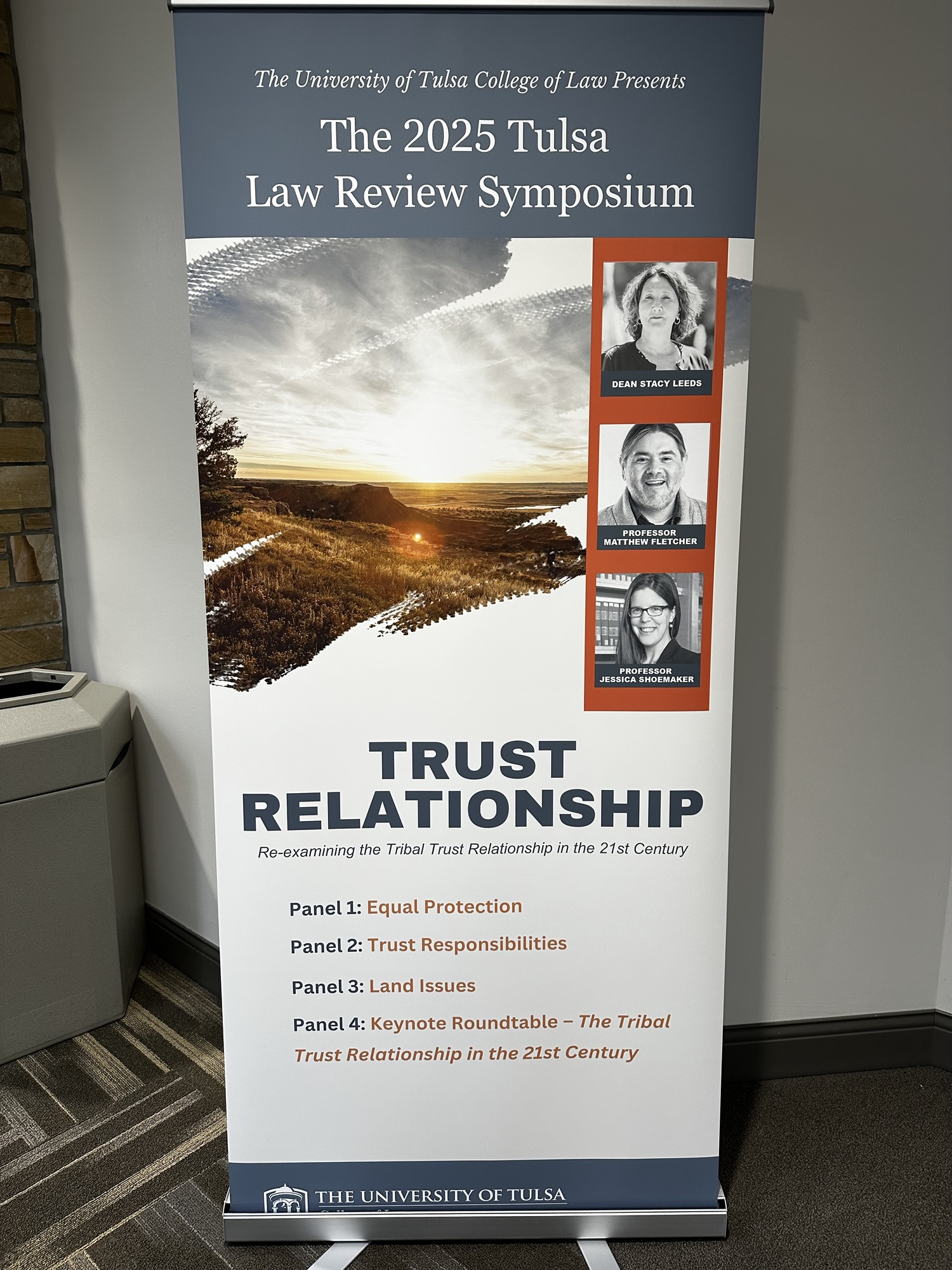
Fletcher’s Uncertainty Principle
Matthew L.M. Fletcher
Tribes as Nations: The Future of the Trust Relationship
Adam Crepelle
The Unenforceable Indian Trust
Ezra Rosser
The New Existentialism in Indian Law
M. Alexander Pearl
Fractionation by Design: Remedy Without Repair in Indigenous-Owned Trust Allotments
Jessica A. Shoemaker
Tribal Co-Management on Ceded Lands: A New Era?
Michael C. Blumm and Adam Eno
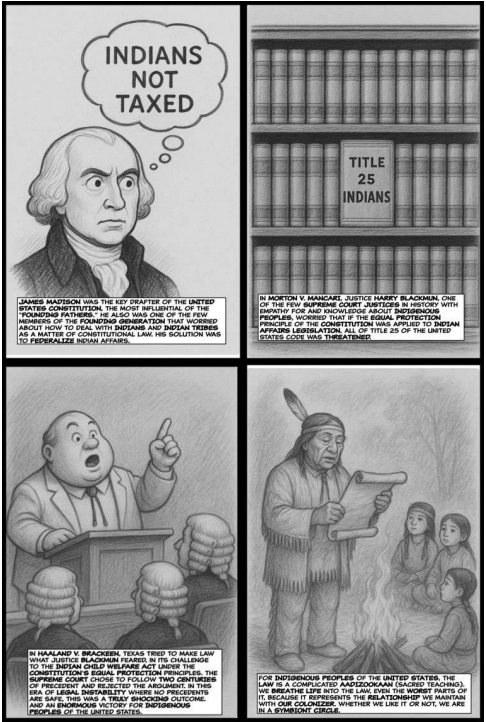
Original Comic: Tribal-Federal Symbiosis—An Aadioozaan
Matthew L.M. Fletcher
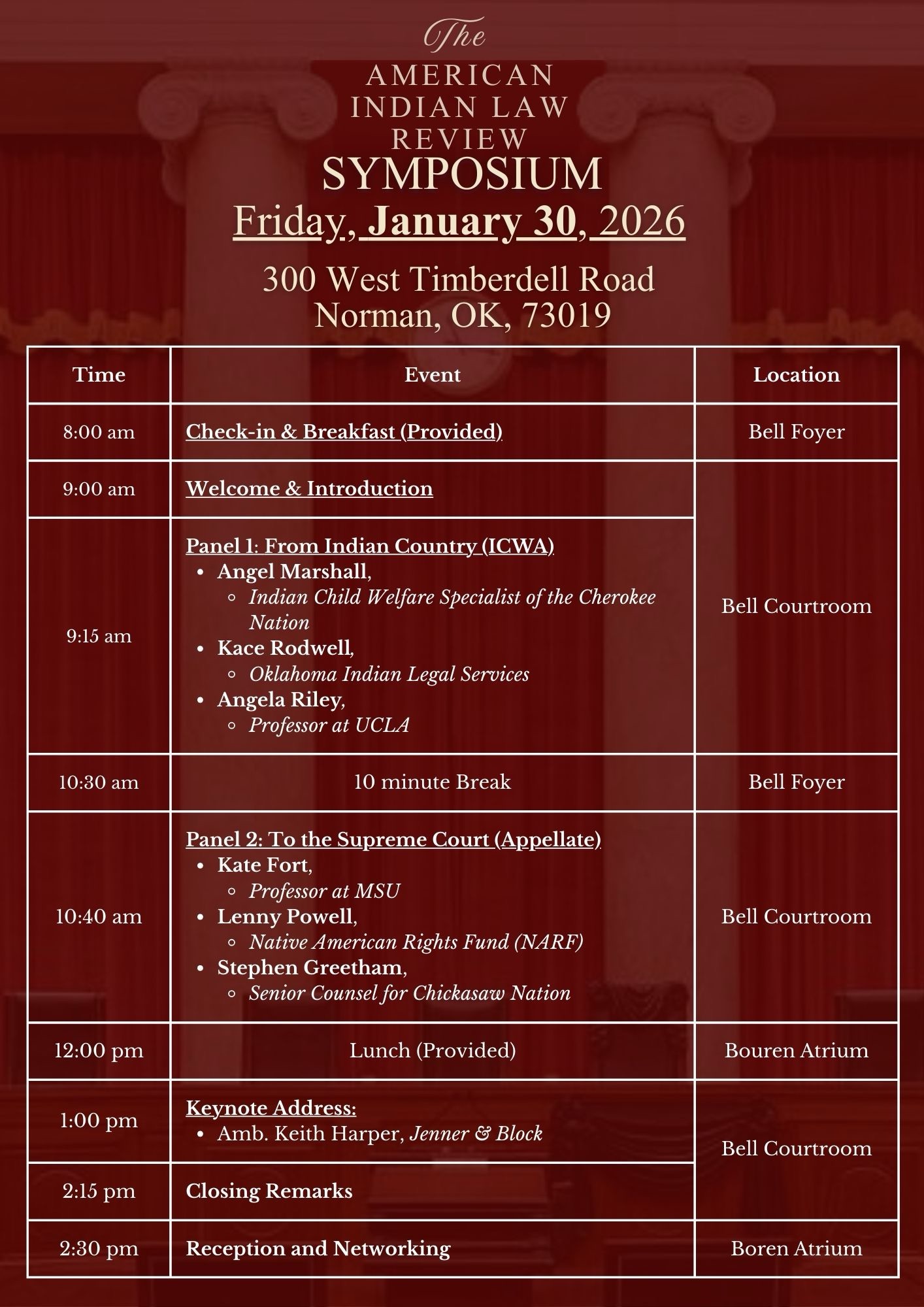
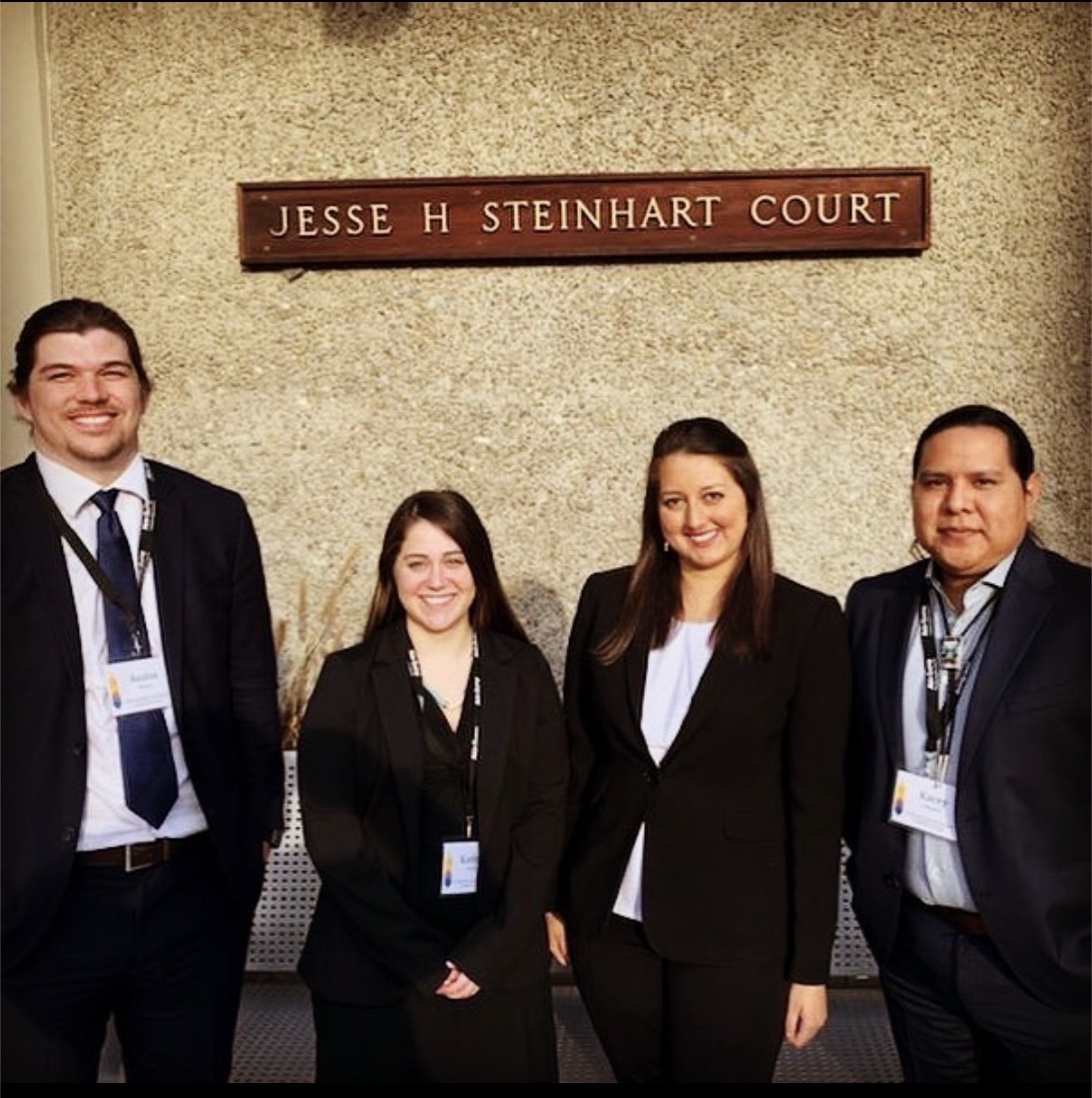
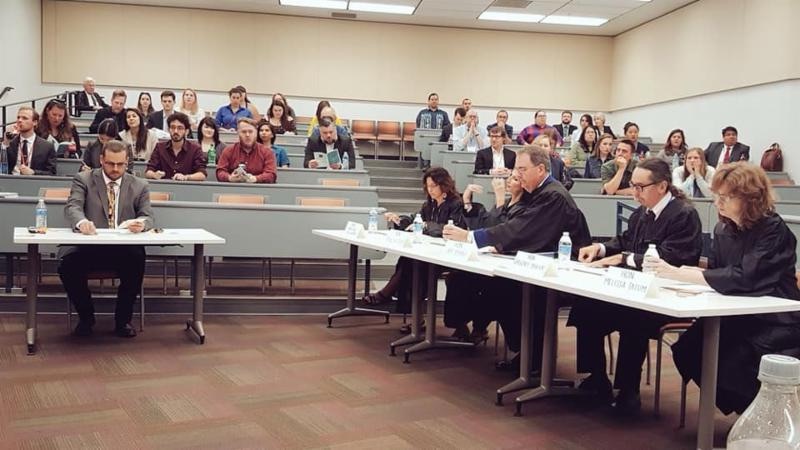
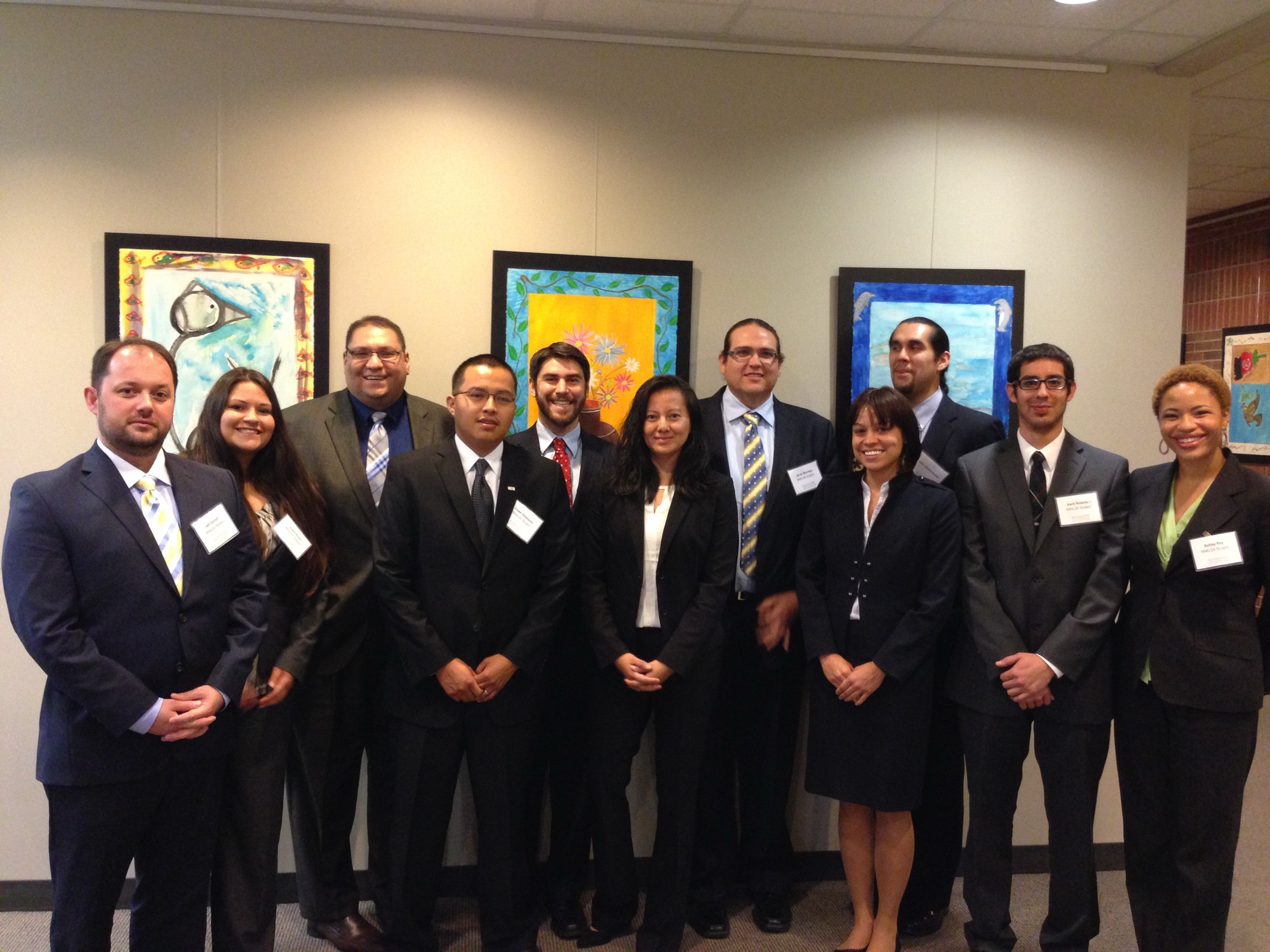
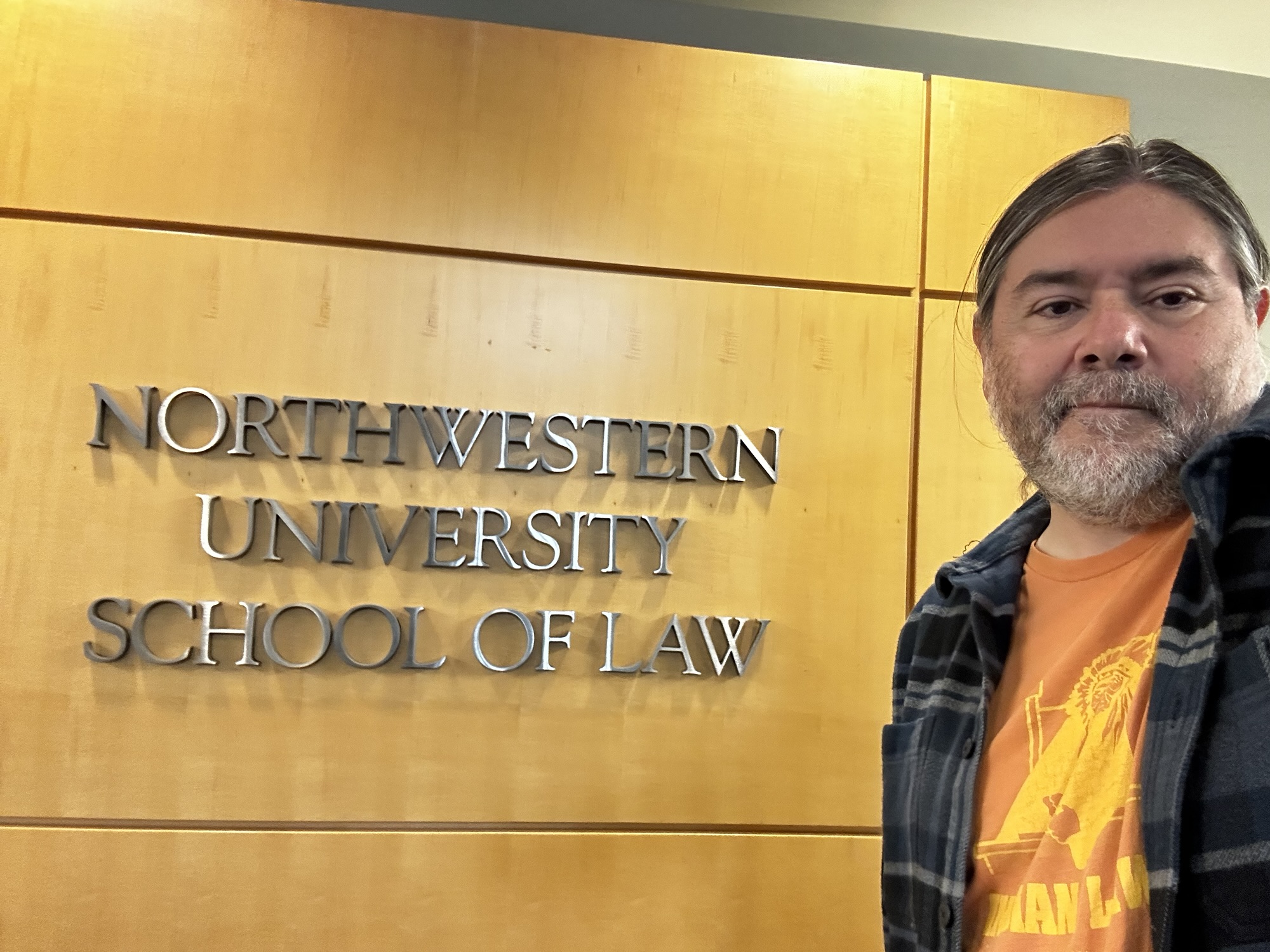
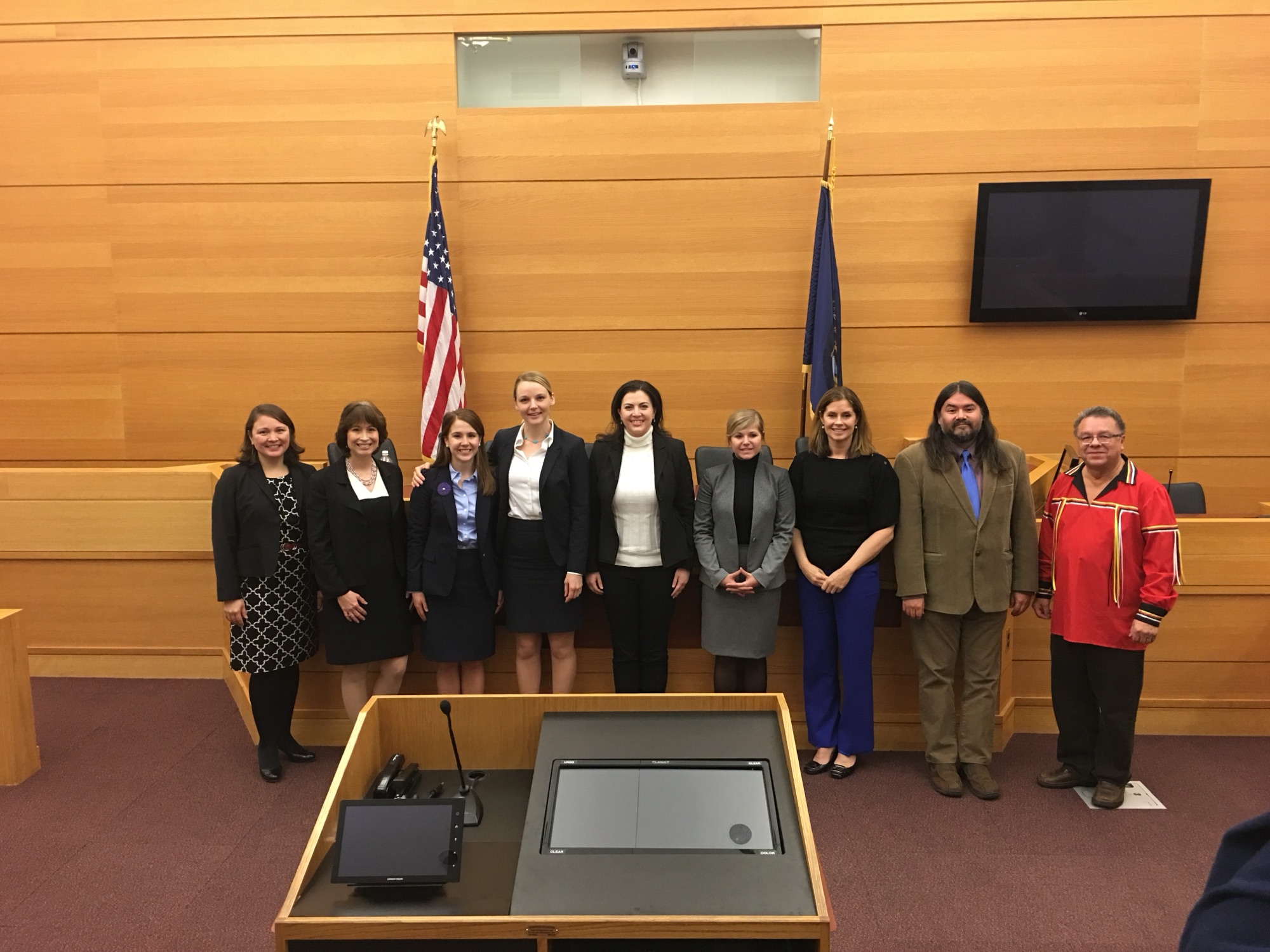
The National Native American Law Students Association (NNALSA) is excited to announce that its 34th Annual NNALSA Moot Court Competition will be hosted by Northwestern Pritzker School of Law. The Competition will take place on February 13-14, 2026, at Northwestern Law in Chicago, IL.
NNALSA was founded in 1970 to support law students who are interested in federal Indian law, tribal law, and traditional forms of governance. Each year, NNALSA sponsors a moot court competition for law students who have a passion for Indian law and litigation.
We ask for your support and invite you to be part of this exciting event by contributing as a volunteer judge. Please fill out this link to share your interest and availability. Ahehee’ (Thank you)!
If you have any questions or comments, please email Colin Tompson at mootcourt@nationalnalsa.org.
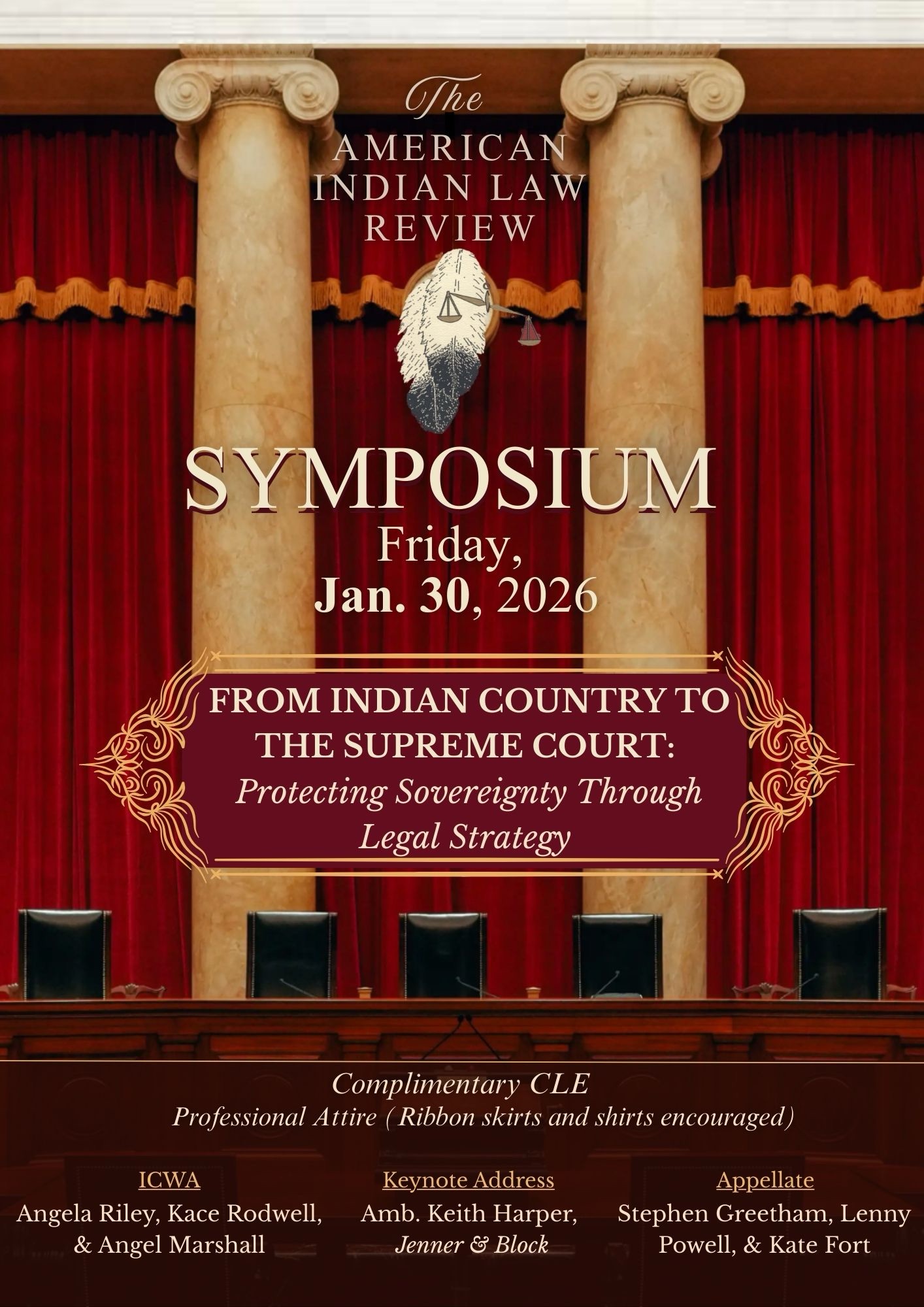
Announcing the 2025-2026 American Indian Law Review National Writing Competition
This year’s American Indian Law Review national writing competition is now welcoming papers from students at accredited law schools in the United States and Canada. Papers will be accepted on any legal issue specifically concerning American Indians or other indigenous peoples. The winning entry will receive $1,500 and publication by the American Indian Law Review, and will also be awarded an eBook copy of Cohen’s Handbook of Federal Indian Law, provided by LexisNexis
The deadline for entries is Friday, February 27, 2026, at 6 p.m. Eastern Standard Time.
Sponsored by the University of Oklahoma College of Law, the American Indian Law Review has proudly served Native and legal communities since 1973. Each year at this time we encourage law students nationwide to participate in this, the longest-running competition of its kind. Papers will be judged by a panel of Indian law scholars and by the editors of the Review.
For further information on eligibility, entry requirements, and judging criteria, see the attached PDF rules sheet or the AILR writing competition website at https://law.ou.edu/ailr/wc.

Here:



Here:
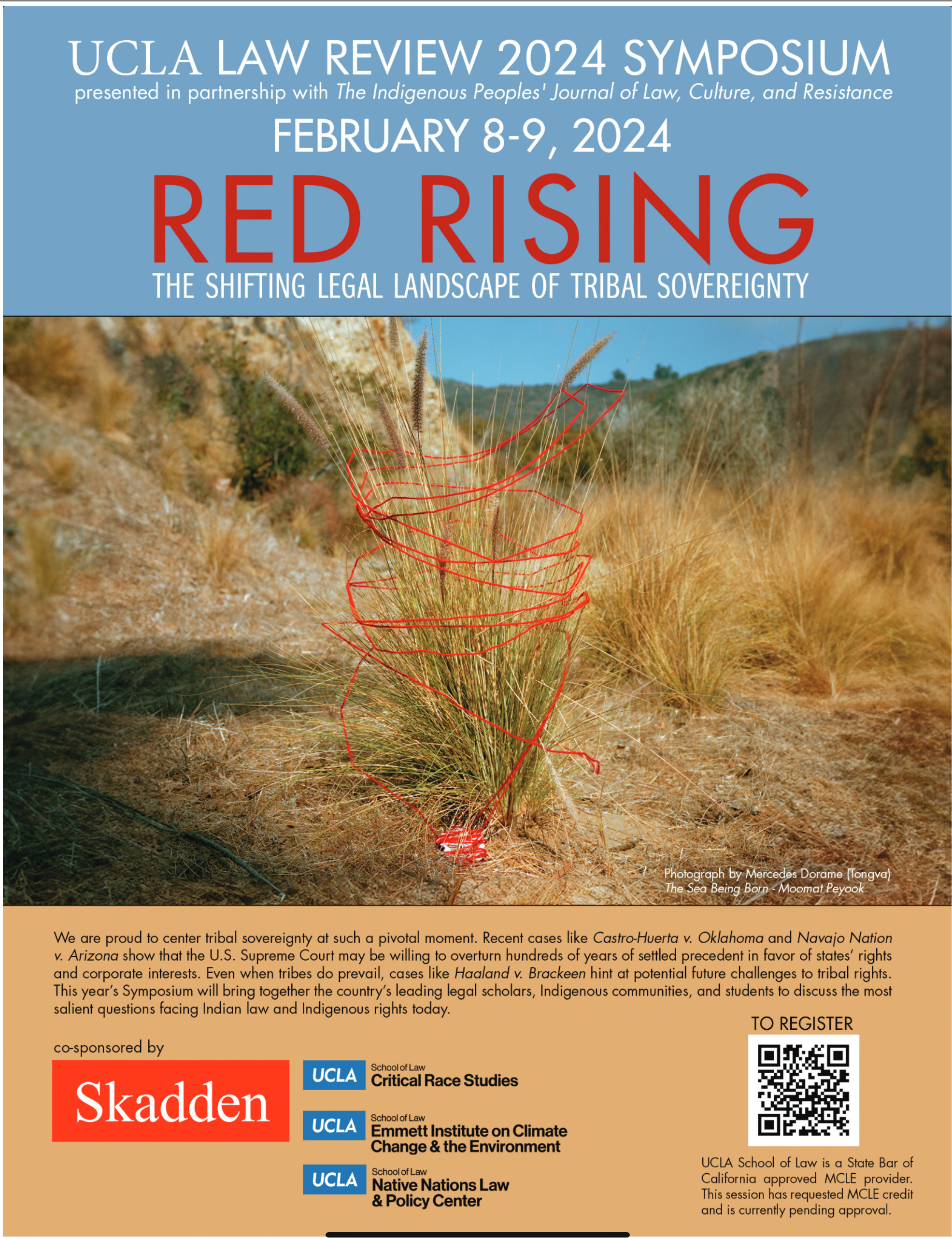
Here:
Development and Practice of Tribal Community Planning: Ensuring Indigeneity in the Planning Process
Jared E. Munster, Ph.D.
The Onondaga Nation’s Land Claim: Rights Without a Remedy?
Larissa Speak
Case Law on American Indians: September 2023 – August 2024
Thomas P. Schlosser

Manuel Lewis has posted “The Decline of the Administrative State and its Potential Effects on Tribal Sovereignty” on the Michigan Journal of Environmental and Administrative Law’s blog.
An excerpt:
The federal government of the United States, including federal agencies, owes a trust responsibility to Tribes. The contemporary federal administrative state has given greater authority over agency decisions to the federal judiciary while simultaneously reducing government funding for various agencies’ operations. As a result, it is unclear that the federal government will continue to adhere to its trust responsibility in agency actions. Failure to account for Tribal governments in the current administrative state is a violation of the United States’ duty to Tribes and calls for greater advocacy to ensure the protection of Tribal interests—both in federal agencies and in federal courts.



You must be logged in to post a comment.