Gregory H. Bigler and the University of Oklahoma Press will soon publish “Rabbit Decolonizes the Forest: Stories from the Euchee Reservation.”
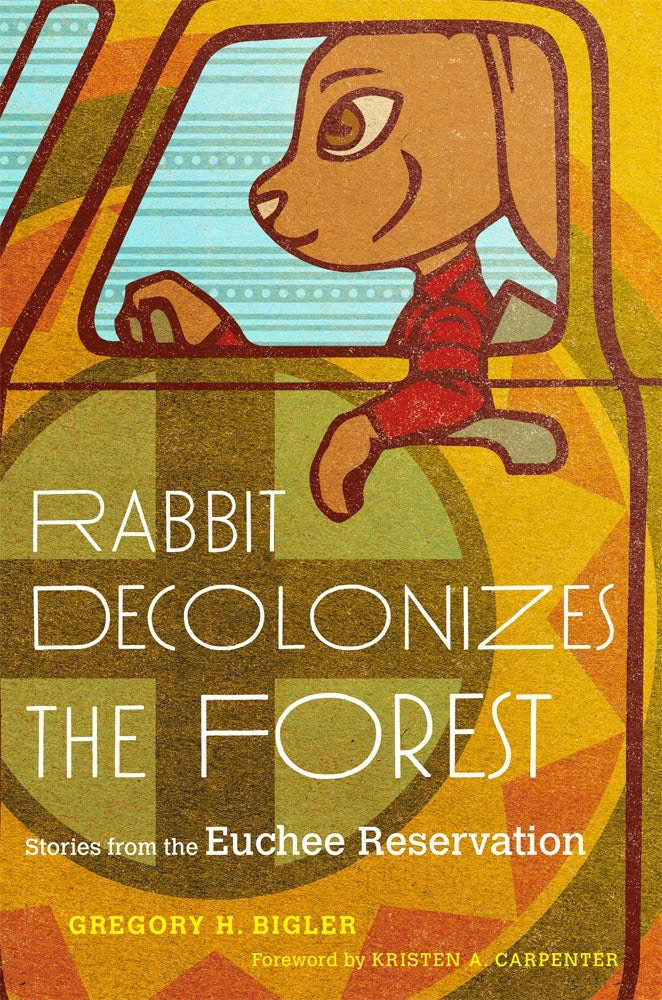
Blurb:
Before their forced removal to Oklahoma in the 1830s, the Euchee people lived in Georgia and other southeastern territories. Today the Euchees are enrolled members of the Muscogee Nation of Oklahoma, but they possess their own language, culture, and traditions. This unique collection by Euchee citizen Gregory H. Bigler combines traditional di’ile (Euchee tales), personal recollections, and contemporary stories to portray a way of life often hidden from view.
Written in an engaging, down-to-earth style, the stories in this book immerse the reader in the everyday experiences of the Euchee community. With his gift for storytelling, Bigler welcomes readers into the lives and culture of the people whose stories he has heard or observed throughout his life and career as a lawyer and judge. Unforgettable characters appear or reappear in various settings, and these figures, whether animal or human, are bound to bring forth a chuckle or leave the reader wanting to learn more about their history. Some of the tales address serious legal injustices, while others poke gentle fun at lofty academic constructs. In the title story, for example, the mischievous character Shajwane (Rabbit), resolves to decolonize the forest, to strip away its “false narrative,” by literally removing all new growth from the trees.
These stories bring to life Euchee traditions that include family ties, the stomp dance, and communal cooking and feasting. Woven throughout is the sacred element of spirit. As Bigler explains in his introduction, the “spiritual” for Euchees signifies not a Western quest for peace or centeredness but a world filled with animate spirits that interact with all of us—as we see them, feel them, or seek them out.
The Euchee people are unknown to most Americans. They inhabit a small area southwest of Tulsa and have yet to receive federal recognition. Yet even in their modern-day lives—as these stories capture so beautifully—the Euchee people remain fiercely determined to show “they are still here.”
 Turtle Talk
You must be logged in to post a comment.