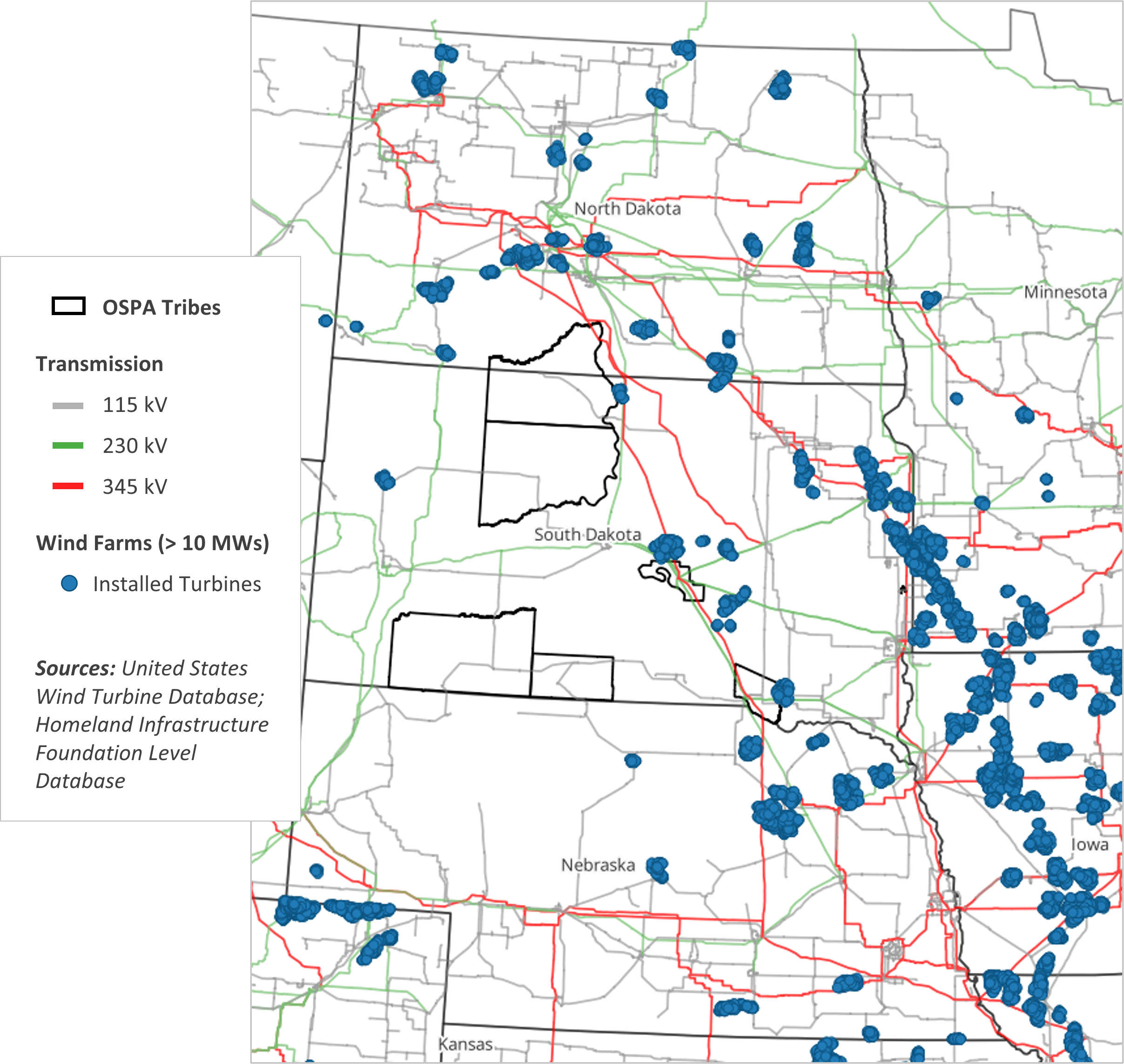
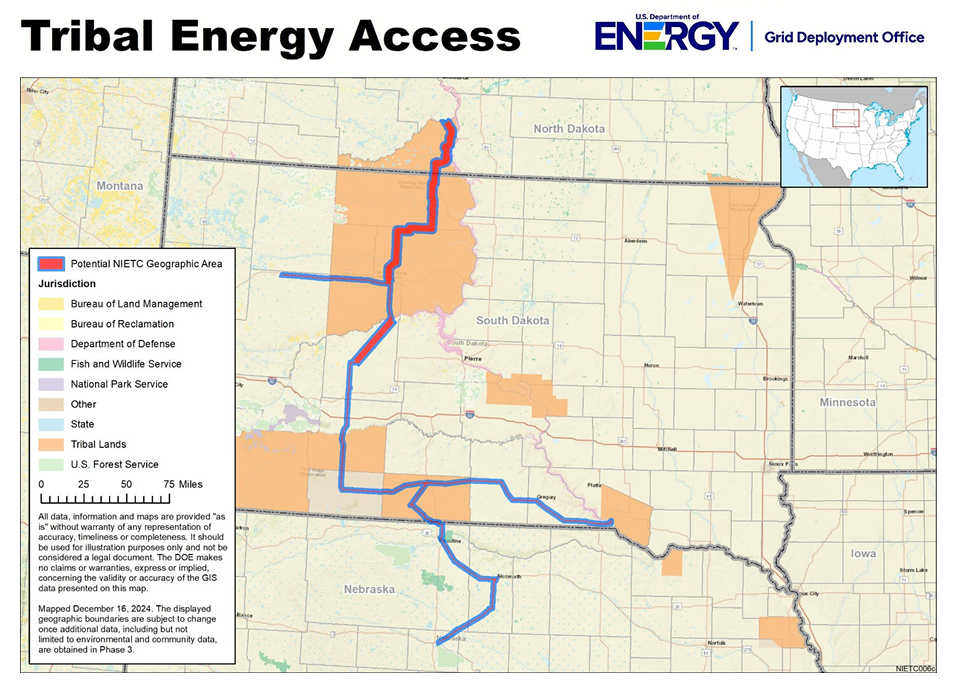
On August 12, the Dept. of Energy terminated plans for a proposed Tribal Energy Access Corridor across North Dakota, South Dakota, and Nebraska that was intended to help Tribal energy projects connect to transmission infrastructure.
The corridor was planned to include the Cheyenne River Sioux Tribe, Pine Ridge, Rosebud, Standing Rock, and Yankton reservations. The 7-Tribe Oceti Sakowin Power Authority reports that its member Tribes have more than 2 gigawatts of emissions-free wind, solar, and geothermal projects that are limited by insufficient transmission access.
The South Dakota Farm Bureau objected to the use of eminent domain to develop the corridor. Scott VanderWal, President of the SDFB, stated that “Farm Bureau supports a reliable and affordable electric grid, but transmission development must respect private property rights, state and local decision-making, and meaningful landowner involvement.”
U.S. Secretary of Energy Chris Wright stated:
Transmission policy must serve the American people—not special interests or a climate-alarmist agenda that drives up costs, worsens reliability, and disregards the concerns of local communities. The Trump Administration is committed to strengthening America’s electric grid with common-sense policies that prioritize delivering affordable, reliable, and secure electricity to American families and businesses.
DOE’s own background materials detail Indian country’s electricity infrastructure deficits:
- Tribal households spend 28% more of their income on home energy costs than the average U.S. household
- 17,000 Tribal homes lack electricity, impacting at least 54,000 people
- Tribal communities experience 6.5 times more outages than the national average
The transmission gap is a legacy of who the grid was built for. DOI acknowledged more than fifteen years ago that Tribes had largely been excluded from transmission planning, limiting Tribal energy and economic development. The proposed corridor was one attempt to address that structural disadvantage.
Additional Resources
Public Comments Submitted to DOE for the Proposed Tribal Energy Access Corridor in 2025
Where the wind blows: Exploring barriers and opportunities to renewable energy development on United States tribal lands, Michael G. Zimmerman and Tony G. Reames, Energy Research & Social Science (2021)
 Turtle Talk
You must be logged in to post a comment.