Here.
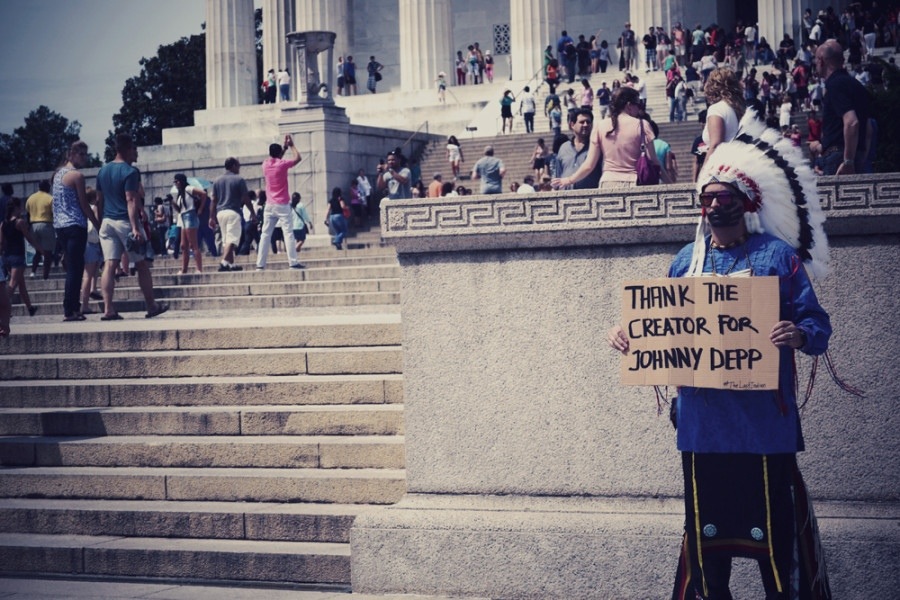
Here.
Here.
I am looking forward to seeing this film.
In the filmGifts from the Elders, five Anishinaabe youth take a summer to embark on a journey via the stories of their Elders. The youth are taken back to a time when people could live healthily off the land, and they contrast it to the options of today.
“Their stories chronicle the devastating impact that environmental and cultural dispossession had on the flow of knowledge from Elders to youth, and ultimately on the health of their people,” the filmmakers say on the documentary’s website.
Article about the film here.
Official site for the film here.
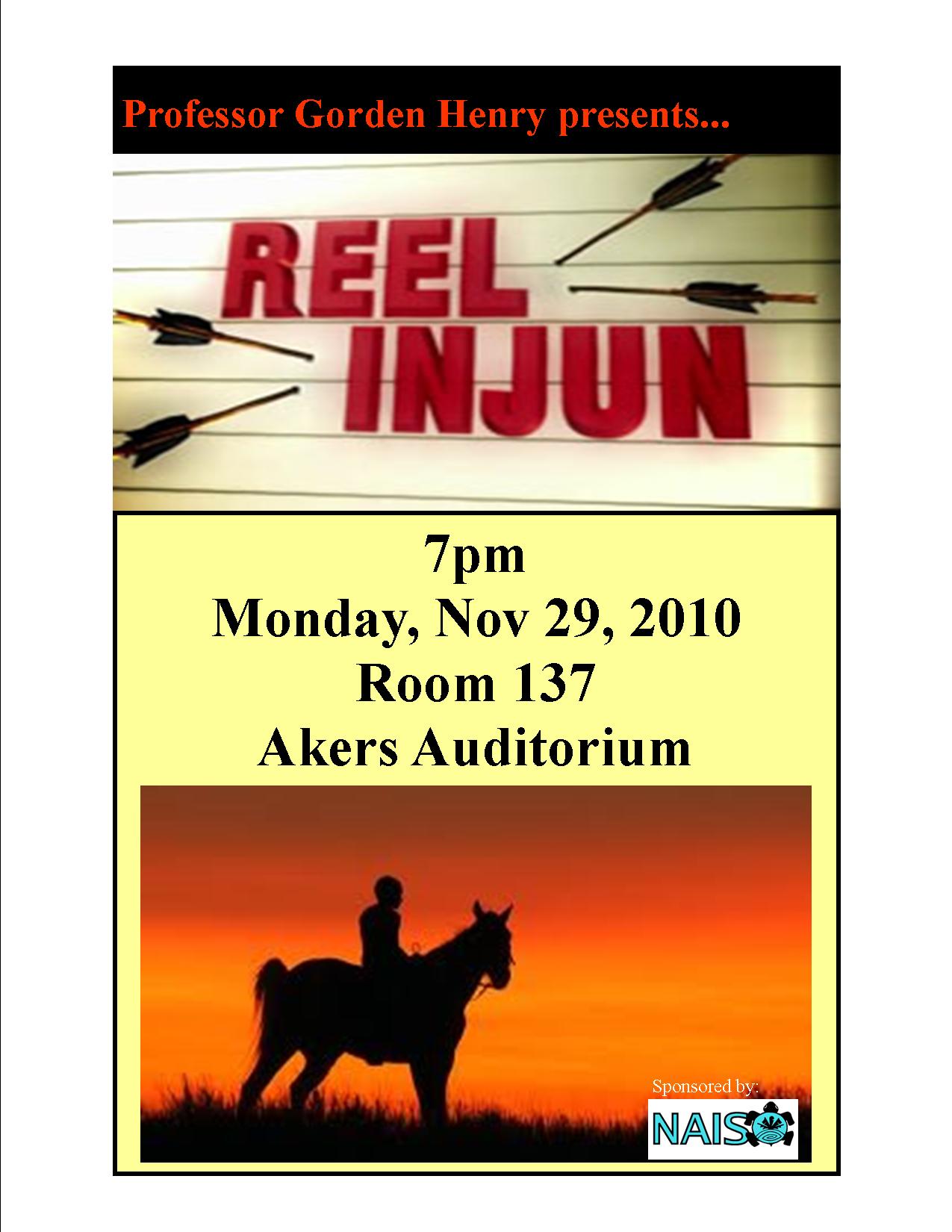
From the flyer:
July 17th to July 22nd
Sponsored by the Native American Institute and the College of Arts and Letters.
All students ages 13‐18 may register. Students will attend workshops under the instruction of MSU faculty.
Students will be housed on Michigan State University campus for 4 days.
Lodging and meals will be included for each student.
Students will complete a short film as well as learn:
To use cameras to film scenes and people
To set up & design shots for filming
To create storyboards to develop stories for film
To edit video
To create & edit soundtracks for film
To produce special effects
For information, contact: Gordon Henry at (989) 859‐0178 or henryg@anr.msu.edu
NAI office at (517)353‐6632.
To register for NAI/CAL Film Institute, visit http://www.nai.msu.edu.
Here.
Suppose this might get me in trouble with the pro-squaw people again, but isn’t this the epitome of using the word as a racial epithet?
From New York Magazine:
Ridley Scott’s Robin Hood is a pompous, interminable hash. Billed as a precursor to the legend we know, it’s rich in bogus historical context, along with enough mud, blood, and clutter to overwhelm our happy memories of Errol Flynn’s grin and Olivia de Havilland’s radiance. Here, Robin and Marian are played by a scowling Russell Crowe and a grim Cate Blanchett, who has the face of a wooden squaw stained by decades of cigar smoke. I can’t remember a more un-fun-looking couple.
Here.
Michael B. Kent Jr. and Lance McMillian have posted “The World of Deadwood: Property Rights and the Search for Human Identity” on SSRN (h/t Law & Humanities Blog). The abstract:
The year is 1876. Gold has been discovered in the fledgling camp of Deadwood, bringing hordes of new arrivals each day seeking to strike it rich. The allure of wealth is coupled with the allure of complete autonomy. There is no law. Although part of the United States, Deadwood is unaffiliated with any existing territorial government. It is free. Or is it? From this backdrop, HBO’s highly-acclaimed drama Deadwood springs forth. Series creator David Milch is frank about his mission behind the story: to explore how order arises from chaos. The assignment and protection of property rights play central roles in this journey from anarchy to law. In the world of Deadwood, where ownership of land can be worth millions, law’s promise and law’s pitfalls are both on full display. The stakes are high; the lessons are many.
Stories are powerful teaching tools because they marry information and context. Film and television also supply a picture of law in action, marshalling the power of the visual to make law more real, less abstract. Because of its rich complexity and invocation of ancient debates over what property is and who rightly can be deemed to own it, the three-season run of Deadwood provides fertile ground for this type of interdisciplinary study. Deadwood demonstrates that the interrelationship between property and law is complex, with many moving pieces and many valid points and counterpoints. Property has both naturalist and positivist attributes, it both pre-exists and coexists with the state, it is about economic power and personal identity, it supports both an individualist and communitarian mindset. Accounting for all of these strands in a balanced way is a lot to ask of legal institutions, especially inasmuch as the strands often are in competition with one another. Deadwood suggests that, while law is certainly a component piece in the puzzle of human relations, it alone cannot do all that we ask of it. And therein may lie the ultimate lesson: Law can be a blessing, but the human condition requires more.
Here’s to more Indian law and legal history scholars taking a look at the “Deadwood” show. This seems to be a decent paper, but like the show it keeps the Indians in the background.
When you’re watching the Oscars tonight, and Avatar wins, remember the debt James Cameron owes to Pocahontas. Hat tip to the New York Review of Books.
Compare this trailer…
Vodpod videos no longer available.
With this….
 Turtle Talk
You must be logged in to post a comment.