Brochure here:
October 18-29, 2012 in Vegas
Trent Crable, John Echohawk, and Professor Frank Pommersheim. Moderator, Glen Staszewski.

Glen:
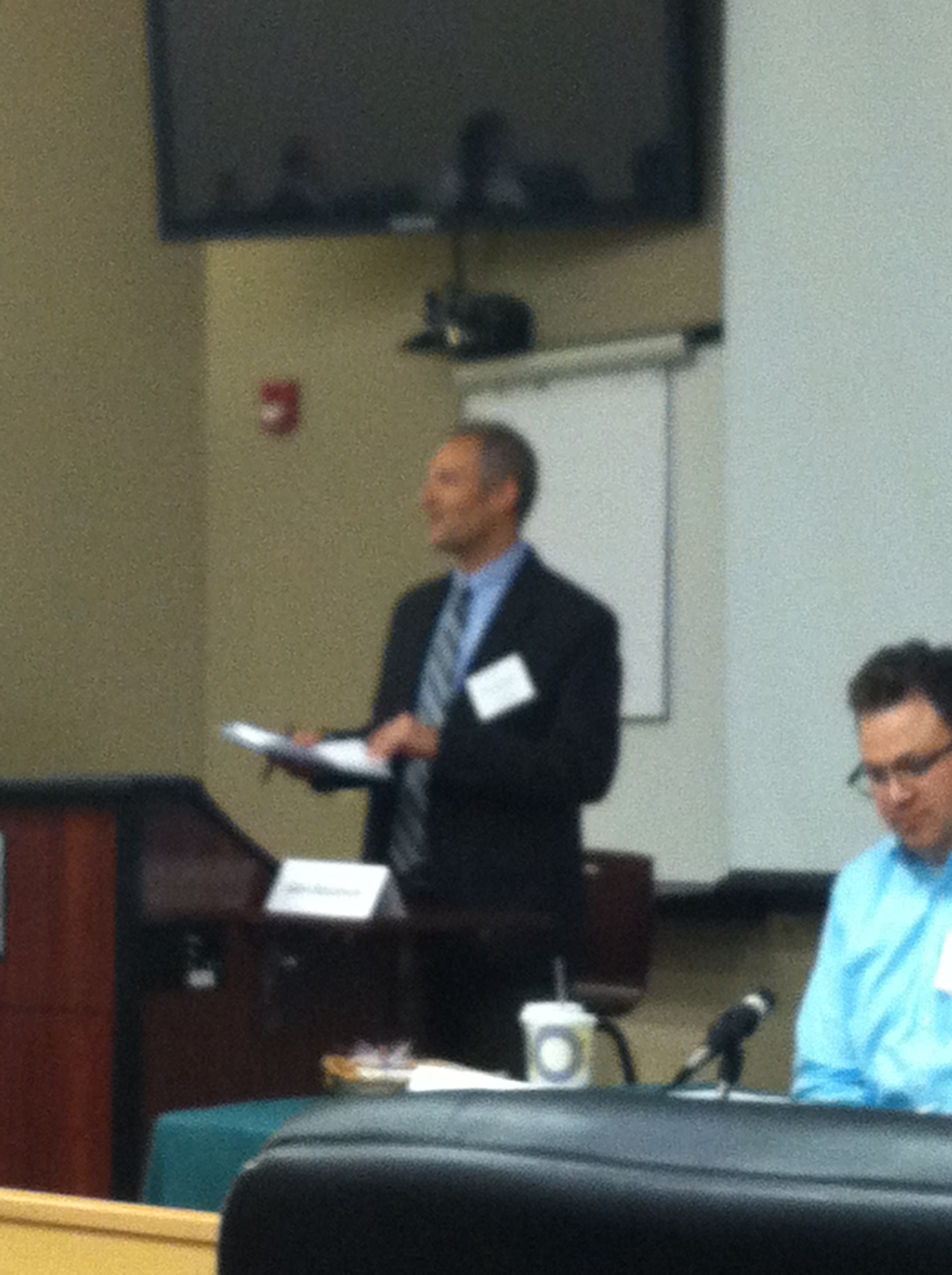
Judges Carrie Garrow and Joseph Thomas Flies Away, and Professor Kirsten Carlson. Moderator, Ken Akini.

Ken:

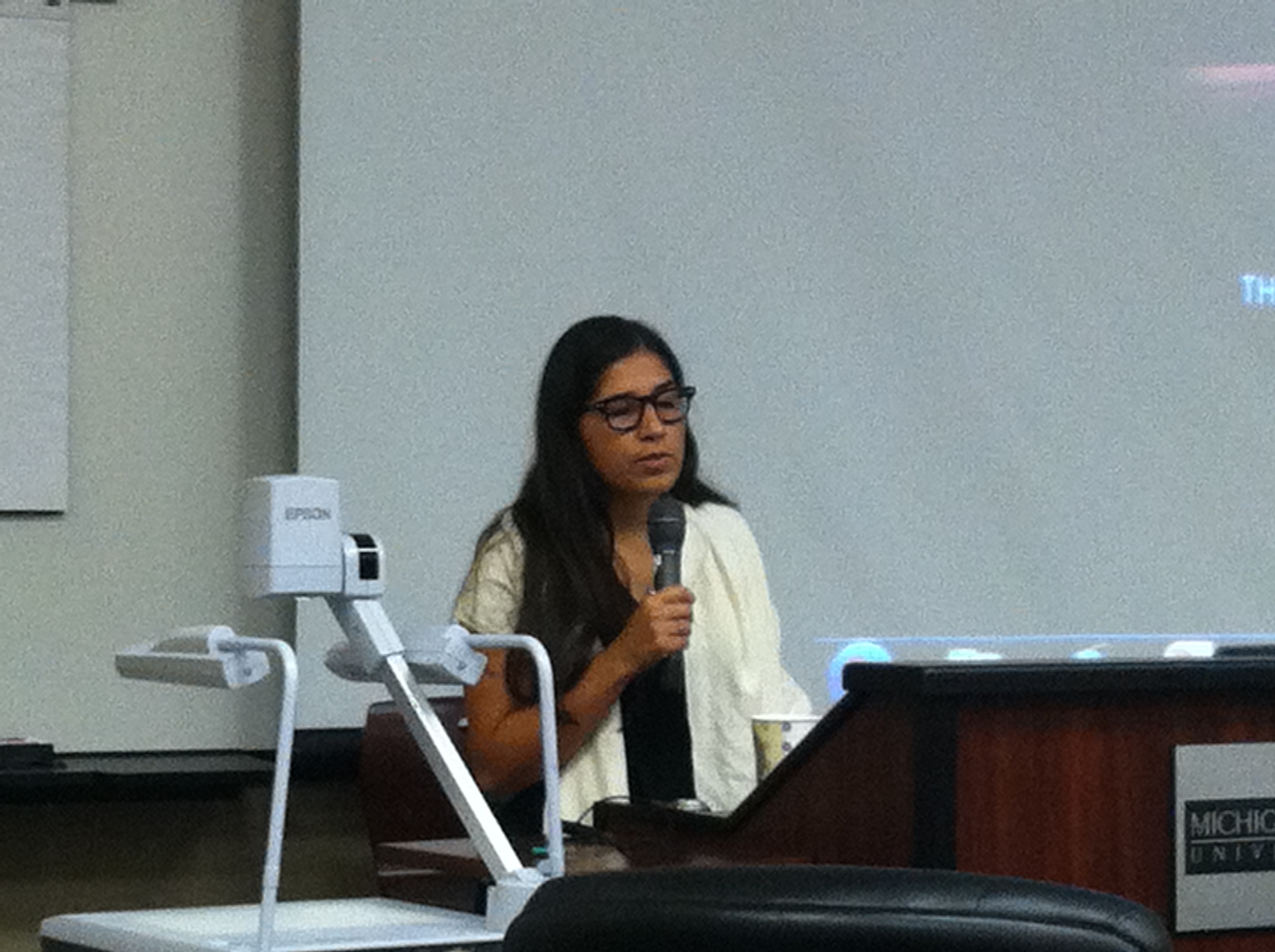
The first panel, Dean Stacy Leeds, and Professors John Borrows and Joseph Singer. Moderator, Estrella Torrez.

Estrella:
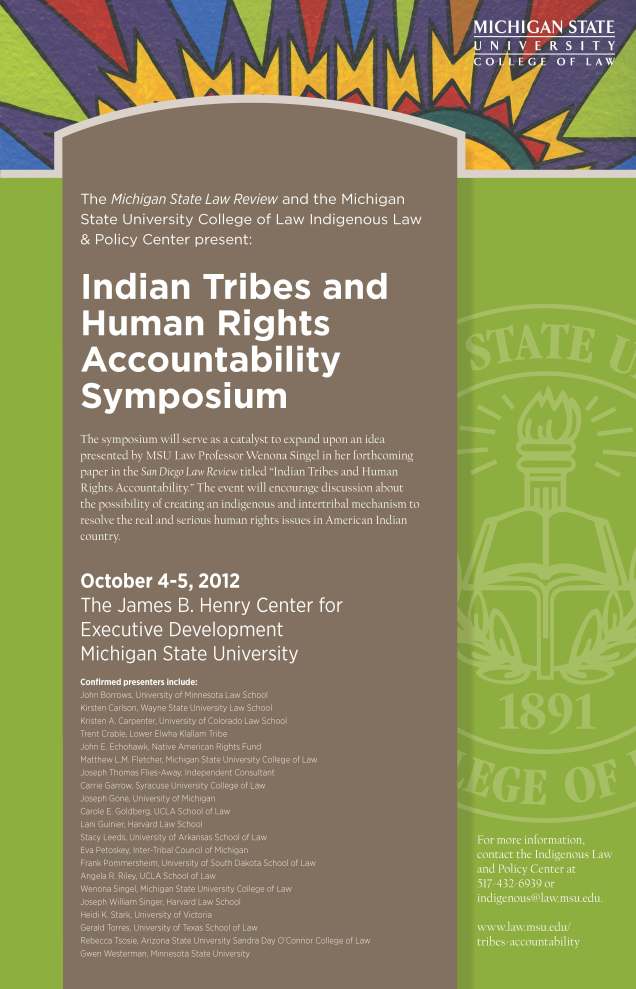
The 2012 Michigan State Law Review Symposium on Wenona Singel’s “Indian Tribes and Human Rights Accountability” runs today and tomorrow.
Schedule and other information here.
Stop by and hear some of the amazing speakers.
Racist Stereotypes and Cultural Appropriation in American Sports
Thursday, November 1, 2012, 10:00 am – 5:45 p.m.
Rasmuson Theater
National Museum of the American Indian
4th Street and Independence Avenue, SW
Washington, D.C.
Join commentators, scholars, authors, and representatives from sports organizations for a series of panel discussions on racist stereotypes and cultural appropriation in American sports. Explore the mythology and psychology of sports stereotypes and mascots, examine the retirement of “Native American” sports references and collegiate efforts to revive them despite the NCAA’s policy against “hostile and abusive” names and symbols, and engage in a lively “community conversation” about the name and logo of the Washington, D.C. professional football organization. A reception will follow immediately after the symposium.
To RSVP or for further information, please contact NMAI-SSP@si.edu.
There is a stellar lineup of speakers for this event, running October 4-5 at the Henry Center on MSU’s campus. All details are here. Register here!
Tentative Symposium Schedule (All events to take place at the MSU Henry Center)
Here.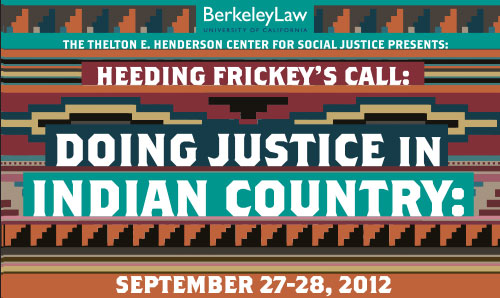
A few years before his untimely death the renowned Indian law scholar Phillip Frickey delivered a lecture at the University of Kansas citing the “failure of scholarship in federal Indian law” to “grapple with the law on the ground in Indian country” or to educate a judiciary that has little knowledge of Native culture. In the aftermath of Professor Frickey’s critique of the abstract writing of law professors, some academics accepted his challenge and expanded their scholarship to address the problems requiring solutions in Indian country. Many of these efforts have been accomplished in partnership with tribal leaders and in response to their expressed needs. Yet significantly more needs to be done. In the face of increasing hostility to Indian law claims in the federal courts, it is imperative for Indian law scholars to assume some of the responsibility for educating the judiciary about Indian country. Moreover, as courthouse doors are closing, it is necessary for tribes, their counsel, and Indian law scholars to expand their audiences and to search for remedies beyond the courts.
This symposium will highlight the challenges facing tribal communities today and ways in which Indian law scholarship has contributed to tackling the issues “on the ground in Indian country.” While recognizing the success stories, the participants will also be encouraged to redouble their efforts, to stretch themselves beyond their usual comfort zones, and to raise the bar for the academy.
 Turtle Talk
You must be logged in to post a comment.