Secretary Jewell and tribal leaders discussed President’s fiscal year 2015 budget request for Indian Affairs at PNW Tribal Summit, as reported here in the National Journal.
Uncategorized
Job Posting: Bad River Legal Environmental Intern
Bad River Legal Environmental Intern:
Ethics Panel at KU ICWA Conference
Kate Fort and moderator Becky Howlett:

Job Posting: Lac Courte Oreilles Ojibwa Senior Tribal Attorney
Job Posting can be accessed here: 020314 Legal Director Posting.
9th Circuit’s Decision in Big Lagoon Case Spells Trouble (breakdown)
Fletcher Update: I should resist interjecting in Bryan’s post but I wanted to note that Howard Bashman of How Appealing picked up on this post and suggested that this case is a good candidate for en banc review:
The majority opinion was written by a senior U.S. District Judge visiting from outside of the Ninth Circuit and joined in by a Senior Ninth Circuit Judge. The third judge on the panel, a Ninth Circuit Judge in active service, dissented. As a result, this case may have a better than ordinary chance of obtaining en banc review.
A panel of the 9th Circuit Court of Appeals issued a decision yesterday in Big Lagoon Rancheria v. California. Matthew posted the decision yesterday afternoon here.
Judge Block’s analysis contained in the decision was so stunningly and thoroughly poor, that there is not enough space or time to address every wrong point in this post (and this is a long post). I encourage you to read it for yourself. Notably, Judge Block is a Senior Status Judge from the Eastern District of New York, which serves as yet another example of how the 2nd Circuit has affected Indian law.
Suffice it to say, this case has the potential to wreak havoc on a number of tribes across Indian Country (and especially in California) related to Carcieri.
Background
Big Lagoon began as a bad-faith lawsuit filed against the State of California, which was seeking to prevent the rural, northern California tribe from developing a gaming facility on its own coastal reservation. The Tribe had filed a lawsuit against the State under IGRA, seeking to compel the Governor to negotiate a compact in good faith; and, the Tribe was making slow, but steady progress in its effort.
In 2009, the State tossed in a junk-drawer defense to its failure to negotiate in good faith – claiming that the Tribe’s trust lands (some of which were acquired in 1918, and some acquired in 1994) were not eligible “Indian lands” due to the Carcieri decision issued earlier that year.
As evidence that this argument was, in fact, a throw-away argument by the State, the Court notes on pages 9-10 that the State was working with the Tribe to find alternate gaming sites that would eventually need to be placed into trust.
It should be noted that a number of states, local governments, and individuals have cited Carcieri in litigation against tribes in recent years. These arguments are almost always thrown into the mix – regardless of apparent relevancy to the case – just to see if they might stick.
In 2010, the District Court tossed the State’s Carcieri arguments aside, and held that the State had failed to negotiate a Class III gaming compact with the Tribe in good faith, as required by IGRA. The Court then ordered the parties to conclude a compact within 60 days. Both the Tribe and the State appealed.
The 9th Circuit panel revived the State’s Carcieri argument – stating that it must determine whether the lands are eligible for gaming to determine whether the State was obligated to negotiate a gaming compact with the Tribe in the first place: “a tribe may only request negotiations to conduct gaming on a particular piece of Indian land over which it has jurisdiction.” (p. 17)
The Court then proceeded with its analysis, stating without any sense of irony, “These questions are thorny indeed, and perhaps beyond our competence to answer.”
The Decision
The Court framed its analysis as follows:
We think [this case] requires us to answer three questions: Must a tribe have jurisdiction over “Indian lands” to compel [compact] negotiations? Has the State waived the “Indian lands” requirement? Is the eleven-acre parcel “Indian lands”?
1. State’s Obligation to Negotiate
The Court answered the first question in the affirmative – holding that “a state need not negotiate with a tribe under IGRA unless the tribe has jurisdiction over Indian lands.” (p. 16). This is not that surprising, given that the law was already trending in that direction.
But, the Court took it one step further, holding, “a tribe’s right to request [compact] negotiations…depends on its having jurisdiction over Indian lands on which it proposes to conduct class III gaming.” (emphasis added).
This rule is merely the beginning of the problems this case may pose.
Does the second part of this holding require that all Class III gaming compacts designate the specific parcels of land on which a tribe will conduct gaming? Will some states use this rule to require tribes to submit a jurisdictional analysis prior to beginning compact negotiations?
Many tribes have entered into Class III gaming compacts without designating particular parcels of land as a Class III gaming site. Many others have entered into compacts without having gaming-eligible trust lands whatsoever. These agreements have been useful in helping tribes secure investors for increasingly expensive projects.
This particular ruling has the potential to require tribes to negotiate gaming compacts as a last step in developing a gaming project, after a project site has been selected and acquired in trust.
2. California’s waiver of the “Indian lands” pre-requisite to compact negotiation
I’m going to skip a breakdown of this part of the decision, except to say that on pages 19-20 of the decision it is clear that the Court is contorting itself to get to the Carcieri “analysis” in the third part of its holding.
3. Big Lagoon’s trust lands are not “Indian lands” due to Carcieri
When reading this part of the decision, it is important to remember that the State’s Carcieri arguments were thrown onto the heap in what was, originally, a lawsuit about gaming compacts under IGRA.
On page 12 of the decision, the Court even acknowledges that the State of California sought discovery on the issue of whether the Tribe was “under federal jurisdiction” in 1934. The lower court did not grant discovery, and the parties did not substantially develop a factual record on that point.
On page 25, the Court again acknowledged this fact:
Neither party squarely addresses how we should go about deciding whether Big Lagoon was a tribe under federal jurisdiction in 1934. The State says that further discovery will shed light on the issue, but does not explain how. Big Lagoon argues that it has been a federally recognized tribe since at least the time of the compact negotiations, but we are concerned with its status in 1934, not 1999.
Notwithstanding the fact that both parties were not prepared to litigate the issue before the 9th Circuit, the Court felt compelled to go ahead and render a decision anyhow. Without a single citation to any legal authority that analyzes the IRA’s fee-to-trust authority in light of the Carcieri decision, the Court stated on pages 26-27:
Since no one resided on what is now the Rancheria [in 1934], there was no group to organize. The absence of Big Lagoon from the 258-tribe list was not an intentional or inadvertent omission; it was a reflection of reality.
As we have held, a predicate to the right to request negotiations under the IGRA is jurisdiction over the Indian lands upon which a tribe proposes to conduct class III gaming. IGRA defines “Indian lands” as including lands held in trust for a tribe. Carcieri holds that the BIA’s authority to take lands in trust for a tribe extends only to tribes under federal jurisdiction in 1934. Thus, the effect of our conclusion that Big Lagoon is not such a tribe is that Big Lagoon cannot demand [compact] negotiations….
Outcome
The Ninth Circuit has effectively created a new test under the Carcieri decision. To meet this test, a tribe would have to show two things:
- That its members must have been residing on the parcel of land in 1934; and,
- That it was one of the 258 tribes listed in the 1947 Haas Report.
There are a lot more than 258 federally recognized tribes in the United States. A lot of them would be left out if the reasoning in this case was adopted elsewhere as a basis for lands to be placed into trust.
The 9th Circuit’s Carcieri analysis looks nothing like the analysis that the Department of the Interior has adopted to determine whether a tribe was “under federal jurisdiction” in 1934 for purposes of having land acquired in trust. The Court didn’t even look to the Department to guide its consideration of this issue (in footnote 8, on page 28, the Court denied the State’s request to implead the BIA).
Moreover, this decision invites collateral attacks on the status of tribal trust lands long after the federal Administrative Procedures Act’s six-year statute of limitations has passed. The trust lands at issue in Big Lagoon were acquired in 1918 and 1994, respectively. More than two decades has passed since the Tribe’s lands were acquired in trust (Laches? Settled expectations?). The State was able to challenge the status of those lands through a lawsuit about gaming compacts under IGRA. Who knows what other avenues may be used for a collateral attack on tribal jurisdiction over trust lands?
I will conclude by dousing the fire in my hair – The Court did not determine that Big Lagoon’s lands must be taken out of trust, or no longer be treated as Indian country (again, see footnote 8 on page 28). That is merely a logical outgrowth of this ruling.
There is also a fair chance that the federal government could be persuaded to intervene in this case to seek an en banc review, as the Court has dramatically affected its interests and administration of Indian affairs. There is also a chance that this case is limited to its facts, or limited to the 9th Circuit.
Notwithstanding those things, Judge Block’s opinion for the 9th Circuit is a poorly reasoned and terrible decision for Big Lagoon; and, potentially, for many other tribes.
Tenth Circuit Reverses Conviction of Navajo Member for Second Degree Murder
Here are the materials in United States v. Toledo:
An excerpt:
Defendant–Appellant Dhanzasikam R. Toledo appeals from his conviction of voluntary manslaughter. 18 U.S.C. §§ 1112, 1153. Although the district court instructed the jury on second degree murder and voluntary manslaughter, it denied Mr. Toledo’s request for self-defense and involuntary manslaughter instructions. Our jurisdiction arises under 28 U.S.C. § 1291, and we reverse and remand for a new trial.
Why Football is Good … Hilarious NYTs Article on the Rose Bowl
The MIT v. Caltech game would have been fun to watch.
Turtle Talk Poll: What is the Biggest Indian Law News Story of 2013?
One last final poll. We’re going the Condorcet route again, but narrowing the focus to seven.
The POLL is HERE. We’ll run until Tuesday night and reveal Wednesday morning next week.
Here are the seven stories:
Lac Du Flambeau Declares State of Emergency — Synthetic and Illegal Drugs
Sen. Feinstein Introduces Tribal Gaming Eligibility Act
Congress Passes VAWA Reauthorization with Tribal Jurisdiction Provisions Intact
25th Anniversary of Voigt Decision in Wisconsin
Stafford Act Amendments (Sandy Relief Bill) Passes: Includes Tribal Emergency Requests Provision
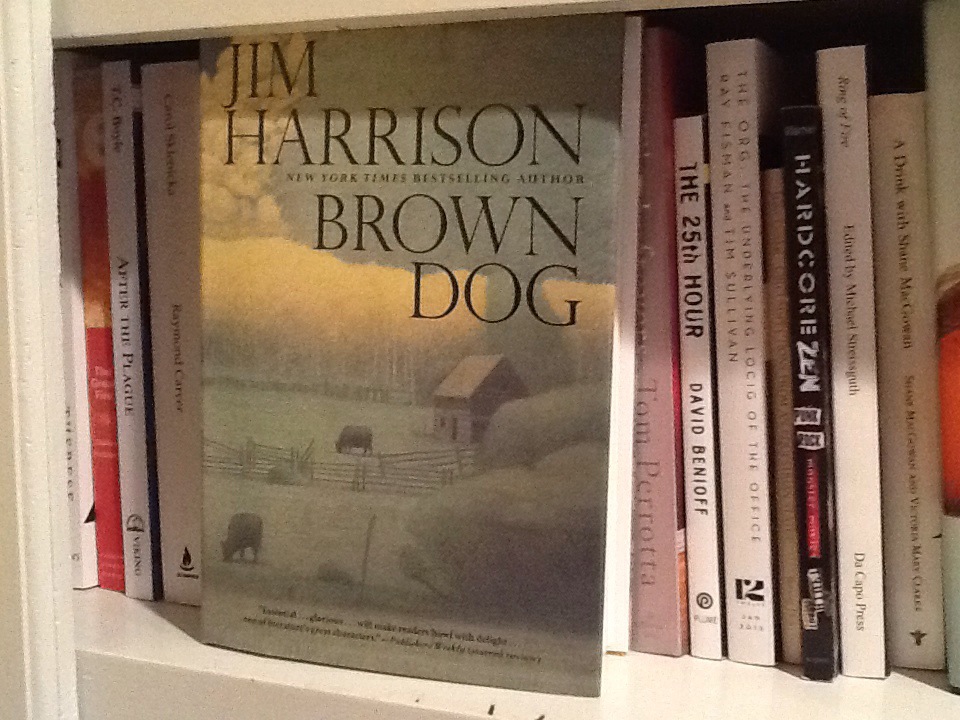
Jim Harrison on the Upper Peninsula
Coverage of Matika Wilbur’s Project 562
Here.
 Turtle Talk
You must be logged in to post a comment.