Fordham Law Review Symposium Save the Date: “The Unfinished American Revolution: Territories, Tribes, and the Meaning of Independence” (Oct. 8-9, 2026)

Here:

Thursday – Friday, October 8 – 9, 2026

Thursday, October 8 | 1 – 5 p.m.

Friday, October 9 | 8 a.m. – 5 p.m.

In-Person and on Zoom

Fordham Law School

150 West 62nd Street

New York, NY 10023

CLE credit will be available.

About the Program

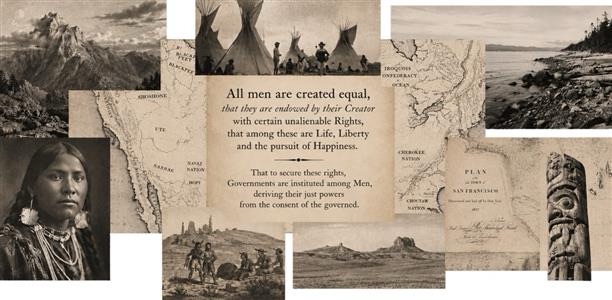
As the United States marks the 250th anniversary of the Declaration of Independence, this groundbreaking symposium reexamines the promises—and unfinished work—of the American Revolution. Bringing together leading scholars, judges, practitioners, and advocates, The Unfinished American Revolution explores how the principles of equality, self-government, and consent of the governed have shaped—and often failed to shape—the constitutional relationship between the United States, Native nations, and U.S. territories.

Timed to coincide with the 125th anniversary of the Insular Cases and the 175th anniversary of the Indian Appropriations Act, the symposium will examine the enduring legacies of territorial governance, federal Indian law, and plenary power. Through interdisciplinary panels and forward-looking discussions, participants will confront some of the most pressing constitutional questions of our time: Who belongs within the American constitutional community? What does self-determination mean in the twenty-first century? And what would it take to finally fulfill the promises of 1776 for all peoples under U.S. sovereignty?

Kindly register here
Alex Pearl on NAGPRA

M. Alexander Pearl has published “Corporeal Property and the Limits of NAGPRA” in the Fordham Law Review.

Here is an excerpt:

The Native American Graves Protection and Repatriation Act represents a pivotal but incomplete legislative effort to confront the enduring legacy of colonialism in the United States. NAGPRA addresses a specific and deeply troubling consequence of colonialism: the unlawful appropriation of Native American ancestors and cultural items by federal and federally funded institutions. Although it lays a critical foundation for repatriation and a sense of cultural justice, NAGPRA’s effectiveness is constrained by its grounding in Western legal traditions—especially its emphasis on corporeal, material property. To redress a wider range of harms suffered by Native communities, we must look beyond the statute’s current framework and embrace an expanded understanding of property, one that includes intangible rights based
in cultural harms and rights.

Fordham Law Review Note on Seneca-New York Tax Disputes

Here is the pdf of the article, titled “A Tale of Three Sovereigns: The Nebulous Boundaries of the Federal Government, New York State, and the Seneca Nation of Indians Concerning State Taxation of Indian Reservation Cigarette Sales to Non-Indians.”

And the abstract:

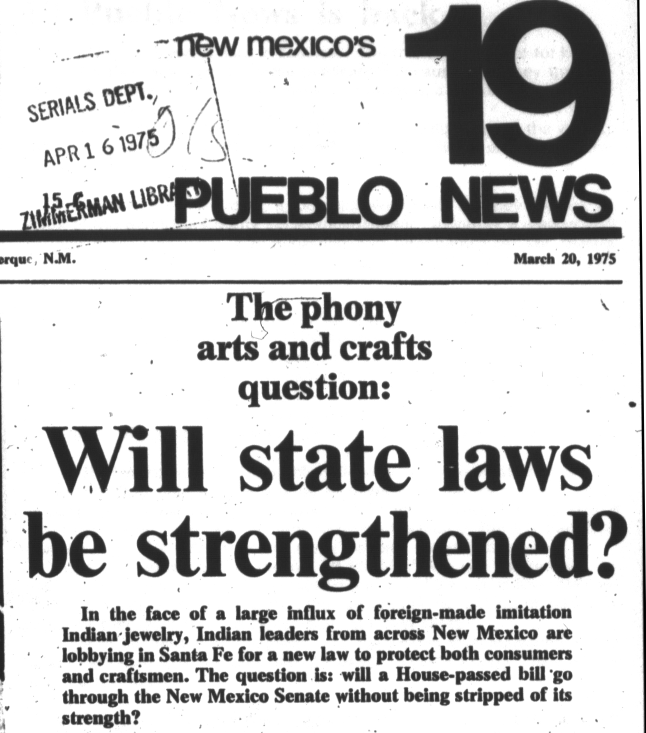
This Note examines the conflict between New York State and the Seneca Nation of Indians regarding the taxation of cigarette sales to non-Indians on Indian reservations.  In 1994, the United States Supreme Court found New York’s taxation scheme facially permissible without providing boundaries or guidance for the state’s subsequent enforcement.  Seventeen years after the Court’s decision, no taxes have been collected on these sales.

The issue involves conflicting spheres of federal, state, and tribal control. From 1965 to 1994, the Supreme Court balanced these competing interests, creating precedent that has failed to provide a definitive solution to this crisis. The Note examines the background of these decisions, the history of the treaties between the Seneca tribe and the United States, and the shift in federal Indian policy towards promoting a government-to-government relationship between the United States government and Indian tribes.

Lastly, this Note proposes a solution modeled on the example of Washington State.  Facing a crisis analogous to that of New York, Washington created a lasting solution to its taxation crisis by forging a relationship of trust between the state, its agencies, and the Indian tribes.  This Note advocates that New York follow the same path and create cigarette tax compacts between New York and the Indian tribes.