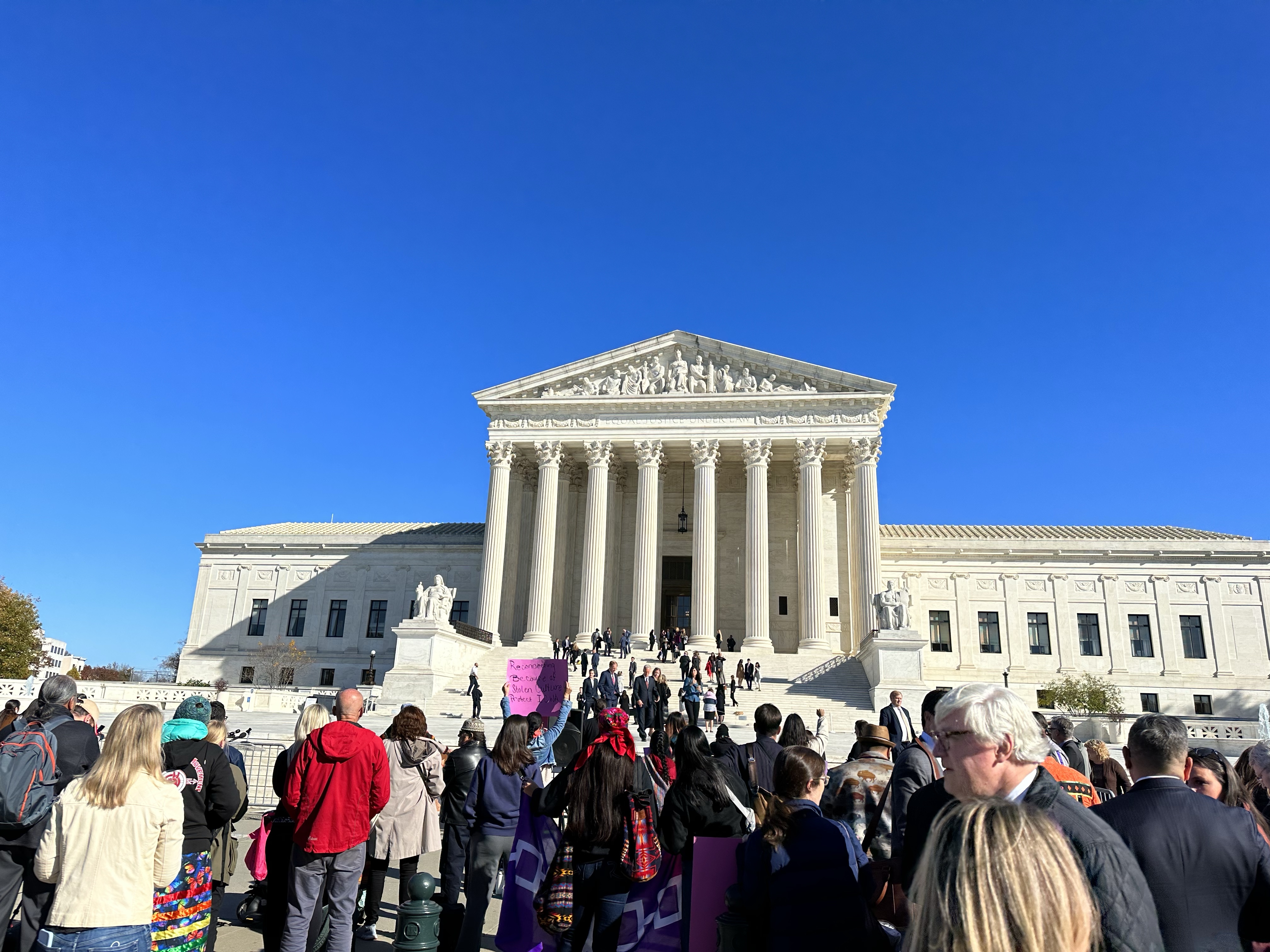
Alex Pearl on ICWA in the Multiverse

M. Alexander Pearl has published “The Indian Child Welfare Act in the Multiverse” in the Michigan Law Review.

This Land Special Brackeen Decision Episode

Here.

Opinion here.

SCOTUS Affirms Constitutionality of ICWA 7-2

Here is the opinion in Haaland v. Brackeen.

More stuff here.

Skipped History Interview of Fletcher on ICWA and the Brackeen Case: “The “Surreal” SCOTUS Case on Indian Adoptions”

Here.

Apparently, I sometimes make this face when someone says “Yoda.”

NPR Code Switch Episode on ICWA (feat. Rebecca Nagle)

Indian Law Issue of the Journal of Appellate Practice and Process

Here:

The Journal of Appellate Practice and Process – Winter 2023 Issue Now Available

The Winter 2023 issue of The Journal of Appellate Practice and Process(Volume 22, Issue 1) is now available. This special issue focuses on appellate issues in and around Indian country. It features the following articles:

Jacob Jurss on ICWA and Brackeen

Here is “Counterpoint: Tribal rights, futures must not be plundered again” in the Minnesapolis Star-Tribune.

Neoshia Roemer on Un-Erasing American Indians and the Indian Child Welfare Act from Family Law

Neoshia Roemer has posted “Un-Erasing American Indians and the Indian Child Welfare Act from Family Law,” forthcoming in the Family Law Quarterly, on SSRN.

Here is the abstract:

In 1978, Congress enacted the Indian Child Welfare Act (ICWA) as a remedial measure to correct centuries-old policies that removed Indian children from their families and tribal communities at alarming rates. Since 1978, courts presiding over child custody matters around the country have applied ICWA. Over the last few decades, state legislatures, along with tribal community partners and advocates, have drafted and enacted state ICWA laws that bolster the federal ICWA laws. Despite four decades of ICWA, trends in child welfare demonstrate that Indian children are still vastly overrepresented in the child welfare system. Because tribal communities, advocates, community partnerships, and scholars work tirelessly to both ensure and improve ICWA compliance, ICWA still provides some of the best outcomes for Indian children through both family reunification and/or placement within their tribal communities.
However, family law often minimizes or mischaracterizes what the Act does. While ICWA is a complex law and even an entire semester may not fully provide justice to the breadth of the Act, this characterization of ICWA creates a stigma around the law. Family law scholars and practitioners can no longer overlook ICWA in conversations and teachings. Stigmatizing ICWA in the classroom contributes to the erasure of American Indians from our society at large and from our classrooms. This allows legitimized racism against this community to seep into both the classroom and the practice area.
Accordingly, this article discusses how family law classrooms can incorporate ICWA into conversations on family law as a step in eliminating bias in the legal academy and in the profession against American Indians. This article describes some of the history around ICWA, how family law feeds into the erasure of American Indians in the legal field, some misconceptions about ICWA, and how we can tie ICWA and other issues impacting American Indians into our classroom teachings on family law.

Penn Law and Field Center Panel on ICWA [more post-argument discussion]

This was Part II, Part I was here.