
Amazing turn out.
Amazing turn out.
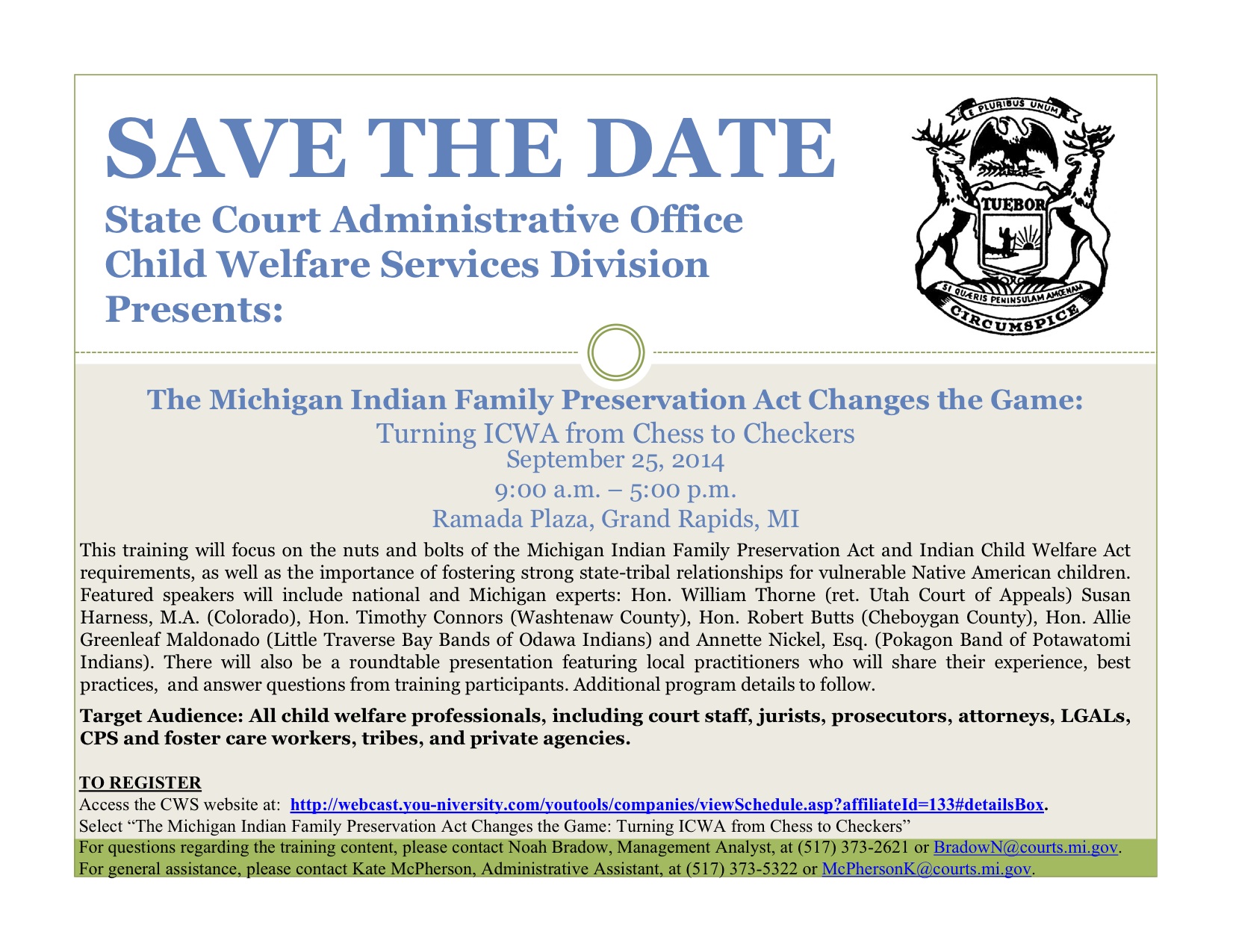
Information here (pdf).
Okemos Conference Center 2187 University Park Dr. Okemos, MI 48864
9:15-10:00 a.m.
Registration
10:00-11:00 a.m.
Healing From History: A Historical Context of ICWA and MIFPA Legislation
Hon. Allie Greenleaf Maldonado, Chief Judge, Little Traverse Bay Band of Odawa Indians
11:00 a.m.-Noon
Putting the “Act” Into Action: Exploring ICWA and MIFPA Compliance Through Interactive Case Scenarios
Annette D. Nickel, Prosecutor/Presenting Officer, Pokagon Band of Potawatomi Indians
Noon-1:00 p.m.
Lunch
1:00-2:00 p.m.
Case Scenarios, Cont’d.
2:00-2:15 p.m.
Break
2:15-3:00 p.m.
Lessons Learned: An Open Dialogue About Implementation, Practice, and Frequently Asked Questions
3:00-4:00 p.m.
Legislation and Collaboration: Building Blocks to Healthy Tribal – State Relationships
Hon. Timothy P. Connors, Judge, Washtenaw County Circuit Court
Here is the information:
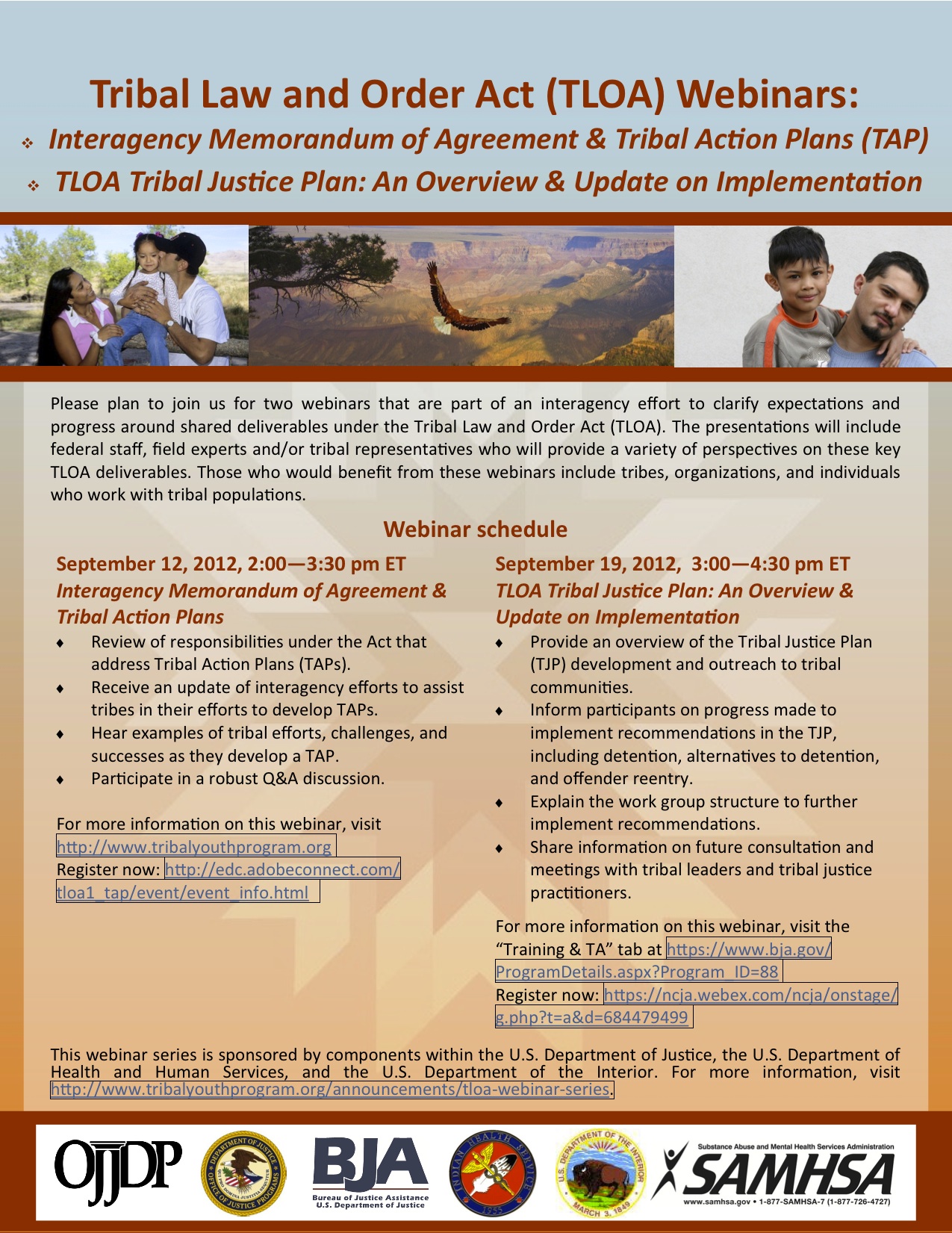
The information is here.
Purpose: This training will help child welfare professionals understand the role of the QEW and will provide practice tips on how to effectively present QEW testimony. This will include testimony on tribal history, tribal perspective on children and childhood, cultural expectations, specific tribal family history, and the unique needs of the Indian child. In addition to improving foundational knowledge on the role of the QEW, the training will also help judges to evaluate the quality of the testimony as well as further aid attorneys in conducting direct and cross examination of the QEW. The morning session will feature a presentation on the role of the QEW in ICWA cases. The afternoon session will offer hands-on exercises demonstrating QEW testimony in an ICWA case.
Target audience: Judges (state and tribal); referees; other court staff; attorneys; DHS caseworkers; other DHS child welfare personnel; and private agency caseworkers.
 Turtle Talk
You must be logged in to post a comment.