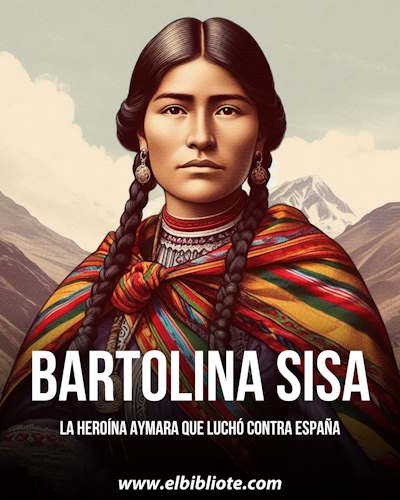
Today, for the first time, the UN is recognizing September 5 as the International Day of the World’s Indigenous Women and Girls. But the UN isn’t the first body to recognize September 5. Recognition of Indigenous women and girls on this day began through a movement of Indigenous women who transformed a date grounded in anticolonial resistance into a movement for commemoration, and who then sought formal international recognition of the day.
September 5 honors Bartolina Sisa, the Aymara leader executed by hanging by Spanish colonial authorities in the main colonial square of La Paz, Bolivia on this date in 1782. Indigenous organizations meeting in Tiahuanaco, Bolivia, established the commemoration in 1983. The International Indigenous Women’s Forum’s website shares an account of this history.
The General Assembly itself recognized that history. Resolution A/RES/80/10 acknowledges that September 5 was already commemorated in several countries in honor of Indigenous women leaders who devoted their lives to resistance and struggles for Indigenous Peoples’ rights. It formally proclaims the date as an annual international day and calls attention to Indigenous women’s leadership, knowledge, cultural and environmental contributions, and the need to protect their meaningful participation in decision making processes with their free, prior, and informed consent when applicable.
When Bolivia introduced the resolution, its representative Carla Lorena Sandy explained that she stood before the General Assembly as an Indigenous woman. She described international recognition of September 5 as an act of “justice, memory, redress and dignity” and insisted that Indigenous women and girls “do not want to be mere symbols.”
Bolivia sought adoption by consensus, but the United States requested a vote and voted no. The resolution passed 123–3, with Argentina, Israel, and the United States opposed and Ethiopia and Turkey abstaining.
The official UN video of the discussion and vote is available online. The United States (comments begin at 9:38 in the video) said that it remained committed to protecting Indigenous women and girls, but it opposed the international day “on principle” under a general policy against proliferating UN commemorative days. It also objected to DEI terminology; routine reaffirmation of the 2030 Agenda and Sustainable Development Goals; and language connecting global harms to climate change.
The explanations after the vote exposed additional fault lines.
- Ethiopia abstained, stating that, “The issue of Indigenous people in the context of Africa have been used creating division and challenging nation building.”
- New Zealand voted yes but shared that it was also concerned about the proliferation of international days and their resource implications. It also emphasized UNDRIP’s nonbinding status and maintained that its domestic legal and constitutional processes define the operation of free, prior, and informed consent.
- Iran supported the resolution while disclaiming obligations under CEDAW (the Convention on the Elimination of All Forms of Discrimination Against Women), which it is not a party to and which was referenced in the resolution to commemorate September 5.
- Cuba criticized the US for its “superfluous and irrelevant reasons” and stated that its support reaffirms its commitment to equality, justice, and respect for the collective rights of Indigenous peoples. It also reaffirmed its commitment to the full implementation of UNDRIP (the UN Declaration on the Rights of Indigenous Peoples).
- Israel took the floor after voting no but declined to explain its vote.
Marking the occasion, the Inter-American Commission on Human Rights called on states to address not only the disproportionate effects of forced displacement on Indigenous women and girls, but also its structural causes, including armed conflict, territorial invasion, extractive projects undertaken without free, prior, and informed consultation, and environmental contamination. The Commission urged states to ensure their full and culturally appropriate participation in designing protection, return, and resettlement measures; guarantee access to justice, health care, and education; collect data disaggregated by Indigenous identity, sex, gender, and age; recognize Indigenous knowledge and institutions in developing durable solutions; and provide comprehensive reparations incorporating intercultural, intergenerational, and gender perspectives.
Ultimately, September 5 demonstrates how international law can be made from the ground up. Indigenous women preserved the memory, established the commemoration, built the organizations, and carried their demands into international institutions. The United Nations’ action is important because it recognizes that work, not because it started it.
 Turtle Talk
You must be logged in to post a comment.