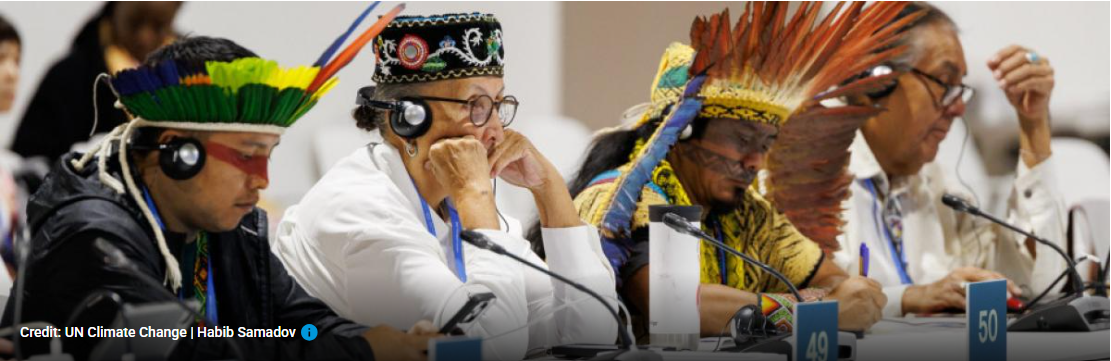
Indigenous Peoples, Tribal governments, local communities, and other stakeholders may submit proposed activities and thematic priorities for the LCIPP’s 2028–2031 workplan by September 30. Comments will be considered by the Facilitative Working Group at its 16th meeting (FWG 16) in November 2026 in Antalya, Turkey.
Some questions commenters might address include:
Looking towards 2031, what concrete outcomes should the LCIPP seek to achieve?
Drawing on the discussions across the gathering, what issues, activities, or areas of work should be prioritized in the 2028-2031 workplan to help achieve those outcomes?
Where could stronger connections between the LCIPP and other bodies, workstreams, and processes under the UNFCCC create the greatest added value?
Organizations with UNFCCC observer status submit through their designated contacts; those without observer status may send comments directly to submission-info@unfccc.int.
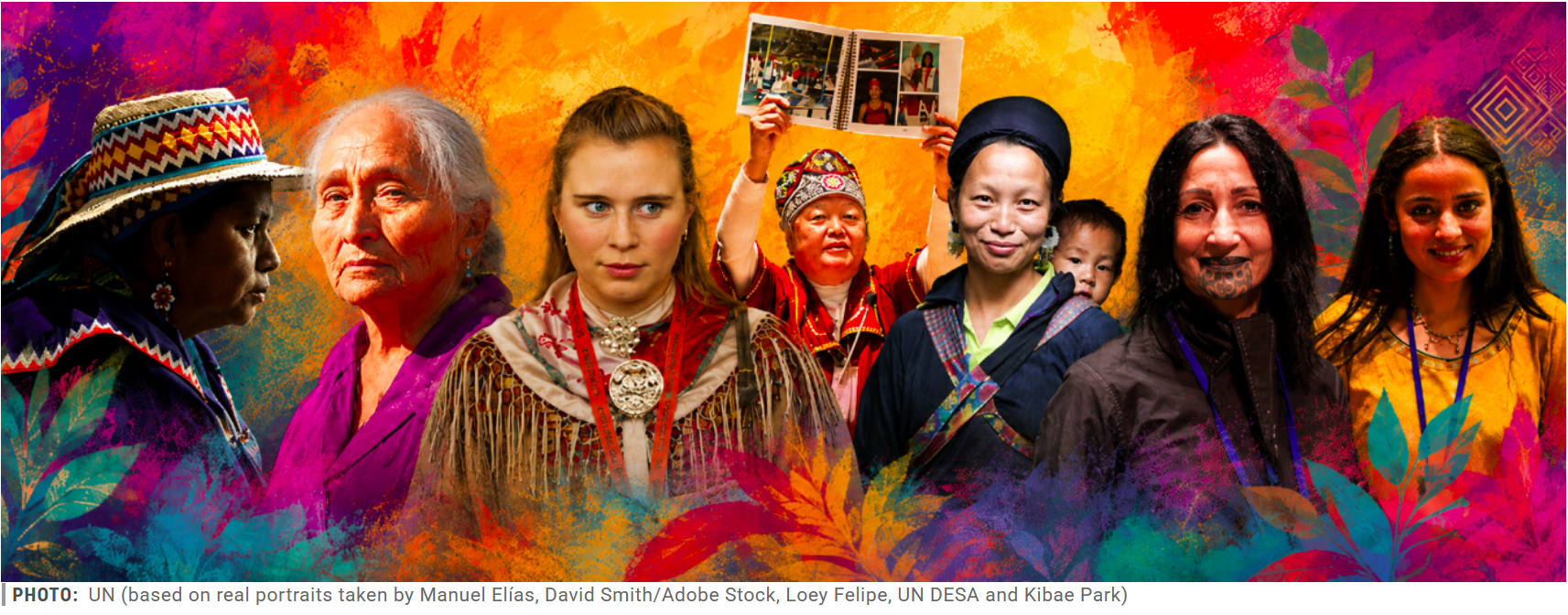
Today, for the first time, the UN is recognizing September 5 as the International Day of the World’s Indigenous Women and Girls. But the UN isn’t the first body to recognize September 5. Recognition of Indigenous women and girls on this day began through a movement of Indigenous women who transformed a date grounded in anticolonial resistance into a movement for commemoration, and who then sought formal international recognition of the day.
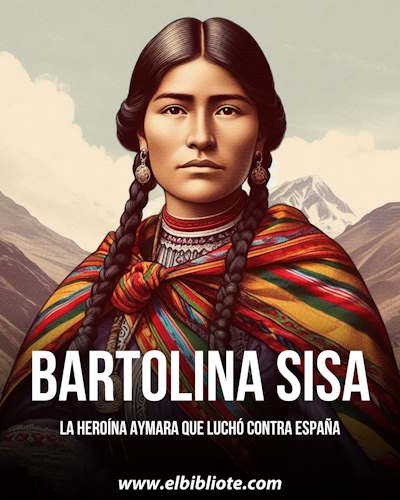
September 5 honors Bartolina Sisa, the Aymara leader executed by hanging by Spanish colonial authorities in the main colonial square of La Paz, Bolivia on this date in 1782. Indigenous organizations meeting in Tiahuanaco, Bolivia, established the commemoration in 1983. The International Indigenous Women’s Forum’s website shares an account of this history.
The General Assembly itself recognized that history. Resolution A/RES/80/10 acknowledges that September 5 was already commemorated in several countries in honor of Indigenous women leaders who devoted their lives to resistance and struggles for Indigenous Peoples’ rights. It formally proclaims the date as an annual international day and calls attention to Indigenous women’s leadership, knowledge, cultural and environmental contributions, and the need to protect their meaningful participation in decision making processes with their free, prior, and informed consent when applicable.
When Bolivia introduced the resolution, its representative Carla Lorena Sandy explained that she stood before the General Assembly as an Indigenous woman. She described international recognition of September 5 as an act of “justice, memory, redress and dignity” and insisted that Indigenous women and girls “do not want to be mere symbols.”
Bolivia sought adoption by consensus, but the United States requested a vote and voted no. The resolution passed 123–3, with Argentina, Israel, and the United States opposed and Ethiopia and Turkey abstaining.
The official UN video of the discussion and vote is available online. The United States (comments begin at 9:38 in the video) said that it remained committed to protecting Indigenous women and girls, but it opposed the international day “on principle” under a general policy against proliferating UN commemorative days. It also objected to DEI terminology; routine reaffirmation of the 2030 Agenda and Sustainable Development Goals; and language connecting global harms to climate change.
The explanations after the vote exposed additional fault lines.
Ethiopia abstained, stating that, “The issue of Indigenous people in the context of Africa have been used creating division and challenging nation building.”
New Zealand voted yes but shared that it was also concerned about the proliferation of international days and their resource implications. It also emphasized UNDRIP’s nonbinding status and maintained that its domestic legal and constitutional processes define the operation of free, prior, and informed consent.
Iran supported the resolution while disclaiming obligations under CEDAW (the Convention on the Elimination of All Forms of Discrimination Against Women), which it is not a party to and which was referenced in the resolution to commemorate September 5.
Cuba criticized the US for its “superfluous and irrelevant reasons” and stated that its support reaffirms its commitment to equality, justice, and respect for the collective rights of Indigenous peoples. It also reaffirmed its commitment to the full implementation of UNDRIP (the UN Declaration on the Rights of Indigenous Peoples).
Israel took the floor after voting no but declined to explain its vote.
Marking the occasion, the Inter-American Commission on Human Rights called on states to address not only the disproportionate effects of forced displacement on Indigenous women and girls, but also its structural causes, including armed conflict, territorial invasion, extractive projects undertaken without free, prior, and informed consultation, and environmental contamination. The Commission urged states to ensure their full and culturally appropriate participation in designing protection, return, and resettlement measures; guarantee access to justice, health care, and education; collect data disaggregated by Indigenous identity, sex, gender, and age; recognize Indigenous knowledge and institutions in developing durable solutions; and provide comprehensive reparations incorporating intercultural, intergenerational, and gender perspectives.
Ultimately, September 5 demonstrates how international law can be made from the ground up. Indigenous women preserved the memory, established the commemoration, built the organizations, and carried their demands into international institutions. The United Nations’ action is important because it recognizes that work, not because it started it.
The UN Committee on the Elimination of Racial Discrimination (CERD) released new findings on August 25 following its review of Finland, Honduras (only released in Spanish), India, and Kuwait.
The findings raise significant concerns related to Indigenous Peoples, including land and resource rights; discrimination; displacement; participation in decision-making; and free, prior and informed consent. In Finland, the report addresses the impacts of mining, wind-energy development, and other projects on Sámi traditional lands and resources.
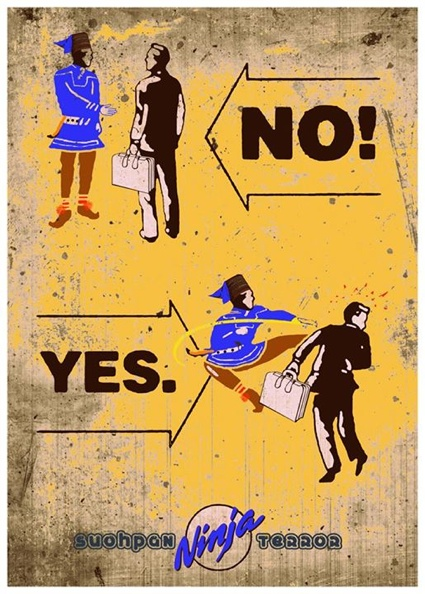
Ninja Terror by Suohpanterror, an anonymous Sámi artivist (art-activist) collective based in Sápmi
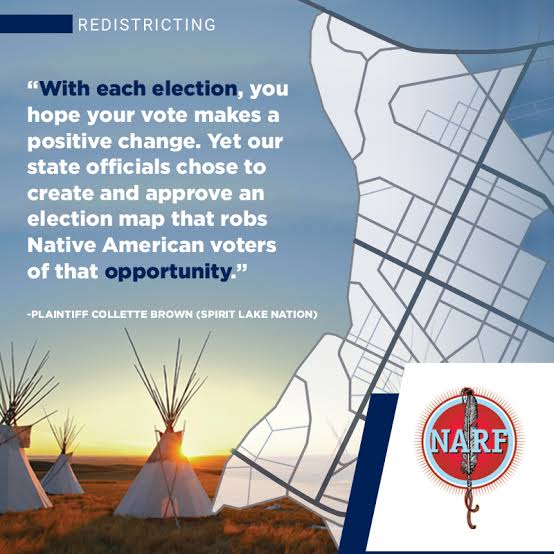
On August 28, 2026, the Turtle Mountain Band of Chippewa Indians, the Spirit Lake Tribe, and individual Native American plaintiffs in North Dakota moved for leave to file an amended complaint in the U.S. District Court for the District of North Dakota in Turtle Mountain Band of Chippewa Indians v. Howe. This filing follows a May 2026 U.S. Supreme Court decision sending the case back to the lower courts for reconsideration under a new legal standard.
The Implementation Project will host its next quarterly meeting, “Tribes, Intertribal Organizations, and the Declaration,” on September 10, 2026, from noon–1:30 p.m. Mountain Time via Zoom. The roundtable will explore opportunities for international engagement and implementation of the UN Declaration on the Rights of Indigenous Peoples. Panelists include Fawn Sharp and Jennifer Weddle, with commentary from Linda Benally and Honor Keeler. Register here.
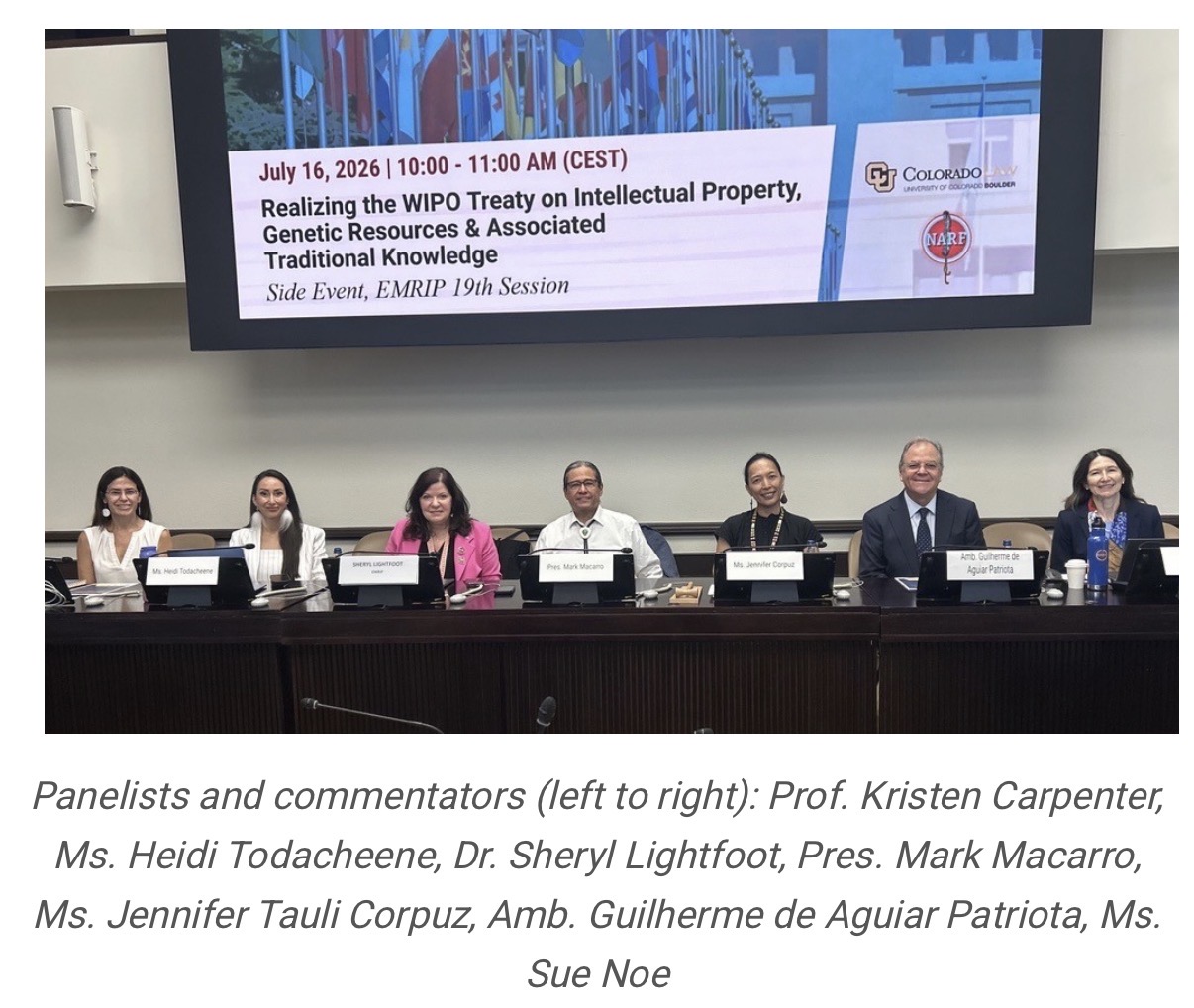
TIP has also published a new article highlighting key takeaways from the July 2026 session of the UN Expert Mechanism on the Rights of Indigenous Peoples.
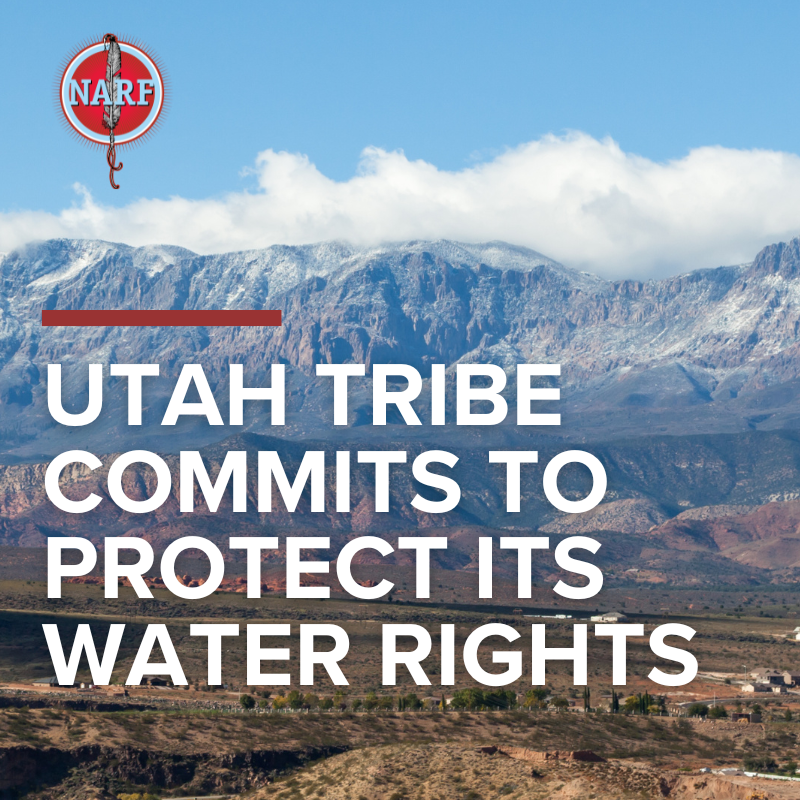
On April 1, 2026, the Indian Peaks Band of the Paiute Indian Tribe of Utah filed a Notice of Appeal and Petition for Stay with the Interior Board of Land Appeals (IBLA), challenging the Bureau of Land Management’s March 2, 2026, approval of the Pine Valley Water Supply Project.
The filing seeks review of BLM’s decision authorizing a large‑scale groundwater extraction and pipeline project in southern Utah and asks the IBLA to stay the project approvals while the appeal is pending. The Band argues that the decision violates federal law, including the National Environmental Policy Act, and unlawfully threatens the Band’s federally reserved water rights and culturally significant resources.
On August 14, 2025, the Chippewa Cree Indians of the Rocky Boy’s Reservation and two Native voters filed a lawsuit in the U.S. District Court for the District of Montana challenging Chouteau County’s unfair, at-large voting system for the Board of County Commissioners. The suit alleges the system unlawfully dilutes the voting strength of Native voters and has denied them any representation on the County Commission for more than a decade.
The Native American Rights Fund has provided legal assistance to Tribes in Alaska since NARF’s founding in the early 1970s. In 1984, NARF opened an Alaska office so it could better serve Alaska Native Tribes and individuals. In the 40 years since NARF Alaska opened its doors, the office has litigated some of the most influential cases in the development of federal Indian law in Alaska. Below is an overview of the foundational work that NARF has done with and on behalf of Alaska Native Tribal governments and people.
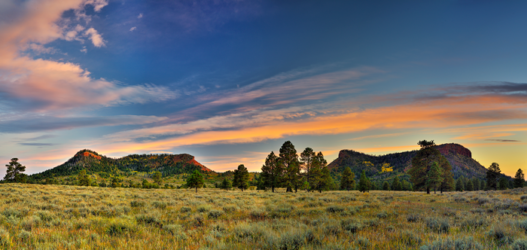
On Friday, August 11, 2023, United States District Judge David Nuffer of the United States District Court of the District of Utah granted motions to dismiss the cases challenging the Bears Ears National Monument designation.



You must be logged in to post a comment.