Here is “The Right to Know — A Paper”:

Here is “The Right to Know — A Paper”:
Melissa Fergusson has published “#Landback to Indigenous Peoples from “Land-Grab” Universities” in the Cornell Law Review. PDF
Here is the abstract:
The Morrill Land Grant Act of 1862 (Morrill Act) was the first federal legislation to fund public higher education in the United States, funding fifty-two land-grant universities (LGUs) that still exist today. While the purpose of the Act was to “democratiz[e] . . . education” focusing on the study of agriculture and mechanical arts, it created LGUs by taking Indigenous land. In 2020, High Country News issued an investigative report, “Land-Grab Universities,” documenting how LGUs were established both on occupied Indigenous land and through the sale of Indigenous land taken by treaty, land cession, or seizure, which provided seed money for the universities. While some LGUs have increased support for Indigenous students through tuition assistance or increased funding for Indigenous studies, none have implemented land return to Indigenous peoples.
This Note analyzes potential remedies to redress the taking of Indigenous lands by the Morrill Act in the context of the #LandBack movement. Part I discusses the Morrill Act provisions and impact as well as the historical context. Part II discusses the modern-day #LandBack movement and past #LandBack actions at the federal and state levels. Part III provides a survey of current responses from LGUs to their Morrill Act legacy. Part IV explains why #LandBack is needed to make amends to Indigenous peoples for the taking of their lands via the Morrill Act. Part V identifies #LandBack remedies that LGUs can take to recompense Indigenous peoples and provides an implementation framework. It also proposes legislative reform, including creating a cause of action for land claims, to compensate Indigenous peoples for the taking of their lands via the Morrill Act.

Here.
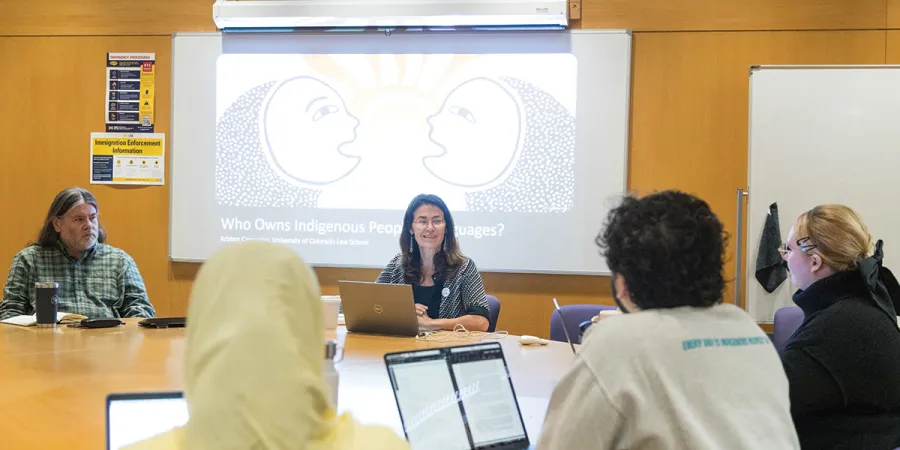
A new American Indian Law Workshop led by Matthew Fletcher, ’97, the Harry Burns Hutchins Collegiate Professor of Law, provides students with the opportunity to engage with a wide range of scholars and examine more granular, niche issues relating to American Indian law.
On May 15, 2026, the Native Hawaiian Legal Corporation (NHLC), the Native American Rights Fund (NARF), and Hobbs, Straus, Dean & Walker, LLP filed a Motion to Intervene on behalf of Papa Ola Lōkahi in a federal lawsuit challenging the constitutionality of the Native Hawaiian Health Scholarship Program. The lawsuit, brought by Do No Harm, targets a program rooted in Congress’s longstanding recognition of the United States government’s trust responsibilities to Native Hawaiians.
And here is the complaint.
Here are the materials in Frank’s Landing Indian Community v. Enlow (W.D. Wash.):
On March 3, 2026, the United States District Court for the Eastern District of Michigan granted the Tribal Nations’ motion to intervene in Torongo v. Burgum, the case that threatens the long-sought designation of the Chuckwalla National Monument.
In August 2025, five Tribal Nations — the Torres Martinez Desert Cahuilla Indians, the Fort Yuma Quechan Indian Tribe, the Chemeheuvi Indian Tribe, the Colorado River Indian Tribes, and the Morongo Band of Mission Indians — filed a motion to intervene to protect Chuckwalla’s national monument status.
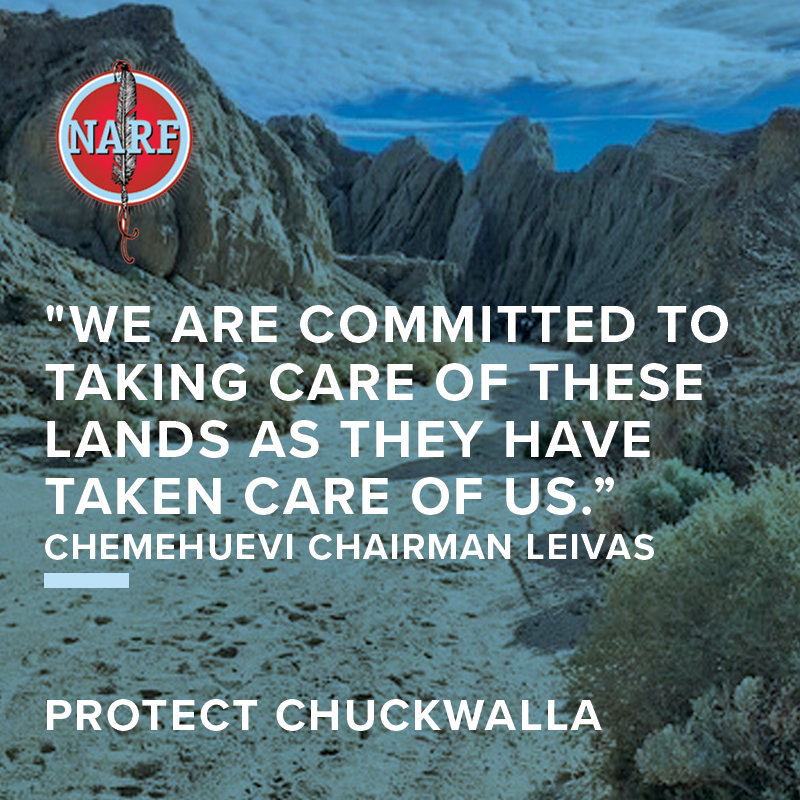
Learn more about Tribal Nations’ advocacy for their homelands in the Chuckwalla region.
Hosted by the American Indian Law Center
March 3-4th 2026
Albuquerque, NM
A training for advisors and mentors with an array of titles and responsibilities:
For registration and topic details, see The Advisors Training page. Travel reimbursements & waivers available for Tribal Education Departments, Tribal Colleges and Universities, and academic advisors for tribal citizens. If you have questions, please email slee@ailc-inc.org.
This training is not for those interested in applying to law school. The focus is on advisors who support or encourage the path to law.
Here is the amended complaint in Rourke-Rodriguez v. McMahon (N.D. N.Y.):

 Turtle Talk
You must be logged in to post a comment.