From High Country News: Native nations sue over Endangered Species Act changes

by Anna V. Smith, High Country News
October 5, 2026
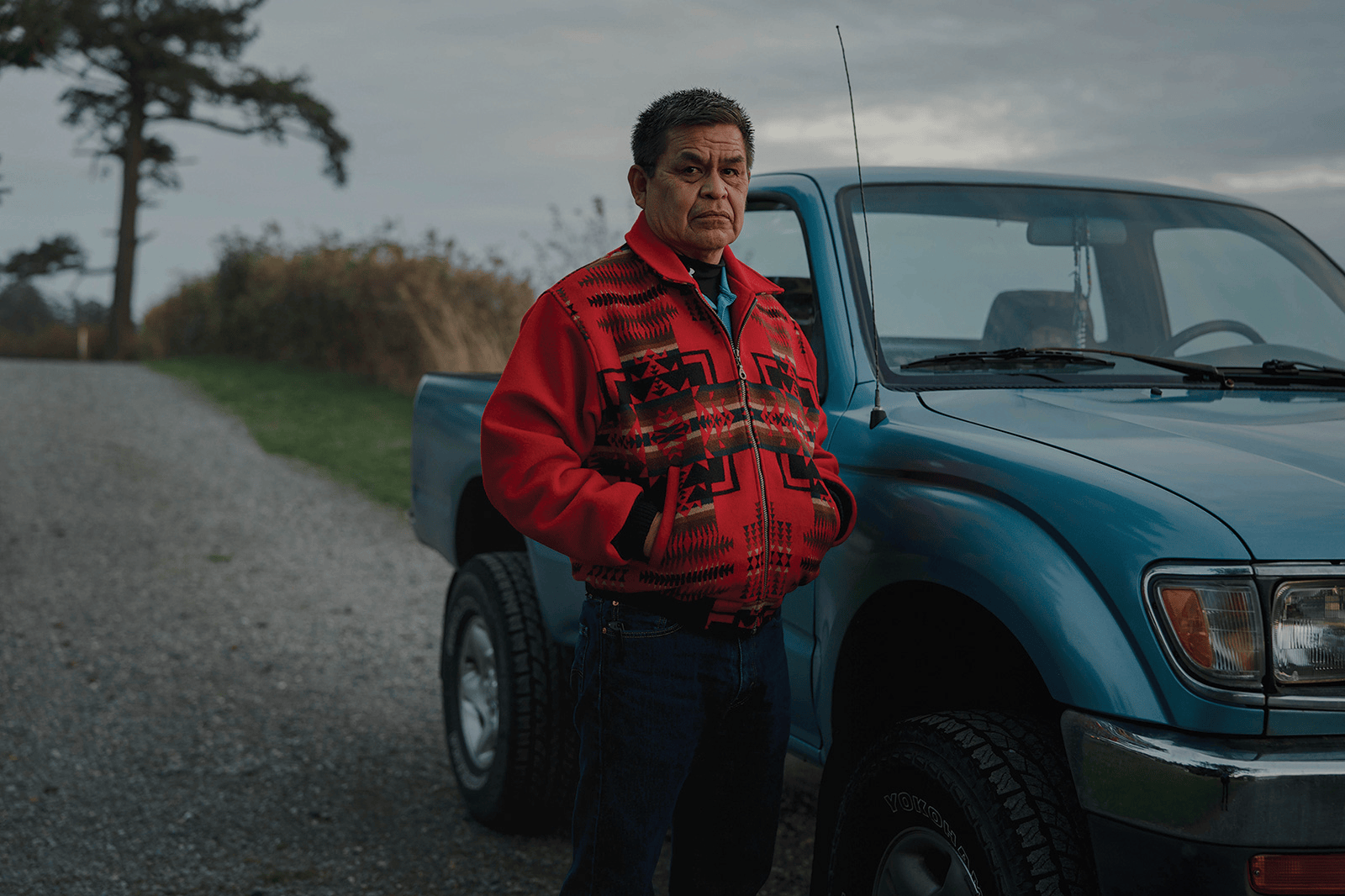
Steve Edwards, chairman of the Swinomish Tribal Community at Lone Tree Point, on the Swinomish Reservation

The Smokehouse Tidal Marsh project on the Swinomish Indian Reservation, which began in 2022, will turn 250 acres of former agricultural land into estuaries and wetlands. It’s one of many tribal community projects aimed at restoring endangered and threatened populations of Puget Sound chinook salmon, Puget Sound steelhead, bull trout and southern resident killer whales in the Skagit River Watershed. A primary cause of decline for each of these species is habitat loss and degradation caused by development and agriculture.

“Over the past 150 years or so, there’s been significant damage to the habitat, and (the habitat is) what salmon needs,” said Swinomish Tribal Indian Community Chairman Steve Edwards, who has fished in the area for over 50 years. 

In July, the Trump administration dealt a massive blow to tribal efforts when it finalized changes to the federal government’s interpretation of the 1973 Endangered Species Act. Previously, the definition of “harm” to a species included the habitat and resources a species needs to survive. Now, agencies will interpret “harm” to mean only the intentional killing or harming of an individual of a species, dramatically narrowing the reach and scope of the law formerly focused on ecosystem-wide protection.

On July 14, the same day the rule change was finalized, the Swinomish and Squaxin Island tribes sued the federal government over its “radical reinterpretation” of the law, arguing that the Trump administration’s changes ignored over 50 years of congressional intent and Supreme Court case law.  

“Squaxin’s cultural and economic well-being depend upon the health and sustainability of Pacific Salmon and other freshwater and marine resources, which play a central role in the daily lives of Tribal members,” the tribes wrote in the lawsuit. 

Chairman Edwards told High Country News that federal agencies never responded to the Swinomish Tribe’s request for government-to-government consultation, despite the United States’ trust obligation to Native nations. 

“Over the past 150 years or so, there’s been significant damage to the habitat, and (the habitat is) what salmon needs.”

“It feels almost like we’ve been betrayed by our federal trustees,” Edwards said of the change, which he said diminishes their treaty rights. “It’s super disturbing that we had to fight this fight.”  

Many Native nations opposed the changes in public comments when they were proposed in 2025. They highlighted the lack of tribal consultation, as well as the devastating impacts the new interpretation could have on the recovery of imperiled species, many of  which have cultural, spiritual and relational meaning and importance to tribal citizens. 

The change could also disrupt fishing communities’ economies and deprive those who rely on salmon for subsistence. 

While the majority of the comments came from Native nations in the Pacific Northwest and were related to salmon, others came from tribes like the Pueblo of San Felipe, which cited impacts on the monarch butterfly and Suckley’s cuckoo bumblebee. The Fallon Paiute-Shoshone Tribe voiced concern for the Dixie Valley toad, which the tribe considers a relative. 

“It is obvious that removing water from a species that needs water to survive harms both individual members of the species and the species’ population,” wrote Fallon Paiute-Shoshone Tribe Chairwoman Cathi Williams-Tuni, about the change and the potential impacts of a nearby proposed geothermal project. 

That geothermal project was halted in 2022 after the toad was listed as endangered, but the Trump administration’s changes could allow it to resume. 

“These harms in Dixie Valley would be catastrophic, permanently ruining the Tribe’s sacred site and ending the ability to use the springs for medicine and ceremonies,” said Williams-Tuni in public comments. 

The tribes asked the court to prevent the regulatory changes from moving forward, which took effect Sept. 14, and requested a decision declaring the changes unlawful and reverting to the previous definitions of “harm.” Although they hope for a timely response, the tribes are prepared for the lawsuit to take months to resolve.

The rule change is advantageous for developers and industry, who may no longer need to consider or mitigate broader habitat impacts of their actions. Previously, if an activity would destroy habitat in a way that harmed a protected species, the business responsible would have to go through a permit process that normally triggered tribal consultation. Under the new changes, such permits would be required much less frequently, effectively cutting tribes out of the process. The changed definition will also require proof that the harm was intentional, which  is something difficult to prove in the legal system, according to Bob Anderson, Oneida Indian Nation visiting professor of law at the Harvard Law School and a member of the Bois Forte Band of the Minnesota Chippewa Tribe. 

“Companies won’t have any incentives to negotiate with the government or environmental groups or tribes about how their activities are going to affect the listed species,” Anderson told HCN.

The change could also impact large-scale agreements on rivers with ESA-listed species, according to Anderson. Currently, river systems like the Klamath, Elwha and Columbia all require water to be released from their dams at certain times of year to support the migration and spawning cycles of endangered or threatened salmon, in accordance with the ESA. The new interpretation throws existing agreements and laws into question and would make salmon recovery exponentially harder. 

“We’re not even close to delisting these species,” said Kayeloni Scott (Nez Perce and Spokane), executive director of the Columbia River Snake Campaign, a coalition of conservation groups, businesses and the Nez Perce Tribe. “Our goal is abundance — healthy and abundant populations — that’s a whole other level, a whole other tier. Even getting to delisting, we’re pretty far off.” 

“It feels almost like we’ve been betrayed by our federal trustees,” Edwards said of the change, which he said diminishes their treaty rights. “It’s super disturbing that we had to fight this fight.”  

Anderson believes that the tribes and environmental groups’ legal arguments are strong but added that they involve a level of political risk, given the administration’s reputation for being highly retaliatory. One striking example is that of the Miccosukee Tribe of Indians of Florida, which joined a lawsuit against the administration in July 2025 over the construction of an immigration detention center in the Everglades. That December, President Donald Trump vetoed an unrelated bipartisan bill that would have returned land to the tribe, citing the tribe’s opposition to the detention center as his reasoning for the veto, calling the Miccosukee Tribe “unaligned with my Administration’s policy of removing violent criminal illegal aliens from the country.”

“That’s a real message there to plaintiffs that they’re going to retaliate against you,” Anderson said. “You’re locking horns with the federal government.”

Despite the latest development, Edwards’ priority is upholding the nation’s sovereign rights for future generations. He says the tribe will not stop its restoration work. 

“It does impact our sovereignty,” Edwards said of the change to species protections. “Generations down the road, I want (Swinomish citizens) to be able to exercise their treaty rights like I have done in the past.”

We welcome reader letters. Email High Country News at editor@hcn.org or submit a letter to the editor. See our letters to the editor policy.

This article appeared in the October 2026 print edition of the magazine with the headline “Tribes sue over ‘harm’.”     

This article first appeared on High Country News and is republished here under a Creative Commons Attribution-NonCommercial-NoDerivatives 4.0 International License.
Newsom Vetoes Sacred Sites and Tribal Water Bills Despite Overwhelming Votes

Five days after celebrating legislation that formally apologized to California’s Native people and strengthened Tribal consultation, California Governor Gavin Newsom vetoed two bills that would have made Tribal interests legally consequential when the state acts.

AB 1881, the California Indian Freedom Act, would have established an enforceable religious freedom standard for Native sacred sites on specified state lands. AB 2218 would have required state water agencies to address historical inequities, protect Tribal beneficial uses, consult during certain investigations of claimed water rights, and provide mediation and a temporary pause in state action for some disputes.

Both bills received overwhelming legislative support. The Senate approved AB 1881 by a vote of 29–1, with Senator Roger Niello casting the only no vote, and the Assembly concurred 65–0. AB 2218 passed both chambers without a single no vote, 28–0 in the Senate and 56–0 in the Assembly.

The two vetoes expose the limits of California’s willingness to make its Tribal commitments legally enforceable. The state will apologize, consult, and enter voluntary partnerships with Tribal Nations, but when legislation would constrain the state’s unilateral authority through consent, strict scrutiny, injunctions, mediation, or a temporary stay, Newsom draws the line.

AB 1881 Would Have Rejected a Central Fiction of Sacred Sites Law

Federal law can permit the government to destroy a sacred place, making the religious practices tied to it impossible, without finding that the government has substantially burdened religion.

In Lyng v. Northwest Indian Cemetery Protective Association, the Supreme Court allowed a road and timber project on federal land even though the government’s own study concluded that it could devastate religious practices dependent on the affected landscape. Because the government hadn’t forced Tribal practitioners to violate their beliefs, penalized their religious conduct, or denied them a governmental benefit, the Court found no constitutional violation.

More recently, the Ninth Circuit held in Apache Stronghold v. United States that the federal government could transfer Oak Flat for a mining project expected eventually to destroy the Western Apache sacred site without imposing a substantial burden cognizable under the Religious Freedom Restoration Act. The Supreme Court declined review in 2025. Justice Gorsuch, joined by Justice Thomas, dissented, arguing that preventing a religious exercise burdens it completely.

AB 1881 would have rejected that narrow understanding of religious injury on the state lands it covered. The bill expressly recognized that denying access to a sacred place, desecrating it, materially altering it, or destroying it can substantially burden Native religious exercise. When the state imposed such a burden, it would have been required to demonstrate that its action furthered a compelling governmental interest through the least restrictive means.

The bill also defined religious exercise to include land- and water-based practices, gathering traditional foods and plants, and practices whether or not compelled by, or central to, a system of religious belief. Native religions would not have needed to conform to a church-centered model before California law recognized them as religions.

A California Tribe, including a non-federally recognized Tribe, would have had standing to assert a violation as a claim or defense in a judicial or administrative proceeding. Remedies would have included declaratory and injunctive relief, equitable remedies, and reasonable attorneys’ fees and costs.

The Bill Had Already Been Narrowed

In his veto message, Newsom said AB 1881 was “overly broad,” would disrupt the state’s ability to manage its lands, and could “delay or halt critical government functions.”

However, the California legislature had already substantially narrowed the bill. It applied only to state agency actions involving land owned by California or a state agency. It didn’t apply to city, county, district, or private land. It excluded land used for public infrastructure or services, land authorized for private use or development, and the State Water Resources Control Board’s authority over water diversion, water use, and water quality. It also protected actions necessary to address imminent threats to public health and safety.

Nor did AB 1881 transfer title, confer general Tribal jurisdiction over public land, or give Tribes an unlimited veto. Before undertaking a project on state land that risked destroying or altering a known sacred site, cutting off access to it, or causing long-term environmental degradation affecting religious practice, a state agency would have been required to seek and document a Tribe’s free, prior, and informed consent. But an agency could treat a failure to respond within a designated reasonable period as consent. If a Tribe objected, the bill provided only that the agency could request consultation. And the statutory text did not clearly provide a separate cause of action to enforce the consent provision.

What remained after the amendments was the bill’s central commitment. Consultation alone is inadequate when the state proposes to damage or destroy a sacred place. At some point, the state should have to justify the harm under an enforceable legal standard.

In practice, Newsom rejected the legislation that would have put that premise into enforceable law. His veto message instead points to consultation requirements, environmental review, repatriation law, agency policies, and Tribal co-management. Those processes may be valuable, but they generally preserve the state’s final authority. Strict scrutiny, injunctive relief, and attorneys’ fees would have subjected that authority to judicially enforceable limits.

AB 2218 Presented the Same Choice in Water Policy

Newsom’s veto of AB 2218 followed the same pattern.

The bill declared that California water policy should address historical inequities affecting Tribes and protect Tribal beneficial uses of water. It would have required the State Water Resources Control Board, on a Tribe’s request, to consult with that Tribe when investigating a claimed riparian or appropriative right to water within the Tribe’s ancestral territory. It also would have created a mediation process for specified disputes and temporarily stayed some state actions while mediation occurred.

Newsom agreed with the objective of addressing historical inequities and respecting Tribal water rights. He nevertheless concluded that the bill’s “broad scope” could interfere with the Water Board’s existing processes. He said mediation would duplicate administrative review, the temporary stay could impair protection of senior water right holders, and a proposed advisory committee would overlap with existing Tribal engagement structures.

But the supposed duplication was part of the bill’s purpose. Existing processes leave the same agency that initiates an investigation or enforcement action in control of the dispute. Mediation would have created a different forum. A temporary stay would have prevented the state from changing conditions on the ground before that process concluded.

AB 2218 didn’t give Tribes control over California water administration; it would have required the state to slow down and engage differently when Tribal interests in water were at stake. But even that limited restraint was too much for the Governor.

Recognition Without Constraint

On September 25, Newsom signed a package of bills advancing Tribal priorities. The package made Native American Day a paid state holiday for state workers, extended an apology for California’s historic atrocities against Native peoples to the legislature and the courts, made the Governor’s Office of Tribal Affairs permanent, and strengthened statewide consultation structures.

Those actions have value. But yesterday’s vetoes reveal the difference between recognizing Tribes and allowing them to constrain state power.

AB 1881 would have required the state to defend substantial burdens on Native religion under strict scrutiny and would have enabled Tribes to seek injunctions. AB 2218 would have required mediation and temporarily restrained state action in certain water disputes. One bill moved beyond consultation toward consent. The other moved beyond agency review toward a process that could interrupt agency action. Newsom vetoed both.

The contrast is especially stark because AB 1881 directly confronted harms the state’s apology acknowledges. California helped remove Native peoples from their lands, suppress their religions, and place sacred places under state control. AB 1881 recognized that the state’s resulting ownership is not a neutral starting point. It asked California to justify actions that would obstruct or destroy religions that remain inseparable from those places.

Newsom’s veto preserves the opposite arrangement. The state may recognize its history, invite Tribal participation, and voluntarily share aspects of management. But it retains the legal authority to decide when consultation ends and state action begins.

The vetoes need not be the final word. AB 1881 received 65 votes in the Assembly and 29 in the Senate. AB 2218 received 56 and 28. Those totals exceed the two-thirds majorities required to override a veto, although an override would require new votes in both chambers.

Whether legislators will take those votes is another question. California’s legislature hasn’t overridden a governor’s veto since 1979, and both chambers have adjourned for final recess. Legislative leaders would have to bring members back before the session ends on November 30. The question is whether legislators meant what their overwhelming votes appeared to say, or whether their support extended only as far as the Governor was willing to allow.

California has apologized for the historic exercise of unilateral power over Native peoples and their lands. Newsom has now declined to surrender even a limited measure of that power. The Legislature still has the constitutional authority to do otherwise.

Tribal Nations and Students File Amended Complaint against BIE, DoED


Three Tribal Nations (Pueblo of Isleta, Prairie Band Potawatomi Nation, and Cheyenne Arapaho Tribes) along with Native students amended challenges against the United States Department of the Interior, the Bureau of Indian Education, and the United States Department of Education for unlawfully failing to consult with Tribal Nations on two sets of key agency actions directly impacting the education of Native American students.

You can see previous posts on this case here.

Turtle Mountain and Spirit Lake look to amend voting rights lawsuit

On August 28, 2026, the Turtle Mountain Band of Chippewa Indians, the Spirit Lake Tribe, and individual Native American plaintiffs in North Dakota moved for leave to file an amended complaint in the U.S. District Court for the District of North Dakota in  Turtle Mountain Band of Chippewa Indians v. Howe. This filing follows a May 2026 U.S. Supreme Court decision sending the case back to the lower courts for reconsideration under a new legal standard.

You can see previous posts on this case here.

WI DNR Asks Enbridge to Halt Line 5 Reroute Work After Spill & Demands Answers about Tribal Communication

From the WI DNR Letter of August 27:

Thank you for the updates provided on the afternoon of Wednesday, August 26, 2026, regarding the liquified natural gas spill near Saxon, Wisconsin. As noted during the call, the agency is deeply concerned about this spill and immensely frustrated by other recent noncompliance events and has several outstanding questions of Enbridge and would appreciate written responses as expeditiously as possible. The department requests that you halt work on the pipeline re-routing project until this event on the existing pipeline is sufficiently resolved and Enbridge has demonstrated that measures are in place to prevent future spill events related to all pipeline work.

* * * *

Tribal Outreach
Wisconsin Tribal Nations and the Great Lakes Indian Fish and Wildlife Commission (GLIFWC) have raised several questions and concerns with the department regarding the liquefied gas spill near Saxon, as well as previous compliance-related incidents associated with Enbridge projects over the past several weeks and months. Please provide written responses to the following questions as expeditiously as possible:

  • What is Enbridge’s communication and outreach strategy for engaging directly with Wisconsin Tribal Nations and GLIFWC regarding the current incident and other recent compliance-related events?
  • When does Enbridge anticipate implementing this communication strategy?
  • How does Enbridge intend to maintain regular and timely communication with Wisconsin Tribal Nations and GLIFWC as response and remediation activities continue?

Additional Resource

Collision causes pipeline leak near Bad River Reservation, shuts down Line 5, Amelia Shafer for ICT, August 26, 2026

Photo posted by the Iron County, WI Sheriff’s Office Facebook page

Ward Churchill Dies

NYTs

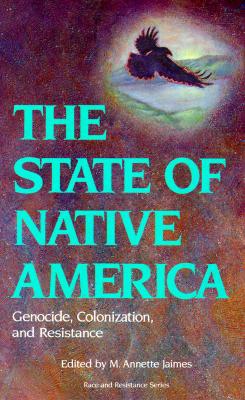
I never had the chance to meet Ward Churchill. I first read him in the early 90s at Michigan in a Native Studies class taught by Estevan Rael-Galvez. Estevan assigned this book, one the featured Ward heavily:

I liked it enough to keep buying books by the leading authors in this collection, including Ward. I was reading Howard Zinn, Noam Chomsky, Vine Deloria, John Trudell, Edward Said, Winona LaDuke, Paula Gunn Allen, Emma Goldman, etc. back in those days. They were mainstays of a radical publishing industry.

Eventually, I would hear negative comments about Prof. Churchill, that he threatened people, that he wasn’t really Indigenous, that he was a plagiarist. Hearing those things doesn’t necessarily make it so, especially when some of the people saying those things to me were themselves a bit unreliable. Other people I trust advised me that Ward was a true champion of academic freedom.

In the mid to late 2000s, D.C. Fed Bar asked me to join Ward and Sam Deloria on a panel about Indian citizenship and identity in their fall event one year. I even put together some materials in a packet I facetiously called “Who is an Indian? Ask the Government.” Being a baby law prof, I had no interest in arguing with either Sam or Ward, which I imagine could be quite bruising, but I did want to meet the man I had read for so long. Sadly, I did not get to see Sam and Ward interact on the same stage because Ward cancelled (or so I was told) and was replaced by a Congressional staffer. I can only imagine, given the controversies over Ward’s ancestry, that the panel might have been enlightening — or a debacle.

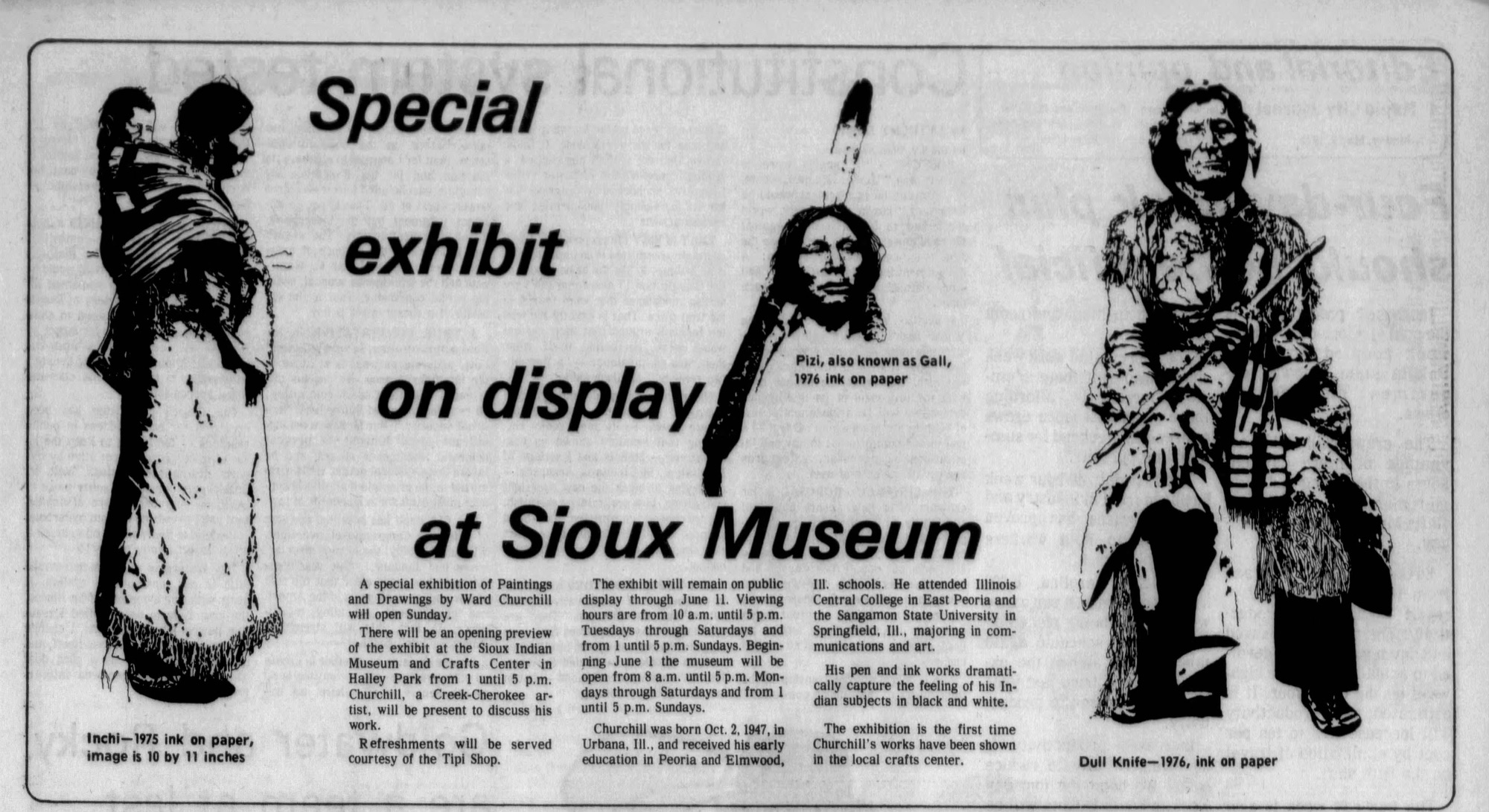
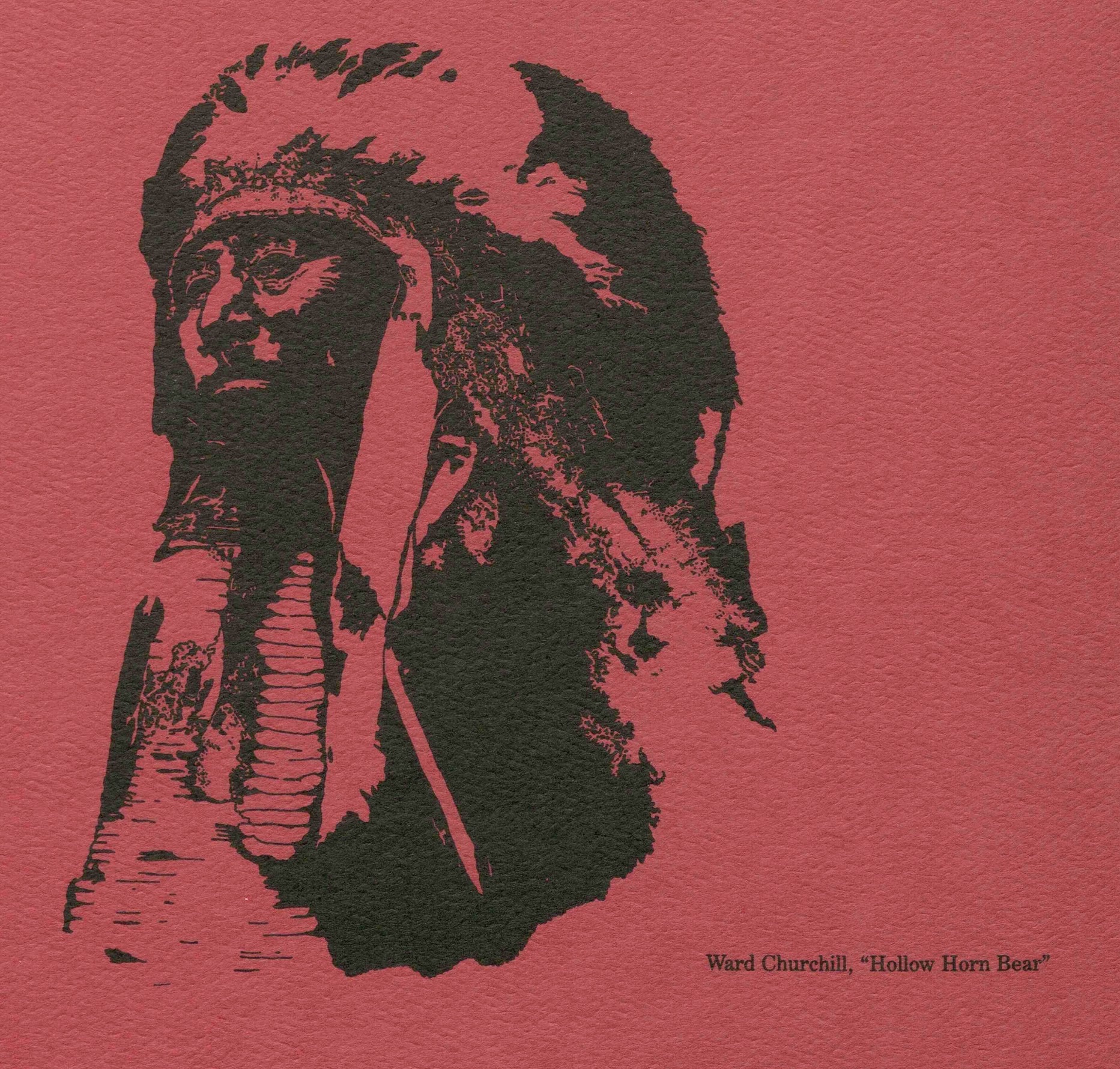
In Native circles in the public record, Ward first appears as an artist in the 1970s. That was news to me. He even showed in Paris in the mid-1970s.

Rapid City Journal, 1975
Rapid City Journal, 1976
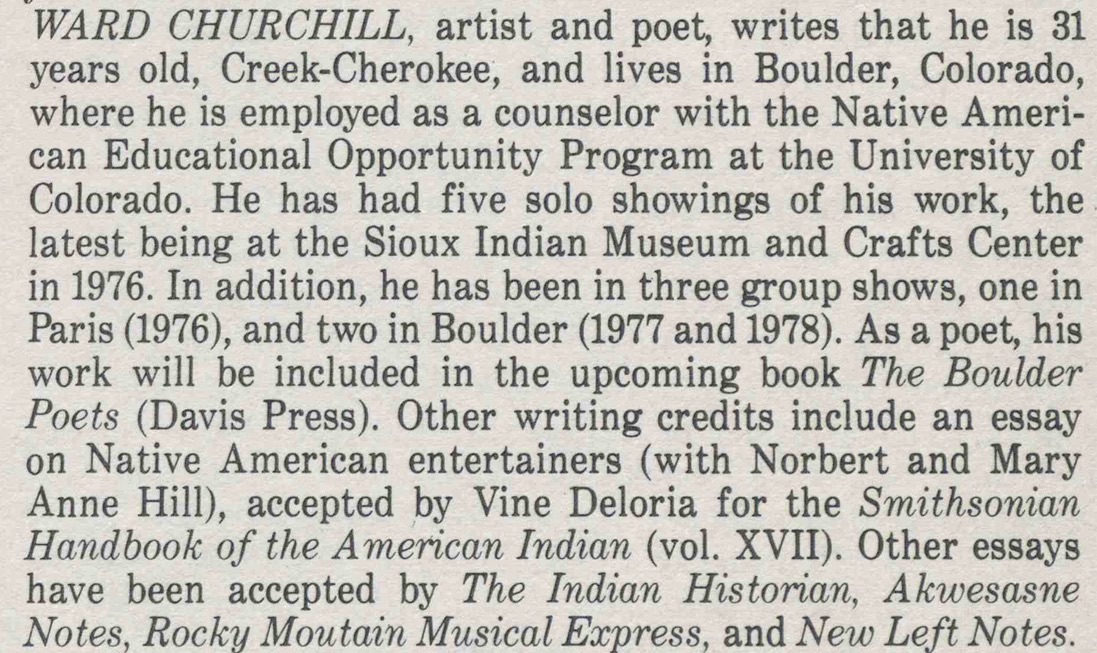
Back inside cover of Shantiih, Summer-Fall 1979
An early bio from the same issue of Shantiih.

I confess that I found myself annoyed/jealous that Ward came up in a field that had so many gaps that one person could be so many things, artist, poet, activist, academic, institutional leader, etc. It’s very impressive that he was all these things without a PhD, JD, MFA, MBA, etc., academic credentials that Native people now struggle to attain — and usually must — just to be one of the things that Ward was known for. It was certainly a different time, with the few Native people that were able to make it through the higher education system that any person who did it was instantly a unicorn.

It was also a time of violence (Wounded Knee, treaty fishing, etc.), which seems to me to have contributed to the ugly academic discourse of that generation, in which Ward definitely partook. Whatever one’s views about Ward, his writings identified so many issues I had never heard about as a young man utterly uneducated about Native issues in the 1990s. For that, I say thanks to Ward and that entire generation of activist-academics.

Like I said, I never met him, but a few years back I did meet his delightful spouse, Natsu Saito, who is truly lovely. In my brief interaction with Prof. Saito, I noticed that her characterization of Ward was much different than what I had heard and read about him. My thoughts go out to her.

Tribal Nations Granted Intervention to Protect Chuckwalla Homelands

On March 3, 2026, the United States District Court for the Eastern District of Michigan granted the Tribal Nations’ motion to intervene in Torongo v. Burgum, the case that threatens the long-sought designation of the Chuckwalla National Monument.

In August 2025, five Tribal Nations — the Torres Martinez Desert Cahuilla Indians, the Fort Yuma Quechan Indian Tribe, the Chemeheuvi Indian Tribe, the Colorado River Indian Tribes, and the Morongo Band of Mission Indians — filed a motion to intervene to protect Chuckwalla’s national monument status.

Learn more about Tribal Nations’ advocacy for their homelands in the Chuckwalla region.  

Klamath Tribes Challenge Orders Based on Secret Agreement Between Irrigator Group and State

On November 19, 2025, the Klamath Tribes filed a motion to amend their petition in the Circuit Court of Klamath County. The amended petition seeks to reverse recent illegal orders that replaced a long-time administrative law judge in the Klamath Basin Adjudication (KBA) on the heels of a secret deal cut between the Oregon State Office of Administrative Hearings and certain water users in the Upper Klamath Basin. Here is the amended petition:

The KBA is a several-decades-old lawsuit pending in the Circuit Court of Klamath County. It is quantifying the federal reserved water rights of the Klamath Tribes in the Klamath River Basin. The KBA involves administrative hearings conducted by the Office of Administrative Hearings, which made initial determinations on the Tribes’ water rights claims. Extensive proceedings were conducted at the Office from 2006 to 2012, and the Klamath County Circuit Court recently returned cases there for additional proceedings.

A Quick Overview of News Profiles and Government Documents Related to Tribal Contracting for ICE Detention Facilities and Related Activities

Prairie Band: “Prairie Band Potawatomi Nation has landed a $30 million contract to vet and design mega detention centers in the Trump administration’s push to stop illegal immigration.” [2025]

NANA Regional Corp.: “Through several presidential administrations, the company has turned itself into a large government contractor, with its biggest revenue generator run out of an office park in a suburb of Washington, DC. NANA’s largest contracts, worth hundreds of millions of dollars a year, are with the Department of Defense. But over the past decade, one of its fastest-growing lines of government business is with Immigration and Customs Enforcement. Schaeffer now says NANA is abandoning crucial values by taking an increasingly large role in President Donald Trump’s mass deportation drive.” [2025]

Other ANCs: “Alaska Native corporations and their subsidiaries do much of the work — and reap the profits — of detaining and guarding U.S. immigrants, patrolling the nation’s borders and maintaining detention centers.” [2021]

Other ANCs: “Well, I combed through the government contracts database to find out what kind of work they did. So I looked at recent contracts for ICE (U.S. Immigration and Customs Enforcement). I found a NANA subsidiary that got a $22 million contract for detention management at Krome, an ICE detention  facility near Miami. The same subsidiary got a contract of $8 million for detention support services in upstate New York. There was an AHTNA subsidiary that got a recent ICE contract for $35 million to provide guard services at a facility in Texas. And another Alaska Native corporation subsidiary runs an ICE detention center in San Pedro, California. Also, I saw one for armed ground transport — $700,000, one of the smaller ones — and it went to a Bering Straits Native corporation subsidiary.” [2018]

Bering Straits Native Corp. “Located just below the Arctic Circle, tribal communities in the Bering Straits region are well-acquainted with frozen conditions. Yet among the 8,000 Indigenous Alaskan shareholders who own the Bering Straits Native Corporation, some are unaware that their company staffs an ICE immigrant detention facility in El Paso, Texas.” [2021]

Same: “Native corporations and other Alaska-based companies have taken on at least a billion dollars in contracts with Immigration and Customs Enforcement in recent years, according to a review of available government contract data from 2012 through the present.” [2018]

Doyton Ltd and others: “Under current federal law and Department of Homeland Security regulations, Native American companies are favored recipients for immigrant detention contracts, and they reap large profits by assigning those contracts to non-Native American firms. One of the major Native-owned corporations that has received such contracts is Doyton Ltd., which holds the contract for operational, transportation and food services at the 800-bed El Paso Service Processing Center in El Paso, Texas.”

Same: “Doyon is one of several Native American corporations that are sealing major contracts with the Department of Homeland Security. Most are Alaska Native Corporations (ANCs), a collection of regional and village corporations created as part of the Alaska Claims Settlement Act of 1971. A few of these Native American corporations are contracting for various parts of ICE’s immigrant detention operations.” [2010]

Department of Homeland Security “Tribal Resources Guide“

dhs-tribal-resource-guide

NANA [2025]

GAO Report : “Increased Use of Alaska Native Corporations’ Special 8(a) Provisions Calls for Tailored Oversight” [2006]

gao-06-399

More NANA/Akima: “As the Trump administration’s immigration crackdown has ramped up, officials are sending some migrants to a detention facility in Guantanamo Bay, Cuba that’s run by the subsidiary of an Alaska Native corporation.” More on same issue.

Yet more NANA/Akima: “A corporate conglomerate now running the US government’s immigration detention center at the Guantánamo Bay naval base on a lucrative contract has been the subject of critical audits and a civil rights complaint over conditions at three other migrant lockups it has run within the US, documents reviewed by the Guardian show.”

Kristen Carpenter Designated as Distinguished Professor by the University of Colorado!!

Here.

Approve. 🙂