NARF Report Shows How Voting Barriers Compound in Indian Country

A recent report from NARF examines Native voting across the entire election process, from registration and voter roll maintenance through mail voting, provisional ballots, and ballot counting. The report is titled Obstacles Persist: According to the Data by Megan Gall and Kevin Stout of Blockwell Consulting, will NARF’s Allison Neswood contributing.

Using federal election data from 2020, 2022, and 2024, NARF focuses on 30 counties where Native people constitute at least 25 percent of the population. In those counties, confirmation notices increased 178% and provisional ballot use more than doubled between 202 and 2024. In 2024, 4 in 10 provisional ballots were rejected (down from nearly 2 in 3 in 2020), compared with about one in four nationally.

These barriers operate as a sequence, since a failure at one stage can push a voter into the next stage, where another barrier awaits. Unreliable mail can prevent a voter from receiving a confirmation notice, placing the voter’s registration at risk. That voter may then arrive at the polls and be directed to cast a provisional ballot, which itself carries an elevated risk of rejection.

These aren’t isolated administrative mistakes. They’re a chain of burdens produced by election systems that fail to account for the realities of Indian Country, including unreliable mail, nonstandard addresses, limited broadband, and inadequate polling infrastructure. The system transfers the resulting labor, uncertainty, and risk of error onto Native voters.

NARF’s report shows why fixing one barrier isn’t enough. Native voting access must be addressed as a connected system that affects not only individual voters, but the political power of Native communities to influence decisions that directly affect them.
Action Item: U.S. Census Bureau to hold virtual Tribal Consultation on Oct. 2 on proposed rule that eliminates race and ethnicity questions from decennial census questionnaire

The proposed rule would prohibit the collection of data on race, ethnicity, or sexual orientation on the short form decennial questionnaire or any questionnaire used for the enumeration of the population. It would also count only U.S. citizens and lawful permanent residents for congressional apportionment.

§70.2 Restrictions on the inclusion of certain demographic questions.
(a) No question about race, ethnicity, or sexual orientation shall appear on the short form decennial census questionnaire or any questionnaire used for the enumeration of the population.

The preamble to the proposed rule also refers to “[s]ubstantial doubts about the meaning, significance, and impact of attempting to categorize persons by race and ethnicity” that have “been reflected in shifts in the law.” This statement is supplemented by a footnote 11 that states:

11 Questions about tribal membership are not necessarily questions about race and/or ethnicity. See Constitutionality of Race-Based Department of Education Programs, 49 Op. O.L.C. ll(Dec. 2, 2025), available at https://www.justice.gov/olc/media/1421576/dl (‘‘Current equal-protection doctrine recognizes a difference between preferences based on Indian ethnicity and those based on affiliation (often membership or citizenship) in a federally recognized tribe.’’); Morton v. Mancari, 417 U.S. 535, 551–55 (1974) (discussing the ‘‘unique legal status of Indian tribes’’ and explaining how certain preferences for members of Indian tribes are not the same as preferences for discrete racial groups).

The proposed rule doesn’t say whether a tribal affiliation question could survive the proposed §70.2, but it’s worth addressing in comments to the agency.

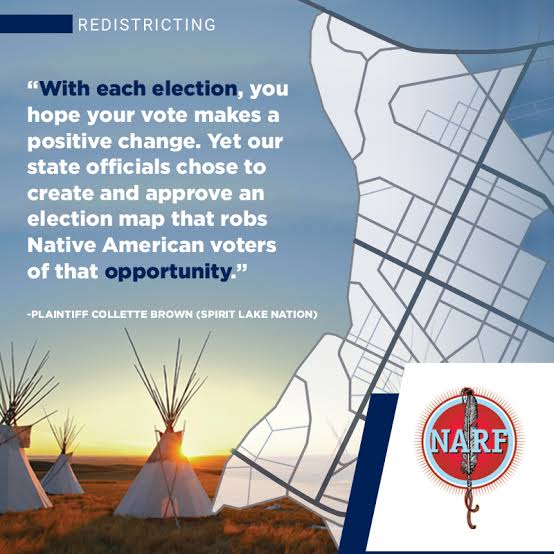
If adopted, the proposed rule would make Native people less visible in federal data, making redistricting analysis and voting rights enforcement more difficult. It would also cause Tribes to have less reliable demographic data for purposes of federal trust and treaty obligations and self-government, and it would make it more difficult for Tribes to plan for housing, health care, schools, transportation, language services, and emergencies.

Relevant Dates

Virtual Tribal Consultation on October 2, 2026 from 3:00 – 4:30 pm ET. Tribal leaders and representatives can register here. Note: The Bureau only gave two weeks’ notice for this consultation instead of its standard 30 days.

Public Comment Period deadline: October 13, 2026. Comments can be submitted here

Extended Tribal Comment Period deadline: November 2, 2026.

Additional resources

Proposed Rule: Decennial Census of the Population of Americans; Proposed Residence Criteria and Proposed Regulations for Demographic Questions

Dear Tribal Leader Letter

What Proposed 2030 Census Changes Could Mean for Native Communities, NARF, Sept. 29, 2026

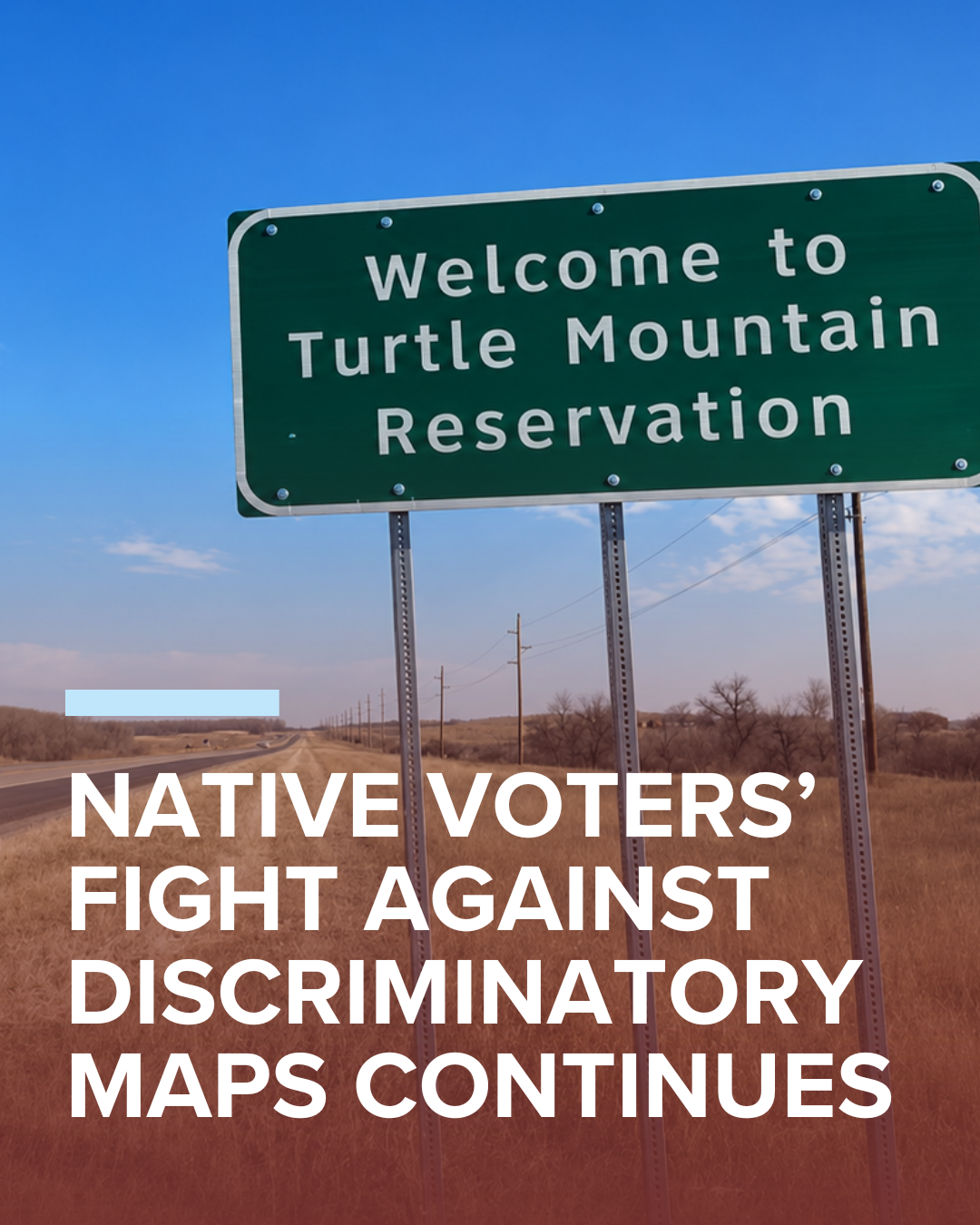
Turtle Mountain and Spirit Lake look to amend voting rights lawsuit

On August 28, 2026, the Turtle Mountain Band of Chippewa Indians, the Spirit Lake Tribe, and individual Native American plaintiffs in North Dakota moved for leave to file an amended complaint in the U.S. District Court for the District of North Dakota in  Turtle Mountain Band of Chippewa Indians v. Howe. This filing follows a May 2026 U.S. Supreme Court decision sending the case back to the lower courts for reconsideration under a new legal standard.

You can see previous posts on this case here.

Supreme Court Allows Ballots Cast On Time To Be Counted After Election Day

On June 29, 2026, the Supreme Court, in Watson v. Republican National Committee, allowed Mississippi ballots cast on time to be counted after Election Day, as permitted under state law. The decision respects longstanding absentee ballot receipt rules. It also protects Native voters who are disproportionately affected by a dearth of voter services and postal delays beyond their control.

An amicus brief on behalf of the National Congress of American Indians, Alaska Federation of Natives, and Washington Conservation Action Education Fund was filed in the case. The brief explained that Native voters often are forced to mail in ballots because in-person voting is made less available in their communities. Meanwhile, Native communities often lack reliable mail delivery, have fewer postal services, and endure longer mail transit time, especially in Alaska Native communities. You can see the brief here.

Supreme Court Sends Voting Rights Case Back to the Eighth Circuit

On May 18, 2026, in Turtle Mountain Band of Chippewa Indians v. Howe, the petition for a writ of certiorari to the U.S. Court of Appeals for the Eighth Circuit was granted, the judgment was vacated, and the case was remanded to the Eighth Circuit in light of Louisiana v. Callais (2026). You can see the order here.

You can see the cert petition here and Eighth Circuit materials here. You can see more about the Supreme Court’s decision in Louisiana v. Callais here and the opinion here.

Tribal Amicus Brief in Watson v. Republican National Committee

Here:

The Chippewa Cree Indians of the Rocky Boy’s Reservation settle redistricting lawsuit

On December 15, 2025, the U.S. District Court for the District of Montana approved a settlement reached in Chippewa Cree Indians of the Rocky Boy’s Reservation v. Chouteau County, Montana that will provide Tribal citizens the opportunity to elect a representative of their choice to the Chouteau County Board of County Commissioners.

Under the terms of the settlement, the Tribal Nation’s reservation will be part of Chouteau County’s District 1, which will elect a representative to the Board of County Commissioner through a single-member district election.

“We’re pleased that the county did the right thing in giving the Chippewa Cree Tribe a chance to elect a representative to the Board of Commissioners,” said Chippewa Cree Tribe Chairman Harlan Gopher Baker. “It has been more than a decade since we have had a Native voice in county politics. We look forward to being a part of this conversation.”

“This case was about our community finally having a representative and a voice like other voters in the county,” said plaintiff and voter Tanya Schmockel, a citizen of the Chippewa Cree Tribe. “I am excited about finally having the chance to have our voices heard and our concerns addressed.”

Most of Chouteau County’s Native population lives on or near the Rocky Boy’s Reservation, and many critical local issues — such as infrastructure, road maintenance, and emergency services — require coordination between the county and Tribal governments.

“In order for our county to include all of us, we needed a fair election system. With the new district, we have a chance for our voters to elect a commissioner who understands Native issues,” said plaintiff and voter Ken Morsette, a citizen of the Chippewa Cree Tribe. “This is a huge step forward for our Tribe.”

Native American Rights Fund (NARF), American Civil Liberties Union Foundation Voting Rights Project (ACLU), and ACLU of Montana (ACLU-MT), represent the plaintiffs in this case.

Read more about the Tribe’s successful fight for fair voting in Chouteau County.

Go Vote. Your Ancestors Fought for the Right.

Here is the order in Trujillo v. Garley (D.N.M. 1948):

Cert Petition in Turtle Mountain et al. v. Howe

More here.

Chippewa Cree Indians of Rocky Boy Sue Chouteau County for Vote Dilution

On August 14, 2025, the Chippewa Cree Indians of the Rocky Boy’s Reservation and two Native voters filed a lawsuit in the U.S. District Court for the District of Montana challenging Chouteau County’s unfair, at-large voting system for the Board of County Commissioners. The suit alleges the system unlawfully dilutes the voting strength of Native voters and has denied them any representation on the County Commission for more than a decade.   

Read more here and see the Complaint below.