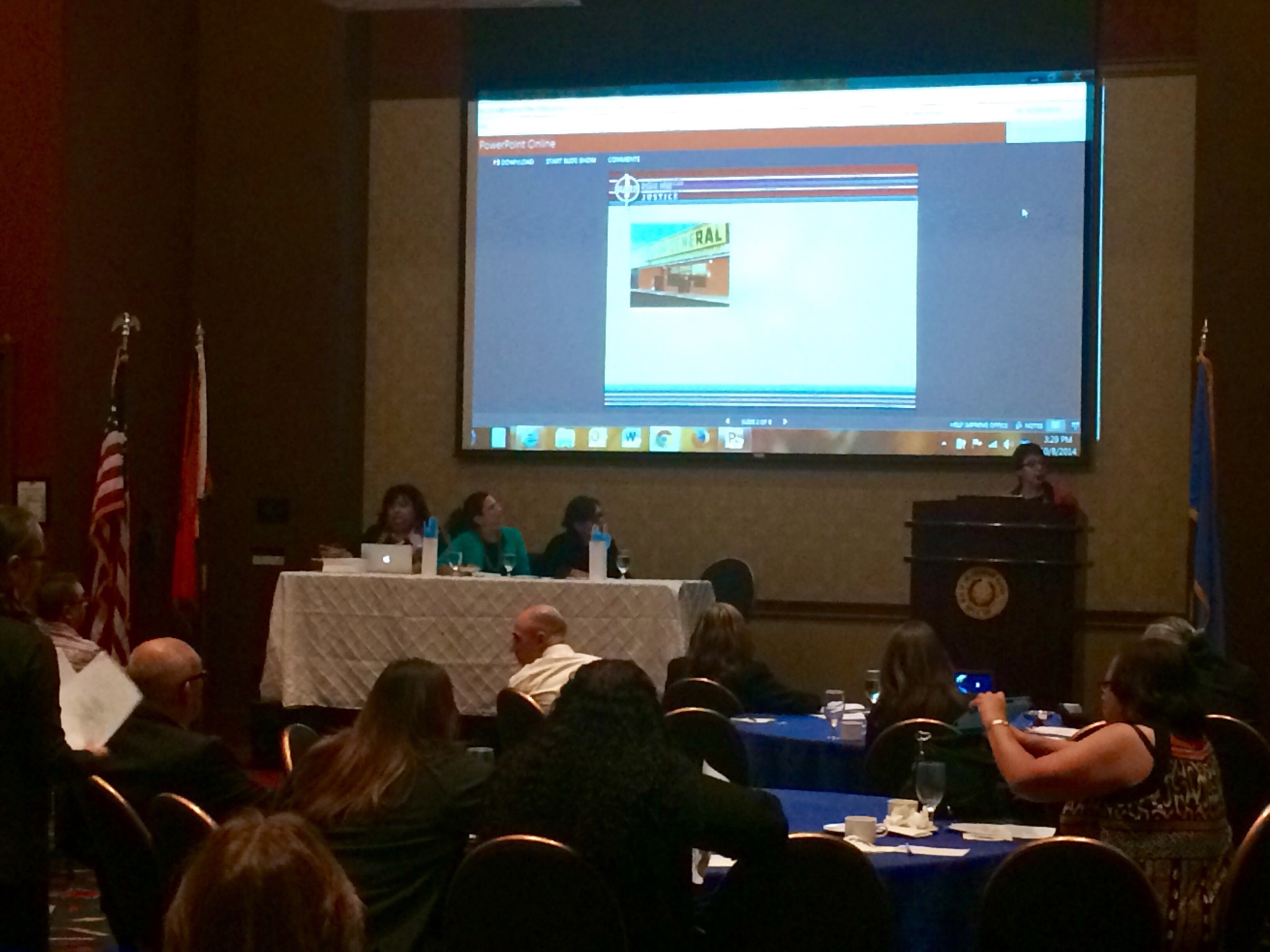
Sarah Kastelic (NICWA), Sam Hirsch (DOJ), JooYeun Chang (Children’s Bureau), and Kevin Washburn (Interior).
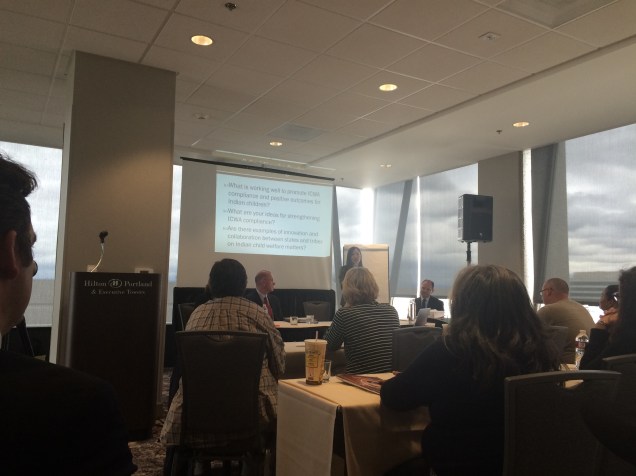
Sarah Kastelic (NICWA), Sam Hirsch (DOJ), JooYeun Chang (Children’s Bureau), and Kevin Washburn (Interior).
Adrea Korthase (ILPC Alum, Oregon DHS) and the incomparable Nadja Jones (Oregon DHS) on ways to provide seamless transitions to youth aging out of foster care.

Kate Fort and Victoria Sweet (ILPC Alum, NCJFCJ) on tribal strategies in state ICWA cases.

The Legal Professionals Reception co-hosted by ILPC, TICA, and Tilden McCoy & Dilweg.
Prof. Berger’s article here.
Prof. Atwood’s response here.
Professor Berger, however, does not address another danger inherent in the Court’s § 1915 holding. If applied to involuntary child welfare proceedings, the holding threatens to seriously undermine the effectiveness of ICWA. In a recent decision from the Alaska Supreme Court, the risks inherent in Adoptive Couple’s broad § 1915 holding were demonstrated. In Native Village of Tununak v. State Department of Health & Social Services, the court applied Justice Alito’s reasoning to a case that arose not as a private adoption but within the child welfare system. 13 The court held that the proposed adoption of a Native child by his Anglo foster parents could go forward without the necessary finding of good cause under ICWA because no other formal adoption petition had been filed.14 In that case the child’s maternal grandmother had taken only informal steps to request that she be allowed to adopt but had not filed a formal petition.15 As noted by the dissent, in rural Alaska where villages are remote and legal representation is nonexistent, the requirement that a formal adoption petition be filed may mean that potential ICWA placements will go undiscovered.16
Other articles and cases related to Adoptive Couple are available here.
Sorry, all. Some of our tech is down and I need to put up a test post.
Today we did a (long) lunch session on ICWA and MIFPA for state court personnel in Macomb County. Thanks to the Macomb criminal and juvenile law committees for inviting us.
Kate Fort, Michelene Eberhard (chair of the criminal law committee), and Maribeth Preston from SCAO.

The founding members of Mizzou’s brand new NALSA, Justin Trueblood and Kristen Stallion. Look for them at Moot Court 2016.

Their first event (with Prof Mary Beck and Kate Fort)
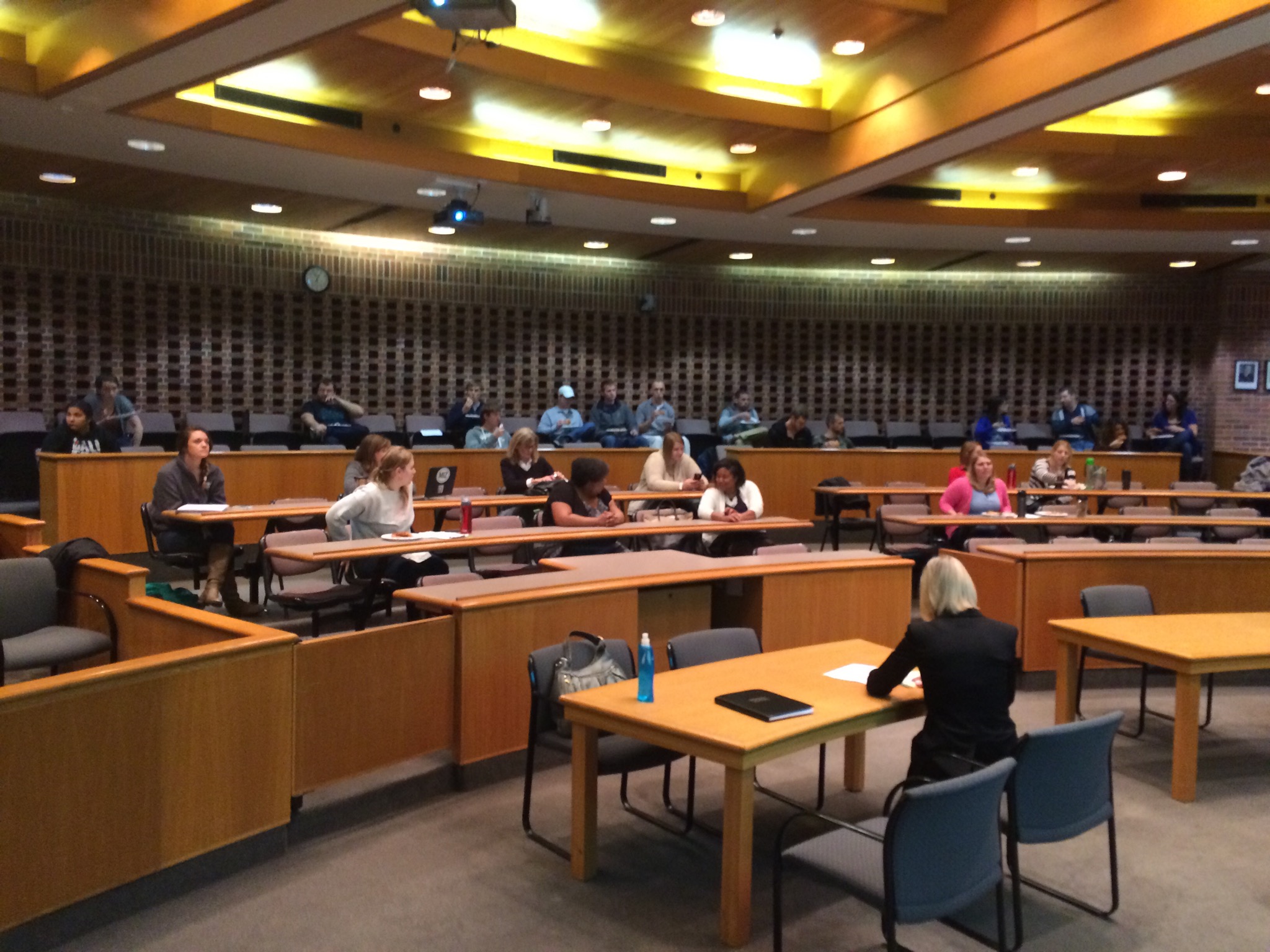
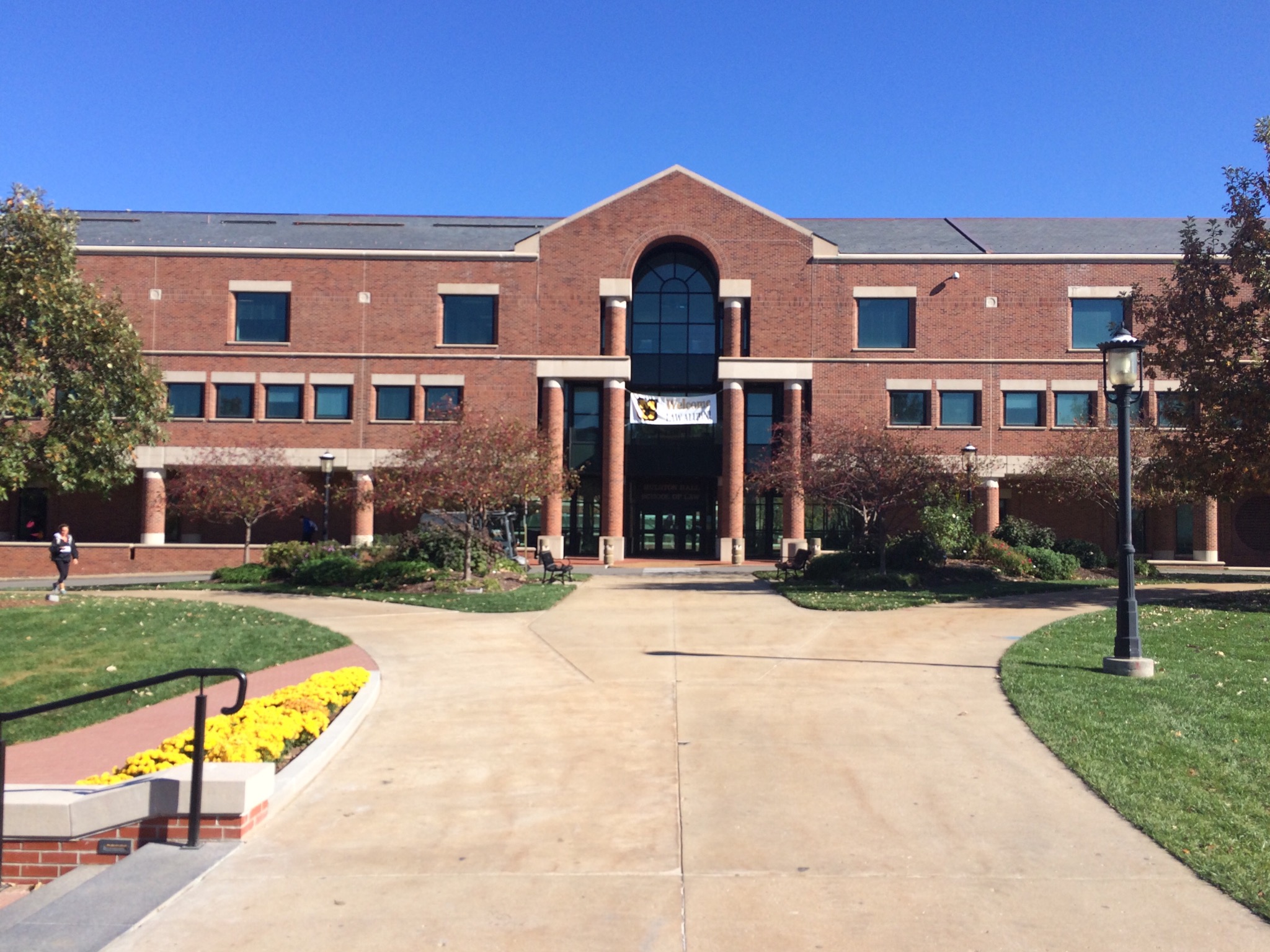
The administration building and the law school on a gorgeous day.

Melody McCoy doing the federal litigation update. Joined by Rodina Cave and Gina Jackson talking about BIA ICWA Guidelines.
With Jack Trope and Justice Kevin Briscoe.


You must be logged in to post a comment.