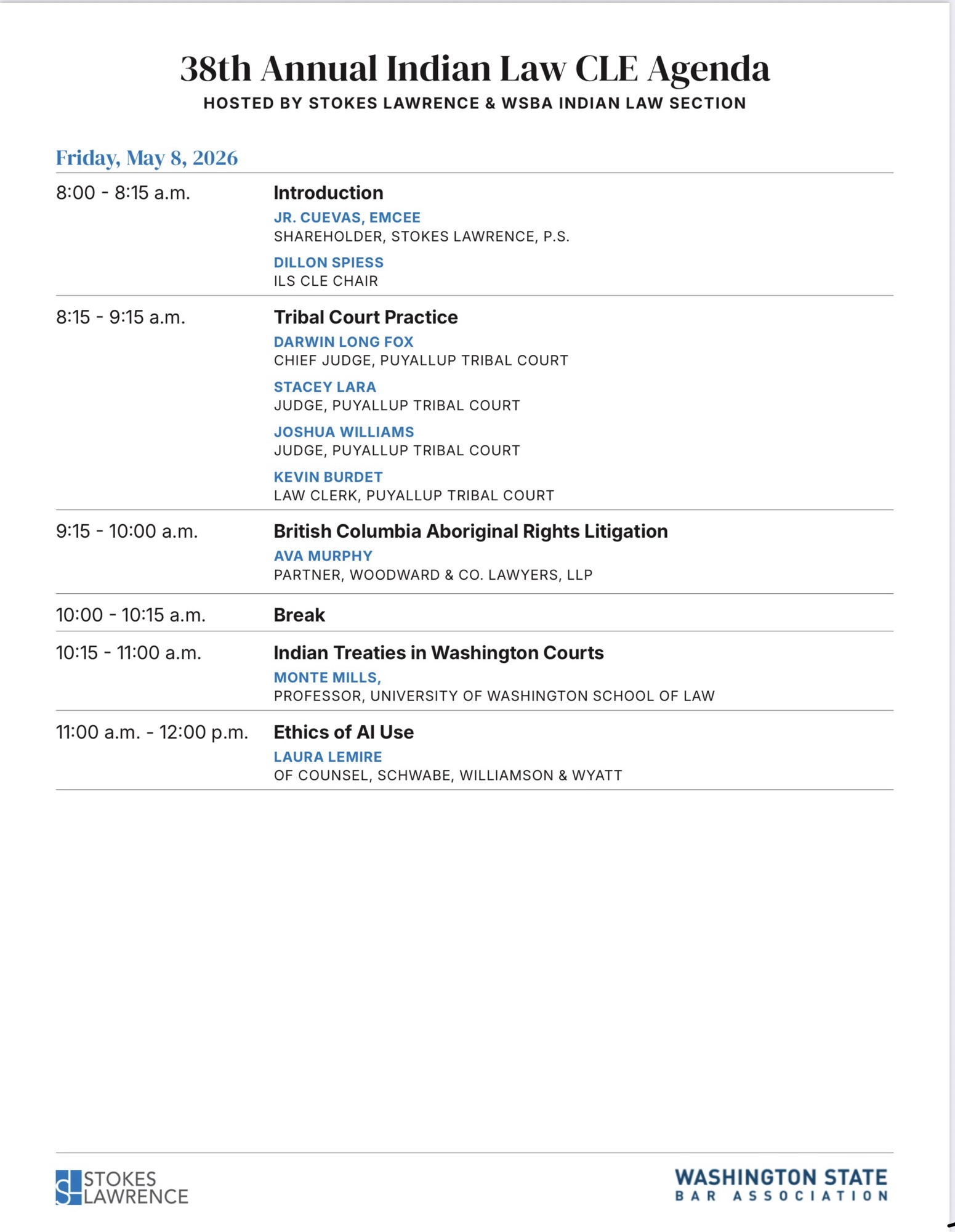
Register here.

Register here.


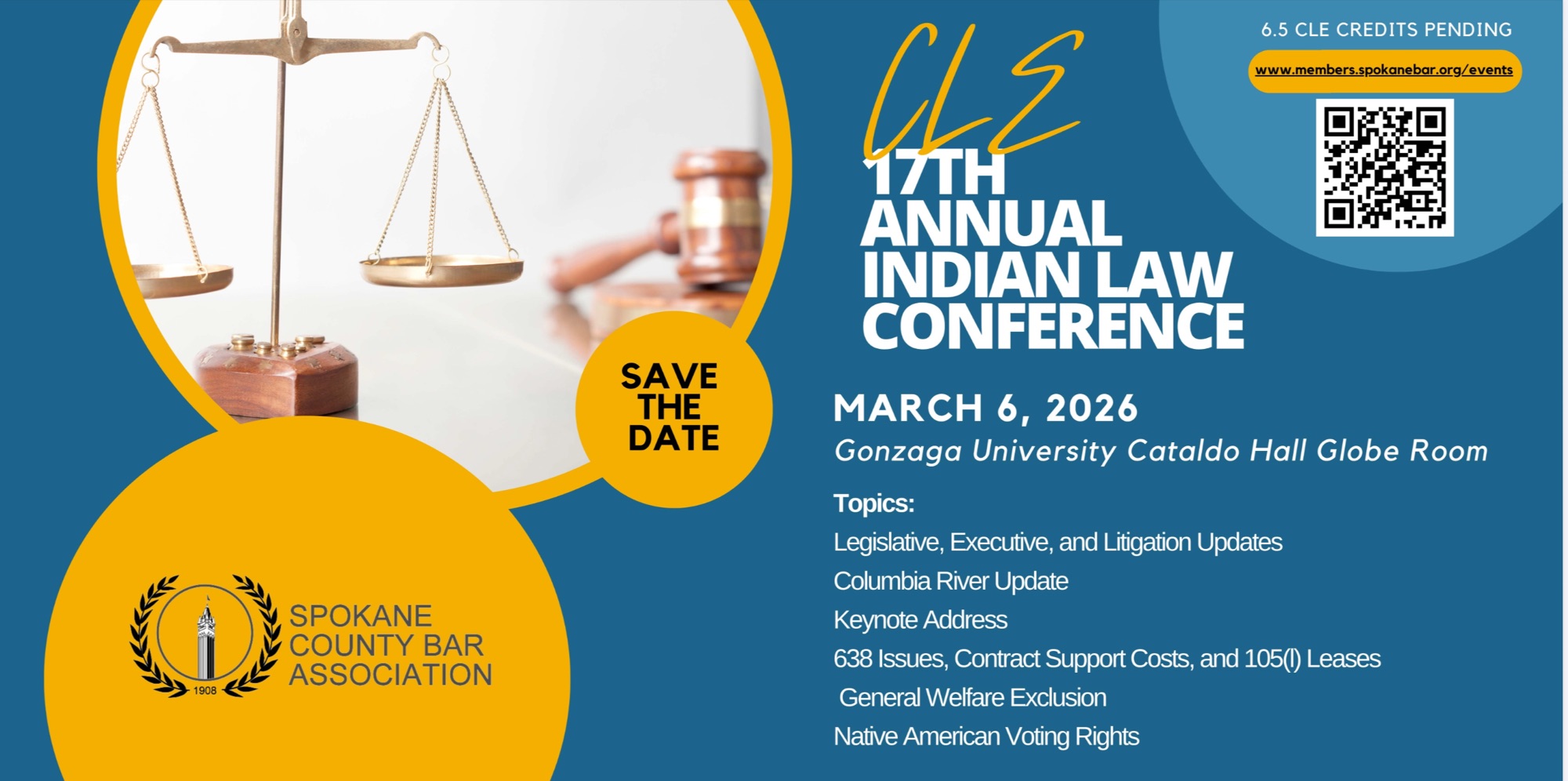
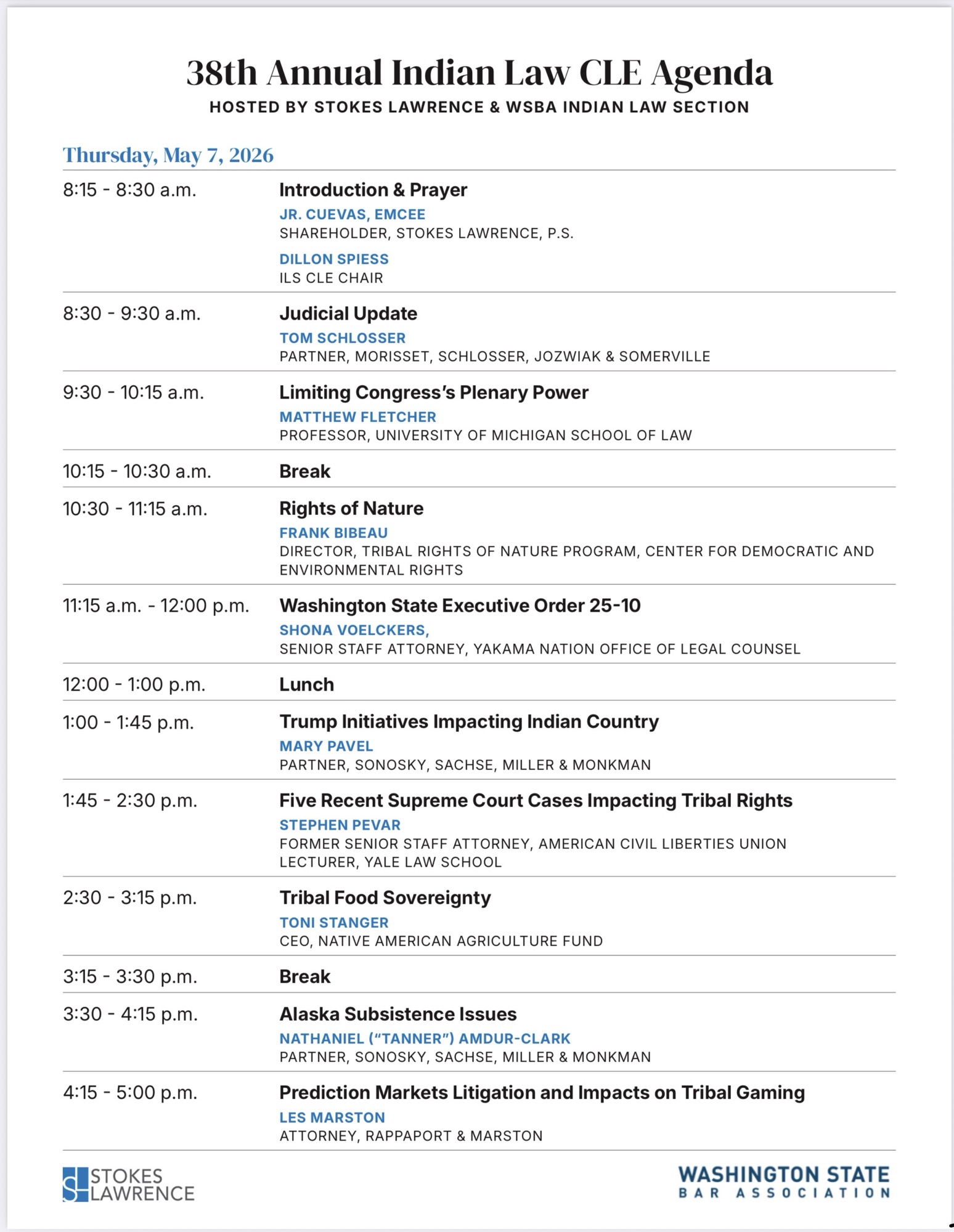
During the annual CLE on May 15 and 16, 2025, seasoned practitioners will discuss some of the most important developments and pressing issues affecting tribes in Washington State and beyond. For the first time in its history, this year’s CLE will be held virtually and in-person in Indian Country on the Tulalip Reservation.
While the agenda is still being finalized, we are excited to share a first look at several of our programs:
Where: Tulalip Administration Building, 6406 Marine Drive, Tulalip, WA 98271
When: May 15-16, 2025
Time:
May 15, 8 a.m.–5 p.m.
May 16, 8 a.m.–12:30 p.m.
Tuition:
$245: Indian Law Section Members
$275: Standard/Non-Section Members
FREE: Current Law Students
Credits: 8 credits
For more information, or to register for In-Person or Virtual, please visit WSBA Indian Law Section’s 37th Annual CLE Registration.


Here:
A ZOOM CLE Program, this Wednesday, December 18, 2024 from 9 am to noon, focusing on jurisdiction in Oklahoma’s Indian Country, focusing on cases spanning from U.S. v. Ramsey in 1926 to the recent Hooper & O’Brien Cases authorizing state jurisdiction over Indians in Indian country under novel and unprecedented theories
3 hours of Oklahoma Continuing Legal Education credit applied for, including 1 hour of ethics.
Presented by the Oklahoma Indian Bar Association (“OIBA”)
Email to OklahomaIndianBarAssociation@yahoo.com for more information. Contact Arvo Mikkanen via text at 405/420-9912 with any questions.
Online registration deadline is 12/18/24 at 9:00 am.
REGISTRANTS WILL RECEIVE A ZOOM LINK BY EMAIL ON THE DAY OF THE SEMINAR 12/18/24. DO NOT ASK FOR LINK BEFORE THAT TIME. LINK WILL BE SENT ONLY TO THE EMAIL ADDRESS YOU PROVIDE WHEN YOU REGISTER.
A DROPBOX WILL BE SET UP AND EMAILED TO YOU FOR YOU TO DOWNLOAD THE WRITTEN MATERIALS
Registration is $ 75.
Current paid 2024 & 2025 OIBA members with paid membership are entitled to $15 discount and can register for $60.
Elected Tribal Leader / Tribal Employee Registration is $ 30.
Student registrations are $20.
Attorneys: 3 Oklahoma Continuing Legal Education (“CLE”) Credits Applied for, including 1 hour of ethics. If you wish for credits for other states, that is your responsibility to submit to your own state bar for approval.
If you are not an Oklahoma bar member, please enter 00000 in the registration form.
AGENDA
9:00 am – 10:00 am – Arvo Mikkanen (Kiowa/Comanche), Attorney & Former Tribal Judge
OIBA President Mikkanen will discuss the recognition of Indian country post statehood in the Osage murder trials, the re-establishment of tribal and federal jurisdiction under the Littlechief and Ahboah cases, and the constructs for analysis provided in the Bracker and Castro-Huerta cases. Ethics for practicing attorneys in the Indian law field will also be discussed throughout.
10:00 am – 11:00 pm – Patti Palmer Ghezzi, Attorney & Trial/Appellate Consultant
Ms. Ghezzi will discuss the critical cases litigated and decided involving Oklahoma’s Indian country after Littlechief, leading up to the Murphy and McGirt cases which recognized the continuing boundaries of the Muscogee Nation Reservation.
11:00 am – 12:00 pm – Jeri Wisner (Muscogee), Attorney General – Muscogee Nation
AG Wisner will discuss the City of Tulsa’s attempts to undermine the McGirt decision which re-established Indian country in eastern Oklahoma within the boundaries of the Muscogee Nation reservation through the recent Hooper and O’Brien cases. The focus will be on assertions that the state has criminal jurisdiction over Indians within Indian country, under a variety of novel theories.

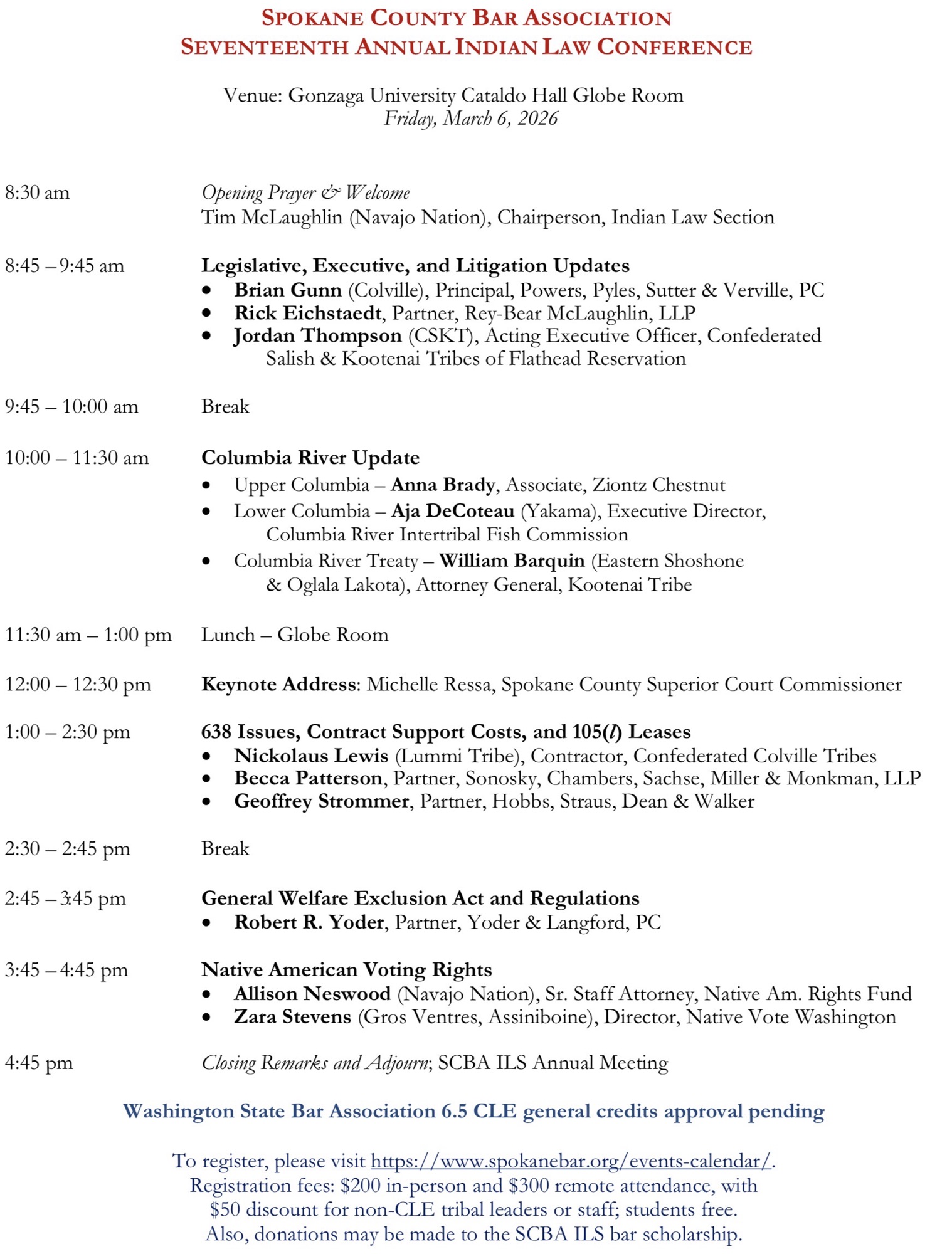
Here.
Business on Native Lands: Tribal Jurisdiction Over Non-Member Enterprises
December 11 | 12:00 – 1:00 p.m. ET
The coupon code FLETCHWEB will bring the price from $199 to $29.
The scope of tribal jurisdiction over non-member business activities is a pivotal issue in contemporary law, as federal and state courts continue to define the limits of tribal authority. This webcast examines recent case law developments that may influence the regulatory and adjudicative authority of tribes over non-member enterprises.
If you do business with or on Indian Country, join us to explore how these rulings affect tribal sovereignty, economic development, and the relationships between tribal, federal, and state governments.
Whether you represent tribes, businesses, or government entities, this program offers essential guidance on this vital and developing area of law, including:
The foundational legal principles governing tribal jurisdiction over non-member business activities.
Analysis of recent federal and state court opinions shaping tribal authority.
Practical implications for businesses operating on tribal lands or engaging with tribal governments.
The interplay between tribal sovereignty and regulatory frameworks in non-tribal jurisdictions.
Attendees will be equipped with the tools to address complex jurisdictional questions confidently and effectively, ensuring compliance and fostering constructive relationships between tribes and non-member businesses.
Register today! Questions submitted during the program will be answered live by the faculty and all registrants will receive a set of downloadable course materials to accompany the program.
This course is ideal for attorneys practicing in areas intersecting with Native American law, particularly those involved in commercial litigation, land use, regulatory compliance, or business operations in Indian Country. It is also highly valuable for tribal legal counsel, public officials, and policymakers navigating the challenges of tribal jurisdiction. Educators seeking to deepen their understanding of these critical legal issues will also benefit greatly.
Here:
From the early 19th century to today, U.S. Supreme Court decisions have significantly shaped the lives and rights of American Indian communities. These rulings impact critical areas like governance, jurisdiction, natural resource management, and religious freedoms. By attending this course, you will gain valuable insights into the legal struggles and triumphs that have defined American Indian history. The program highlights key issues such as tribal sovereignty, land rights, treaty obligations, and cultural preservation, showing how the Supreme Court has influenced the legal landscape of American Indian rights.
Attendees will dive into the evolving field of American Indian law with a special focus on U.S. Supreme Court decisions that directly affect tribal sovereignty, land rights, and treaty obligations. With these legal issues becoming increasingly relevant in today’s practice—impacting areas like environmental law and civil rights—understanding the foundational cases and legal challenges faced by Native communities is critical. This course will arm you with the knowledge to address these complex legal questions with confidence and precision.
Questions will be submitted live to the faculty and all registrants will receive downloadable course materials to accompany the program.
This course is ideal for attorneys who are interested in or currently practicing in areas that intersect with Native American law. It is particularly valuable for those working in fields related to civil rights, land use, environmental law, and government relations, as well as those involved in representing tribal governments or advocating for Native communities.
Additionally, public officials, policymakers, and educators seeking to broaden their understanding of tribal sovereignty, treaty rights, and the historical context of U.S. Supreme Court decisions impacting Native American law will benefit greatly from the insights provided in this program. Whether you are seeking to enhance your legal practice or simply deepen your knowledge of the complexities of Native American legal issues, this course offers essential learning for anyone committed to justice and equity in this vital area of law.
Register two or more and SAVE! Register as a group for this program and save up to 35%. Click here for more details. (Offer valid on new registrations in the same delivery format only; discounts may not be combined.)
Your instructor is me:
Matthew L.M. Fletcher, Harry Burns Hutchins Collegiate Professor of Law, Co-director, Program in Race, Law, and History, Michigan Law School, Ann Arbor, MI
Matthew L.M. Fletcher is the Harry Burns Hutchins Collegiate Professor of Law at Michigan Law. He teaches and writes in the areas of federal Indian law, American Indian tribal law, Anishinaabe legal and political philosophy, constitutional law, federal courts, and legal ethics. He also sits as the chief justice of the Pokagon Band of Potawatomi Indians, the Poarch Band of Creek Indians, and the Grand Traverse Band of Ottawa and Chippewa Indians. Fletcher is the Reporter for The American Law Institute’s Restatement of the Law, The Law of American Indians.
Here:


Here:
From the early 19th century to today, U.S. Supreme Court decisions have significantly shaped the lives and rights of American Indian communities. These rulings impact critical areas like governance, jurisdiction, natural resource management, and religious freedoms. By attending this course, you will gain valuable insights into the legal struggles and triumphs that have defined American Indian history. The program highlights key issues such as tribal sovereignty, land rights, treaty obligations, and cultural preservation, showing how the Supreme Court has influenced the legal landscape of American Indian rights.
Attendees will dive into the evolving field of American Indian law with a special focus on U.S. Supreme Court decisions that directly affect tribal sovereignty, land rights, and treaty obligations. With these legal issues becoming increasingly relevant in today’s practice—impacting areas like environmental law and civil rights—understanding the foundational cases and legal challenges faced by Native communities is critical. This course will arm you with the knowledge to address these complex legal questions with confidence and precision.
Questions will be submitted live to the faculty and all registrants will receive downloadable course materials to accompany the program.
This course is ideal for attorneys who are interested in or currently practicing in areas that intersect with Native American law. It is particularly valuable for those working in fields related to civil rights, land use, environmental law, and government relations, as well as those involved in representing tribal governments or advocating for Native communities.
Additionally, public officials, policymakers, and educators seeking to broaden their understanding of tribal sovereignty, treaty rights, and the historical context of U.S. Supreme Court decisions impacting Native American law will benefit greatly from the insights provided in this program. Whether you are seeking to enhance your legal practice or simply deepen your knowledge of the complexities of Native American legal issues, this course offers essential learning for anyone committed to justice and equity in this vital area of law.

You must be logged in to post a comment.