And here is another one!
Maine ICWA Signed into Law on June 30
And here is another one!
And here is another one!
Not sure how this one slipped by–the Governor of Nevada signed this into law just before Brackeen came down.
Media coverage here.
Assemblywoman Backus (the sponsor of the bill) graduated from ASU with an Indian Law Certificate. She is also a commissioner on the Uniform Law Commission’s study committee for a uniform state ICWA law.
Please join the American Constitution Society tomorrow, July 11, 2023, from 2:30 – 4:00 pm EDT for the National Supreme Court Review, which examines the most consequential cases of the 2022-2023 Term. Prof. Wenona Singel will offer commentary on Haaland v. Brackeen and discuss the decisions of this Term and their long-term effects on law and policy.

Welcome Remarks
Russ Feingold, President, American Constitution Society
Featuring
Chris Geidner, Publisher and Author, Law Dork, moderator
Debo Adegbile, Partner and Chair of the Anti-Discrimination Practice, WilmerHale
Ruben Garcia, Professor of Law and Co-Director of the Workplace Law Program, University of Nevada, Las Vega William S. Boyd School of Law
Kelly Moser, Senior Attorney and Leader of the Clean Water Program, Southern Environmental Law Center
Wenona Singel, Associate Professor of Law, Michigan State University College of Law and Director, Indigenous Law & Policy Center
Stephen I. Vladeck, Charles Alan Wright Chair in Federal Courts, The University of Texas at Austin School of Law
The American Constitution Society is a State Bar of California approved provider. This event has been approved for 1.5 hour of California MCLE credit.
As the nation’s leading progressive legal organization, ACS is committed to ensuring that all aspects of our events are accessible and enjoyable for all. If you require any accommodations, please contact us at info@acslaw.org.
The registration link is available here.
Please check out “Federal Indian Law as Method,” likely forthcoming in the University of Colorado Law Review. Here is the abstract:
This Essay is written in the shadow of a series of noxious attacks on core principles of federal Indian law, most notoriously Haaland v. Brackeen, a challenge to the constitutionality of the Indian Child Welfare Act (ICWA). The Supreme Court did not reach the merits of the equal protection challenges, but during oral argument, several judges expressed skepticism that Congressional Indian affairs enactments that grant privileges or preferences to Indian people could survive scrutiny under an equal protection analysis. Justice Kavanaugh, one of the judges most interested in the equal protection claims, wrote separately to highlight these issues, asserting that “the equal protection issue is serious.”
The parties siding with ICWA’s constitutionality argued to the Court that the Mancari case is a guide, whereas the opponents to ICWA’s constitutionality wanted to Court to ignore the case altogether. This Essay is a full-throated defense of the Mancari as a method of constitutional interpretation. Not only is the Mancari method correct, it is also the only justifiable method. This Essay proceeds with a short background on federal Indian law and its default interpretative rules. Next, the Essay surveys the application of and challenges to the Mancari method. Finally, the Essay concludes with a comparison of the methods proposed to replace or displace the Mancari method.
This Essay was prepared for the 31st Annual Rothgerber Symposium at Colorado Law School.

This Article lays out the history of the fight over ICWA from Baby Girl to Haaland, from my perspective as a clinical professor who has been involved with every major ICWA case since 2013, as well as my observations about why ICWA was so vulnerable to an organized litigation attack despite continued bipartisan and widespread support of the law.
The rest of the issue is here, with an essay by Chemerinsky and an article on Dobbs by Delgado and Stefancic.
M. Alexander Pearl has published “The Indian Child Welfare Act in the Multiverse” in the Michigan Law Review.

Here is “A Win for Tribal Sovereignty.”

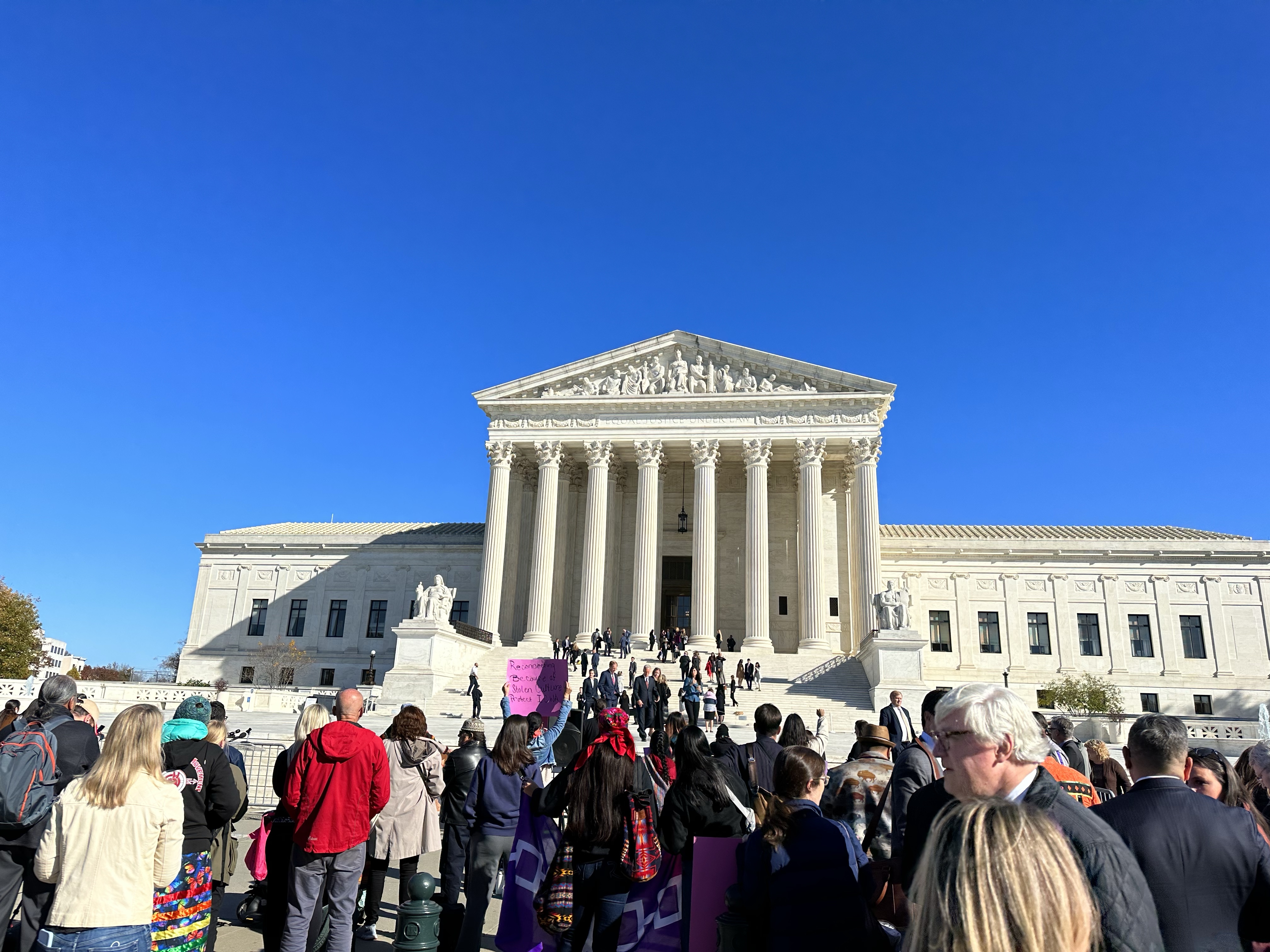
The decision was written by Justice Barrett with all but Justice Thomas and Alito joining her opinion. Justices Gorsuch and Kavanaugh wrote (very different) concurrences. Justices Thomas and Alito dissented.
Essentially the Court held that ICWA is not beyond the power of Congress to effectuate, and does not violate commandeering concerns by making states follow federal law. Neither the foster parents or the state of Texas had standing to bring the equal protection arguments related to the third placement preferences. They did not rule on any merits regarding equal protection and ICWA. Gorsuch’s concurrence laying out the history of federal Indian Law and ICWA is veritable who’s who of Indian law professors. Kavanaugh’s concurrence wants us to make sure we understand there was no ruling on equal protection, only on standing to bring the claim. Justices Thomas and Alito did their usual thing.
This is, without question, a massive win. It’s a stunning victory upholding both the foundations of federal Indian law and the Indian Child Welfare Act. The original district court decision finding ICWA unconstitutional, as well as the parts of the Fifth Circuit decision finding the same, are no longer good law. There is, at this time, no major change in ICWA practice. We can talk details in the coming weeks. So for now I’ll leave you with the last sentence of the Gorsuch concurrence while we all breath a sigh of relief:
In adopting the Indian Child Welfare Act, Congress exercised that lawful authority to secure the right of Indian parents to raise their families as they please; the right of Indian children to
grow in their culture; and the right of Indian communities to resist fading into the twilight of history. All of that is in keeping with the Constitution’s original design.
 Turtle Talk
You must be logged in to post a comment.