New Scholarship on the Adjudication of Tribal Interests without their Participation

Luke Colvard has posted “Uncivilized Procedure,” forthcoming in the UCLA Law Review, on SSRN.

Here is the abstract:

This Comment addresses a persistent and under examined feature of federal Indian law: the adjudication of tribal rights without tribal participation. From the Marshall Trilogy to present day disputes, the rules of access to U.S. courts have repeatedly excluded tribes from cases that define their property and jurisdiction. The procedural barriers that facilitate this, including representation by the United States of tribal interests and the complete lack of tribal notice and intervention rights in Indian country criminal cases, are not relics of a bygone era. They continue to shape foundational Indian law decisions today.

This exclusion is unjust and destabilizing. When the United States purports to represent tribal interests while pursuing its own, tribes are silenced and later barred from relitigating outcomes that fail to reflect their needs. In criminal cases, Indian defendants may raise tribal jurisdiction to contest state authority while the tribe whose jurisdiction is contested remains unaware of the proceeding and unable to intervene. The already existential consequences of this system are worsened by denying tribal governments a right of action under §1983 to affirmatively challenge violations of their members’ rights. As a result, courts are often deprived of the expertise of the sovereigns most affected by their rulings and the deprivation of the rights of Native peoples is streamlined. This Comment contributes to the literature by emphasizing procedure as a central battleground of tribal sovereignty and concomitantly, Native cultural survival.

The Comment proceeds in three parts: it traces the history of tribal exclusion from courtrooms, identifies modern hurdles to tribal participation, and proposes reforms drawing on the Indian Child Welfare Act as a model. These reforms would not decolonize the courts, but they would help civilize their procedures.   
Ablavsky on State Criminal Jurisdiction in Indian Country

Gregory Ablavsky has posted “State Criminal Jurisdiction in Indian Country: A History,” forthcoming in the Virginia Law Review, on SSRN.

Here is the abstract:

In Oklahoma v. Castro-Huerta (2022), the Supreme Court dismantled the long-standing black-letter principle that states lack criminal jurisdiction in Indian country absent congressional authorization by embracing a revisionist historical account emphasizing inherent state sovereignty. The consequences have been predictable: intense uncertainty and ongoing litigation. Oklahoma’s highest courts, for instance, have repeatedly endorsed inherent state jurisdiction over Native people within Indian country, employing Castro-Huerta to distinguish considerable contrary federal law and precedent.

The challenge, especially given the current history-minded judiciary, is that the claim that states have never asserted inherent criminal jurisdiction over Indian country is too simplistic and easily disproven, making it tempting to toss out the old rules. But the revisionist claim, advanced by some scholars and embraced by Justice Thomas, that states enjoyed expansive criminal jurisdiction, is also wrong. This Article attempts to offer a more rigorous legal history, moving beyond the handful of Supreme Court decisions to survey every identifiable state and federal case on inherent state criminal jurisdiction in Indian country. It depicts four distinct periods: an initial headlong assault on federal authority (1787–1834) ; an era of “great confusion” in which states pressed on the many uncertainties of federal Indian law (1835–1886) ; the jurisdictional chaos of the allotment era (1880s–1930s); and a period of relative statutory stability (1948–2022) that Castro-Huerta has now abruptly terminated. What this history shows above all is contestation—a cat-and-mouse game in which states seized on ambiguities to claim authority, only to be periodically rebuffed by the federal courts. But the mere existence of past conflict does not support broader state jurisdiction in Indian country. Rather, every conventional method of legal and constitutional interpretation undercuts the argument that such jurisdiction was ever meaningfully positive law. There are also strong normative reasons for skepticism, since state claims of authority were rarely motivated by public safety but were instead tools to facilitate Native dispossession and erode tribal self-governance. By recounting these complexities, the Article challenges the current legal instability that threatens the foundations of modern tribal sovereignty.

Kirsty Gover on Membership and Self-Identification under UNDRIP

Kirsty Gover has posted: “Membership and Self-identification in The United Nations Declaration on the Rights of Indigenous Peoples: a Commentary on Article 33” on SSRN.

Here is the abstract:

This chapter addresses two broad themes within the United Nations Declaration on the Rights of Indigenous Peoples (UNDRIPS): self-identification and membership, as addressed in international jurisprudence on UNDRIP Article 33.  The article protects the rights of Indigenous Peoples to ‘determine their own identity or membership in accordance with their customs and traditions’. It should be read with Article 9, which protects the right of individuals ‘to belong to an indigenous community or nation’. Together the articles protect both individual and collective self-identification, but UNDRIP does not specify what should happen when groups and individuals disagree on a person’s membership status. Recent applications of the UNDRIP in international forums link ‘self-identification’ to collective self-determination, in a way that prioritises the authority of group decisions on membership. This is a positive step that promises a more nuanced and jurisdictional approach to identity issues, one that supports the authority of Indigenous law and can potentially bring international human rights law closer to a fully realised appreciation of Indigenous-State legal pluralism. This chapter outlines the history of Article 33, discusses its recent application and interpretation and explains its potential impact on membership disputes.

John Borrows on Anishinaabe Inaakonigewin and Treaties

John Borrows has published “Anishinaabe Treaties and the Rule of Law” in the Canadian Journal of Law & Jurisprudence.

Here is the abstract:

This lecture considers conserving and upholding Anishinaabe law as it relates to the more-than-human world. It suggests that we must continually renew our broadest legal commitments to protect and preserve what sustains us. Protecting clans and the animals from which they derive is close to the heart of Anishinaabe law (ode’naakonige). This law is embodied through Anishinaabe treaties with our evolutionary progenitors, our clan relatives. These treaties with the more-than-human world were incorporated into treaties with other First Nations. From an Anishinaabe perspective, these obligations were, in turn, eventually imported into treaties with the Crown. Anishinaabe treaties with the more-than-human world continue to inform how Anishinaabe people practice constitutional law through consultation protocols, legislation, and participation in court proceedings.

Alex Fay on Resolving Tribal-State Conflicts

Alexandra Fay has posted “Coordinated Sovereignty: Federal Tools for Resolving State-Tribe Conflict,” forthcoming in the Wisconsin Law Review, on SSRN.

Here is the abstract:

American federalism describes the constitutional relationships between three kinds of sovereign political bodies: the federal government, the fifty states, and 575 federally recognized Indian tribes. Yet federalism scholarship often elides the third sovereign, instead exclusively focusing on the relations between states and the federal sovereign. Previously, I argued that trilateral federalism should frame federal approaches to issues involving tribal governance. This Article continues that work, with a structural examination of federal statutory interventions to resolve conflicts between America’s domestic sovereigns, the states and tribes. 

State-tribe conflict is a perennial feature of federal Indian law. This Article engages with examples across various substantive fields of law—including family law, criminal justice, gaming, taxation, and public health—to articulate four models of federal statutory intervention: (1) Federal Preemption, (2) Opt-In, (3) Guided Compacting, and (4) Noninterference. The Article considers their relative strengths, weaknesses, and appropriate contexts. Finally, the Article applies these models to the case study of traffic enforcement in Oklahoma Indian country, a major site of tribe-state conflict in the wake of the Supreme Court’s 2020 decision in McGirt v. Oklahoma 

Blumm and McMichael on Tribal Fish and Wildlife Co-Management in Oregon

Michael Blumm and Connor McRobert have posted “Tribal Comanagement at the State Level: The Oregon Experience” on SSRN.

Here is the abstract:

Ecological disturbances are straining conventional fish and wildlife management, which tribal knowledge can inform to produce more effective management. Although federal policy has recognized government-to-government relations with Tribal Nations, most day-today regulation of fish and wildlife runs through state agencies. This Article argues that Oregon has provided an important management framework between the state and Tribal Nations. Since 2022, Oregon has entered a series of state-tribal agreements that constitute a durable and increasingly replicable co-management framework. This Article contends that these agreements reflect a second-generation, state-driven adaptation of an earlier co-management framework that emerged from the Columbia River treaty-rights litigation. Although Oregon has not formally ceded legal primacy, the agreements nonetheless shift considerable operational authority to Tribal Nations through recurring harvest negotiation, shared scientific information, hunting and fishing licensing, and habitat coordination. Some limits to the co-management framework appear in Willamette Falls, an important historic intertribal commons, where overlapping tribal claims expose the shortcomings of bilateralism. Habitat restoration likewise tests whether Oregon’s framework can apply beyond the harvest context. Consequently, the Article concludes that the Oregon-tribal agreements offer a workable but conditional framework of inter-sovereign resource management for other states and Tribal Nations, and other resources.

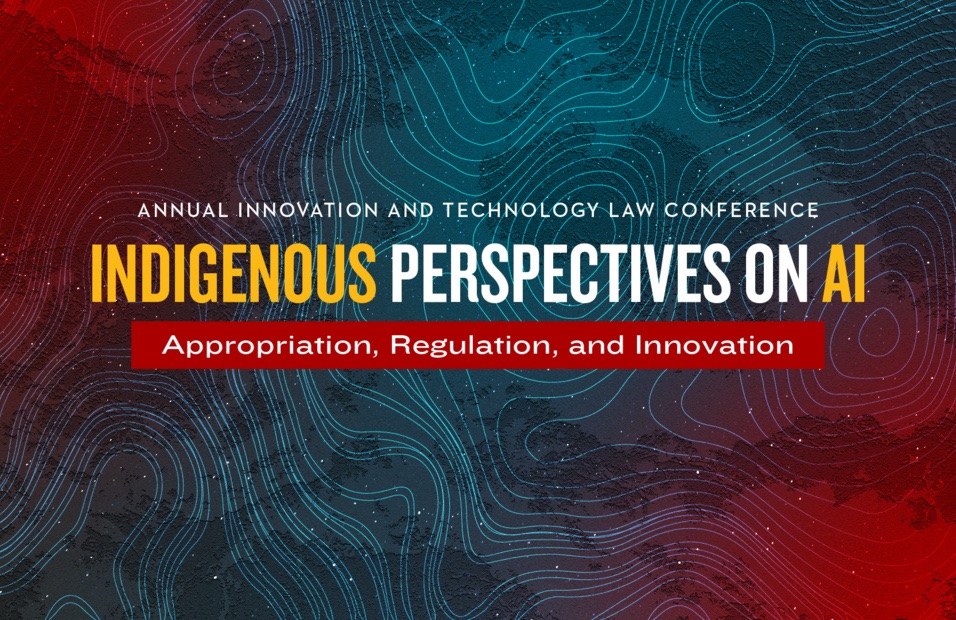
Seattle Law School: “Indigenous Perspectives on AI: Appropriation, Regulation, and Innovation” on June 5, 2026

Here.

Join Seattle University School of Law for the 9th Annual Innovation and Technology Law Conference, a virtual gathering exploring Indigenous Perspectives on AI: Appropriation, Regulation, and Innovation.


  • Friday, June 5, 2026
  • 9:00 a.m. to 4:30 p.m.
  • Virtual event
  • Register to receive the Zoom link the day before the event


Presented by the Technology, Innovation Law, and Ethics (TILE) Institute and the SITIE Initiative, and co-sponsored by the Northwest Center for Indigenous Law, Seattle Journal of Technology, Environmental & Innovation Law (SJTEIL), and the American Indian Law Journal, this year’s conference brings together leading scholars, practitioners, and Indigenous leaders.


Through a full day of panels and discussion, you’ll gain insight into:


  • The legal and ethical implications of cultural appropriation in AI
  • Indigenous data sovereignty and emerging frameworks
  • AI regulation through the lens of tribal sovereignty
  • Innovative models led by Indigenous technologists and communities


View the full agenda and speaker lineup on the SITIE Conference event page.
Register now to be part of this timely and critical conversation.

Agenda

Continue reading

American Indian Law Review, Vol. 50, Issue 1

Here:

Essay

PDF

“Discovered!”: Plaintiff’s Brief to the United States Supreme Court in Johnson & Graham’s Lessee v. M‘Intosh (1823)
Mark Savage

Comment

PDF

The Bad Man’s Hourglass: Extending the Clock on Justice
Liv G. Cummins

Notes

PDF

With Religious Freedom Came Religious Authority: Apache Stronghold v. United Statesand the Exclusion of Native American Religion Within the Legal Understanding of Religious Freedom
Cassidy Beck

PDF

Abrogation Without Mention: A Note on Lac Du Flambeau Band of Lake Superior Chippewa Indians v. Coughlin
Taya Maxson

PDF

Tulsa v. O’Brien: A City Adds to the Battle over Jurisdiction in Indian Country
Fatima D. Jaime

Special Features

PDF

Ward, Trust, or Sovereign: The Impact of Metaphor in Supreme Court Indian Law Jurisprudence
Sadie Pate

PDF

Winner, Best Appellate Brief in the 2025 Native American Law Student Association Moot Court Competition
Baylee Ogle and Madison Bailey

Papa Ola Lōkahi seeks to intervene in defense of the Native Hawaiian Health Scholarship Program

On May 15, 2026, the Native Hawaiian Legal Corporation (NHLC), the Native American Rights Fund (NARF), and Hobbs, Straus, Dean & Walker, LLP filed a Motion to Intervene on behalf of Papa Ola Lōkahi in a federal lawsuit challenging the constitutionality of the Native Hawaiian Health Scholarship Program. The lawsuit, brought by Do No Harm, targets a program rooted in Congress’s longstanding recognition of the United States government’s trust responsibilities to Native Hawaiians.

More here and here.

And here is the complaint.

Alex Zhang on Taxation of Indian, Indian Tribes, and the Territories

Alex Zhang has published “The Other Taxation: Tribes, Territories, and Fiscal Autonomy” in the Columbia Law Review.

Here is the abstract:

Native Americans pay taxes. Territories, by contrast, tax in place of the federal government. Both live with the legacy of American imperialism. Both seek the elusive fiscal self-governance and autonomy promised by Congress. The Supreme Court—through preemption, the plenary power doctrine, and interpretive principles—has hollowed out the Native tax base, forcing tribes to compete fiercely with Congress, states, and localities for revenue. By contrast, territorial residents pay no federal or state taxes on territorially sourced income by edicts of Congress and geography. But such tax exemption enabled the creation of incentive regimes that have only invited more criticism as entrenching subordination. This Article argues that the conceptual underpinnings of the divergent tax treatment of tribes and territories are unsound. Under a more robust vision of fiscal autonomy, judicial limits on Native tax sovereignty are misguided. The territories’ wide latitude in designing revenue streams merits increased scrutiny. While imperfect, a uniform, nonrefundable federal income-tax credit for tribal and territorial taxes paid is a promising path forward. This Article thus provides the first systematic study of subfederal taxation beyond states and localities—the “other” American taxation often overlooked in scholarship.