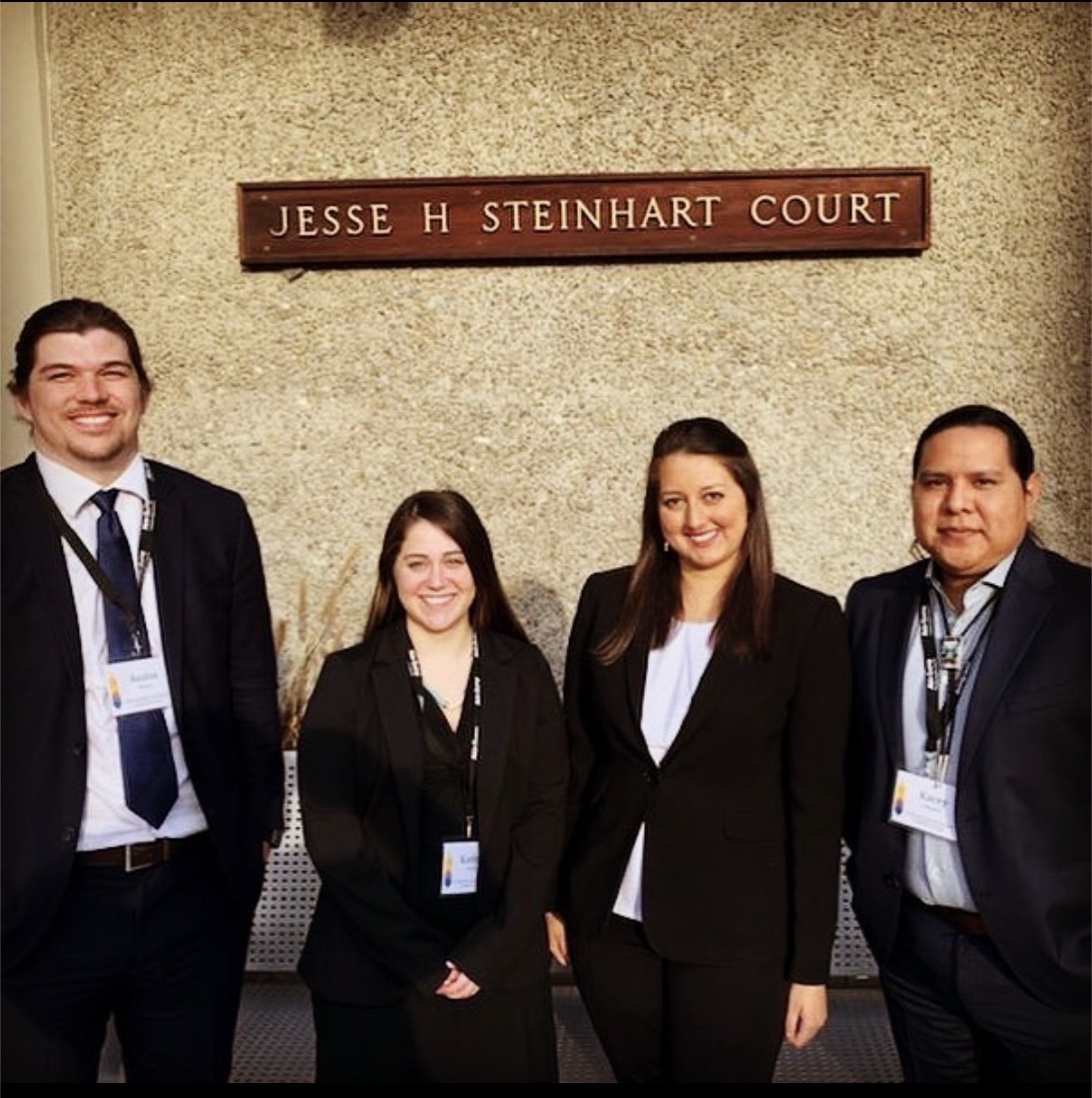
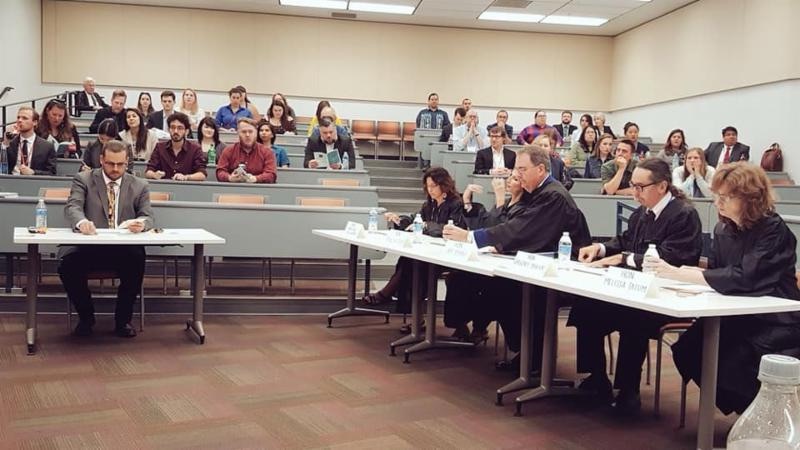
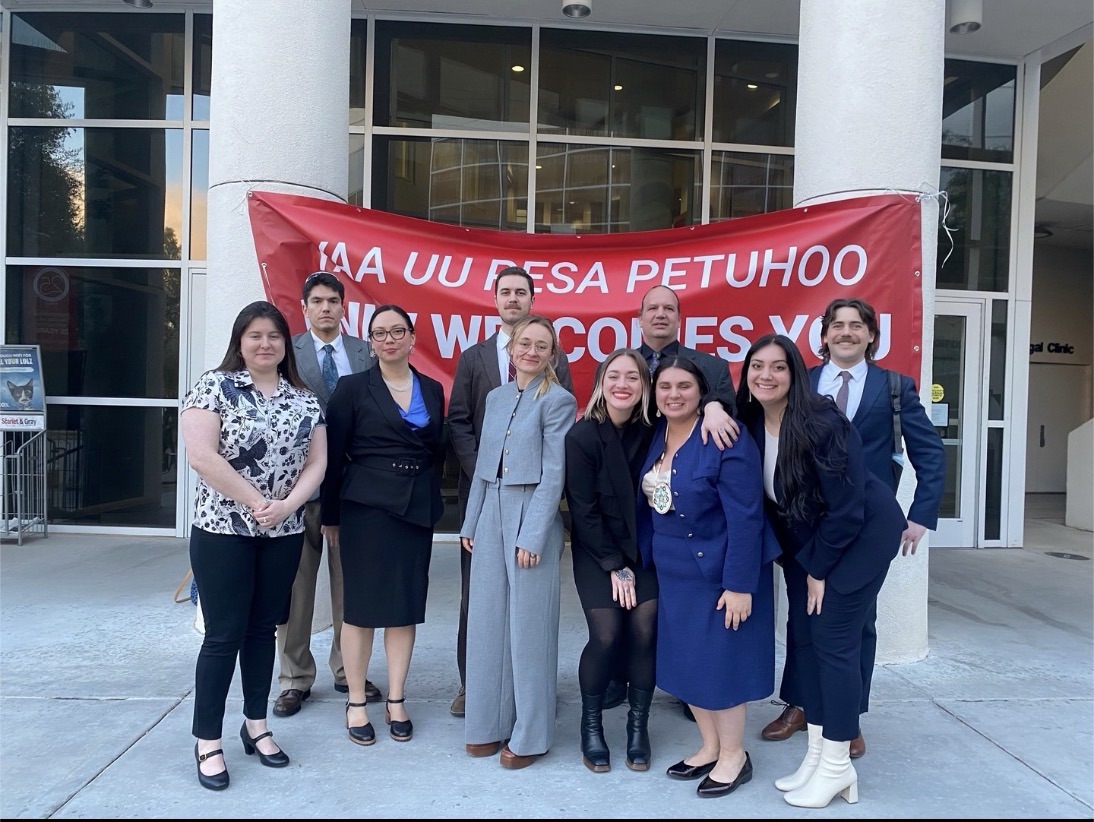
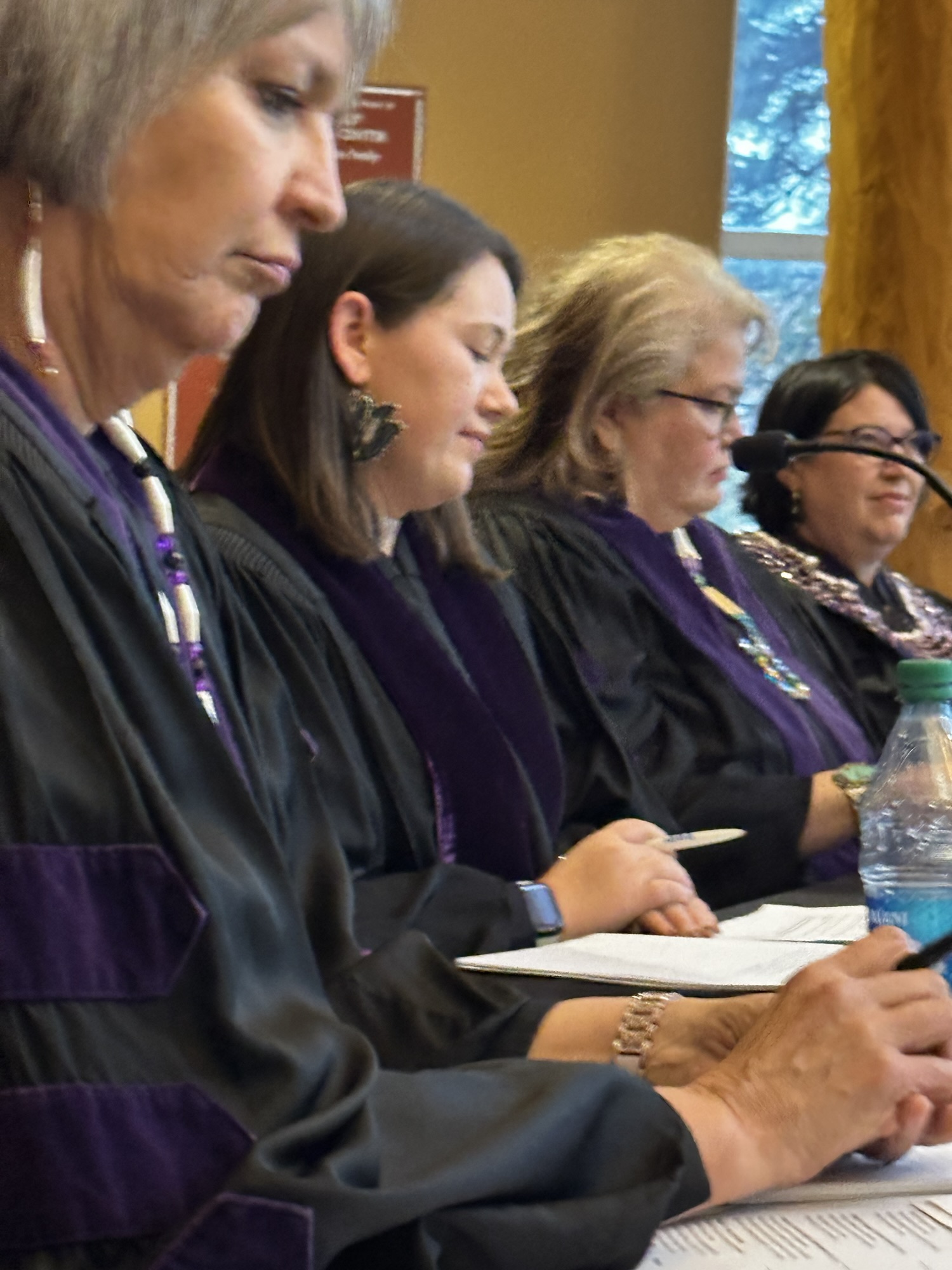
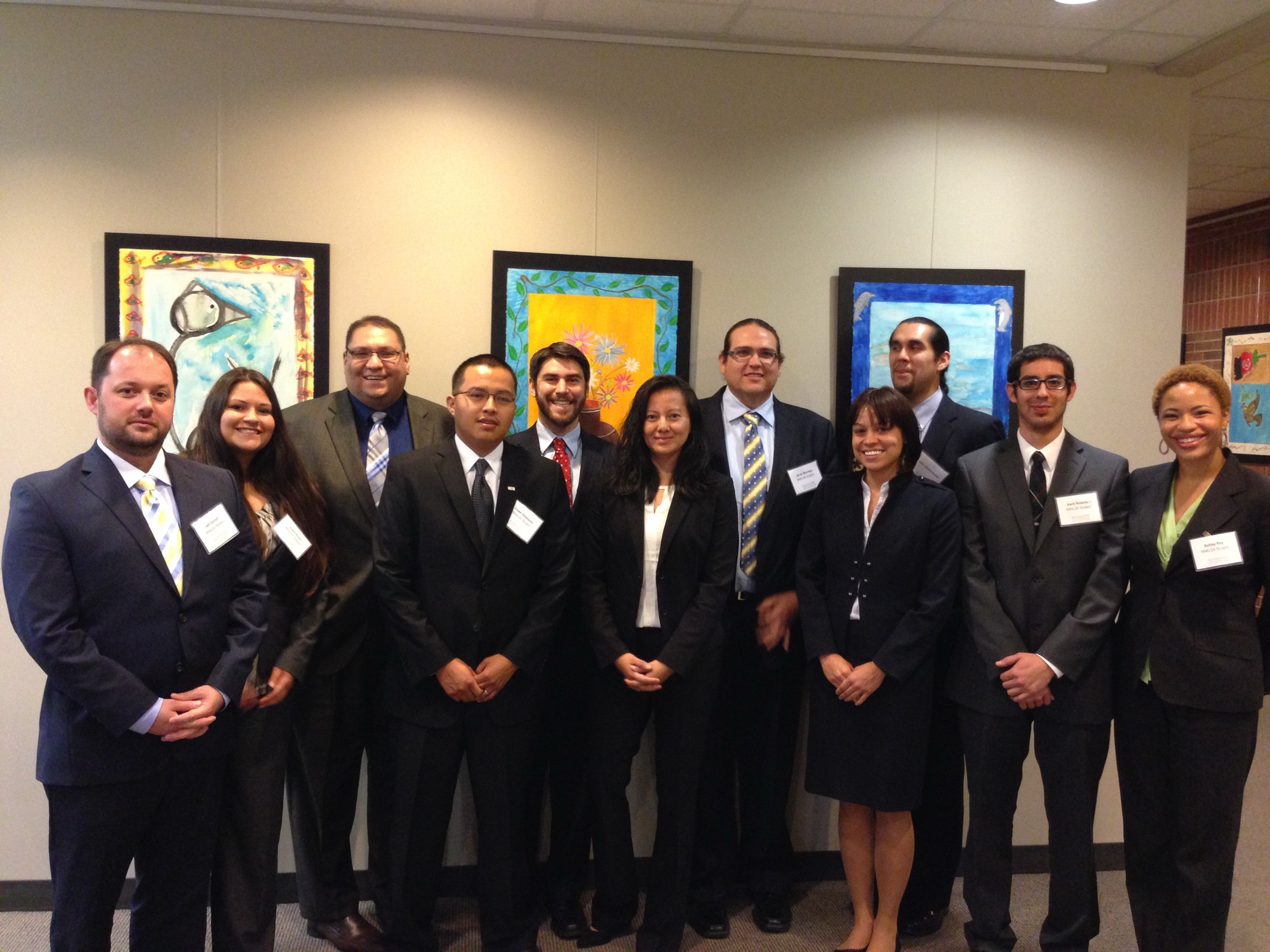
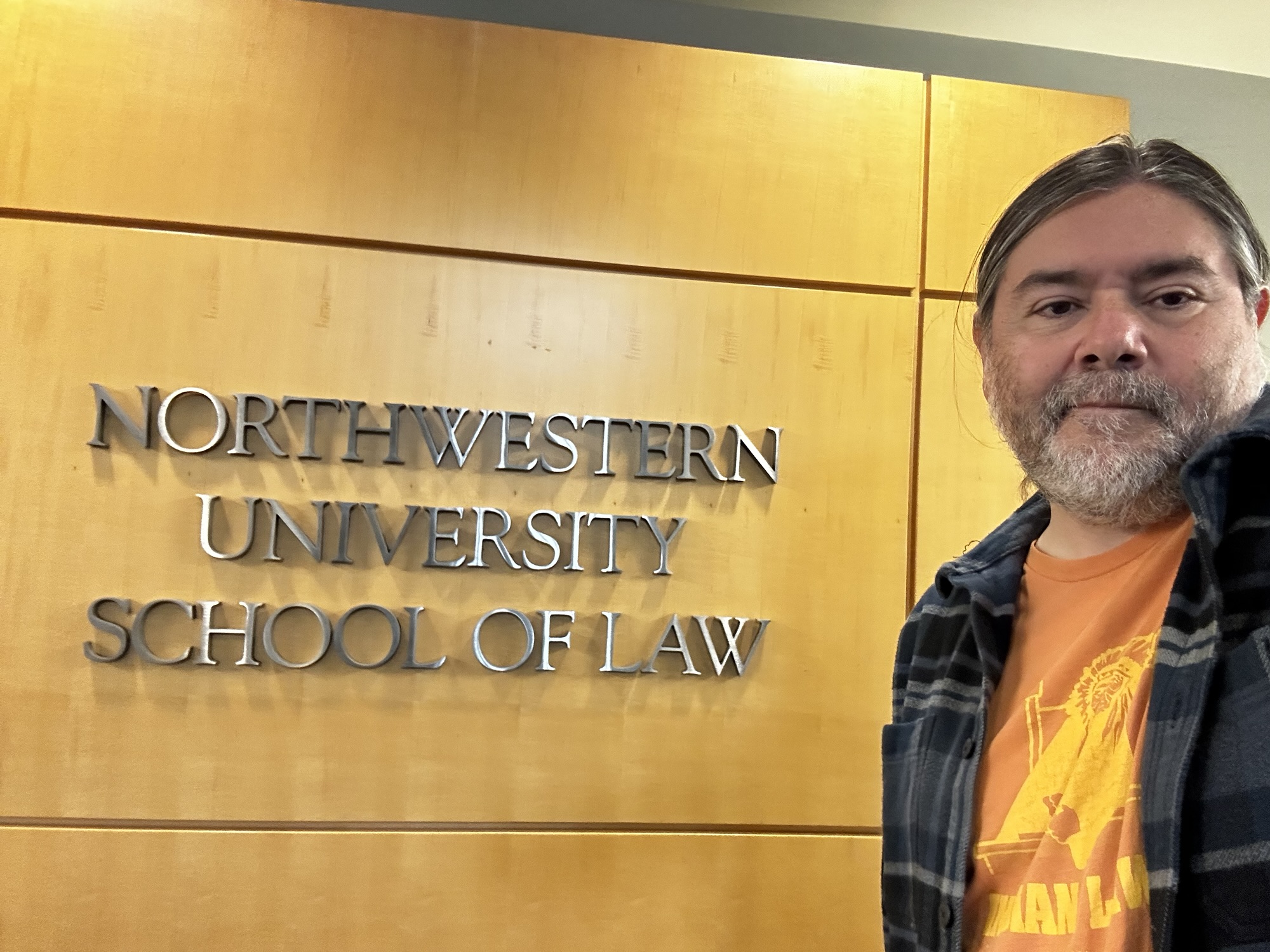
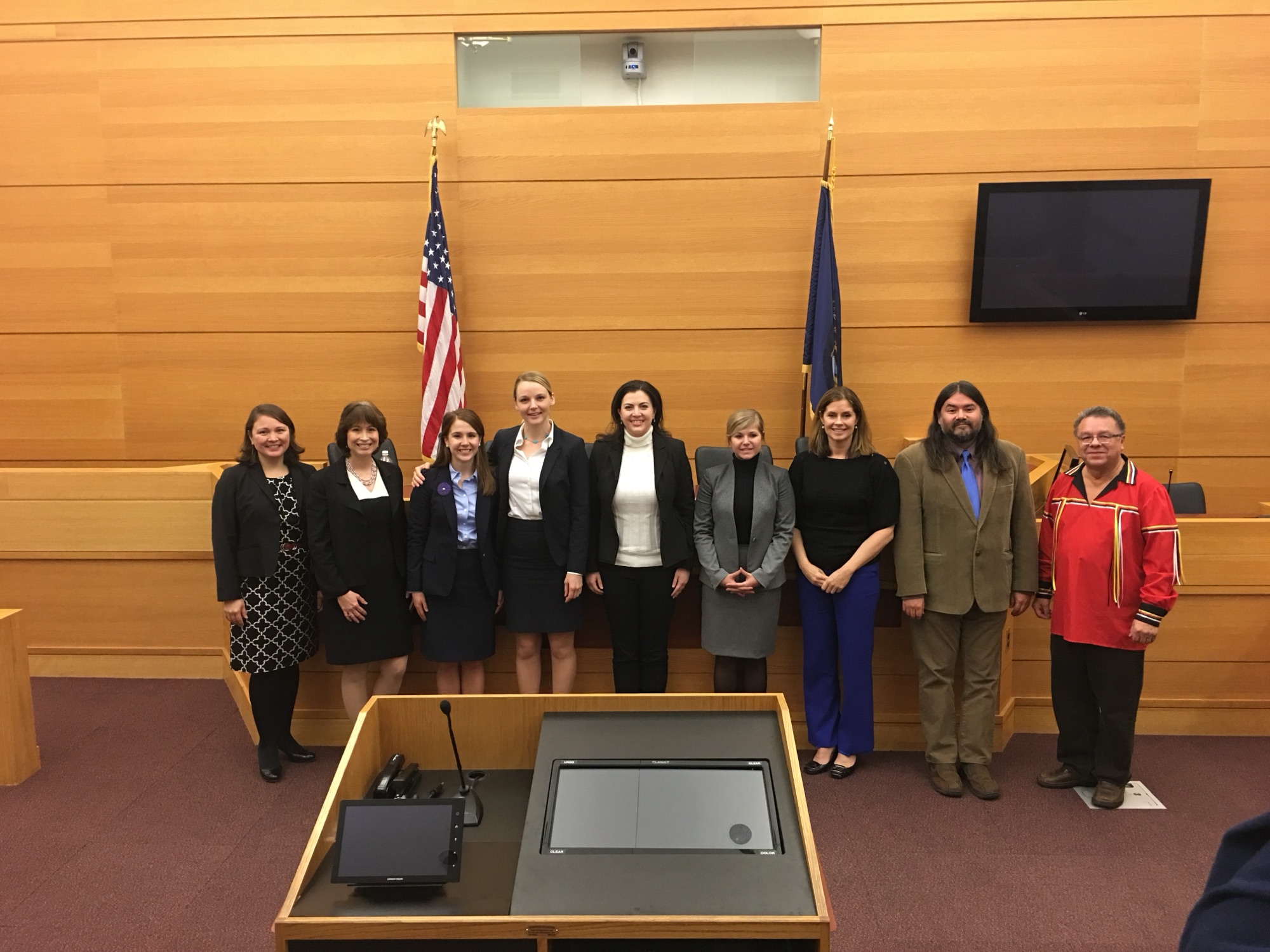
Northwestern Univ. Law School National NALSA Moot Court Call for Judges

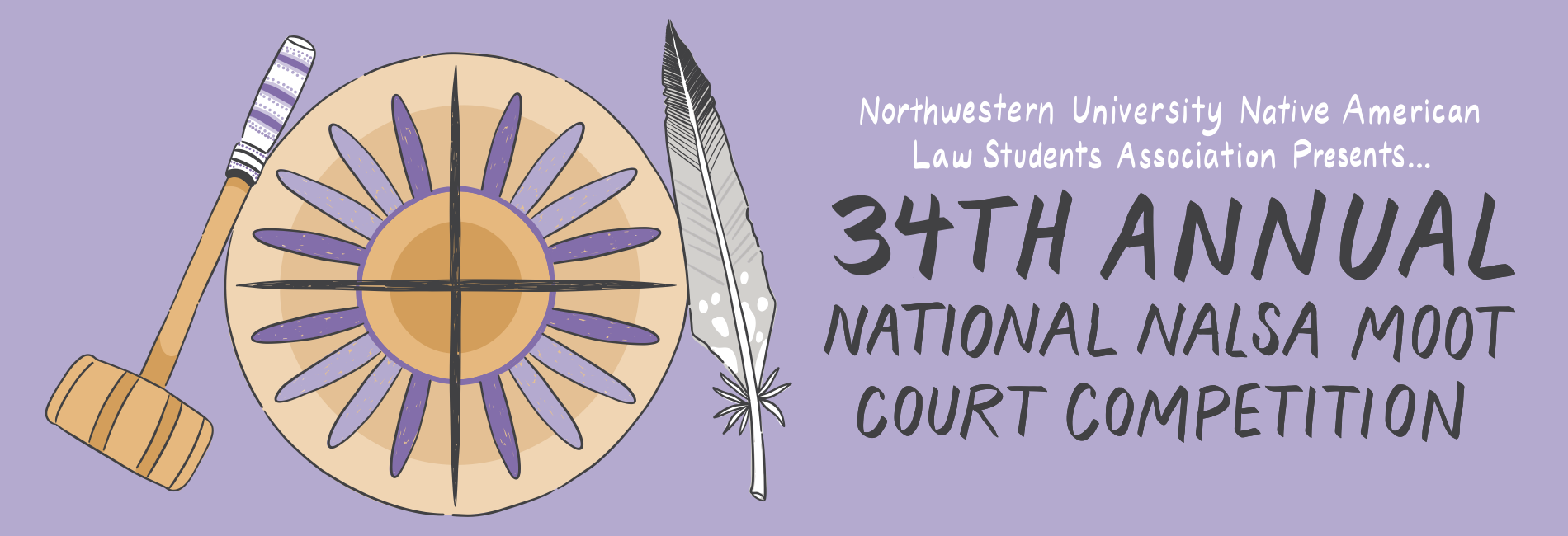
The National Native American Law Students Association (NNALSA) is excited to announce that its 34th Annual NNALSA Moot Court Competition will be hosted by Northwestern Pritzker School of Law. The Competition will take place on February 13-14, 2026, at Northwestern Law in Chicago, IL. 

NNALSA was founded in 1970 to support law students who are interested in federal Indian law, tribal law, and traditional forms of governance. Each year, NNALSA sponsors a moot court competition for law students who have a passion for Indian law and litigation.

We ask for your support and invite you to be part of this exciting event by contributing as a volunteer judge. Please fill out this link to share your interest and availability. Ahehee’ (Thank you)!
If you have any questions or comments, please email Colin Tompson at mootcourt@nationalnalsa.org

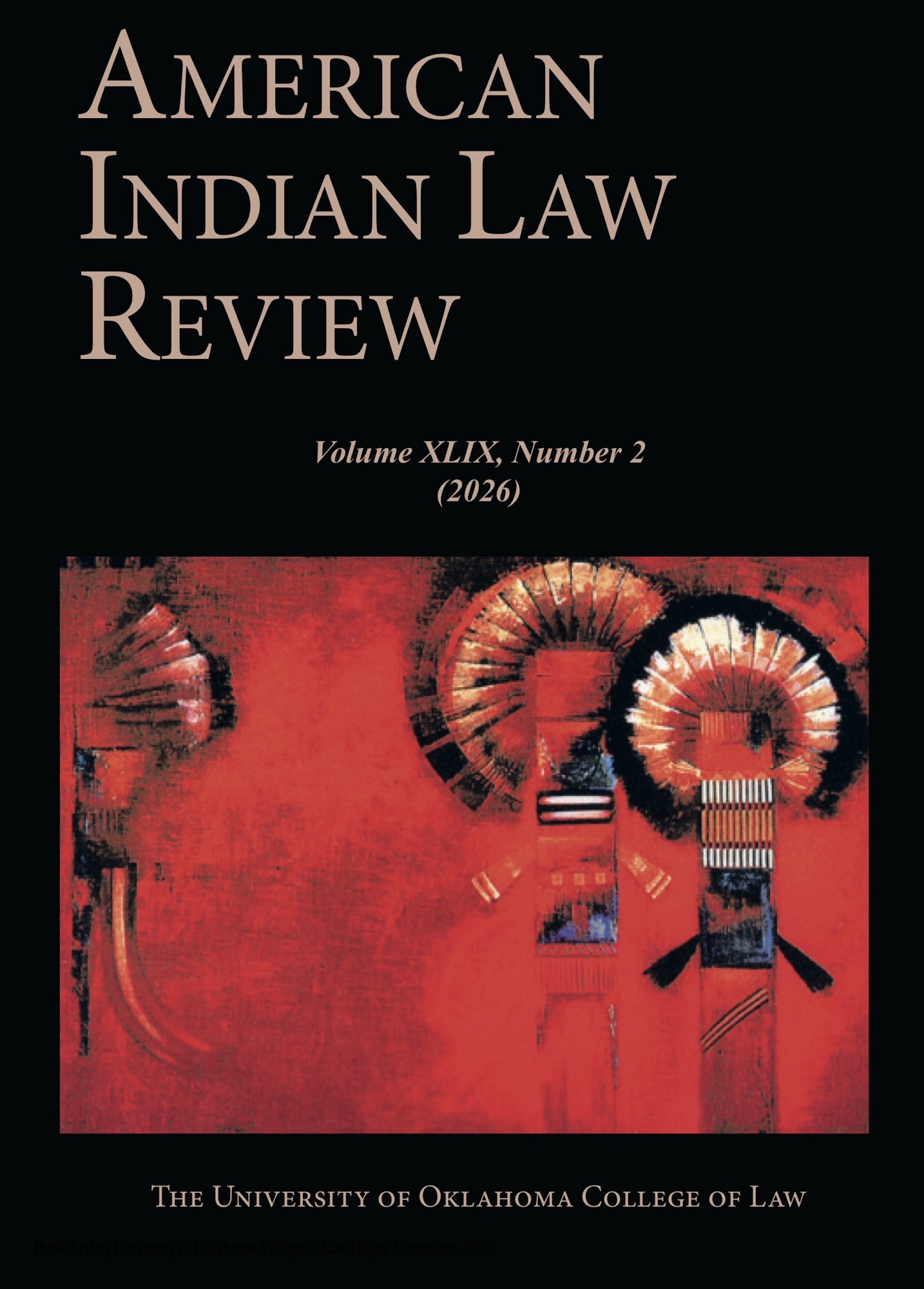
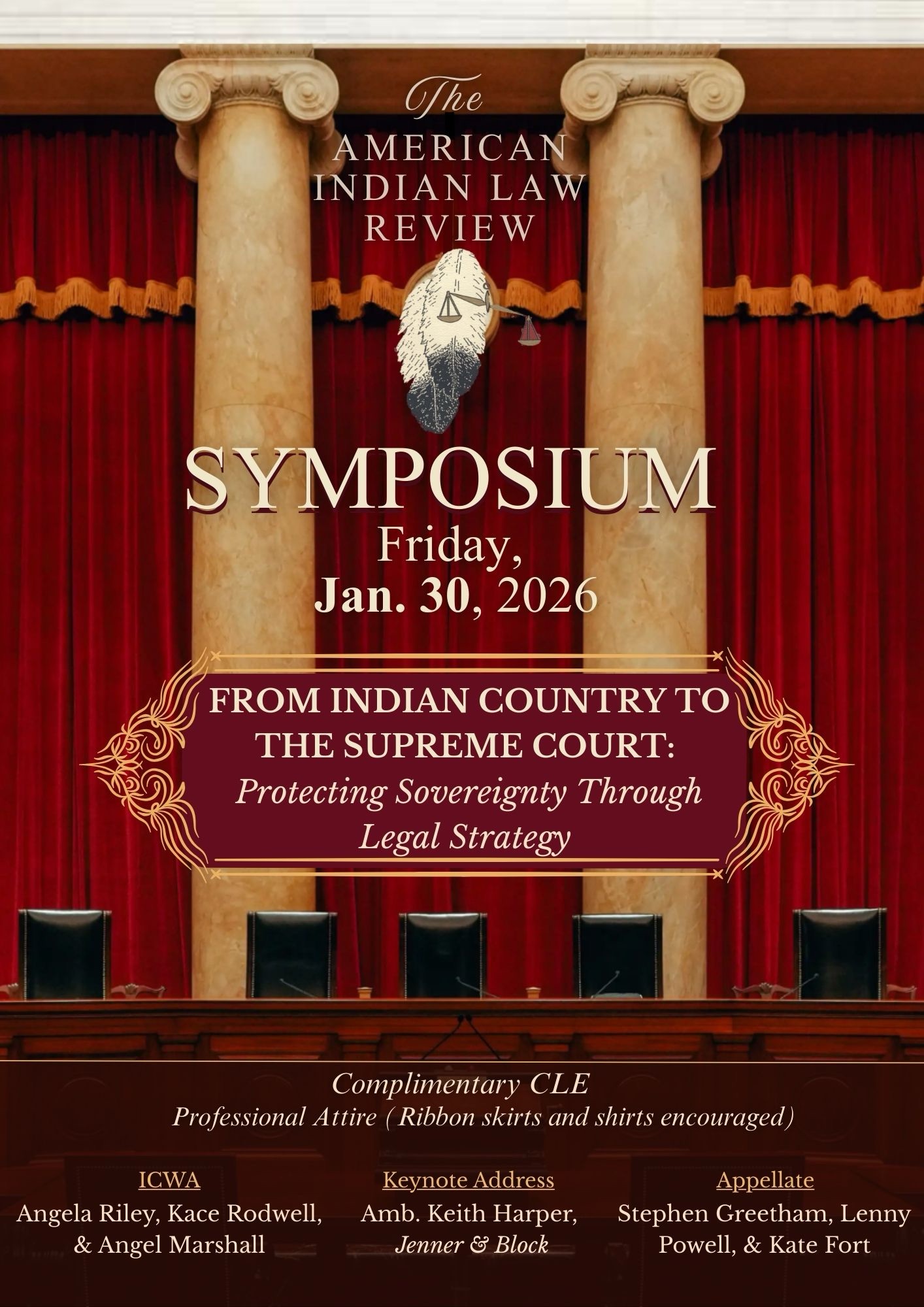
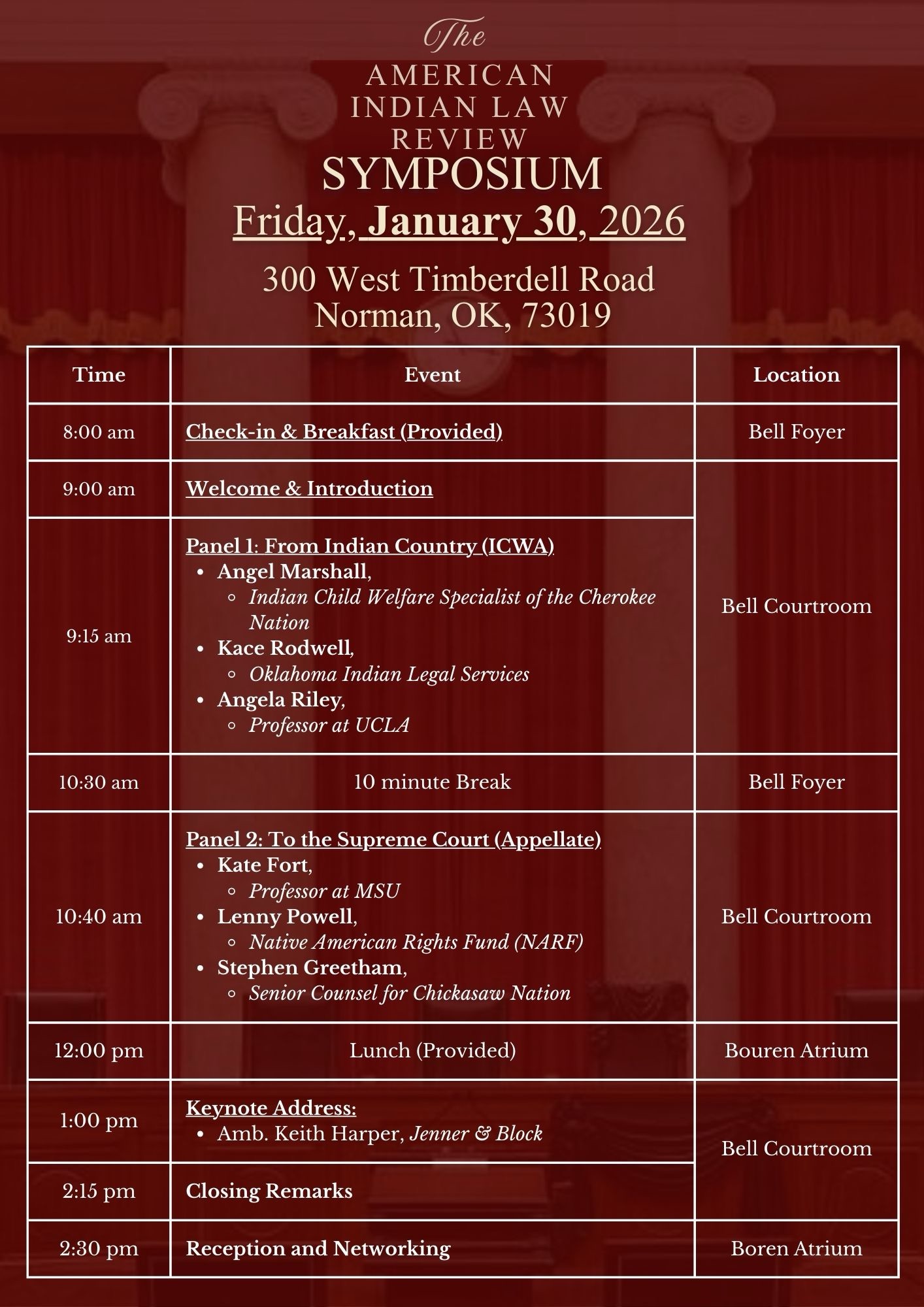
2025-2026 American Indian Law Review National Writing Competition

Announcing the 2025-2026 American Indian Law Review National Writing Competition

This year’s American Indian Law Review national writing competition is now welcoming papers from students at accredited law schools in the United States and Canada.  Papers will be accepted on any legal issue specifically concerning American Indians or other indigenous peoples.  The winning entry will receive $1,500 and publication by the American Indian Law Review, and will also be awarded an eBook copy of Cohen’s Handbook of Federal Indian Law, provided by LexisNexis

The deadline for entries is Friday, February 27, 2026, at 6 p.m. Eastern Standard Time.

Sponsored by the University of Oklahoma College of Law, the American Indian Law Review has proudly served Native and legal communities since 1973.  Each year at this time we encourage law students nationwide to participate in this, the longest-running competition of its kind.  Papers will be judged by a panel of Indian law scholars and by the editors of the Review.

For further information on eligibility, entry requirements, and judging criteria, see the attached PDF rules sheet or the AILR writing competition website at https://law.ou.edu/ailr/wc.

Stanford Law Review Symposium: Promises of Sovereignty

Here:

Mantle
Symposium – 2025 – Promises of Sovereignty Tribal Sovereignty, Justice Gorsuch, and the Letter of the Law by  Desmond Mantle  on  July 23, 2025 I meant what I said, and I said what I meant. An elephant’s faithful, one hundred percent!  —Dr. Seuss, Horton Hatches the Egg Introduction This Comment seeks to defend Justice Neil Gorsuch’s approach to statutory interpretation, arguing against pragmatist efforts to reduce the Supreme Court’s reliance on textualism and against efforts by fellow self-proclaimed textualists…Volume 77 (2024-2025)
Kinsbury
Symposium – 2025 – Promises of Sovereignty What We Talk About When We Talk About (Indian) Sovereignty: Montana and the Application of General Statutes to Tribes by  Annelisa Kingsbury Lee  on  July 23, 2025 Montana v. US is a case about tribal civil jurisdiction. Yet it has had a second life in a surprising context: federal statutes of general applicability that do not mention tribes. This Comment explores the circuit split on these silent statutes and shows that Montana is the doctrinal lynchpin for every court that has considered…Volume 77 (2024-2025)
Cui
Symposium – 2025 – Promises of Sovereignty Separation-of-Powers Formalism and Federal Indian Law: The Question of Executive Order Reservations by  Isaac Cui  on  July 23, 2025 Introduction The creation of Indian reservations largely coincided with and was facilitated by the development of presidential authority to withdraw public lands for Indian purposes. Of the roughly 42.8 million acres of total tribal trust lands in 1951, slightly over 23 million were set aside through executive order. That number far dwarfs any other method…Volume 77 (2024-2025)
Schilfgaarde
Symposium – 2025 – Promises of Sovereignty Tribal Revestiture by  Lauren van Schilfgaarde  on  July 23, 2025 I. Implicit Divestiture Presumes Cultural Incompatibility Tribes have a precarious political posture in relation to the United States. Tribes are distinctly sovereign and extra-constitutional, but are also without meaningful external infrastructure to define and protect their legal status in relation to the United States. That is, the U.S. recognizes Tribes as “domestic dependent nations,” but…Volume 77 (2024-2025)
Riley
Symposium – 2025 – Promises of Sovereignty Indigenous Rights to Culture: What’s Next? by  Angela R. Riley  on  July 23, 2025 Introduction For more than two centuries, the United States has maintained—in law and in practice—a colonial system designed to destroy Indigenous peoples’ culture. My work has explored this phenomenon from a property lens, explaining how attacks on Indigenous cultures traverse and encompass all categories of property, including real, tangible, and intangible. From a property perspective,…Volume 77 (2024-2025)
Mills
Symposium – 2025 – Promises of Sovereignty The Supreme Court’s Old Habits in a New Era? Native Nations, Statehood, and an Indigenous-led Future for Natural Resources by  Monte Mills  on  July 23, 2025 Introduction After rising from the depths of eras in which the United States intended to eliminate Native Nations, tribal sovereignty remains ascendant. With respect to natural resources, the governance of Native Nations has expanded to more fully occupy the legal space reserved in treaties with the United States. Across the country, Native Nations have built…Volume 77 (2024-2025)
Lewerenz
Symposium – 2025 – Promises of Sovereignty Federal Indian Law in a Time of Judicial Self-Aggrandizement by  Dan Lewerenz  on  July 23, 2025 Introduction The Supreme Court is accumulating power. Call it “concentrating power in the court,” a “judicial power grab,” or (as a growing number of scholars are calling it) “judicial aggrandizement” or “judicial self-aggrandizement.” Each of these ideas describes a Supreme Court that is upsetting accepted notions of the separation of powers—accumulating power for itself, often…Volume 77 (2024-2025)
Fletcher
Symposium – 2025 – Promises of Sovereignty Against Judicial Generalists by  Matthew L.M. Fletcher  on  July 23, 2025 There is something irritatingly wrong with Indian law practice at the Supreme Court. Oral argument at the Supreme Court is a bitterly unpleasant affair for Indigenous people and tribal advocates for a lengthy variety of reasons. It is canonical that tribal advocates must attempt to avoid Supreme Court review; the strategic thinking is that the…Volume 77 (2024-2025)
Davis
Symposium – 2025 – Promises of Sovereignty Can the Roberts Court Find Federal Indian Law? by  Seth Davis  on  July 23, 2025 Introduction Imagine the lost world of “lawfinding.” In that world, there was a general common law for federal judges to find. And in that world, each statute had a “single, best meaning” for judges to unearth with the traditional tools of statutory interpretation. Of course, we are not going back to that world. Too much…Volume 77 (2024-2025)

UCLA Law Review Symposium Issue — Red Rising: The Shifting Legal Landscape of Tribal Sovereignty

Here:

American Indian Law Journal, Vol. 13, Issue 2

Here:

Current Issue: Volume 13, Issue 2 (2025)

Articles

PDF

Development and Practice of Tribal Community Planning: Ensuring Indigeneity in the Planning Process
Jared E. Munster, Ph.D.

PDF

The Onondaga Nation’s Land Claim: Rights Without a Remedy?
Larissa Speak

Note

PDF

Case Law on American Indians: September 2023 – August 2024
Thomas P. Schlosser

Manuel Lewis (UMLS) on Tribal Sovereignty and the Decline of the Administrative State

Manuel Lewis has posted “The Decline of the Administrative State and its Potential Effects on Tribal Sovereignty” on the Michigan Journal of Environmental and Administrative Law’s blog.

An excerpt:

The federal government of the United States, including federal agencies, owes a trust responsibility to Tribes. The contemporary federal administrative state has given greater authority over agency decisions to the federal judiciary while simultaneously reducing government funding for various agencies’ operations. As a result, it is unclear that the federal government will continue to adhere to its trust responsibility in agency actions. Failure to account for Tribal governments in the current administrative state is a violation of the United States’ duty to Tribes and calls for greater advocacy to ensure the protection of Tribal interests—both in federal agencies and in federal courts.

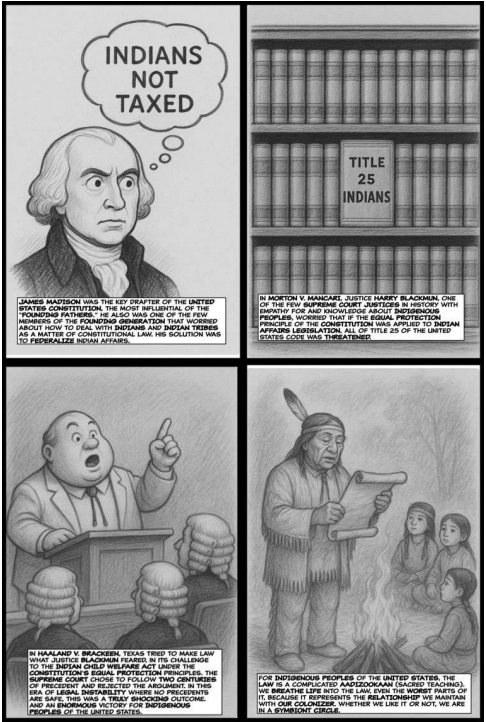
This bullshit AI art is no reflection on Manny’s great work. (Look at those cheeks!)

Pics from LLSA/NALSA Talk with Dr. Estevan Rael-Galvez

Luis c.deBaca, Estevan Rael-Galvez, and Fletcher
LLSA and NALSA
Ashley and Andrew!

Michigan NALSA Panel on MMIR, April 22, 2025

LLSA/NALSA Talk Thursday

Fletcher’s April Fool’s Day Visit to Yale, Courtesy of the YLJ

With Megan Gupta and Ashlee Fox
With Gerald Torres, too
Bobby and Ryan’s mural at the Yale NACC
One of Yale’s ghosts