Yale Law Journal Article Submissions Portal Opens Feb. 1

The Yale Law Journal plans to reopen its submissions portal for Articles & Essays on Saturday, February 1.

Submissions guidelines and portal can be found here. Any questions you might receive about the submission process can be referred to our Managing Editors, Ako Ndefo-Haven (ako.ndefo-haven@yale.edu) and Matt Beattie-Callahan (matt.beattie-callahan@yale.edu).

Updated Harvard NALSA Symposium Info. Feb 28, 2025

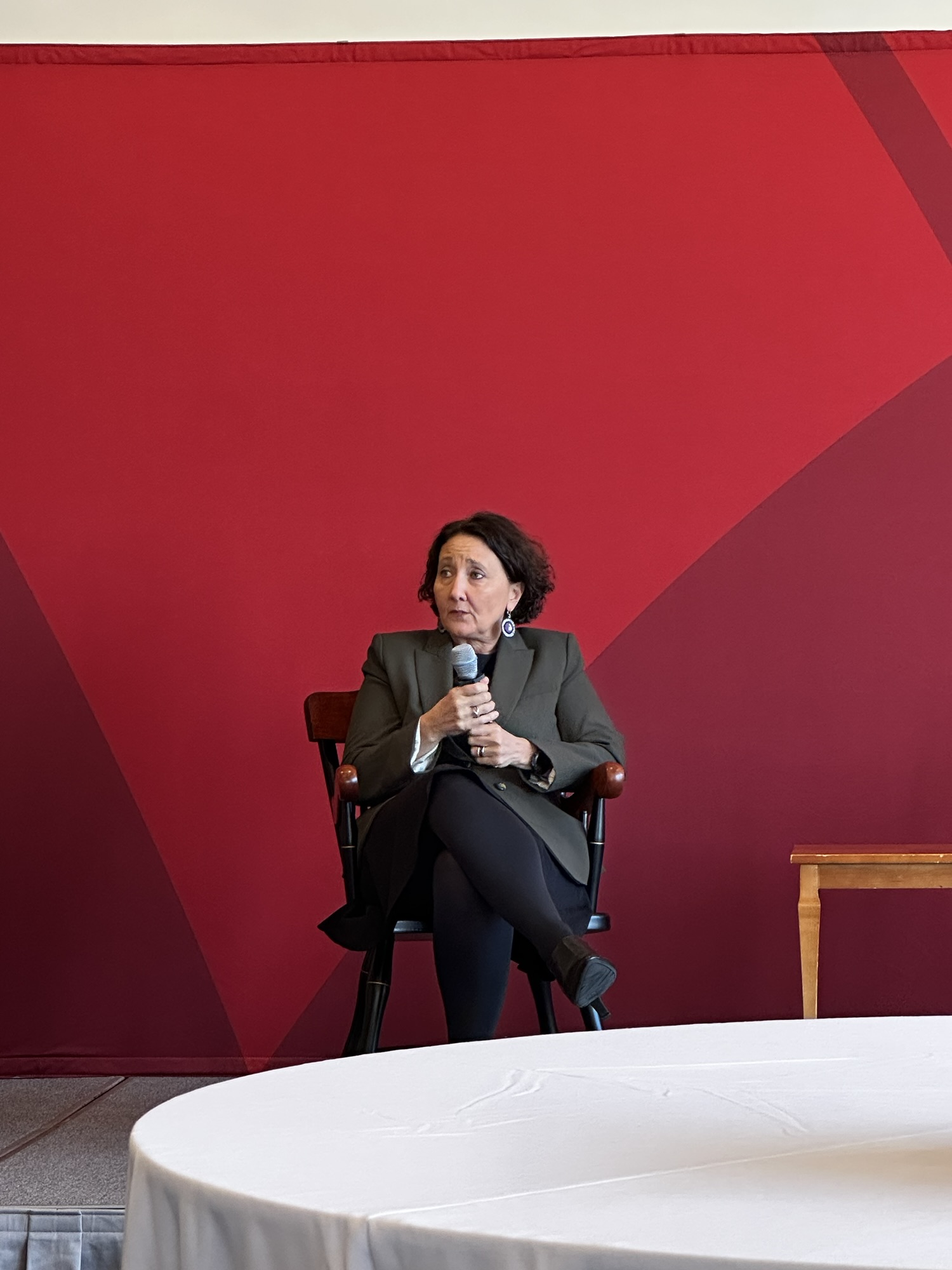
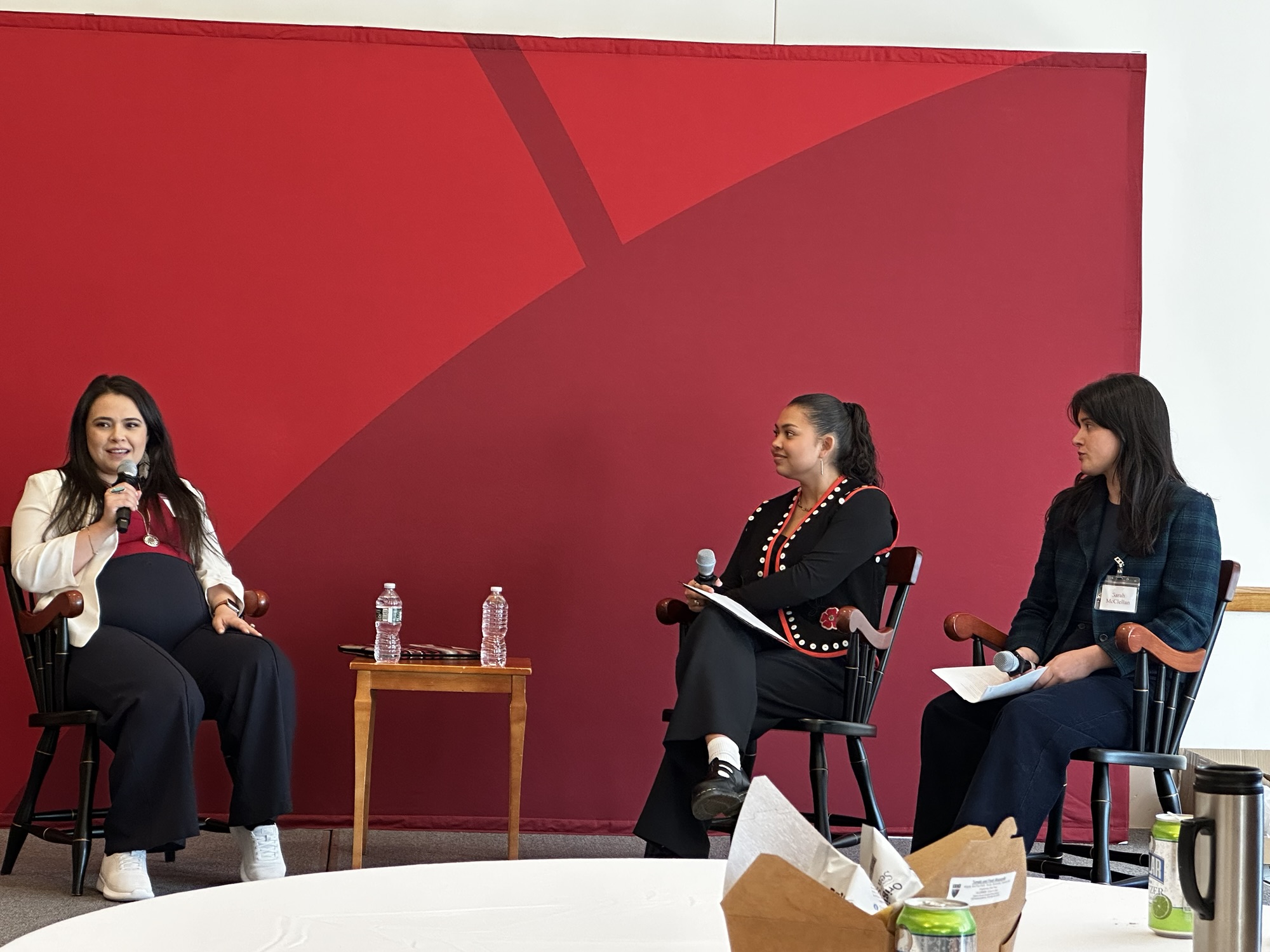
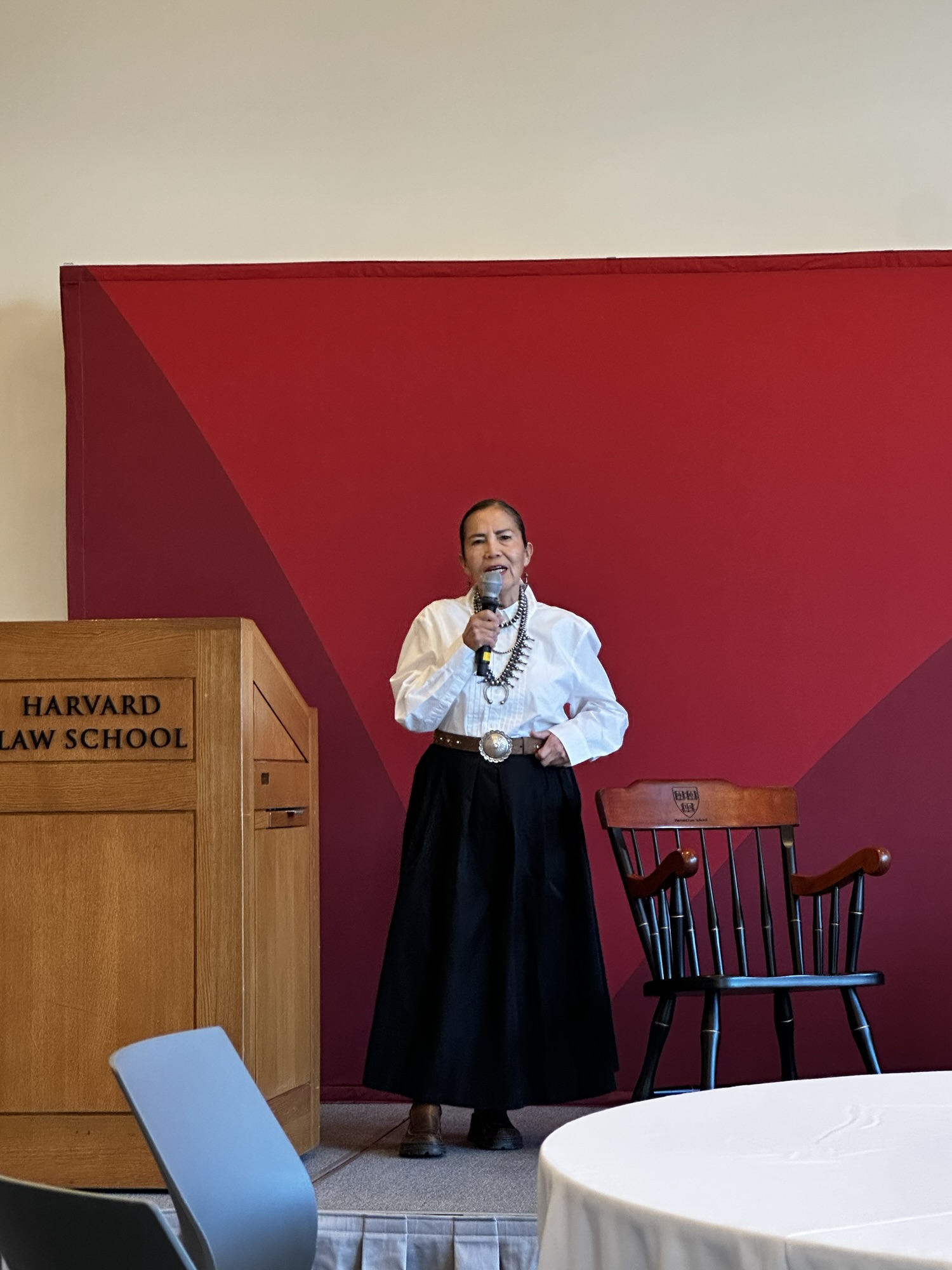
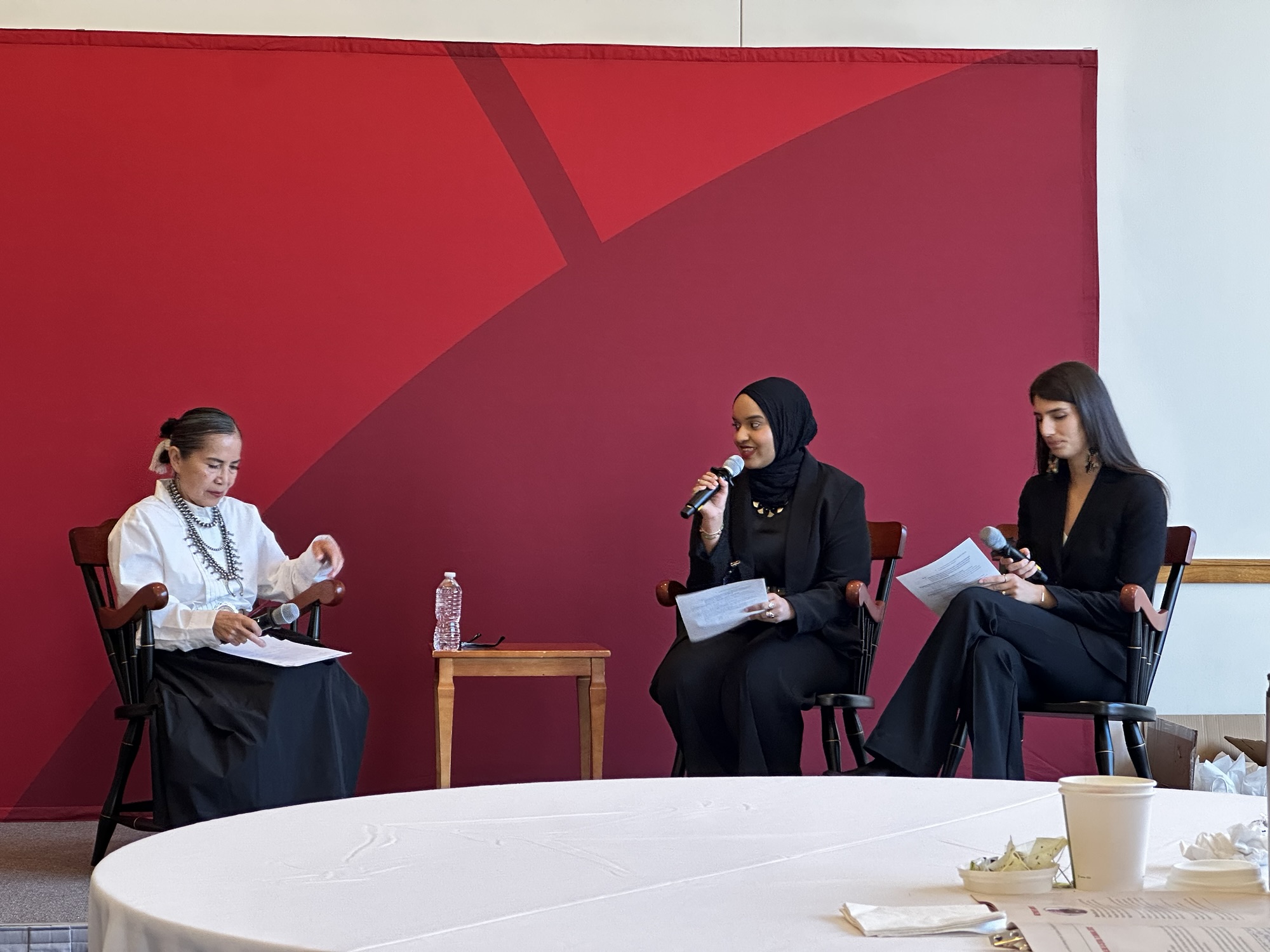
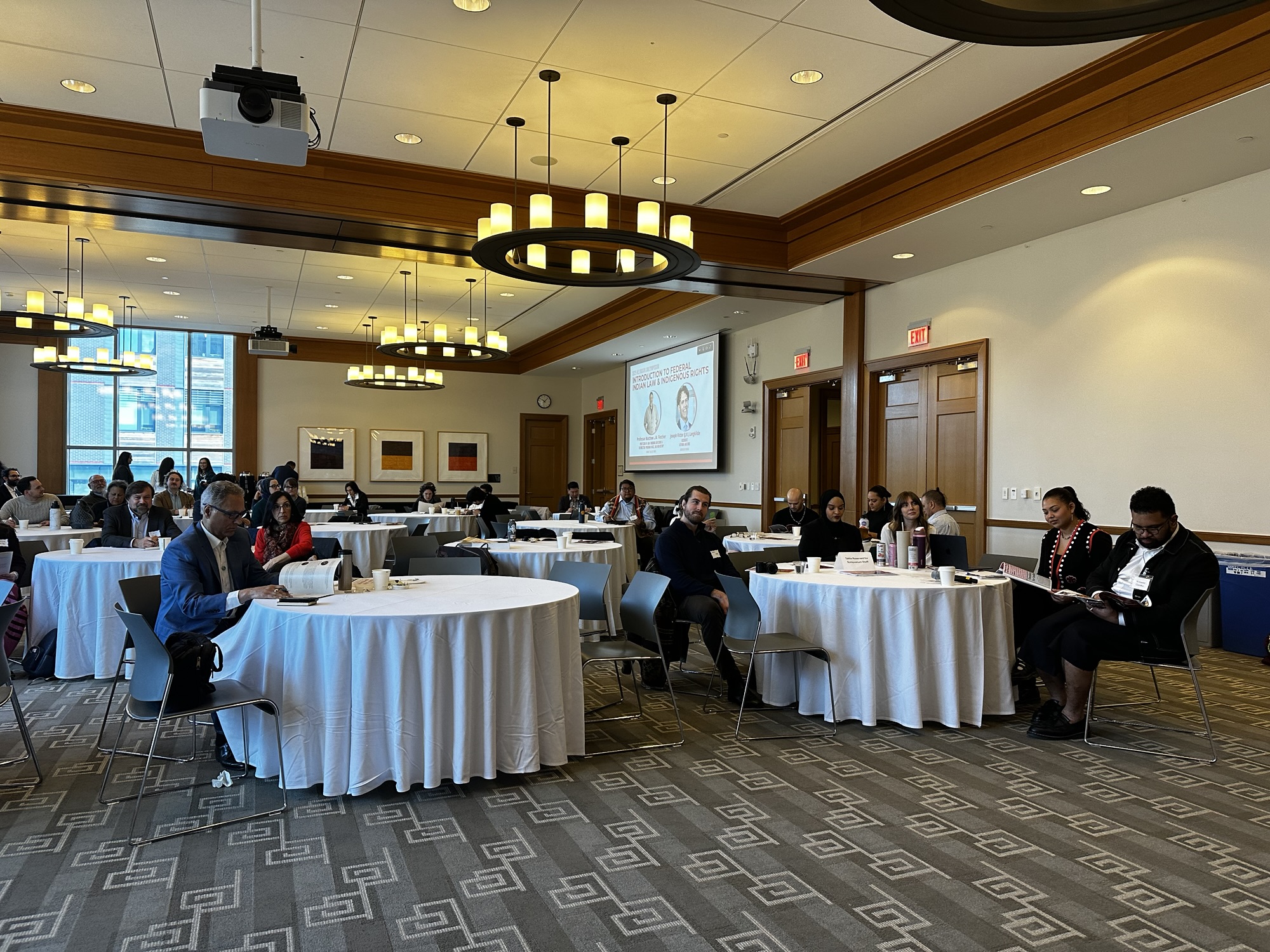
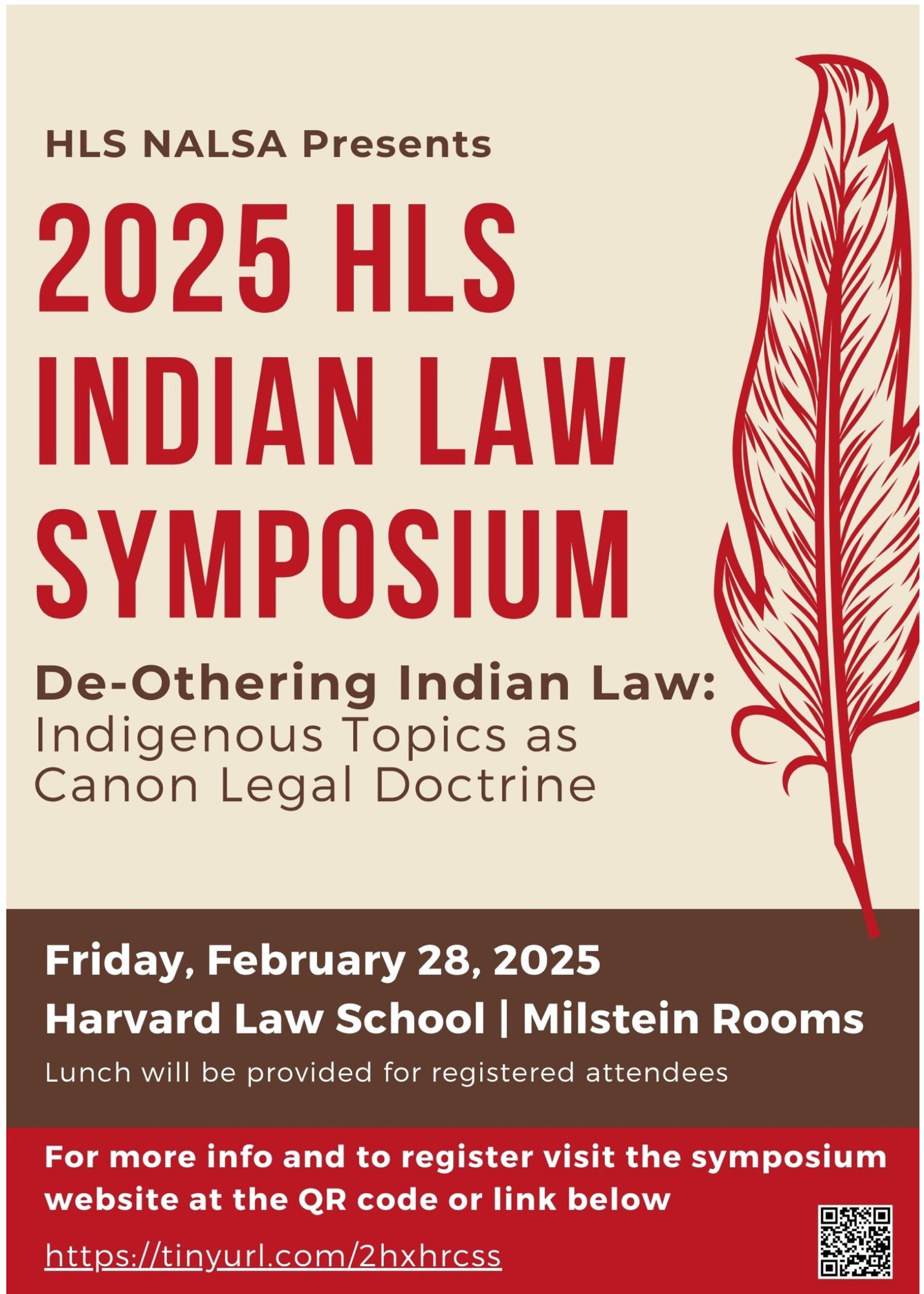
The Harvard Law School (HLS) Native Law Students Association (NALSA) is excited to present the 2025 HLS Indian Law Symposiumtitled”De-Othering Indian Law: Indigenous Topics as Canon Legal Doctrine.” 

The symposium will be a day-long event on Friday, February 28, 2025,from 9am – 5pm
The symposium is open to the public and free to attend forregistered attendees. You can register using the form link located on the symposium website.

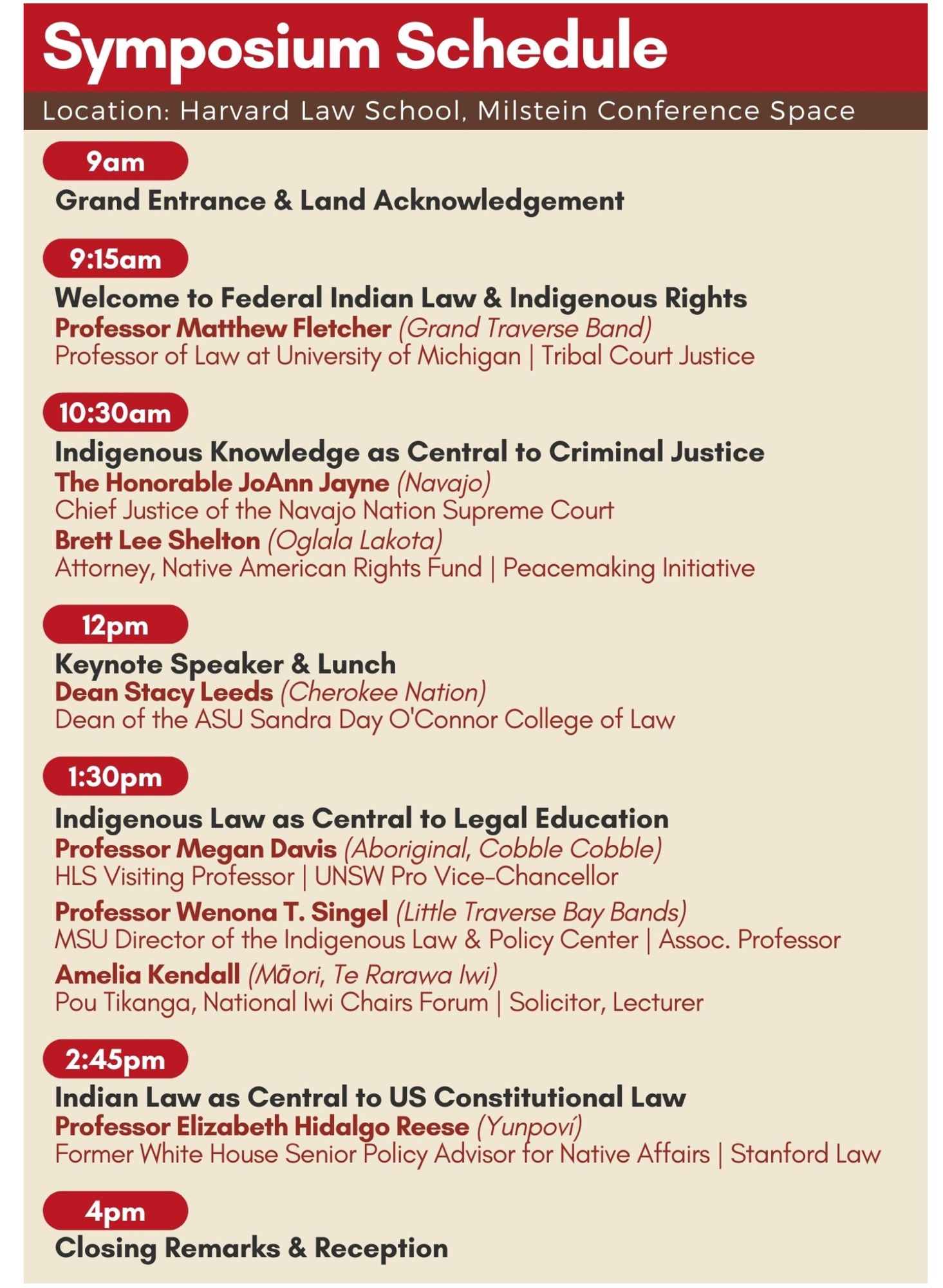
We have an amazing line-up of speakers coming, including: 
U.S. District Court Judge Sunshine S. Sykes, ASU Law School Dean Stacy Leeds, Navajo Nation Chief Justice JoAnn Jayne, White House Senior Policy Advisor on Native Affairs and Stanford Professor Elizabeth Reese, UNSW & HLS Professor Megan Davis, MSU Professor Wenona T. Singel, and University of Michigan Professor Matthew Fletcher

For those interested in a virtual link to the symposium, please fill out the registration form and indicate interest in a virtual live stream option. 

For any questions, please contact nalsa@mail.law.harvard.edu

Stanford NALSA Admissions Panel — Jan. 26

Register here:

Join the Native American Law Students Association (NALSA) to learn more about the law school application process. Current NALSA members will provide tips, best practices, and answer general questions about SLS and admissions. This event is open to the public.

Harvard NALSA Indian Law Symposium Feb. 28, 2025

More details here (updated Jan. 20, 2025):

The Harvard Law School (HLS) Native Law Students Association (NALSA) is excited to present the 2025 HLS Indian Law Symposiumtitled”De-Othering Indian Law: Indigenous Topics as Canon Legal Doctrine.” 

The symposium will be a day-long event on Friday, February 28, 2025,from 9am – 5pm
The symposium is open to the public and free to attend forregistered attendees. You can register using the form link located on the symposium website.

We have an amazing line-up of speakers coming, including: 
U.S. District Court Judge Sunshine S. Sykes, ASU Law School Dean Stacy Leeds, Navajo Nation Chief Justice JoAnn Jayne, White House Senior Policy Advisor on Native Affairs and Stanford Professor Elizabeth Reese, UNSW & HLS Professor Megan Davis, MSU Professor Wenona T. Singel, and University of Michigan Professor Matthew Fletcher

For those interested in a virtual link to the symposium, please fill out the registration form and indicate interest in a virtual live stream option. 

For any questions, please contact nalsa@mail.law.harvard.edu

National NALSA Writing Competition Deadline Feb. 22, 2025

Here:

The National NALSA Writing Competition is sponsored by the National Native American Law Students Association (“National NALSA”). This 2024-25 academic year, Seattle University School of Law is hosting the Competition in collaboration with the Center for Indian Law and Policy, American Indian Law Journal (“AILJ”), and Seattle University’s Native American Law Students Association (“NALSA”) chapter. The goal of the Competition is to encourage law students to become involved with National NALSA and increase awareness and education regarding legal issues that impact Native Nations, Inter-tribal organizations, and Indigenous communities.

Submission deadline is February 22, 2025. Please review the competition brochure, website, and rules linked below.

2025 Writing Competition Website

2025 Brochure

Writing Competition Rules

Call for Papers: Texas Journal of Civil Rights and Civil Liberties Indigenous Rights Symposium

The Texas Journal of Civil Rights and Civil Liberties is seeking articles from legal scholars, practitioners, or individuals with unique expertise on legal issues pertaining to Indigenous Rights for our spring special issue. If you have any articles on Indigenous issues, please submit them to us via scholastica or to this email (tjclcrsubmissions@gmail.com). Feel free to forward this to any colleagues that may also be interested! Article length can vary (typically from 30-60 pages) and so can topics. Any questions or concerns can also be sent to the TJCLCR submissions editor at this email: tjclcrsubmissions@gmail.com.  

2024-25 American Indian Law Review National Writing Competition

Here:

Announcing the 2024-2025 American Indian Law Review National Writing Competition

This year’s American Indian Law Review national writing competition is now welcoming papers from students at accredited law schools in the United States and Canada.  Papers will be accepted on any legal issue specifically concerning American Indians or other indigenous peoples.  Three cash prizes will be awarded: $1,500 for first place, $750 for second place, and $400 for third place.  Each of the three winning authors will also be awarded an eBook copy of Cohen’s Handbook of Federal Indian Law, provided by LexisNexis.

The deadline for entries is Friday, February 28, 2025, at 6 p.m. Eastern Standard Time.

Sponsored by the University of Oklahoma College of Law, the American Indian Law Review has proudly served Native and legal communities since 1973.  Each year at this time we encourage law students nationwide to participate in this, the longest-running competition of its kind.  Papers will be judged by a panel of Indian law scholars and by the editors of the Review.

For further information on eligibility, entry requirements, and judging criteria, see the attached PDF rules sheet or the AILR writing competition website at https://law.ou.edu/ailr/wc.

Vermont Law Review Symposium Panel on the Indian Child Welfare Act, Today @ Noon

Link to YouTube livestream here. Panelists are Lauren van Schilfgaard and Fletcher.

Hosted by the Vermont Law Review, this symposium will focus on legal challenges and innovative solutions to protect our most vulnerable population: children. It will be held as a four-part lunch series beginning on Thursday, September 19.

The first installment will focus on the Indian Child Welfare Act (ICWA). The discussion will explore the impact of recent Supreme Court decisions on ICWA and its long-term implications for Native American children and tribal sovereignty.

If you’re unable to join us in person on the VLGS campus, a livestream will also be available. You can access the livestream via the button below or by clicking here.

Approaching 55 Years, National NALSA Continues Filling Gaps in Legal Education

By Katie Mimini. Katie Mimini is a JD/MPP student at Columbia Law School and the Harvard Kennedy School.

“What is ICWA?” asked the visiting speaker, sitting in the front of a packed classroom at Columbia Law School.

He was not familiar with the Indian Child Welfare Act, a federal law enacted in 1978 to protect Native families and communities after decades of government-sanctioned child separation. A lawyer and graduate of a prestigious law school, the speaker was discussing impactful cases the Supreme Court would decide in the 2022–2023 term. But when a student raised his hand to ask about Haaland v. Brackeen, an upcoming Supreme Court case that could have declared ICWA unconstitutional, the speaker was not familiar.

The student who raised his hand was Eldred Lesansee—a member of the Pueblo tribes of Jemez and Zuni, one of a handful of Native law students at Columbia, and someone who has often found himself educating other students, professors, and even visiting speakers about Indian law. In elite legal circles and in law schools across America, Indian law issues are commonly ignored, waived away, or simply unknown. For students like Lesansee, the labor of educating others can create a deep sense of loneliness and burden. And because of the systemic failure across law schools to uplift Indian law and Native law students, many non-Native law students will never get to hear Native perspectives on the law at all.

Eldred Lesansee

“The foundations of law were used on Native tribes, Indian nations,” says Lesansee. “And so that presence in itself is so integral to American jurisprudence that without a Native student in the classroom, you wouldn’t think twice about, ‘Oh, that’s just how it is.’” Meanwhile, cases such as Haaland v. Brackeen, which had gained an unusually high profile for a case about Indian law, have increased interest in the subject, at least temporarily.

But law professors often skip over Indian law issues, leaving them off exams and thereby sending a direct signal to students that this is not something they need to know. “It’s a really hostile thing to do,” says Matthew Fletcher, the Harry Burns Hutchins Collegiate Professor of Law at the University of Michigan Law School and member of the Grand Traverse Band of Ottawa and Chippewa Indians. “It’s a direct insult, frankly, to Native students or any student interested in learning more about Indian law and policy.”

The insult is particularly damaging given the low numbers of Native law students across the country and the isolation many of them face in their institutions. In 2023, about 0.5% of all J.D. students were Native (aggregating the categories American Indian, Alaska Native, Native Hawaiian, and Other Pacific Islander). According to mandatory reports to the American Bar Association (ABA) in the same year, only nine law schools out of 196 had more than ten Native law students enrolled. The highest number by far was at Mitchell Hamline School of Law in Minnesota, with 42 Native law students out of 1,209 total J.D. students, or about 3.5%.

Outside of a few law schools that have dedicated resources to Indigenous scholarship, few law schools create robust offerings or cultures that are welcoming and inclusive of Native students. “There are probably tiers,” says Makalika Naholowa’a, the 2023–2024 president of the National Native American Bar Association (NNABA) and a Native Hawaiian. NNABA’s Young Lawyers Committee prepares a scorecard that evaluates Indian law offerings at ABA-accredited law schools, including whether the school offers a class on Indian law, whether it has any Native law professors, and whether it provides experiential opportunities in Indian law. “I think top tier is the [schools that] . . . . have true centers for this. And then I think there’s a second tier where they have more than nothing,” Naholowa’a says. “And then I think there’s a steep cliff where if you’re a Native student, [it’s] NALSA.”

Makalika Naholowa’a

NALSA refers to an individual law school chapter of the National Native American Law Students Association (National NALSA), an organization run by Native law students that provides many of the opportunities and services that law schools themselves will not. In April 2023, Eldred Lesansee was elected president of National NALSA for the 2023–2024 school year. Founded in 1970, National NALSA oversees 43 registered chapters at law schools across the country. “Unfortunately, not every law school can have a chapter, just because there are very few Native American law students generally,” Lesansee explains. “Usually there’s no Native American professor, or faculty, or staff member to help with the organization, to keep the knowledge going.”

For that reason, Lesansee sees National NALSA’s role as filling gaps: the gap between what Native law students need and what their law schools provide, and the gap between Native law students who may feel isolated and the larger Native legal community.

National NALSA’s annual flagship activities include a national moot court competition, a national writing competition, two conferences, awards, and several scholarships to support Native students. The moot court competition attracts teams of law students, Native and not, from across the country to work on a federal Indian law issue. “Where do you learn the substantive legal skills of being a lawyer in an Indigenous-governed space as a law student? I don’t think there is one other than the moot court” for most students, says Naholowa’a, who helped lead the Columbia NALSA chapter and participated in the moot court during her time in law school. “[National] NALSA creates opportunities for people to connect, to network in ways that are culturally sensitive, that are honoring of their identity,” she says.

These opportunities also include numerous events—broadcast widely to membership on Zoom and social media—highlighting substantive federal Indian law issues, professional advancement, and cultural celebration, says Lesansee. For Indigenous Peoples’ Day in October 2023, Columbia’s NALSA chapter, also led by Lesansee, worked with the administration to install a Native land acknowledgement plaque at the law school. And as a celebration, they hosted a dance performance by a Pueblo cultural dance group, with a live broadcast bringing close those who may have felt far.

More generally, National NALSA allows students to pursue opportunities for advancement that might not be available to them locally, even through their school’s NALSA chapter (if they have access to one). National NALSA “is really important for creating a network and a cohort of people that you can always reach out to,” says Fletcher, who serves as the faculty advisor for the NALSA chapter at Michigan Law School. “It also provides a lot of opportunity for leadership positions. And I think you see a lot of people that maybe even in their own institution feel sort of overwhelmed or not really a part of the law school. But through National NALSA, they can find a spot and they can rise above and shine.”

In this way, National NALSA and its local chapters help fill perhaps the biggest gap of all: the gap between the number of lawyers Native communities have and the number they need. “So many of the most important battles for our peoples in the last two hundred years have not been fought out on the fields in combat, but in courtrooms and legislative sessions,” Jasmine Neosh, Director of Public Relations for National NALSA and a citizen of the Menominee Nation, explains over email. “And often we have had to go in with little to no defense (if we are present at all).”

Jasmine Neosh

For Native communities, then, growing and nurturing more Native law students is existential. “It’s funny that we’re on this desperate journey for proportional representation—that’s nowhere near in sight,” says Naholowa’a. “And, actually, that probably is not enough. Because there’s so much stacked against that, actually, you need more hands in all the different places activating on this really complex, mature, mature system to effect change.”

And for Native people who make it to law school and become lawyers, participating in NALSA allows them to embrace their identities in the face of immense pressure to assimilate. Many people, argues Naholowa’a, assimilate in the professional sphere “so that cultural difference, as much as possible, is not the reason that you’re not successful.”

But “it’s unfair to ask Native people to assimilate, even professionally, because the existence and perpetuation of our cultures is so fragile,” she continues. “You might be one of five practitioners that have been vested with the knowledge of some cultural practice. You might have learned how to speak your language from one of the last native speakers on earth. So, asking them to assimilate so that they can be accepted professionally is tantamount to asking them to be the last of their kind, even if genetically they perpetuate their genes. You’re asking them to be a part of their genocide.”

For this year’s National NALSA board, the focus is on the future—both for the organization and for the community. “It is an amazing time to be a Native law student because it’s clear that things are changing,” writes Neosh. “Thanks to all the great people who have paved the way for us and the amazing students who are taking things even further.”

And for Lesansee, who has recently been re-elected for a second year as National NALSA’s president, embracing this bright future means recognizing how National NALSA is paving the way for others right now. “National NALSA, we’re at our 55th year this year,” he explains. “But as we move for the next 55 years, a lot of the work that we’re doing is reaffirming the foundation and really building out that foundation.”

Since long before he started law school, Lesansee knew he wanted to be a part of National NALSA and his NALSA chapter. “This has really been a love letter to Indian country, the Native law community,” he says. “But also those that are coming up behind me.”

* * *

National NALSA is celebrating its 55th anniversary this academic year. Please visit www.nationalnalsa.org to learn how to get involved and how to support Native American law students.

Montana Law Review and the Public Land and Resources Law Review Call For Papers

Here: