Last night the 1491s performed at the Kellogg and then came by the law school for a reception catered by the incomparable Eva Menefee.
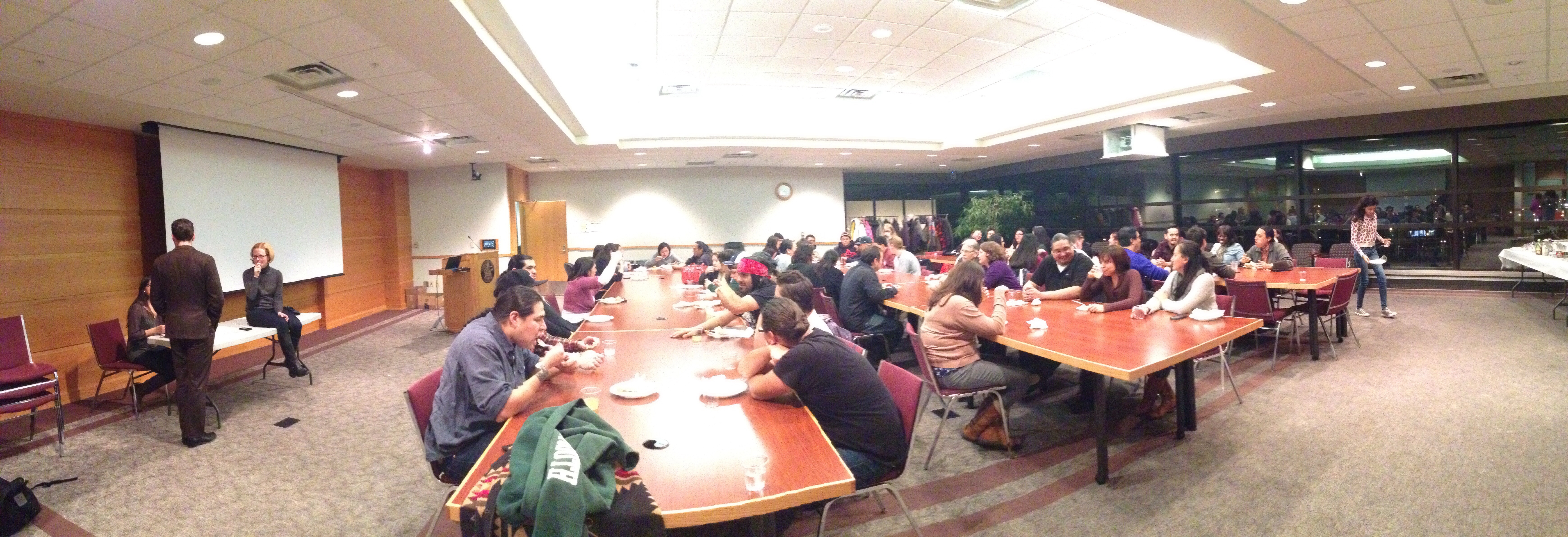
Good eats for all.
Estrella made it all happen.

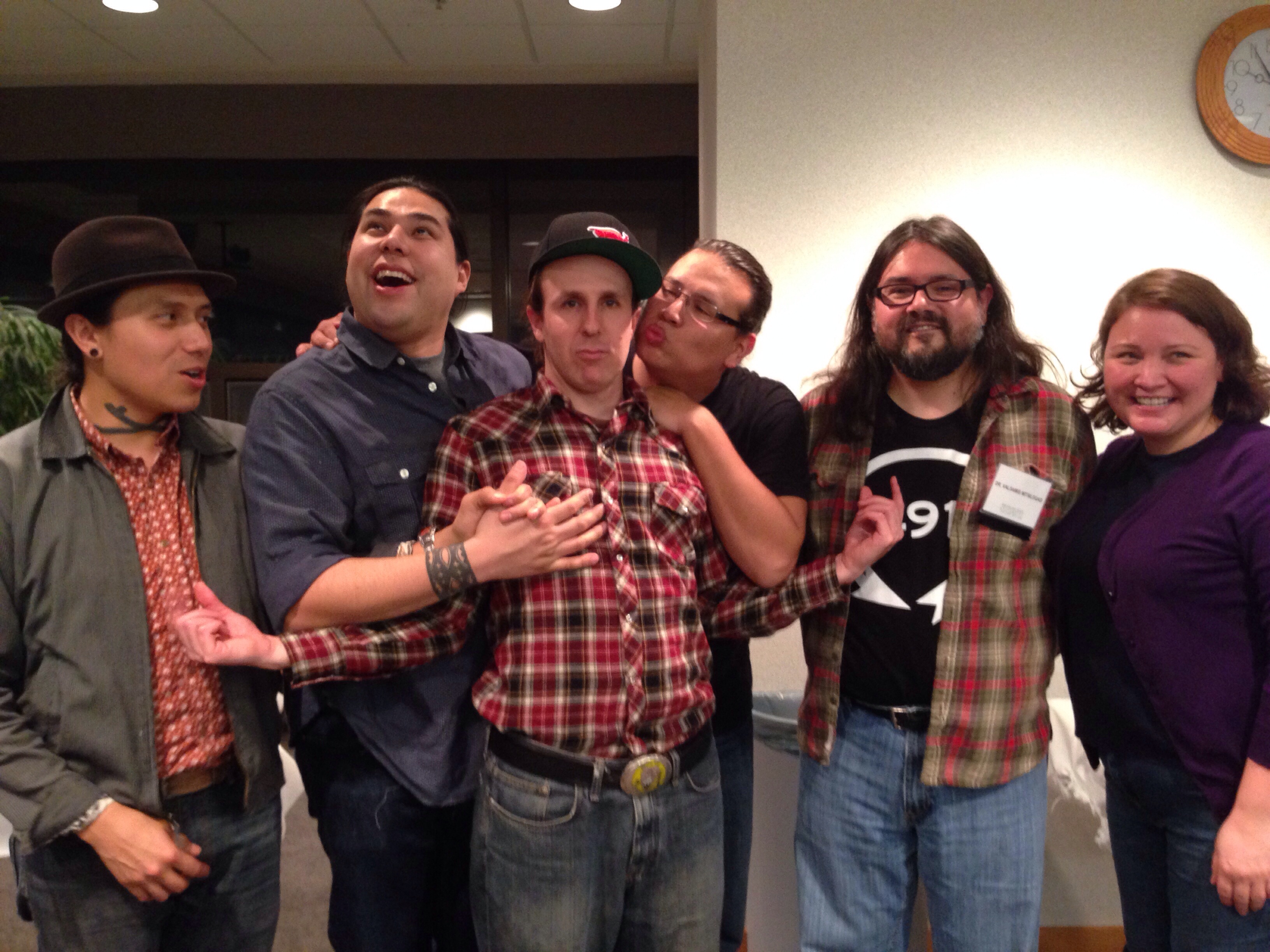
Eric and Emily were there.
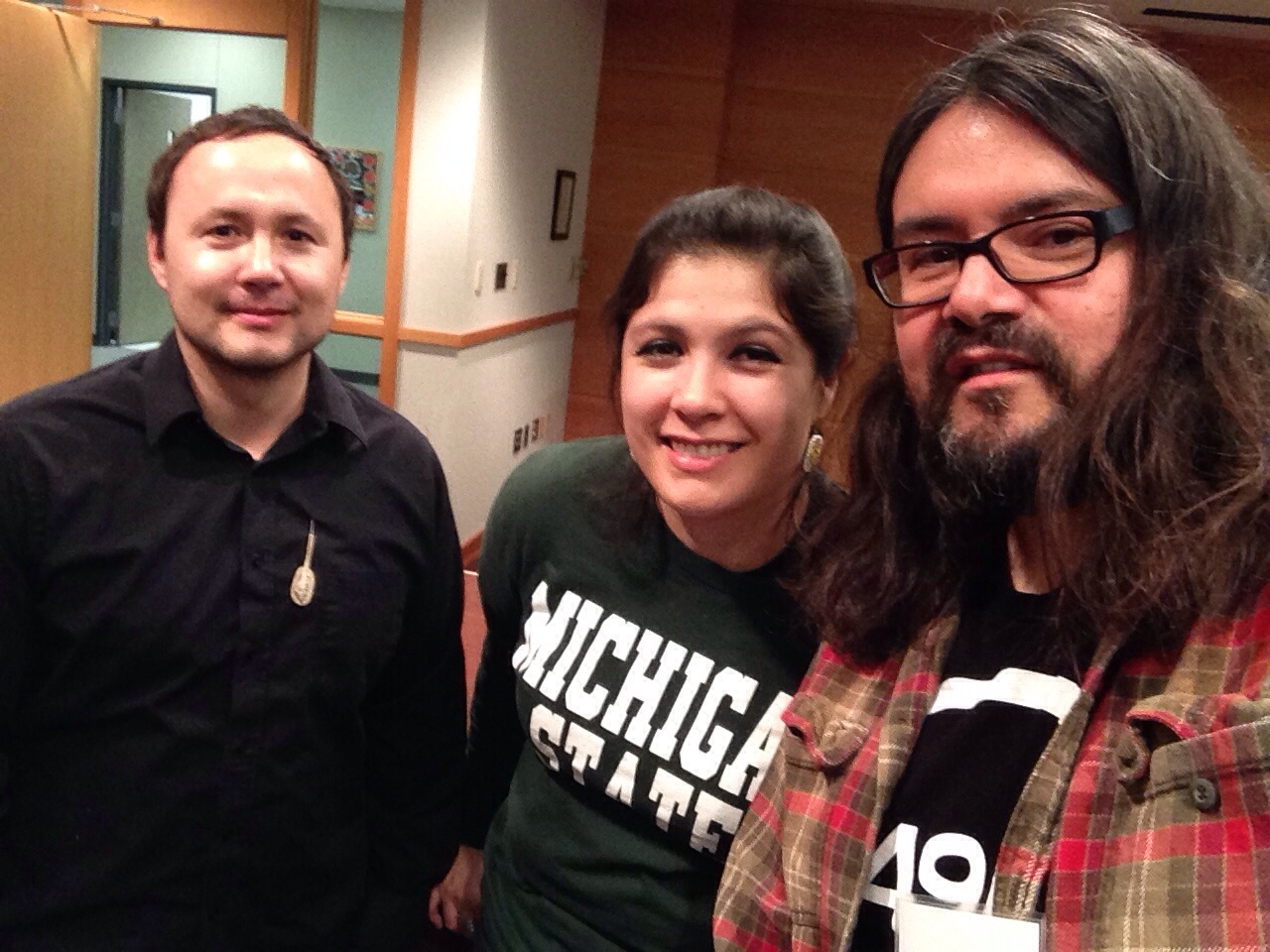
Another one, this time with Kate.

Last night the 1491s performed at the Kellogg and then came by the law school for a reception catered by the incomparable Eva Menefee.
Good eats for all.
Estrella made it all happen.
Eric and Emily were there.
Another one, this time with Kate.
Here:

And here:

And here (too cold for this pose…):

Here is a study of the effects of gaming per capita payments on tribal members of three Michigan tribes (Keweenaw Bay Indian Community, Saginaw Chippewa Indian Tribe, and Pokagon Band of Potawatomi Indians). In line with the 1491s’ hilarious video in which a candidate for tribal office runs on the platform of “progression, procreation, per cap,” the study suggests that tribal members receiving per caps leads to “decreased work efforts,” while “weak” evidence exists that per cap payments increase fertility. Enjoy.
Here is the study:
The abstract:
The purpose of this research is to provide a preliminary examination of the effects of per capita tribal payments on the decision making of tribal members. Standard microeconomic theory suggests that unearned income changes the labor-leisure tradeoff in utility maximization models. While the results of per capita payments on hours of work can be easily anticipated, the effects of these payments on human capital accumulation and family size are more ambiguous. Using Census data from 1990 and 2000 we shed some light on the impact of these per capita tribal payments on the lives of the recipients. We concentrate on three tribes in the state of Michigan: the Saginaw Chippewa Tribe, the Keweenaw Bay Indian Community, and the Pokagon Band of Potawatomi Indians of Michigan. The results lend support to the basic labor theory conclusion that an increase in nonlabor income causes individuals to decrease their work efforts. There is also weak evidence that the payment of per capita payments from casino profits is increasing the fertility rate of Saginaw Chippewa tribal families.
The Indian Law Resource Center released a new short video this week urging lawmakers to reauthorize a stronger version of the Violence Against Women Act (VAWA) to protect Native women from violence.
In the video, Native women raise awareness about statistics that show one in three of them will be raped in their lifetime and six in ten will be physically assaulted. Even worse, on some reservations, the murder rate for Native women is ten times the national average.
“I want the rights afforded other women in this country. I want to be safe and when my safety is violated, I want justice,” says a young Native woman in the video.
 Turtle Talk
You must be logged in to post a comment.