Website here.
Website here.
David Selden of National Indian Law Library has published “Researching American Indian Tribal Law” in the Colorado Lawyer.
An excerpt:
The ability to research tribal law is becoming increasingly important as 566 sovereign Indian nations and Alaska Native villages exercise their powers of self-governance. “Tribal law” comprises the laws developed by tribes or Indian nations, which apply within their territories and to their members. It can be a difficult area of law to research because few primary and secondary resources are published and made available to the public.
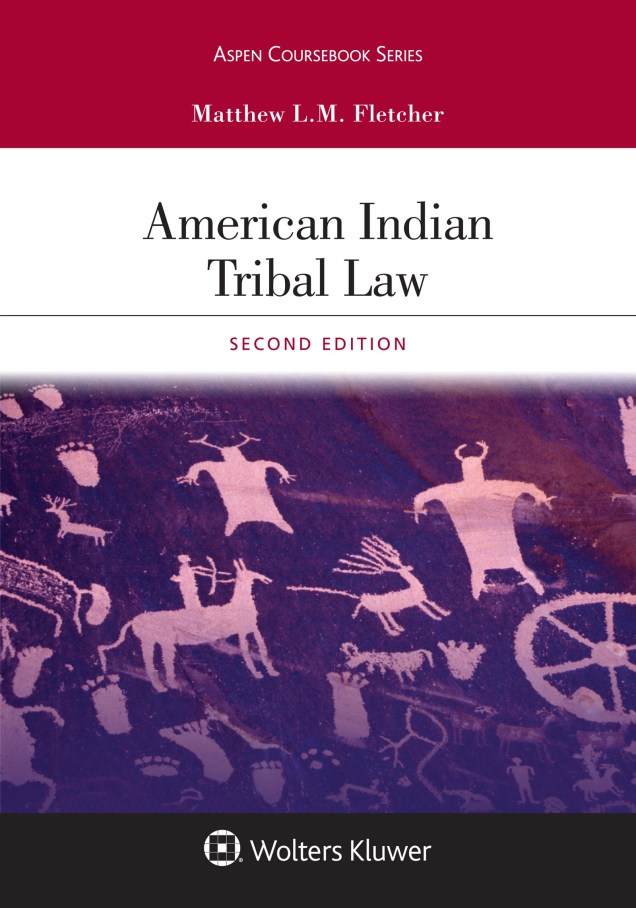
 Here is Turtle Talk’s page on the book, and here is the Aspen webpage for the book (where it can be purchased). Update — Also, the companion website.
And here is where you can download the introduction, table of contents, table of cases, and index.
My book — “American Indian Tribal Law” — soon will be published by Aspen as part of the Aspen Elective Series. This is the first law student-oriented casebook on tribal law.
I have posted the introduction, table of contents, table of cases, and the index on SSRN. Please take a look. You can download the pdf here.
Here is a description of the book:
“American Indian Tribal Law” is the first casebook for law students to survey the field of laws and cases generated by American Indian tribes. There are 565 federally recognized Indian tribes in the United States as of this writing. Each Indian nation has the authority, often expressed in an organic document such as a tribal constitution or a treaty with the United States, to legislate for the general welfare of the tribe, its people, and its land. Tribal ordinances and resolutions often are codified into tribal codes and published in book form and on the Internet.
American Indian tribal courts decide thousands of cases daily, with misdemeanor criminal cases, child welfare, and tribal administrative law cases constituting the large portion of tribal court dockets. Some tribal courts, such as those of the Navajo Nation, handle more than 100,000 cases each year, while other tribal courts handle only a very few cases. Many tribal courts span the full panoply of subject areas, from criminal to civil to probate to divorce to environmental law; others handle only a select few subject areas, such as tribal conservation courts, which adjudicate disputes involving tribal treaty fishing and hunting rights. The variety of tribal court disputes is endless.
Indian country is ready for a comprehensive set of materials on what some academics and practitioners have called the ‘‘real Indian law’’—the law of Indian nations and tribal courts. It is a new field, and scholarship on the subject has taken off only in the past few years. These materials are intended to assist students in navigating tribal courts and other indigenous dispute resolution forums, and how to otherwise practice law in Indian country. Students need to learn that nearly all tribal jurisdictions can and do apply their own laws, not the laws of the United States or state law.
[The materials that form this submission are the introduction and acknowledgments, the table of contents, the table of cases, and the index.]
 Turtle Talk
You must be logged in to post a comment.