In WaPo, here.
Kevin Gover: “Five Myths about American Indians”
In WaPo, here.
In WaPo, here.
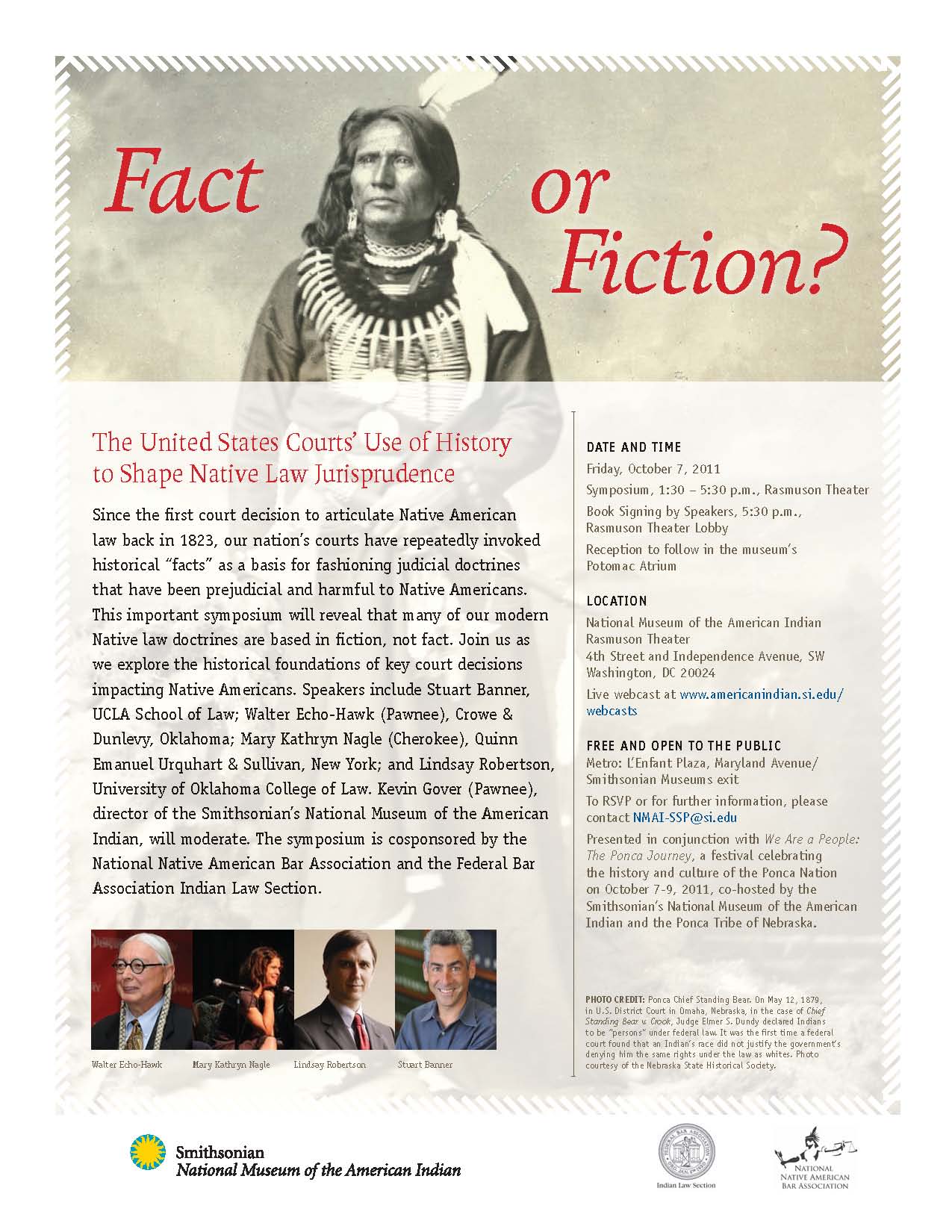
Edited to Add: The WSJ is not the only publication in fits about modern Native art on display. The NYT review of the Brooklyn Museum’s display is equally muddled. It’d be nice if the art reviews were of the art, rather than criticizing it for not being old:
Also in this section is a blue-and-white carved wood piece called “Horse Head Effigy Stick,” by Butch Thunder Hawk, of the Hunkpapa Lakota. A casual viewer might mistake it for a war club, with a horse-head-shaped business end, used in the 19th century when intertribal warfare was a way of life. It turns out that it was made in 1998, which, if you think about it, raises puzzling — but here unanswered — questions. What is the relationship of this rather slick modern object to the historic artifacts? And what about the buffalo-horn ladle with a glossy cube pattern imitating the 20th-century Dutch illusionist M. C. Escher that Kevin Pourier, a member of the Oglala Lakota, created in 2009?
The display suggests that there is no important difference between the old and the new. But how can that be so? The Plains Indian culture that gave rise to these kinds of objects was practically destroyed by the United States government’s campaign to clear land for settlement by white people over a century ago.
Wouldn’t one relationship between the old and the new be to demonstrate that the culture was not actually destroyed by the United States government, hard as it might have tried?
The Wall Street Journal published an article about museum displays of Native art and artifacts today. It is accessible here. The article is odd, with a title (“Shows That Defy Stereotypes”) indicating the article might be positive, but is instead full of sideways insults. For example, the author writes about the Denver Art Museum’s attempt to include contemporary Native art in its installation, and a display of two different shirts:
One of Denver’s great masterpieces is a 1720s Eastern Sioux deerskin shirt embellished with painted abstract designs, possibly representing birds. The curators invite its comparison to a nearby 2010 fringed “war shirt” commissioned from Bently Spang, the suddenly ubiquitous Northern Cheyenne artist whose designs, which are meant to be seen, not worn, are also on view in Manhattan and Brooklyn.
The author does not seem to think the more contemporary shirt is at the same level as the old shirt, nor am I sure why she describes the artist who made it as “suddenly ubiquitous,” but the tone indicates the author doesn’t think he ought to be.
Here is the ABA’s announcement and here is a blog profile of the award.
H/T to G.G.
Louis Fisher moderates a panel discussion on “Indian Religious Freedom: To Litigate or Legislate,” with Kevin Gover of the Pawnee Tribe, Susan Shown Harjo of the Cheyenne and Hodulgee Muscogee Tribe and Dean Suagee of the Cherokee Tribe.
Noon, West Dining Room, LM 621, Madison Building
Sounds interesting. Wish I could go.
This link is a great introduction to law school for American Indians interested in a career in law. Speakers include:
Raquel Montoya-Lewis
Wambdi Wastewin (Angelique Eaglewoman)
Scott Sufficool
Kevin Gover [soon to be Curator of the NMAI]
 Turtle Talk
You must be logged in to post a comment.