NYU Law Review Seeking Submissions

The NYU Law Review is open for Articles & Online Features. The submission guidelines and portals can be found here. Any questions about the submission process can be referred to NYULR‘s EIC, Yejin Chang (yejin@nyu.edu) and Senior Online Editor, Priya Prasad (nyulrevonline@gmail.com).

New Student Scholarship on Federal Indian Law and Legal Geography

Erica Liu has published “The Cartographic Court” in the NYU Law Review.

Here is the abstract:

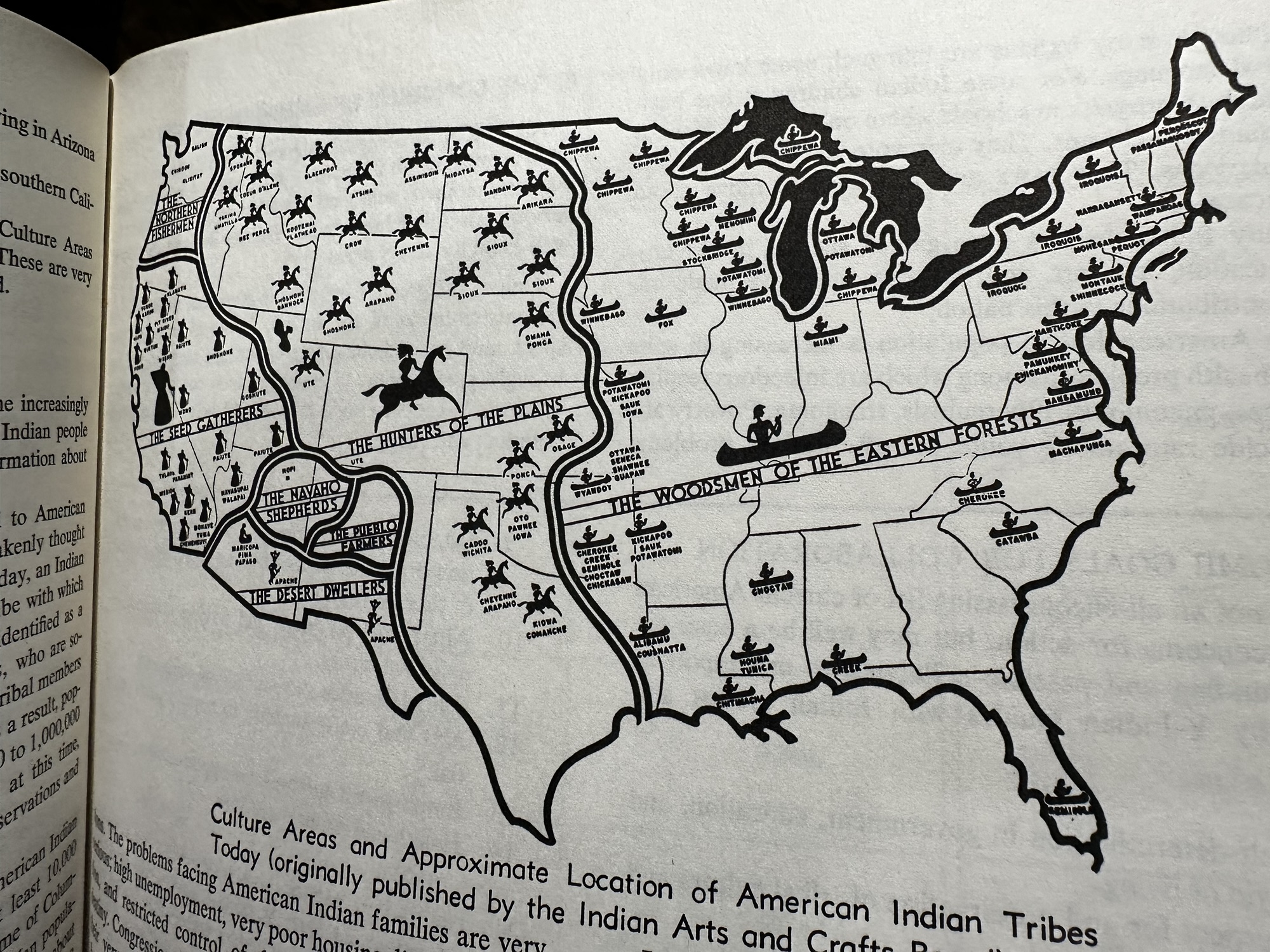
Over the past few decades, the Supreme Court of the United States has adopted an exceedingly narrow view of tribal civil jurisdiction, establishing doctrines that restrict the circumstances in which Native Nations can exercise their regulatory and adjudicative powers. While most scholarship in federal Indian law has assessed this judicial trend towards tribal disempowerment by focusing on the Court’s treatment of tribal sovereignty, this Note centers the Court’s manipulation of tribal territory. It argues that the Court has constructed three territorial incongruities—non-Indian fee lands, public access, and loss of “Indian” character—to justify the disallowance of tribal authority over significant portions of tribal reservations. In so doing, the Court relies on a spatial imaginary of territorial sovereignty, or the notion that sovereign power must be commensurate with sovereign domain, to present certain spaces as falling outside of a Native Nation’s territory and, accordingly, as beyond the reach of its jurisdictional power.

By illuminating the spatial imagination of the Supreme Court, this Note identifies a key practice employed by the Court that is central to empires past and present— cartography. The Court superimposes its own imagined legal geography upon the preexisting system of territorial division, redrawing the jurisdictional boundaries that separate states and Native Nations. This practice of spatial manipulation is cartographic in that it allows the Court to determine and limit the territory of tribal rule; to expand the areal authority of state jurisdiction; and to project its particular vision of reservation lands—a vision defined by notions of ownership, accessibility, and character—upon Indian country. These cartographic tactics of territorial acquisition and control are in direct furtherance of the American colonial project. They fragment tribal regulatory regimes, reify Indigenous life, and transfer congressional power to the Court to diminish tribal reservations. These practices of fragmentation, reification, and de facto diminishment are continuations of the repudiated but never-undone federal policy of allotment, although the main perpetrator is now the Court rather than Congress.

By turning to critical legal geography and theories of space and power, this Note reveals a Supreme Court that is highly imaginative, overtly spatial, and problematically cartographic in nature, engaged in a project of colonial expansion across its tribal civil jurisdiction cases.

New Student Scholarship on Indian Country Criminal Sentencing

Nasrin Camilla Akbari has published “The Gladue Approach: Addressing Indigenous Overincarceration Through Sentencing Reform” in the NYU Law Review. PDF

Here is the abstract:

In the American criminal justice system, individuals from marginalized communi- ties routinely face longer terms and greater rates of incarceration compared to their nonmarginalized counterparts. Because the literature on mass incarceration and sentencing disparities has largely focused on the experiences of Black and Hispanic individuals, far less attention has been paid to the overincarceration of Native peo- ples. Yet there are clear indications that Native peoples are both overrepresented within the criminal justice system and subject to unique sentencing disparities as compared to other ethnicities. While these issues are partly motivated by traditional drivers of criminal behavior, including access barriers to housing, employment, and education, this Note argues that there is a greater systemic issue at play: the enduring legacy of colonialism. Accounting for—and correcting—this legacy in the criminal justice system is a complex task, though not an impossible one. For example, over the past twenty years, the Canadian criminal justice system has implemented a novel, remedial sentencing approach to address the overincarcera- tion of Aboriginal offenders: the Gladue approach. Recognizing the extent to which the Canadian legal system has failed to account for the unique needs, exper- iences, and circumstances of Aboriginal offenders, the Gladue approach mandates an individualized and contextualized approach to sentencing, one which prioritizes community-based alternatives to incarceration and emphasizes restorative justice. This Note proposes two legal pathways by which to transplant the Gladue approach to the American criminal justice system. In so doing, it offers the first comprehensive analysis of the normative and constitutional implications of applying the Gladue approach to the sentencing of Native peoples within the United States. While the approach has challenges and shortcomings, it is neverthe- less a powerful tool by which the American criminal justice system can begin to reckon with its colonial past and present.

The Whitney’s effort to get you to feel good about giving them zhoonya.

David Moore and Michalyn Steele on Revitalizing Indian Sovereignty in Treatymaking

David H. Moore and Michalyn Steele have published “Revitalizing Indian Sovereignty in Treatymaking” in the N.Y.U. Law Review.

Abstract:

In the current model of federal-Indian relations, the United States claims a plenary legislative power, as putative guardian, to regulate Indian tribes. Under this model, tribes are essentially wards in a state of pupilage. But the federal-tribal relationship was not always so. Originally, the federal government embraced, even promoted, a more robust model of tribal sovereignty in which federal-Indian treatymaking and diplomacy figured prominently. Through treaties, the United States and tribes negotiated territorial boundaries, forged alliances, facilitated trade, and otherwise managed their relations. In 1871, Congress attempted to put an end to federal-Indian treatymaking by purporting to strip tribes of their status as legitimate treaty partners. In a rider to the 1871 Appropriations Act, Congress prohibited the recognition of tribes as sovereign entities with whom the United States could negotiate treaties. Since that time, the 1871 Act and the plenary power-pupilage model it entrenched have grown deep roots in federal Indian law and the policies of the United States. Congress has aggrandized its role in tribal life at the expense of tribal sovereignty, and the coordinate branches of the federal government have acquiesced in this foundational shift.

The literature of federal Indian law has wrestled with the doctrine of plenary power, contemplated the fate of the federal-tribal treaty relationship, and questioned the constitutionality of the 1871 rider. This Article posits new arguments for the unconstitutionality of the 1871 Act, uprooting the presumptions underlying the Act and revitalizing the prospect of federal-Indian treatymaking. Two recent developments provide an opportunity for such a transformation. In Zivotofsky v. Kerry, the Supreme Court held that the President alone possesses the power to recognize foreign states and governments. While Zivotofsky was a landmark case for U.S. foreign relations law, its potential significance for federal Indian law has gone underappreciated. Zivotofsky did not directly address the locus of power to recognize tribal sovereignty to enter treaties, but it prompts the question and provides a blueprint for arriving at an answer. Engaging that blueprint, this Article argues that the President possesses the exclusive power to recognize tribes’ sovereign capacity to enter treaties. The result: The 1871 Act is unconstitutional because it attempts to limit that power. In our view, the President can and should unilaterally reengage in federal-Indian treatymaking, revitalizing treatymaking and reanimating the sovereignty model of federal-Indian relations.

A second development, the Supreme Court’s decision in McGirt v. Oklahoma, is less fundamental to the argument but also significant for revitalizing tribal sovereignty. In McGirt, the Court recognized the ongoing vitality of federal-Indian treaties that were entered when the sovereignty model prevailed, strengthening both claims to tribal sovereignty and the viability of treatymaking in the federal-Indian relationship.

The implications of these developments are significant. Deracinating the 1871 Act disrupts the dominance of the plenary power doctrine and pupilage model with their attendant abuses, more fully realizes the promise of the United States’ policy of Indian self-determination and commitment to international norms, and generates positive ripples for Indigenous-state relationships across the globe.

HIGHLY recommended.

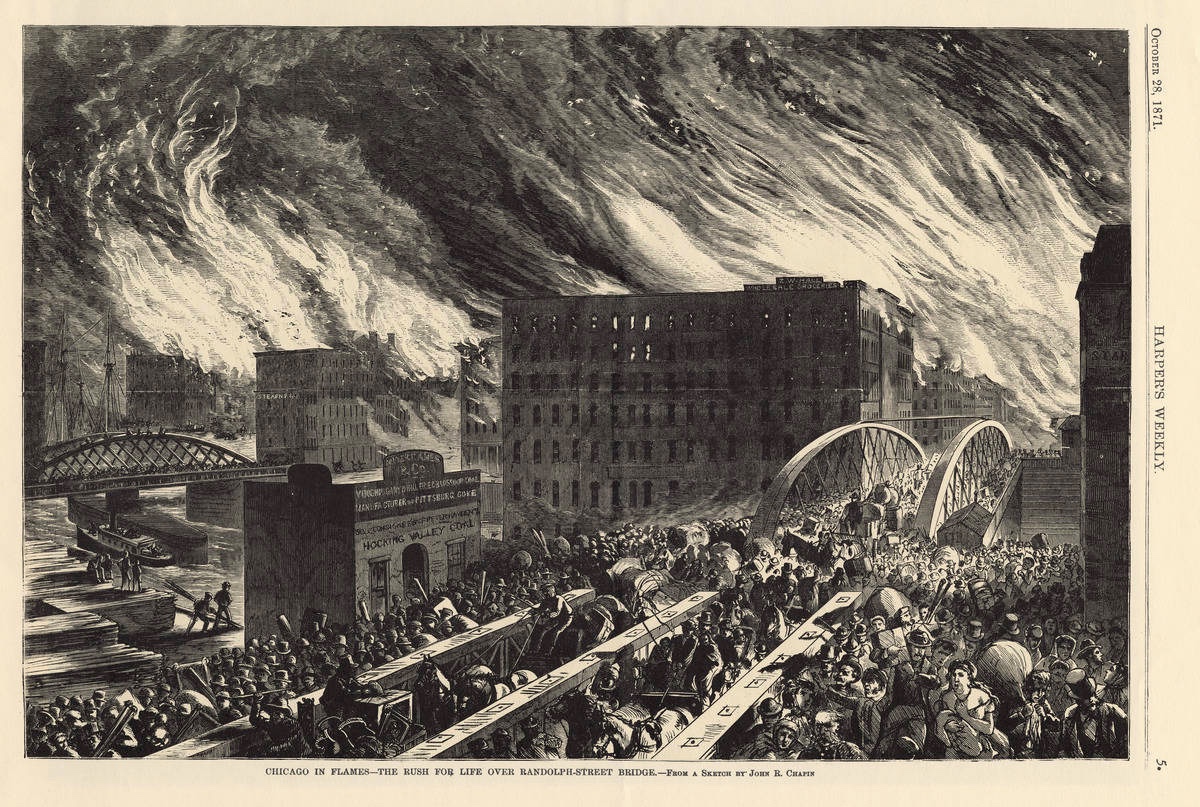
End of Federal-Tribal Treatymaking & Great Chicago Fire of 1871 Coincidence or Correlation?

NYU Law Review Seeking Submissions from Indian Law Scholars

A message from the editorial board:

NYU Law Review is seeking submissions from Indian law scholars.

1. Print Articles.

As always, our Articles Department is seeking submissions covering diverse subject-matters, especially including general issues in Indian law that would be accessible to a generalist audience. Article submissions must have a minimum of 10,000 words and be submitted on Scholastica. In addition to submission on Scholastica, you may also forward any submission directly to our Senior Articles Editor, Simon Williams, at sjw446@nyu.edu. The Department is accepting unsolicited articles through the end of March, 2016.

2. Online Essays and Comments.

Our Online Department is similarly interested in submissions in Indian law. The Online Department is focused on publishing content addressing timely legal issues, such as current controversies and debates. Online submissions have a maximum word limit of 10,000 words and may be submitted directly to our Senior Online Editor, Marcelo Triana, at mt3497@nyu.edu or via Scholastica. More information on our submission policy can be found on our website, www.nyulawreview.org.

Student Scholarship on Cross-Border Affirmative Action

Here:

An Indian by Any Other Name: Cross-Border Affirmative Action
Forthcoming, 92 N.Y.U. L. REV. (2017)
Raymond J. Fadel
New York University (NYU), School of Law, Students
Date Posted: December 08, 2016

NYU Law Review Seeking Submissions from Indian Law Scholars

A message from NYU Law Review editor Raymond Fadel…

NYU Law Review is seeking submissions from Indian law scholars.

  1. Online Series on Dollar General.

Our Online Department has voted to publish an online feature series spotlighting the Dollar General case, and its legal and policy implications. Amongst other things, we are currently looking for pieces that discuss the case itself, its legal background and importance, and its implications for Indian and non-Indian country alike—particularly Indigenous women’s issues and its insights into women’s issues in general.

To facilitate timely debate, we plan on publishing the spotlight series shortly after the Dollar General case is decided. We encourage you to submit your Essays and Comments within two weeks after the Supreme Court’s decision, but of course, you are welcome to send your pieces for consideration as soon as you have them.

Online submissions have a maximum word limit of 10,000 words and may be submitted directly to our Senior Online Editor, Agne Jomantaite, at aj785@nyu.edu or via Scholastica. More information on our submission policy can be found on our website, www.nyulawreview.org.

  1. Print Articles.

As always, our Articles Department is seeking submissions covering diverse subject-matters, especially including general issues in Indian law that would be accessible to a generalist audience. Article submissions must have a minimum of 10,000 words and be submitted on Scholastica. In addition to submission on Scholastica, you may also forward any submission directly to our Senior Articles Editor, Tyler Domino, at tjd266@nyu.edu. The Department is accepting unsolicited articles through the end of March, 2016.