Meghan Gupta on History and Tradition in Federal Indian Law

Meghanlata Gupta has published “‘In Keeping with the Constitution’s Original Design”: History and Tradition in Federal Indian Law” in the Public Land & Resources Law Review.

HIGHLY RECOMMENDED!

Here is the abstract:

This Article examines the Supreme Court’s use of history and tradition in federal Indian law. In recent years, the Court has increasingly relied on Founding-era practices and historical traditions to determine constitutional meaning in areas such as firearm regulation, substantive due process, and religious liberty. At the same time, while the Founding-era record contains substantial evidence that Native nations were understood and treated as independent, sovereign political communities, this evidence has not yet been fully incorporated into the Supreme Court’s Indian law jurisprudence. Examining decisions from Oliphant to Castro-Huerta, this Article describes the Court’s approaches to historical analysis in Indian law cases and identifies areas where deeper engagement with the historical record could inform the doctrine. By centering Indian law within the broader history-and-tradition framework, this Article argues that more consistent applications of history support the robust conception of tribal sovereignty contemplated at the Founding.
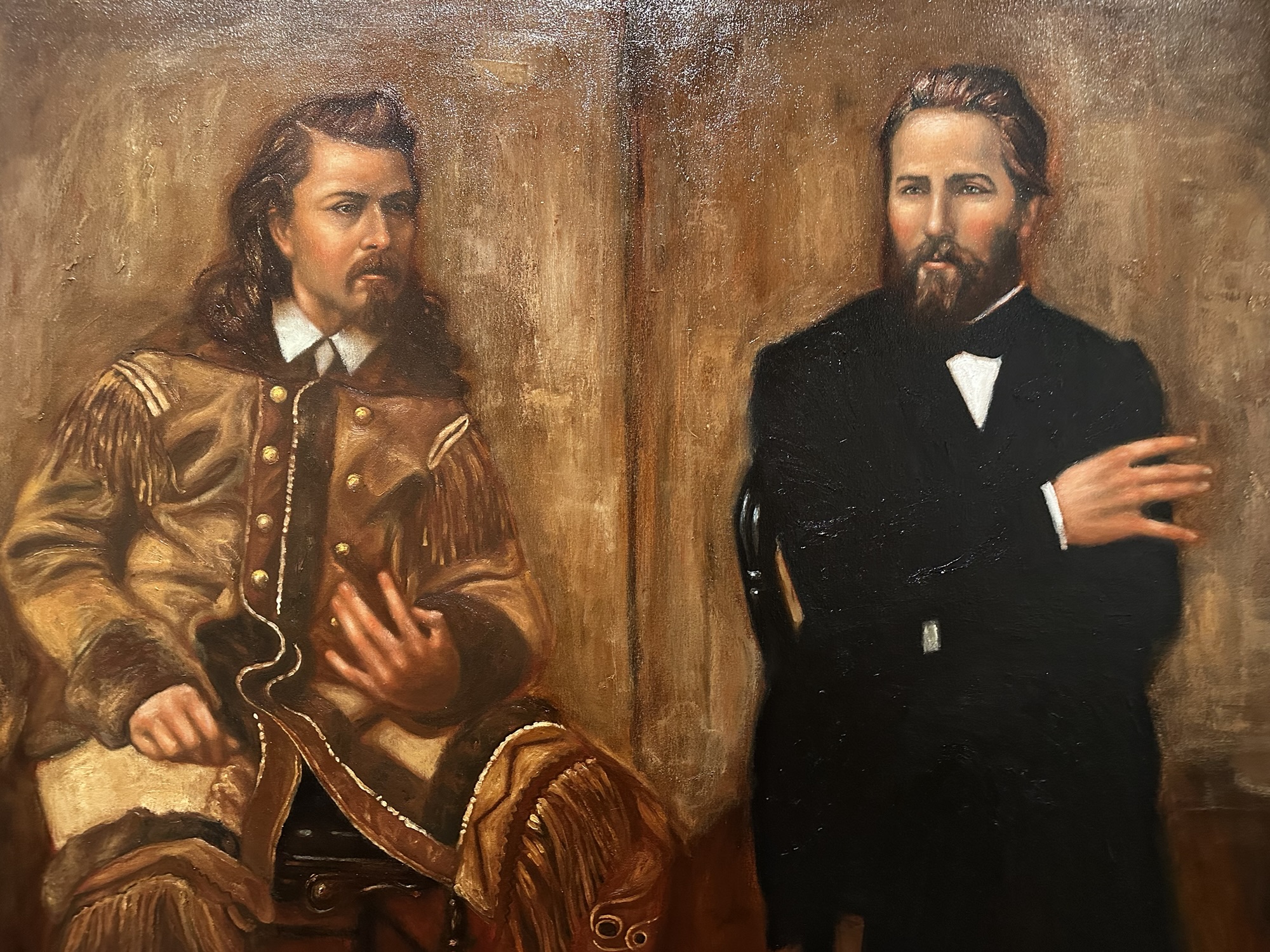
Buffalo Bill and Herman Melville flashing west coast gang signs— Ray Martin Abeyta

Montana Law Review and the Public Land and Resources Law Review Call For Papers

Here:

Call for Presentations and Papers: 37th Public Land Law Conference

Download(PDF): Announcement

The PUBLIC LAND & RESOURCES LAW REVIEW invites submissions for panelist presentations at its 37th Public Land Law Conference, Bridging Divides: Energy, Environment, and Empowerment in a New Era. The conference will be held at the Alexander Blewett III School of Law at the University of Montana in beautiful Missoula, Montana. Our invited keynote speaker is U.S. Secretary of the Interior Ryan Zinke.

Alex Skibine on Federal Control over Tribal Property and The New Equal Protection

Alex Tallchief Skibine has published “Using the New Equal Protection to Challenge Federal Control over Tribal Lands” in the Public Land and Resources Law Review.

Here is an excerpt of the conclusion of the article:

Indian tribes and their members are probably the only people who are subject to federal restrictions on the management of their own lands because of their status. While the law prevented Indians from successfully challenging these restrictions on equal protection grounds, recent development in equal protection jurisprudence has opened new possibilities. This article [argues] that while congressional restrictions imposed on Indians pursuant to the Indian Commerce Clause do not create racial classifications, these laws can be successfully challenged on equal protection grounds alleging that they were either enacted pursuant to unconstitutional animus or are not rationally tied to the true congressional purpose behind the legislation.

Public Land and Resources Law Review Call for Papers

The Public Land and Resource Law Review is interested in receiving articles for possible submission in the law review. They have expressed a particular interest in articles dealing with Indian law issues. Please consider submitting articles! See the information about the law review below.
The Public Land and Resources Law Review, published by the University of Montana School of Law, is currently accepting submissions for potential publication in the spring issue. The Public Land and Resources Law Review serves as a vital resource providing high quality articles on issues relevant to public land, natural resources, environmental, and federal Indian law practitioners and scholars across the country. The deadline for submissions for the spring issue is December 15, 2014. The editing process for publication begins soon after this date.

The Public Land and Resources Law Review accepts articles and abstracts for consideration from students, practitioners, and law school faculty members. For more information or to submit an article, please contact Dave Bell, Publication Editor, at david2.bell@umconnect.umt.edu.