Here are the new materials in Chegup v. Ute Indian Tribe of the Unitah and Ouray Indian Reservation (D. Utah), formerly Chegup v. Ute Indian Tribal Court of the Uintah and Ouray Reservation:
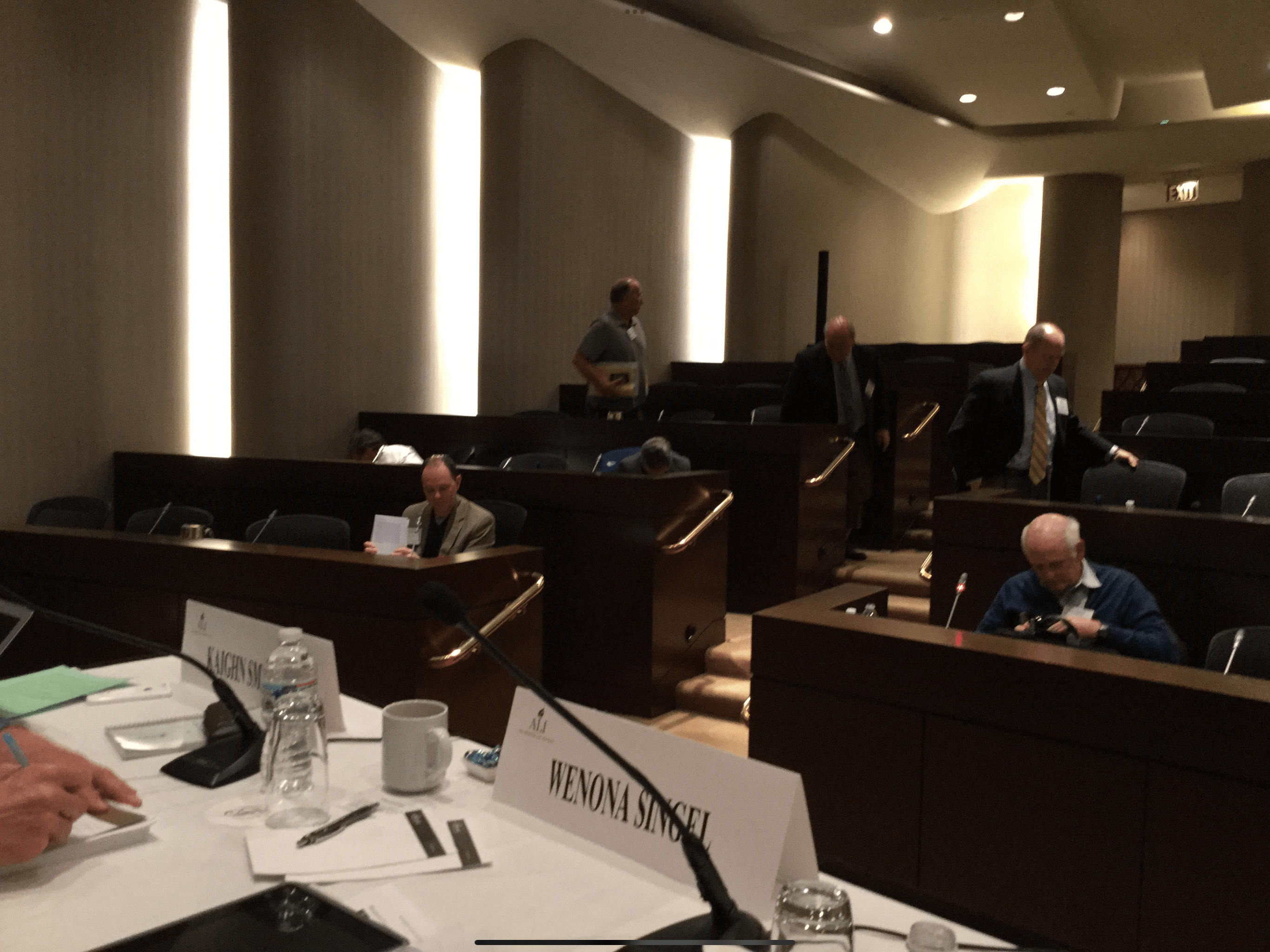
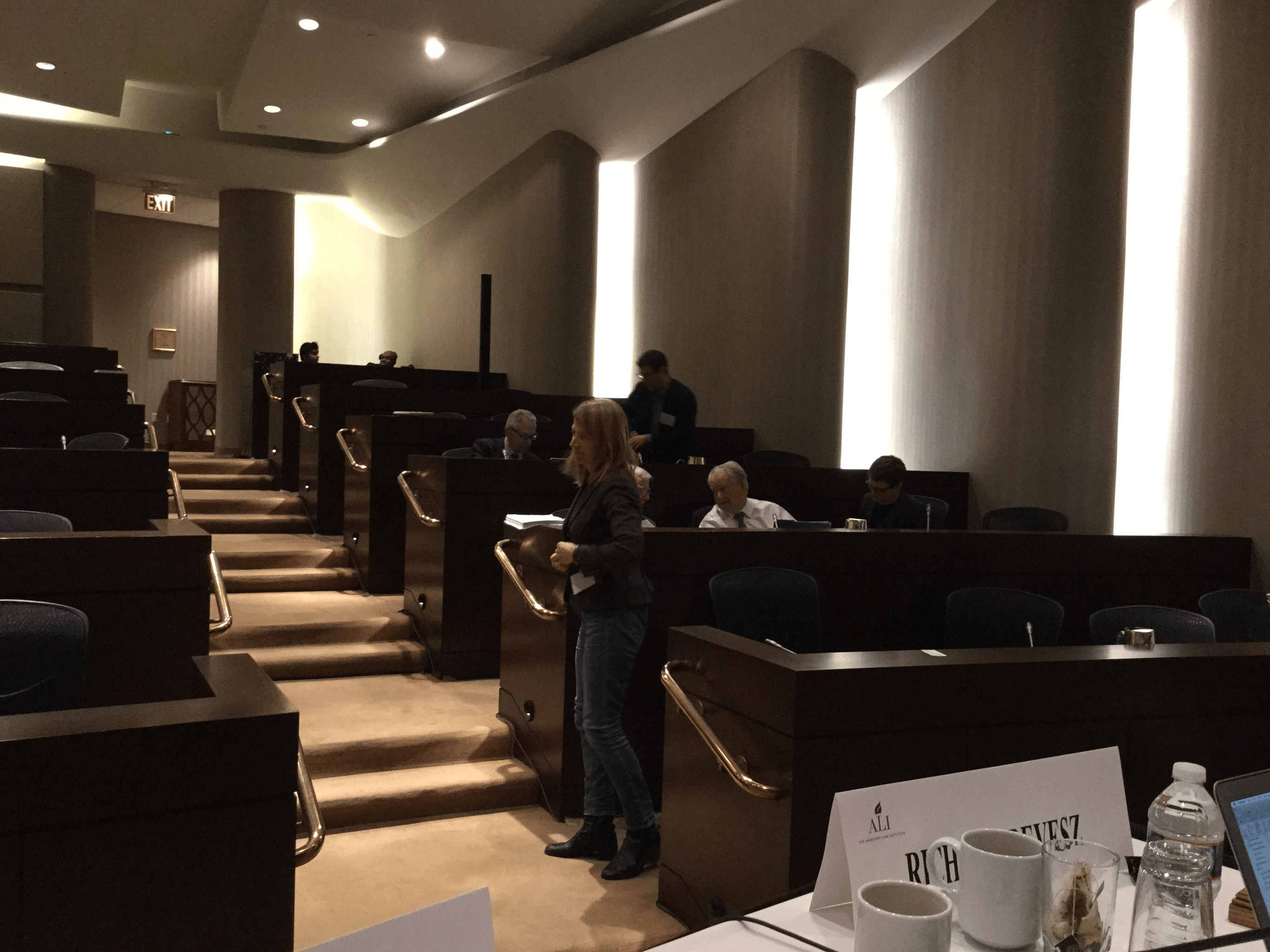
In 2010, Michael reached out to me and asked me if I wanted to be a member of the American Law Institute. I had never met the man, but he wanted to enable junior scholars from underprivileged backgrounds to become a part of the ALI. Barely knowing what the ALI was, I agreed. Within the next couple years, Wenona Singel and I were spearheading a restatement project and dragging along people like Venus Prince and Keith Harper to help us.
Over the years, Michael continued to elevate my work. When he became President of the American Association of Law Schools, he asked me to join the empirical research committee.
Michael added me to his rock and roll posse, where he discussed rock music and the law amongst friends. His emails were always a welcome respite from work, though they were frighteningly incisive on the law. Another time, he hosted me and our son Owen in Santa Fe for dinner, remarking that he could tell Owen’s parents were both lawyers; as a small boy, he already knew how use lawyer words like “actually” and how to hedge his opinions.
In 2020, when the Indigenous Law and Policy Center won the M. Shanara Gilbert Human Rights Award from the Society of American Law Teachers, Michael gave us the award and spoke about the restatement project. He was far too kind, generous, and inspirational.
2020 SALT awards ceremony
Michael was such a good guy. It’s amazing how gracious and generous people can be. I’m glad I could get it together to wish him a good journey in time.
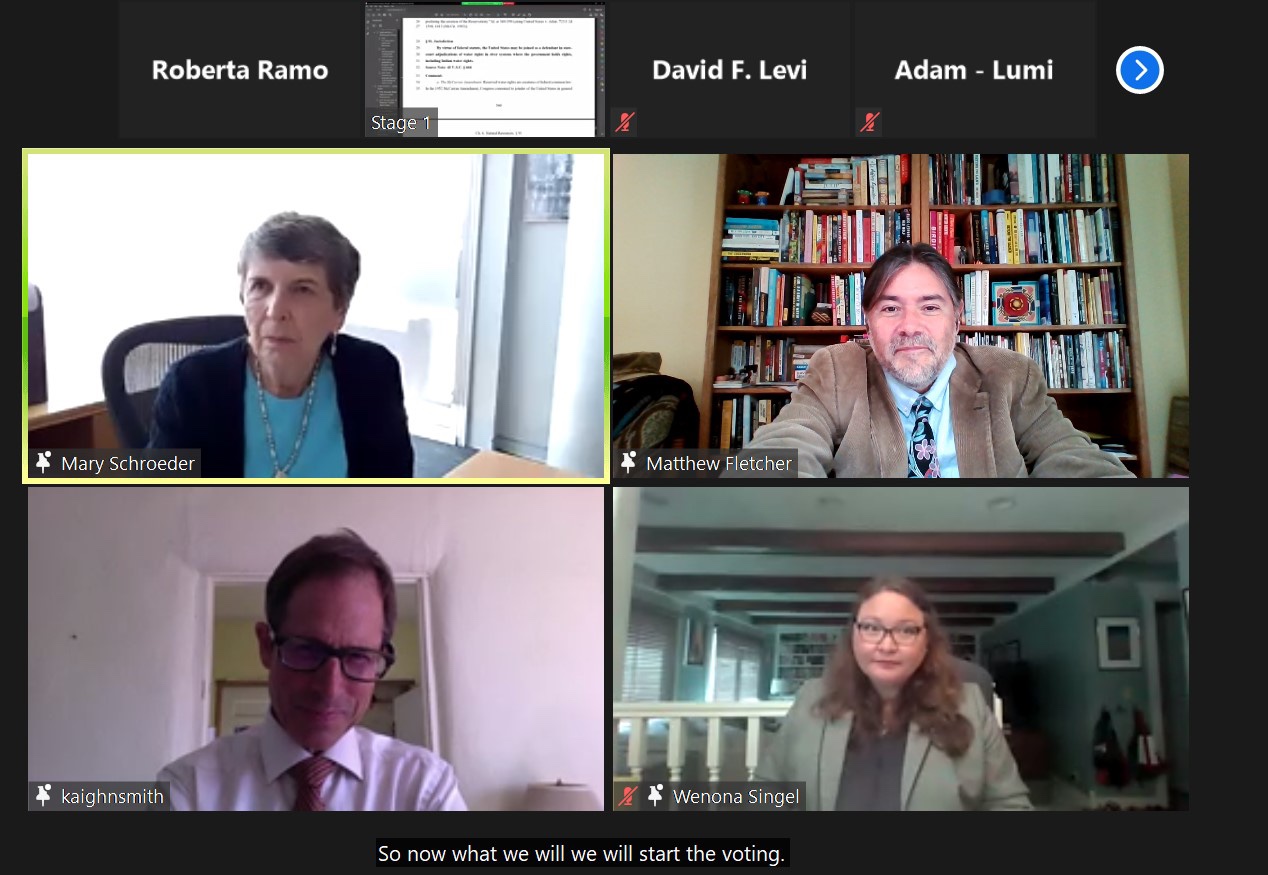
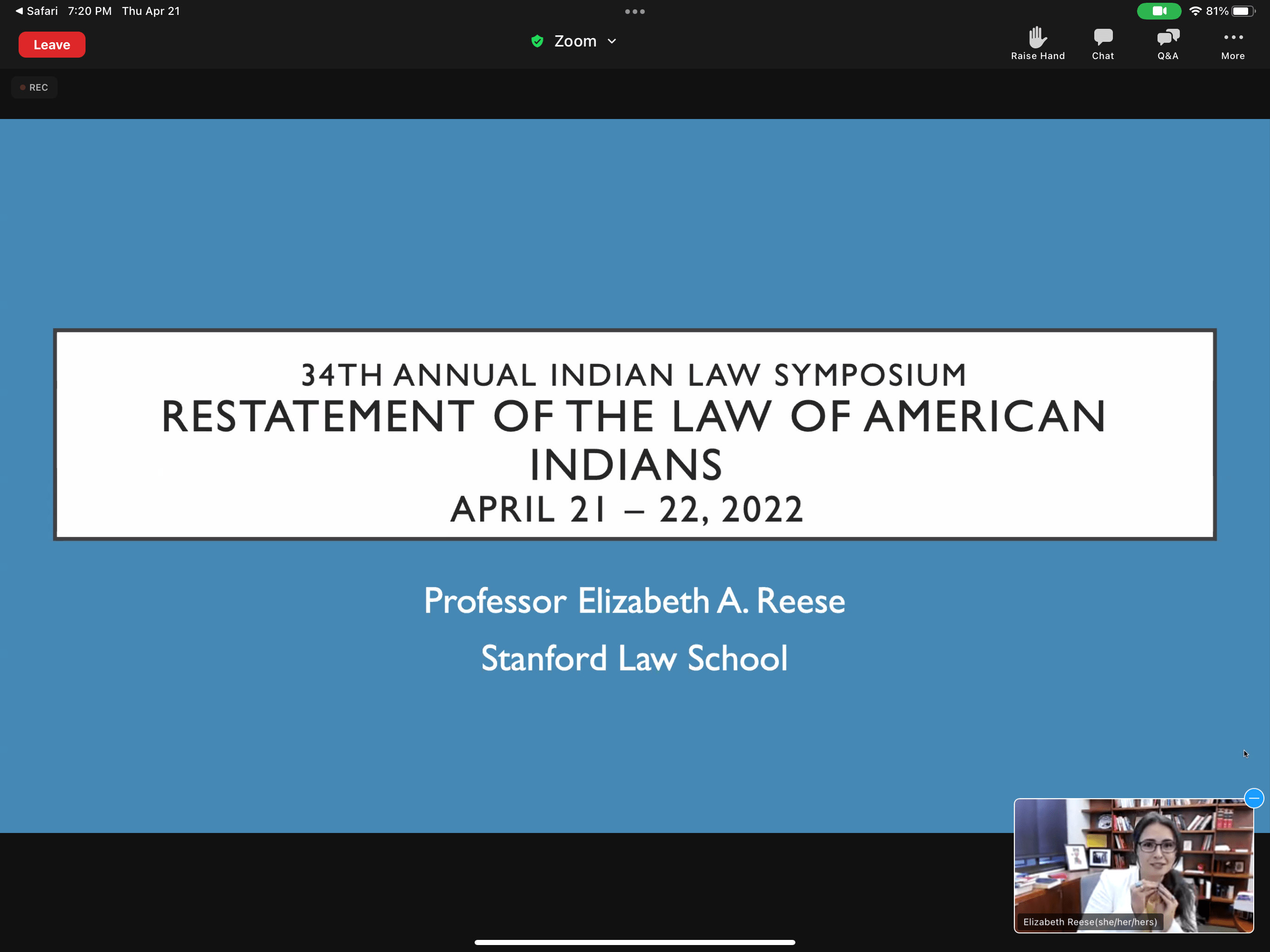
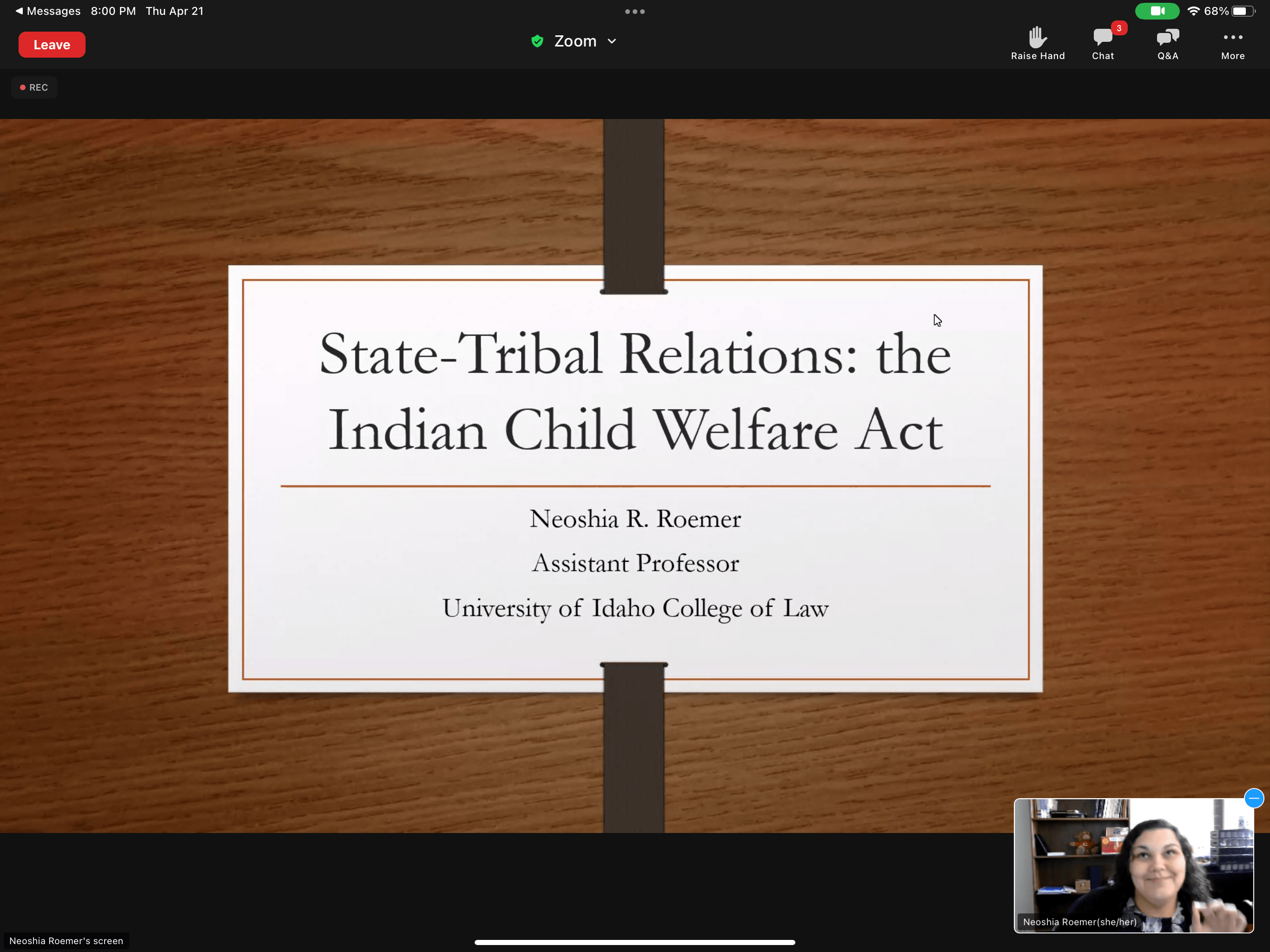
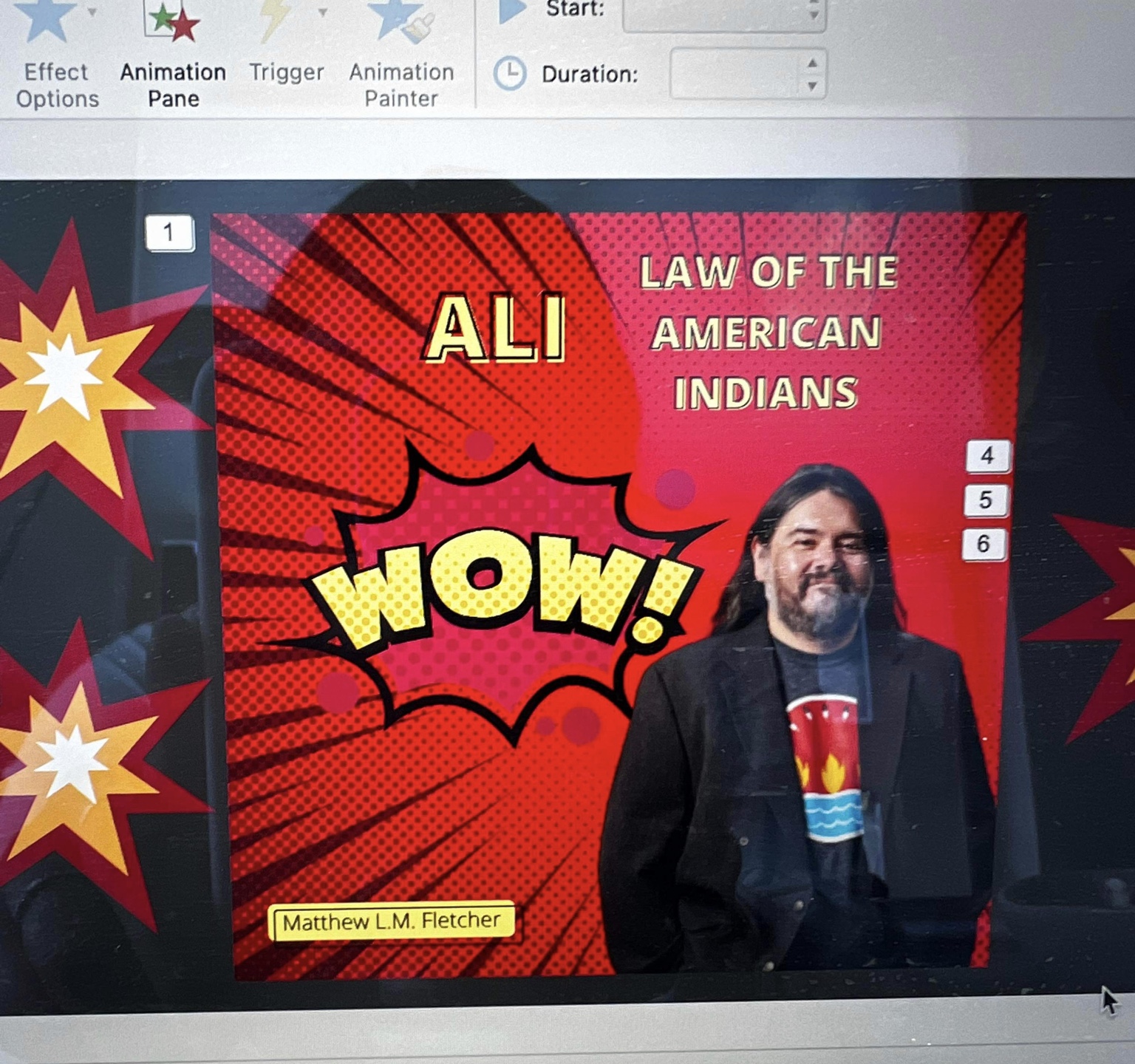
The final vote, May 2021The first slide of the first presentation to the ALI membership, May 2012The draftsThe filing cabinet drawer of restatement materialsFletcher waiting for the Advisers’ comments on the most recent draft.
We begin by discussing the tribal exhaustion doctrine involved in this case. “[W]hen a federal court has subject-matter jurisdiction over a claim arising in Indian country over which a tribal forum has colorable jurisdiction, principles of comity and the federal policy of promoting tribal self-government generally require that the plaintiff fully exhaust tribal remedies before proceeding in federal court.” Restatement of the Law of Am. Indians § 59 cmt. a (Am. Law Inst., Proposed Final Draft 2021).
slip op. at 14.
Maybe a little more Restatement. . . .
Post–Santa Clara Pueblo, federal review has been limited to habeas, leaving tribal courts to adjudicate any other civil rights claims. See Restatement of the Law of Am. Indians § 16 cmt. a (“With the exception of actions for habeas corpus relief [under § 1303, ICRA’s civil rights] guarantees are enforceable exclusively in tribal courts and other tribal fora.”).
slip op. at 21.
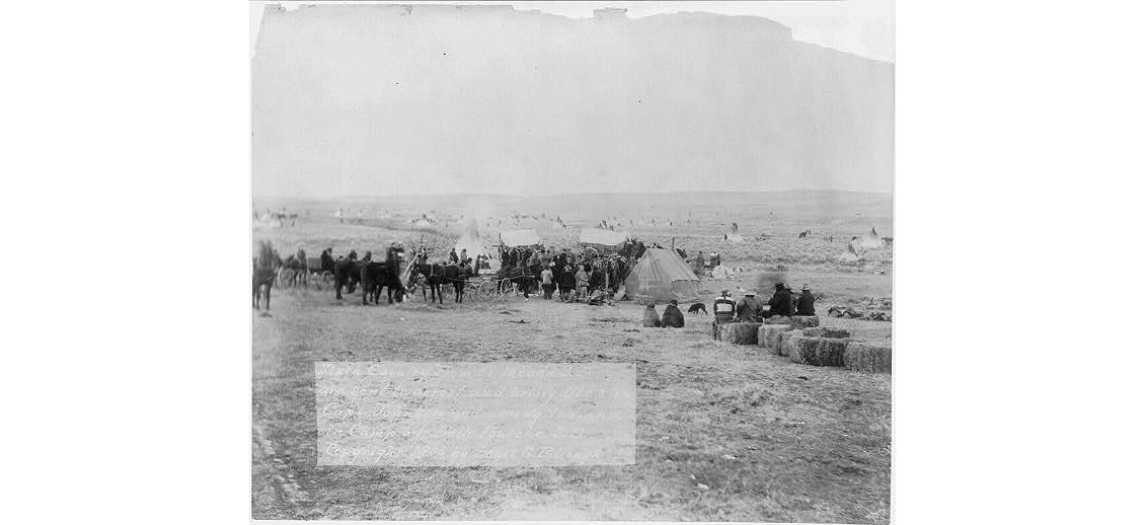
Ute Indians camped at Belle Fourche, South Dakota, who are dissatisfied with their treatment: Capt. Johnson, with the Sixth Cavalry from Ft. Meade, S.D., addressing Indians, who they were sent to arrest
And more. . . .
Tribal exhaustion doctrine exists to preserve tribal sovereignty and prevent the federal courts from running roughshod over tribal legal systems. See Norton, 862 F.3d at 1243; Restatement of the Law of Am. Indians § 28 cmt. a (“[A]djudication of matters impairing reservation affairs by any nontribal court . . . infringes upon tribal law-making authority, because tribal courts are best qualified to interpret and apply tribal law.”).
















 Turtle Talk
You must be logged in to post a comment.