Alaska Legal Services Corp: Job Posting for Fairbanks Native Law Staff Attorney

Here.

Fairbanks Native Law Staff Attorney – Alaska Legal Services Corporation is seeking a full-time staff attorney for its Fairbanks office to provide legal services to Tanana Chief Conference member Tribes and tribal members. This position primarily involves representation of individual and tribal clients in proceedings related to the Indian Child Welfare Act, as well as litigating other Native law matters on behalf of TCC Tribes and tribal members. Travel to both rural and urban areas may be required. Click here for full job description.

NICWA Job Posting: ICWA Legal Advisor

Here: ICWA Legal Advisor

The National Indian Child Welfare Association (NICWA) in Portland, Oregon, is recruiting for a full-time ICWA legal advisor. The ICWA legal advisor at NICWA is responsible for managing the dissemination of information relating to Indian child welfare to the general public and to NICWA membership. NICWA offers a generous benefit package. The position is open until December 5.

Nebraska Supreme Court ICWA Decision on Active Efforts

Here.

As covered on Friday by NICWA and others, the Nebraska Supreme Court ruled on the active efforts standard. Specifically,

 The sole issue presented is whether the active efforts standard of 25 U.S.C. § 1912(d) of the federal Indian Child Welfare Act of 1978 (ICWA)1 and § 43-1505(4) of the Nebraska Indian Child Welfare Act (NICWA) applies when a juvenile court physically places an Indian child with his or her parent but awards another entity legal custody of the Indian child. The question is whether this disposition in an involuntary juvenile proceeding is “seeking to effect a foster care placement” within the meaning of ICWA/NICWA. Upon further review, we agree with the Nebraska Court of Appeals and hold that at any point in an involuntary juvenile proceeding involving an Indian child at which a party is required to demonstrate its efforts to reunify or prevent the breakup of the family, the active efforts standard applies in place of the reasonable efforts standard applicable in cases involving non- Indian children.

Additional Pictures from Today’s Fed Bar DC Conference

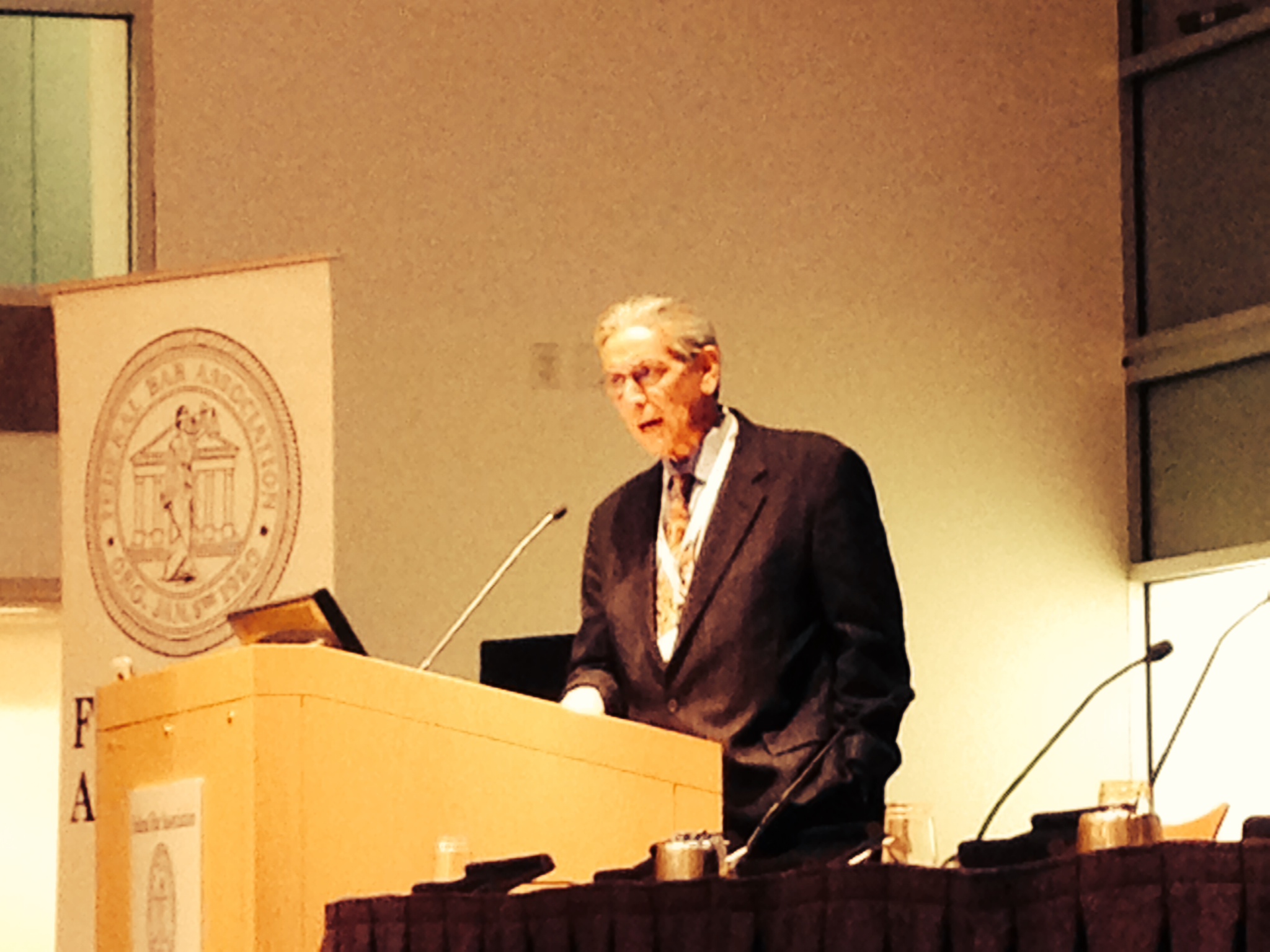
Keynote Speaker, Kevin Gover:

photo

Gabe Galanda on the big screen during the ethics panel:

photo

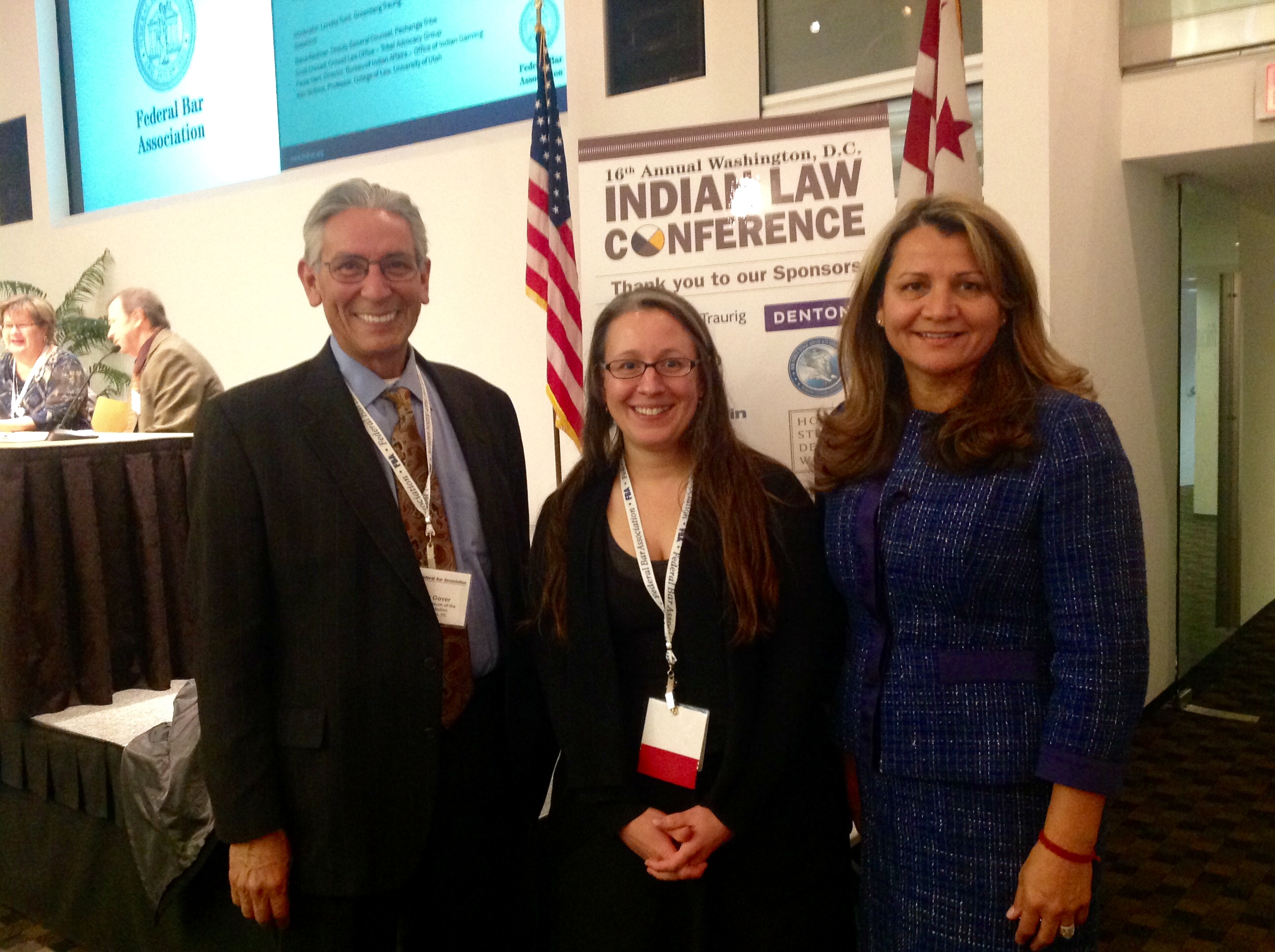
Kevin Gover with co-chairs Gina Allery and Loretta Tuell:
FullSizeRender

Pictures via Jenn Weddle. Neither Matthew nor Kate are in D.C. today.


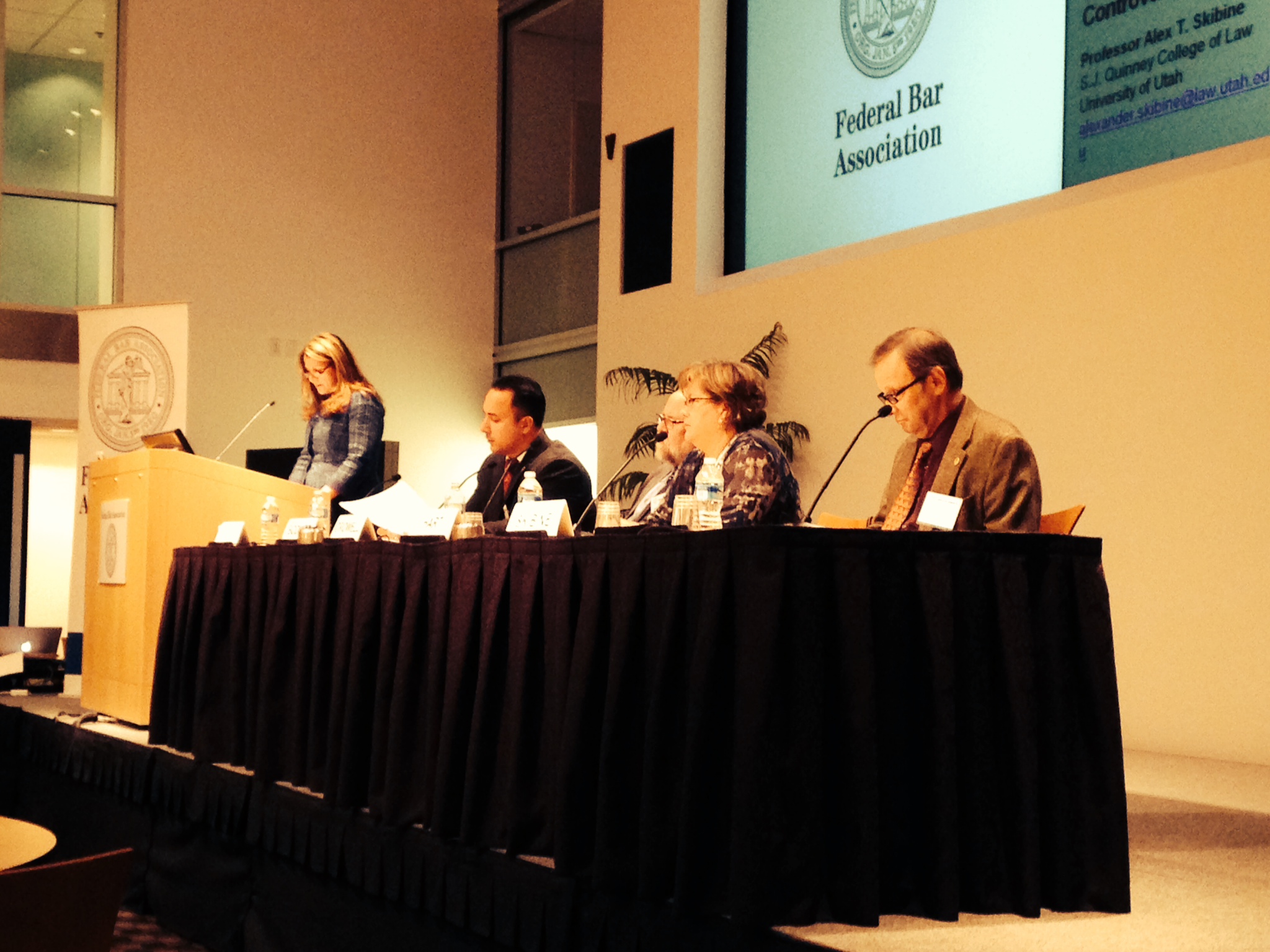
Gaming Panel at the Fed Bar DC Indian Law Conference

photo

Moderator:Loretta Tuell, Greenberg Traurig
Speakers: Alex Skibine, Professor, College of Law, University of Utah
Scott Crowell, Crowell Law Office -Tribal Advocacy Group
Paula Hart, Director, Bureau of Indian Affairs – Office of Indian Gaming
Steve Bodmer, Deputy General Counsel, Pechanga Tribe

Job Posting for Senior Advisor for Tribal Child Welfare for HHS/Adminstration for Children and Families

Here.

Job Title:Senior Advisor, GS-0301-14
Department:Department Of Health And Human Services
Agency:Administration for Children and Families
Job Announcement Number:HHS-ACF-DE-15-1245975

DUTIES:
Back to top
·         Lead policy advice and policy direction to, and on behalf of, the Associate Commissioner in relation to tribal child welfare.
·         Provide the highest level of strategic policy advice to the Associate Commissioner on tribal child welfare.
·         Work with Deputy Associate Commissioner, Directors, Regional Program Mangers and across the Children’s Bureau to co-ordinate the implementation of the Associate Commissioner’s tribal child welfare priorities tribal child welfare legislation and programming.
·         Develop and maintain effective partnerships with a wide range of specialist stakeholders from the philanthropy, public and private sectors to ensure a fully inclusive approach to the development and implementation of the Associate Commissioner’s tribal child welfare strategies and policies.
·         Provide advice, guidance and assistance to ensure the development and implementation of policies, procedures, and systems needed to plan, develop, monitor and support work with tribes.
·         Review a variety of policy, programs and administrative actions, reports, and projects such as new and revised regulations, funding recommendation, program guidelines etc.
·         Develop methodology for and conduct special studies, independent analyses and sensitive assignments on matters related to tribal care welfare programs.
·         Recommend program improvement initiatives and regulatory and legislative strategies to improve program efficiency and effectiveness.
Conference Registration Reminder

Just a reminder post that the registration for the White House Initiative on American Indian and Alaska Native Education listening session is here and the registration for the 11st Annual Indigenous Law Conference–Dismantling Barriers in American Indian Education–is here.  Those events are happening on November 19 and 20 in East Lansing.

See this page for more information about both events.

Fredericks Peebles & Morgan Litigation Attorney Posting

OMAHA NE LITIGATION ASSOCIATE ATTORNEY

MIFPA/ICWA Expert Witness and Active Efforts Case out of Michigan COA

Here.

The court conditionally reversed the trial court because of a lack of proper expert witness testimony (citing ICWA, MIFPA and the Guidelines). It also finds that the agency made active efforts–even if there was no testimony for each element in the MIFPA definition of active efforts.

Interestingly, this case also addresses what child protective orders may be appealed (or not) in Michigan, and advises the Michigan Supreme Court to revise the Michigan Court Rules to allow for an appeal of right of a removal of a child:

We also suggest that the Supreme Court consider modifying MCR 3.993 in order to permit a parental appeal of right, at least under some circumstances, from removal order when a child is removed from his or her parents at a stage prior to adjudication. Where a parent’s action or neglect threatens a child’s safety sufficient to justify removal at the outset of a child protective proceeding, it is neither surprising nor objectionable that such removal would correlate with a higher likelihood of termination. However, as several recent cases have shown, the decision to remove a child can substantially affect the balance of the child protective proceedings even where the initial concerns are eventually determined to have been overstated.

In such cases, the parent may find his or her parental rights terminated not because of neglect or abuse, but because of (1) a failure to adequately comply with the Department’s directives and programs and (2) a loss of bonding due to a lack of parental visitation.