2016 ICWA Appellate Cases by the Numbers

Here’s our annual contribution to the ICWA data discussion. While a few cases might yet come in, we have our final list of 2016 appealed ICWA cases sorted. A note on the data–these are cases that are on Westlaw and/or Lexis Nexis, and ICWA (or state equivalent) was litigated. We collect the case name, the date, the court, the state, whether the case is reported (also called published) or not, the top two issues, up to three named tribes, the outcome of the case, and who appealed the case. These are standard state court ICWA cases, and do not include any of the ongoing federal litigation. We did this last year as well. Sadly no, I haven’t yet published this anywhere but Turtle Talk, and yes, it is next on the to-do list. If you know we are missing a case based on the numbers, and it’s publicly available, *please* send it to me [fort at law.msu.edu] so we can add it. I’m also happy to answer questions at the same email.

There were 175 appealed ICWA cases this year, down 74 from last year. There were 30 reported ICWA cases this year. As always, California leads the states with 114 cases, 10 reported. Michigan is second with 13, 2 reported. Texas, which didn’t have any cases we could find last year, had 7 cases this year, 1 reported. Then Iowa with 6, 1 reported, Oklahoma with 4 reported, Nebraska with 3, 2 reported, and Alaska and Arizona with 3, 1 reported each. States with 2 appealed ICWA cases include Arkansas (none reported), Indiana (none reported), Ohio (none reported), Oregon (2 reported), Washington (1 reported), Illinois (1 reported). Finally the following states had 1 ICWA case: Idaho, New Jersey, New Mexico, South Dakota, Utah, Kansas, North Carolina, Vermont, Kentucky, and Massachusetts.

In California, the cases further breakdown to 37 in the 4th Appellate District, 33 in the 2nd, 24 in the 1st, 9 in the 5th, 6 in the 3rd, and 3 in the 6th. California is the only state where we track by appellate districts at this time.

Supreme Courts in Oklahoma (2), Alaska (2), Idaho, Nebraska (2), South Dakota, California (2), Vermont and Washington all decided ICWA cases this year.

Of the 175 total appeals, 90 were affirmed, 67 were remanded, 14 were reversed, and the four remaining were affirmed in part and reversed in part (1), denied as moot (1), dismissed (1), vacated and remanded (1).

Top litigated issues were as follows: Notice (106), Inquiry (21), Placement Preferences (10), Active Efforts (8), Determination of Indian Child (8), Burden of Proof (5), Transfer to Tribal Court (5), Intervention, Termination of Parental Rights, Existing Indian Family, (2 cases for each one). The other cases with 1 each: Qualified Expert Witness, Indian Custodian, Tribal Customary Adoption, Application to Divorce, Ineffective Assistance of Counsel, Foster Care Placement

52 different tribes are represented in the first named tribe in a case. There were 56 cases involving claims of Cherokee citizenship. Of those appeals, 48 involved issues of notice and inquiry. In 21 cases the tribe was unknown (parent did not know name of tribe). In 14, the tribe was unnamed (court did not record name of tribe in the opinion).

4 cases were appealed by tribes (Cherokee Nation, Gila River, Shoshone Bannock). 92 were appealed by mom, 49 by dad, and 24 by both. Other parties who appealed include agency (1), child’s attorney (1), foster parents (1), great aunt and uncle (1), Indian custodian (1), and state and foster mother (1).
Child Welfare Staff Attorney Position at Nebraska Appleseed

Job Announcement

Staff Attorney – Child Welfare Program

Organization Profile

Nebraska Appleseed is a nonprofit organization that fights for justice and opportunity for all. Appleseed takes a systemic approach to complex issues – such as children’s welfare, immigration policy, affordable health care, and poverty – and takes its work wherever it can do the most good, whether that’s at the courthouse, at the statehouse, or in the community. For more information visit neappleseed.org.

Nebraska Appleseed is an equal opportunity employer; people of color, members of the LGBTQ community, individuals with disabilities, individuals with personal experience in the child welfare system, and those from diverse backgrounds are strongly encouraged to apply. Nebraska Appleseed does not discriminate on the basis of race, color, national origin, ethnic background, religion, gender, sexual orientation, age, or disability.

Position Summary

The Staff Attorney will be responsible for working with the Child Welfare Program Director to identify and develop legal and policy solutions to issues impacting Nebraska’s child welfare system. The focus of the work will be on reforming the state’s child welfare system to make sure it supports children and families who need its intervention, and that intervention does not contribute to problems. The Staff Attorney will engage in policy research and analysis, legal research and litigation, and resource development. This position will report to the Child Welfare Program Director, and will work closely with staff attorneys in other programs and the Child Welfare Program Associate. This is a full-time position based in our office in Lincoln, Nebraska.

Responsibilities:

The Staff Attorney will work with the Child Welfare Program Director to carry out the objectives of the program. Specific responsibilities include:

  • Identifying laws and policies that negatively affect the welfare of Nebraska children and working with Child Welfare Program Director, Legal Director, and other staff attorneys to develop and conduct impact or class action litigation to remedy problems.
  • Conducting policy research and analysis focused on the legal aspects of key issues affecting Nebraska’s child welfare system, as well as drafting and providing testimony to the Legislature and administrative agencies.
  • Developing legal resources and providing technical assistance, including amicus curiae briefs, for a network of “on the ground” juvenile court attorneys.
  • Developing educational materials (e.g., reports, fact sheets, presentations, policy briefs) for key stakeholders.
  • Learning from community members and community partners about issues and potential systemic solutions.
  • Supervising law clerks and interns, and advising intake coordinator on child welfare intakes.
  • Participating, as needed, in administrative tasks and program teams.

Qualifications:

  • Licensed to practice law in Nebraska or be willing to take necessary steps to be licensed.
  • Excellent legal research, analytic, and writing skills.
  • Creative thinking. The ability to develop novel legal theories and strategies to address complex problems.
  • Ability to work independently, be organized and detail oriented.
  • Ability to work in a team-oriented and collaborative environment.
  • Strong interpersonal skills and ability to effectively build and maintain community relationships.
  • Experience in or demonstrated commitment to public interest law and advocacy on behalf of children.
  • Knowledge and awareness of local, regional, and national issues facing child welfare.
  • Three years experience practicing law strongly preferred but exceptional recent graduates will be considered.
  • Legal experience in litigation and the areas of child welfare and juvenile law, administrative law, civil rights, and/or appellate practice preferred.
  • Experience with legislative and administrative advocacy preferred.

Salary and Benefits

Competitive nonprofit salary based on experience and benefits including health, vision, dental, 401(k), and vacation.

To Apply

Position is open until filled. Target start date is March 2017. Please send a cover letter, resume, writing sample, and list of three references to Elizabeth Hutchison at ehutchison@neappleseed.org or mail to: Nebraska Appleseed Child Welfare Staff Attorney search, Nebraska Appleseed, 941 “O” Street, Suite 920, Lincoln, NE 68508 by Friday, Jan. 20. If you have any questions or need additional time to submit materials, please contact Elizabeth Hutchison at 402-438-8853, ext. 122.

Marcia Zug on Sharpe v. Sharpe and Child Support Modifications

Here.

It is easy to presume that maximizing child support is in a child’s best interest, but as the above cases demonstrate, there are exceptions. When the benefits of modification outweigh the negatives, modification should be permitted. This is true for all child support cases, but especially those pertaining to American Indian families. When considering modification requests made by Indian obligors, family courts must be particularly sensitive to the effects of income imputation on individual Native families as well as the effects of imputation on their tribes more broadly. If the benefit of modification relates to the child’s or the parent’s unique status as a member of a federally recognized tribe, this fact should be given substantial, perhaps even decisive, weight in the court’s modification decision. As discussed in Part I, courts applying the strict rule test have permitted modification when it benefits the child or the greater community. Supporting native subsistence lifestyles does both.

Sharpe v. Sharpe is here.

Cert Opposition Briefs Filed in In re Alexandria P. SCOTUS Petition

Briefs are here.

Case page is here.

This is the case out of the California Court of Appeals (California Supreme Court denied review) that garnered a lot of media attention regarding the change in placement of a Choctaw girl in foster care so she could go live with her relatives.

NICWA Launches Heart of ICWA Video Series

Press Release.

The first video is here, and features Quinault President Fawn Sharp and her family. Deepest thanks to her for being a leader unafraid to share her story to help Native families.

Latest Orders and Injunctions in Oglala Sioux v. Fleming (Van Hunnik)

From Stephen Pevar:

Judge Viken issued four sweeping orders  in the Rapid City Indian Child Welfare Act case. One is a Permanent Injunction barring the defendants from continuing to violate seven federal rights of Indian children, their parents, and their tribes. It mandates an “immediate halt” to those violations. The Injunction is accompanied by a 27-page decision explaining the need for the remedies being imposed by the Court.

301-order-section-1922-issue

302-order

303-declaratory-judgment

304-permanent-injunction

Final AFCARS Rule with ICWA Elements

Here is the final Adoption and Foster Care Analysis and Reporting System Rule incorporating a number of new data elements states will have to report to the feds. These elements include important information on ICWA cases and placements. Many people in our field worked very hard to get these elements included, which required a supplemental notice and comment period.

This is the first time these ICWA data elements will be required by the federal government. The first anticipated annual AFCARS report that will include the information is anticipated by 2020 (thanks, Heather, for this information!).

2016 BIA ICWA Guidelines Released

Here are the 2016 Guidelines. For those keeping track at home:

February 2015, Updated Guidelines replacing the 1979 Guidelines (No Longer in Effect)

June 2016, Federal Regulations released (Became Binding on December 12)

December 2016, Updated Guidelines replacing the February 2015 Guidelines

What this means:

25 USC 1901 et seq (ICWA) has not changed in 1978, and provides the minimum federal standards for Indian families. State ICWA laws (and corresponding court rules) that provide higher standards still apply. The federal Regulations are now binding and are like the federal law. The December 2016 Guidelines are now in effect and are non-binding interpretation of the Regulations (given the way they are drafted).


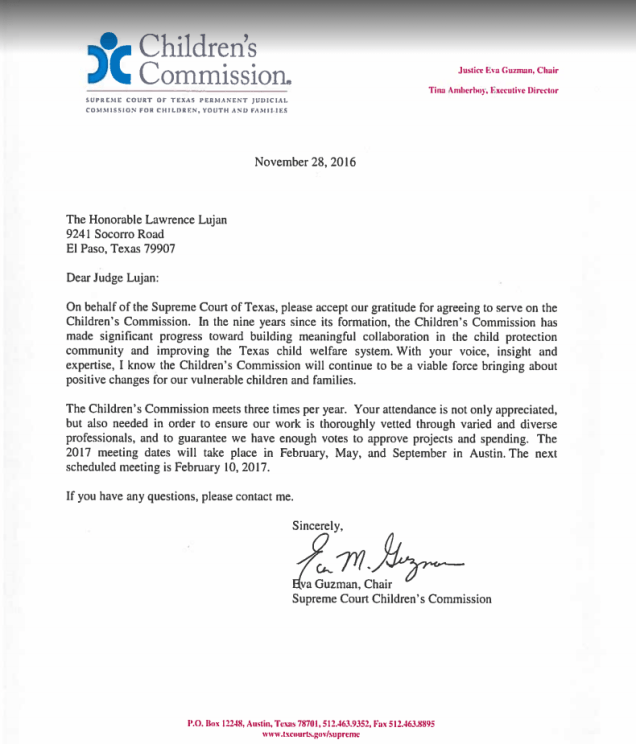
Ysleta del Sur Chief Judge Lawrence Lujan Appointed Commissioner to Texas Supreme Court’s Permanent Judicial Commission for Children, Youth and Families

From the National American Indian Court Judges Association (NAICJA) Facebook Page:

NAICJA Vice President Appointed Commissioner to the Texas Supreme Court’s Permanent Judicial Commission for Children, Youth and Families

Our Tribal Courts not only serve our sovereign communities but also seek partnerships at the state and federal level. These partnerships enhance Indian Country legal services and most importantly put our tribal nations in key leadership positions that promote the welfare of our community members and the sovereignty of all Tribal Courts.

Congratulations on your new appointment Chief Judge Lawrence Lujan of the Ysleta del Sur Pubelo!


image-1image

Nebraska Supreme Court ICWA/NICWA Decision

Here.

This is a tough case of intergenerational removal. The Nebraska Supreme Court finds that both ICWA and NICWA apply to non-Indian parents of Indian children as defined by the statutes. The Court also found that NICWA’s different language in its active efforts provision, which requires active efforts not just to prevent the break up of the family, but to unite the parent with the Indian child, means the Baby Girl holding does not apply to that provision of state law. However, where NICWA’s language is the same as ICWA’s regarding “continued custody” in the termination of parental rights section, the Baby Girl holding does apply, and there is no need to find the continued custody of the child will result in serious physical or emotional damage, where the parent hasn’t had custody of the child.

While the new federal Regulations, which go into effect next week, are useful for tribes and Native families, state ICWA laws continue to hold the most promise for enforcement of the law in the courts. If your state is contemplating drafting one (either through a tribal-state workgroup, Court Improvement Program, or other mechanism), there are resources and people available to provide research and assistance.