Here, from the Stranger in Seattle.
Update:
Here.
Congratulations to Louise Erdrich. Her work is getting a great deal of attention around the country. Finally.
Here is a great quote from Librarian of Congress James Billington about why Erdrich was chosen for this award:
Librarian of Congress James Billington said in a statement that Erdrich’s novels have uniquely explored the cultural challenges faced by Native Americans and mixed-race Americans.
“[H]er prose manages to be at once lyrical and gritty, magical yet unsentimental, connecting a dreamworld of Ojibwe legend to stark realities of the modern-day,” Billington said. “And yet, for all the bracing originality of her work, her fiction is deeply rooted in the American literary tradition.”
Here:
Renowned Native American Writers and Activists Suzan Harjo, Mary Kathryn Nagle
Join with Theater Director Matt Pfeiffer to Present My Father’s Bones at the Penn Museum
 PHILADELPHIA, PA January 20, 2015—The Penn Museum hosts a staged reading of My Father’s Bones, a short play by nationally renowned Native American writers and activists Suzan Shown Harjo and Mary Kathryn Nagle, Thursday, February 12, 5:30 pm. The play recounts the ongoing struggle of three sons to recover the remains of their father—the unmatched Olympian Jim Thorpe—from the Borough of Jim Thorpe, Pennsylvania, for reburial with his relatives on Sac and Fox Nation land in Oklahoma. The free program, sponsored by the Penn Cultural Heritage Center of the Penn Museum and presented in conjunction with the Museum’s Native American Voices exhibition, concludes with a panel discussion and reception.
The first version of My Father’s Bones was selected as a finalist for the 2013 Von Marie Atchley Excellence in Playwriting Award and performed at the Autry Center of the American West in Los Angeles. This revision is staged by Philadelphia-based director Matt Pfeiffer, recently nominated for the 2014 Barrymore Award for Outstanding Direction of Play for his direction of Down Past Passyunk, at InterAct Theater Company in Philadelphia.
Following the play, the Penn Cultural Heritage Center and the Museum host a panel discussion about repatriation and the use of the Native American Graves Protection and Repatriation Act (NAGPRA) as the legal basis to return Jim Thorpe’s remains to his ancestral home. Representatives of the Borough of Jim Thorpe and the Sac and Fox Nation have been invited to attend. To date, panelists include tribal representatives of the Sac and Fox Nation; Attorney John Echohawk, Director of the Native American Rights Fund; and Suzan Shown Harjo, President of the Morningstar Institute. Penn Cultural Heritage Center Director Richard Leventhal moderates.
For those unable to attend in Philadelphia, the play will be viewable online via HowlRound’s livestream on its global, commons-based peer produced HowlRound TV network at http://howlround.com/tv.
To participate in the talk back following the performance, use Twitter hashtag #newplay, #MyFathersBones and/or#JimThorpe and direct your questions @HowlRound.
Background to the Story
On October 23, 2014, the United States Court of Appeals, Third Circuit Court of Appeals in Philadelphia determined that NAGPRA does not apply to the requested repatriation of Jim Thorpe’s remains. As a result, Sac and Fox Nation, Jim Thorpe’s sons Bill and Richard Thorpe, the National Congress of American Indians (NCAI), and Senator Ben Nighthorse Campbell have all petitioned the Court, requesting that the Third Circuit reconsider the case en banc. Their petitions remain pending.
Jim Thorpe was an enrolled citizen of the Sac and Fox Nation and winner of several Olympic gold medals. He passed away in 1953 and the Sac and Fox Nation honored him with a traditional Sac and Fox burial, in accordance with his last wishes. Ordinarily, these ceremonies last four days. However, on the fourth day, his third wife, Patsy, who was not Native American, interrupted the returning-the-name ceremony, which is the last step before burial in the territory of the Sac and Fox Nation.
“Researching the play, we learned that Patsy burst into the funeral and, with the assistance of an Oklahoma State Trooper, removed his body,” noted Ms. Harjo. “She then proceeded to sell Jim Thorpe’s body for a few thousand dollars to a town in Pennsylvania that hoped to use his body to attract tourism and enhance its local economy. This town, originally comprised of East and West Chunk, re-named itself after the human body it purchased as the Borough of Jim Thorpe, Pennsylvania.”
After years of attempts to convince the Borough to permit the repatriation of Jim Thorpe to his Sac and Fox homeland, his sons (former Chairman Jack Thorpe and Bill and Richard Thorpe) filed suit, along with the Sac and Fox Nation. The District Court concluded that NAGPRA does apply to the Borough’s possession of Jim Thorpe, but the Court of Appeals for the Third Circuit overturned the lower court’s decision.
About the Playwrights and Panelists
John Echohawk (Pawnee), one of the panelists, is the Executive Director of the Native American Rights Fund. He was the first graduate of the University of New Mexico’s special program to train Indian lawyers, and was a founding member of the American Indian Law Students Association while in law school. John has been with NARF since its inception in 1970, having served continuously as Executive Director since 1977. He has been recognized as one of the 100 most influential lawyers in America by the National Law Journal and has received numerous service awards and other recognition for his leadership in the Indian law field. He serves on the Boards of the American Indian Resources Institute, the Association on American Indian Affairs, the Indigenous Language Institute, and the Native American Rights Fund (August 1970 to present), among others.
Suzan Shown Harjo (Cheyenne and Hodulgee Moscogee) and Mary Kathryn Nagle (Cherokee) have collaborated to create a provocative play that documents the conflict. Dr. Harjo, one of the principal consultants for Native American Voices, is president of The Morning Star Institute in Washington, DC, and has helped Native Peoples protect sacred places and recover more than one million acres of land. President Obama awarded her with a 2014 Presidential Medal of Freedom for her work on American Indian civil, human, and treaty rights. Over the past five decades, she has developed key laws to promote and protect Native nations, sovereignty, children, arts, cultures and languages, including the American Indian Religious Freedom Act, National Museum of the American Indian Act and Native American Graves Protection and Repatriation Act. Formerly the executive director of the National Congress of American Indians, she served as Legislative Liaison for the Native American Rights Fund and in the Carter Administration, and was lead plaintiff in Harjo et al v. Pro Football, Inc. (1992-2009), the landmark lawsuit against the name of the Washington professional football franchise. She is a Founding Trustee of the National Museum of the American Indian and is the first Native woman to receive an Honorary Doctorate of Humanities from the Institute of American Indian Arts. Prior to moving to Washington, D.C., she had a long career in broadcasting and theater in New York City.
Oklahoma City-native Mary Kathryn Nagle studied theater at Georgetown University and graduated summa cum laude from Tulane Law School, where she received the Judge John Minor Wisdom Award. Her plays have been performed from Oklahoma to New York. She is a member of the 2013 Emerging Writers Group at the Public Theater, where her latest play, MANAHATTA, was performed as part of the PUBLIC’s new PUBLIC STUDIO series.
Dr. Richard M. Leventhal, moderator for the program, is Executive Director of the Penn Cultural Heritage Center at the Penn Museum, a Professor in the University of Pennsylvania Department of Anthropology, and Curator in the American Section of the Penn Museum. He is also the former Director of the Penn Museum, President and CEO of the School of American Research in Santa Fe, Director of the Cotsen Institute of Archaeology and Associate Professor in the Department of Anthropology at UCLA, and Director of the Institute for Mesoamerican Studies at SUNY-Albany. Dr. Leventhal lectures and writes extensively on the preservation of cultural properties and cultural sites, on the need to prevent the looting of global heritage resources, and on the acquisition policies of museums.
The Penn Museum (the University of Pennsylvania Museum of Archaeology and Anthropology) is dedicated to the study and understanding of human history and diversity. Founded in 1887, the Museum has sent more than 300 archaeological and anthropological expeditions to all the inhabited continents of the world. With an active exhibition schedule and educational programming for children and adults, the Museum offers the public an opportunity to share in the ongoing discovery of humankind’s collective heritage.
The Penn Cultural Heritage Center is dedicated to expanding both scholarly and public awareness and promoting discussion and debate about the complex issues surrounding the world’s rich—and endangered—cultural heritage.
Photo: Jim Thorpe at the 1912 Summer Olympics in Stockholm, Sweden. Public domain image.
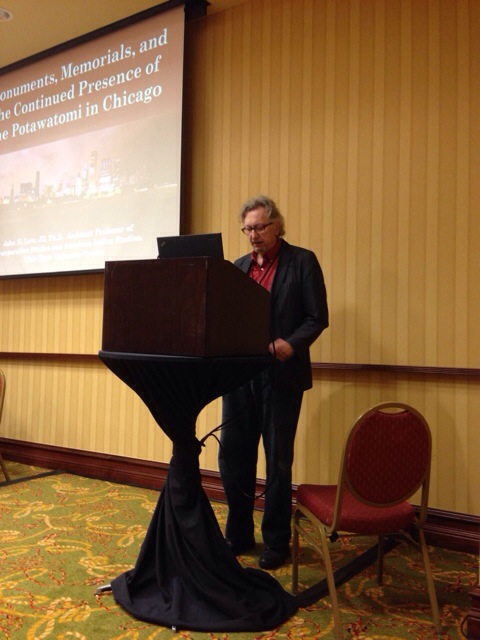
John Low, a Pokagon Band member, opened it up
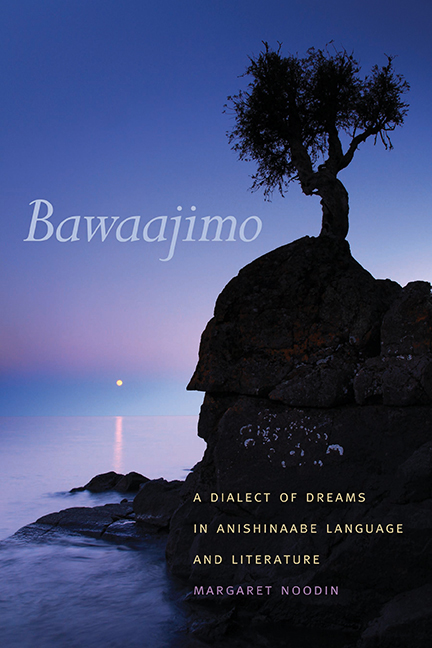
MSU Press is here displaying Simon’s novel

From the MSU Press Website:
Bawaajimo: A Dialect of Dreams in Anishinaabe Language and Literature combines literary criticism, sociolinguistics, native studies, and poetics to introduce an Anishinaabe way of reading.
Although nationally specific, the book speaks to a broad audience by demonstrating an indigenous literary methodology. Investigating the language itself, its place of origin, its sound and structure, and its current usage provides new critical connections between North American fiction, Native American literatures, and Anishinaabe narrative. The four Anishinaabe authors discussed in the book, Louise Erdrich, Jim Northrup, Basil Johnston, and Gerald Vizenor, share an ethnic heritage but are connected more clearly by a culture of tales, songs, and beliefs. Each of them has heard, studied, and written in Anishinaabemowin, making their heritage language a part of the backdrop and sometimes the medium, of their work. All of them reference the power and influence of the Great Lakes region and the Anishinaabeakiing, and they connect the landscape to the original language. As they reconstruct and deconstruct the aadizookaan, the traditional tales of Nanabozho and other mythic figures, they grapple with the legacy of cultural genocide and write toward a future that places ancient beliefs in the center of the cultural horizon.
From the Atlantic….
Full list here.

by Robert Traver (1958)
A former district attorney in rural Michigan opens his defense practice by taking on a foul-tempered client accused of murder. The book, which became an Otto Preminger film, sizzles with courtroom confrontations grounded in the nuances of real-life trials.
Note: Traver was the pen name of John D. Voelker, a justice of the Michigan Supreme Court.
Here.
Carole Goldberg has published a review of the classic novel by D’Arcy McNickle, “The Surrounded,” in the Michigan Law Review’s annual Survey of Books Related to the Law. The PDF is here: A Native Vision of Justice.
A synopsis:
Although largely unheralded in its time, D’Arcy McNickle’s The Surrounded has become a classic of Native American literature. When the University of New Mexico Press reissued the book in 1978, a year after McNickle’s death, the director of Chicago’s Newberry Library, Lawrence W. Towner, predicted (correctly) that it would “reach a far wider audience.” Within The Surrounded are early stirrings of a literary movement that took flight several decades after the novel’s first publication in the writings of N. Scott Momaday, Louise Erdrich, James Welch, Leslie Marmon Silko, and Gerald Vizenor, among others. All of these Native American authors share with McNickle a desire to present, from a Native perspective, the challenges of establishing identity and sustaining community in a world where indigenous societies must contend with powerful forces of colonization and modernity. Literary critics have offered sharply differing interpretations of the ultimate message The Surrounded conveys about the future of indigenous peoples. Some view the novel as a statement of despair, while others discern McNickle’s confidence in the strength of Native cultures and their capacity for renewal. There is broad consensus, however, that The Surrounded is a seminal work.
What the literary critics have largely overlooked is the novel’s pointed analysis and critique of criminal justice in Indian country. Much of the novel’s plot is driven by acts viewed as criminal by the dominant, non-Native social order. The protagonist, Archilde Leon, returns home to the Flathead Reservation of the Confederated Salish and Kootenai Tribes in Montana, hoping to say a last farewell to his family before making his way as a fiddler in the cities. His relationship with both parents has become strained, following his education in the local Catholic mission school and in a federal Indian boarding school. For different reasons, neither parent wanted him to pursue his ambition of making his way far from home in a big city. Greeting him is news that his older brother, Louis, is hiding in the mountains, accused of stealing horses-conduct outlawed by the local authorities but long carried out by the Salish against their enemies. Archilde’s non-Indian father is so displeased with Louis’s behavior that he has disassociated himself from the other members of his family, living apart from his Salish wife, Catharine, and refusing all contact with Louis. At first, Archilde also feels alienated from the more traditional Salish ways that Catharine, his mother, still practices, despite her long-ago conversion to Catholicism. But as he develops greater appreciation for his mother-through feasts and Salish stories told in his honor by the blind elder, Old Modeste-Archilde agrees to accompany her on one last hunting trip into the snowy mountains. There they first encounter the hostile local sheriff, Sheriff Quigley, and later are surprised to discover Louis. Louis proceeds to shoot a young, female deer. When the local game warden comes upon the group and accuses Louis of violating state game laws, there is a confrontation, and the warden mistakenly believes Louis is about to shoot him. The warden fires his gun, killing Louis, and a furious Catharine steals behind the warden and fells him with a hatchet.
 Turtle Talk
You must be logged in to post a comment.