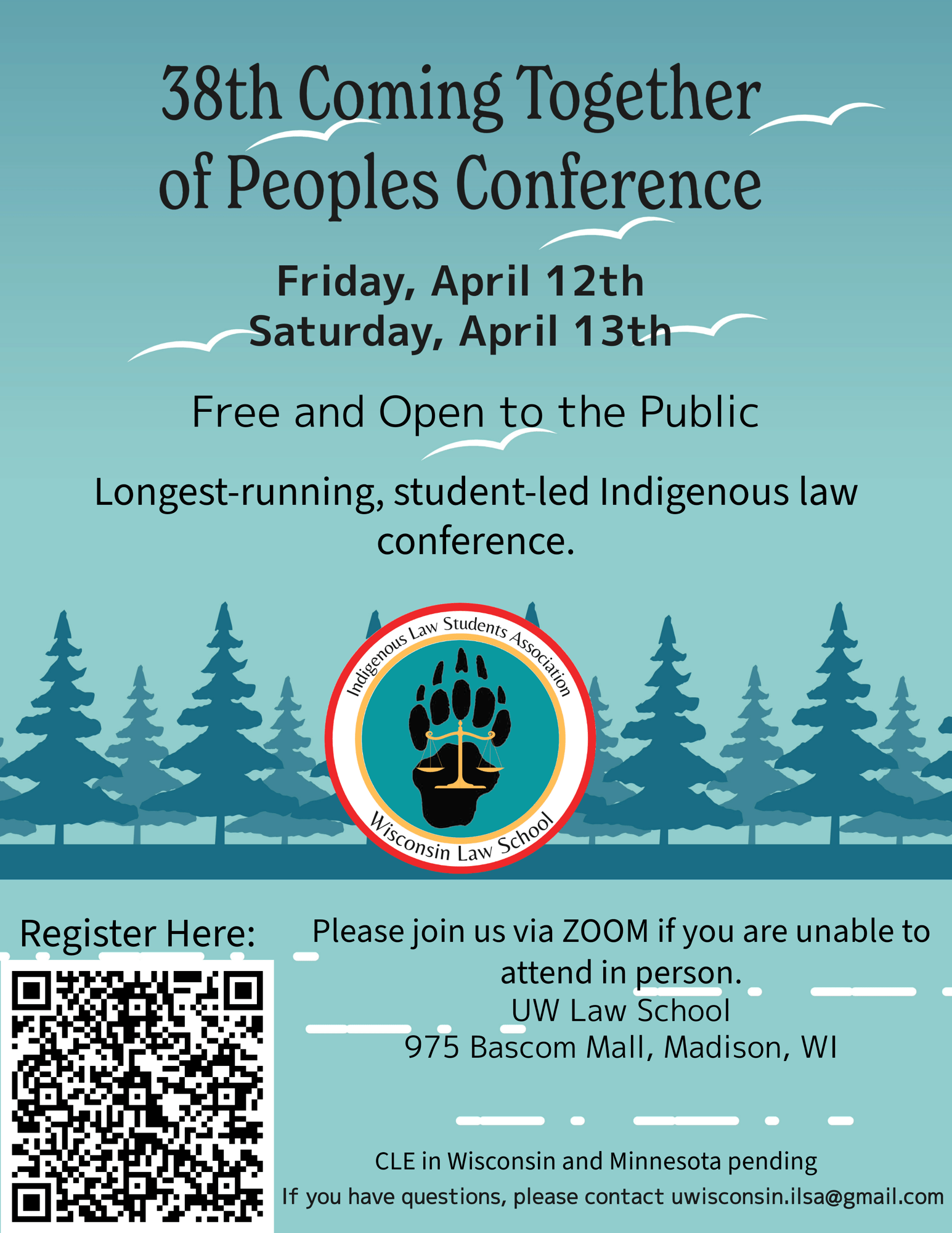
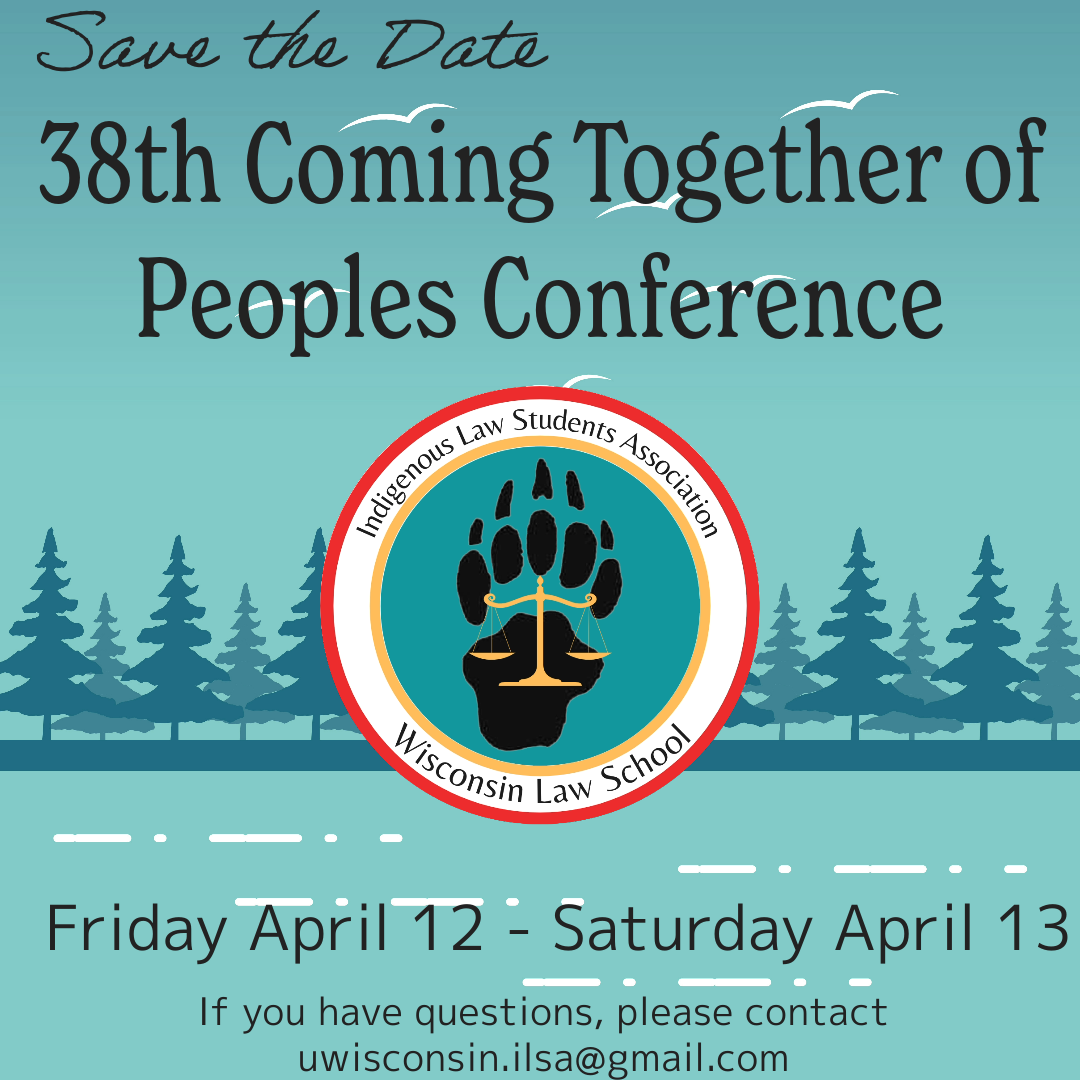
Attend the 38th Coming Together of Peoples Conference (CTOPC) on Friday, April 12th or Saturday, April 13th, 2024!
You can attend via Zoom or in-person at the UW Law School (975 Bascom Mall, Madison, WI 53706).
We will cover many Indigenous Law topics, including Tribal data sovereignty, publication of Tribal codes and cases, interdisciplinary research in Federal Indian Law, and much more! Be on the lookout for more information about the panels and our program release!
If you are interested, please fill out this registration form (full link below). Feel free to share this registration link and Info Poster with other attorneys, professionals, and students that may be interested.
The Yale Law Journal’s submissions season opened on February 1, and we are reaching out to see if you would be able to share a call for submissions on Turtle Talk. The Articles and Essays submissions guidelines can be found here.
We greatly appreciate your time, and we hope to hear from you soon!
Best,
Ashlee Fox, Meghan Gupta, and Lily Moore-Eissenberg, on behalf of the Yale Law Journal
This Note argues for a change in the Supreme Court’s treatment of free exercise claims over Indigenous sacred sites. First, this Note reasons that, in Lyng v. Northwest Indian Cemetery Protective Association, the Court set an impossibly high standard for parties bringing sacred site free exercise claims against the government. This insurmountable standard, masking itself as strict scrutiny, implicitly precludes any claimant from prevailing against a government action designated for a sacred site. Further, statutes aimed at protecting religious liberty have resolved little, leaving no choice but to rework the standard.
Next, this Note delves into three pre-existing theories from like-minded critics of Lyng, analyzing the pros and cons of their proposed approaches to sacred site free exercise claims. Lastly, this Note sets forth a novel test which modifies the framework courts currently use in free exercise jurisprudence. Appreciating the fundamental distinctions between religious land and religious acts, this new test is uniquely tailored to address claims over sacred lands. This proposed test seeks to (1) give religious claimants a realistic opportunity to meet their initial burden in court, (2) put sacred site claims on equal footing with other free exercise claims, and (3) address the Supreme Court’s concerns with overexpanding free exercise doctrine.
The ABA Section on Environment, Energy, and Resources (SEER) has launched its 2024 law student writing competitions, and the Indigenous Law Committee is thrilled to be participating again this year. Please share this exciting opportunity with any law students who may be interested in submitting a piece on Indigenous law and the environment!
Prize: $1,000 cash
Length: 20 page max
Entries due: May 31, 2024
Submit to: Kevin.Gordon@americanbar.org with the subject line: “SEER Law Student Writing Competition: Indigenous Law.”
Our 38th Coming Together of Peoples Conference (CTOPC) is arriving quickly, and we are excited to see you at our conference! The Conference is Friday, April 12th, and Saturday, April 13th, at the UW Law School (975 Bascom Mall, Madison, WI 53706).
If you plan on attending, please fill out this registration form. Feel free to share this registration link and Save-the-Date with other attorneys, professionals, and students that may be interested.
In the coming weeks, we will share the panels we have scheduled, and more details about the conference. So be on the lookout for more information!
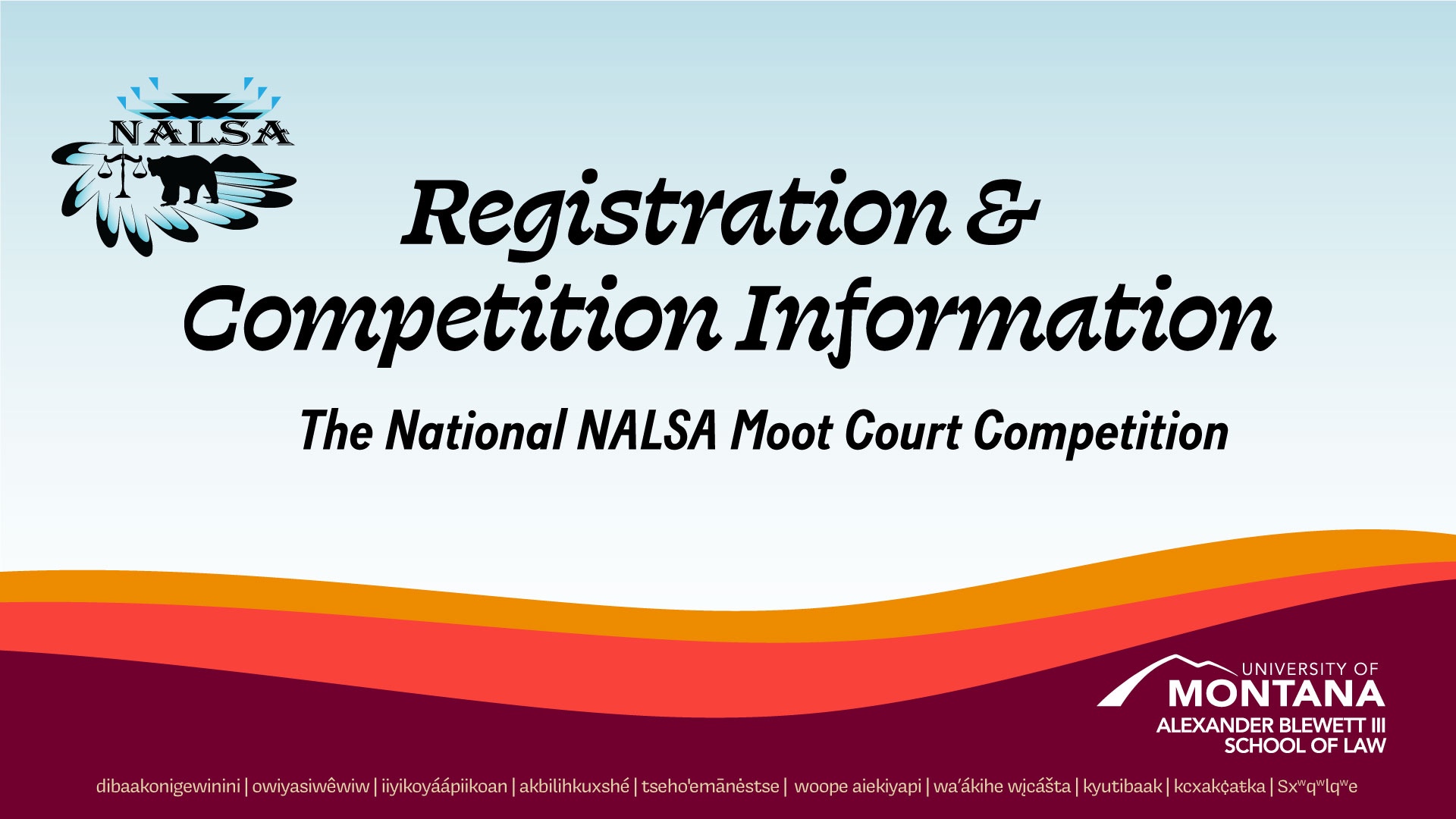
The National Native American Law Student Association (NNALSA), in partnership with the University of Montana, Alexander Blewett III School of Law NALSA Chapter, are excited to host the 32nd Annual NNALSA Moot Court Competition.
Registration Opens Friday, November 3rd, 2023 at 12:00 a.m. MST






 Turtle Talk
You must be logged in to post a comment.