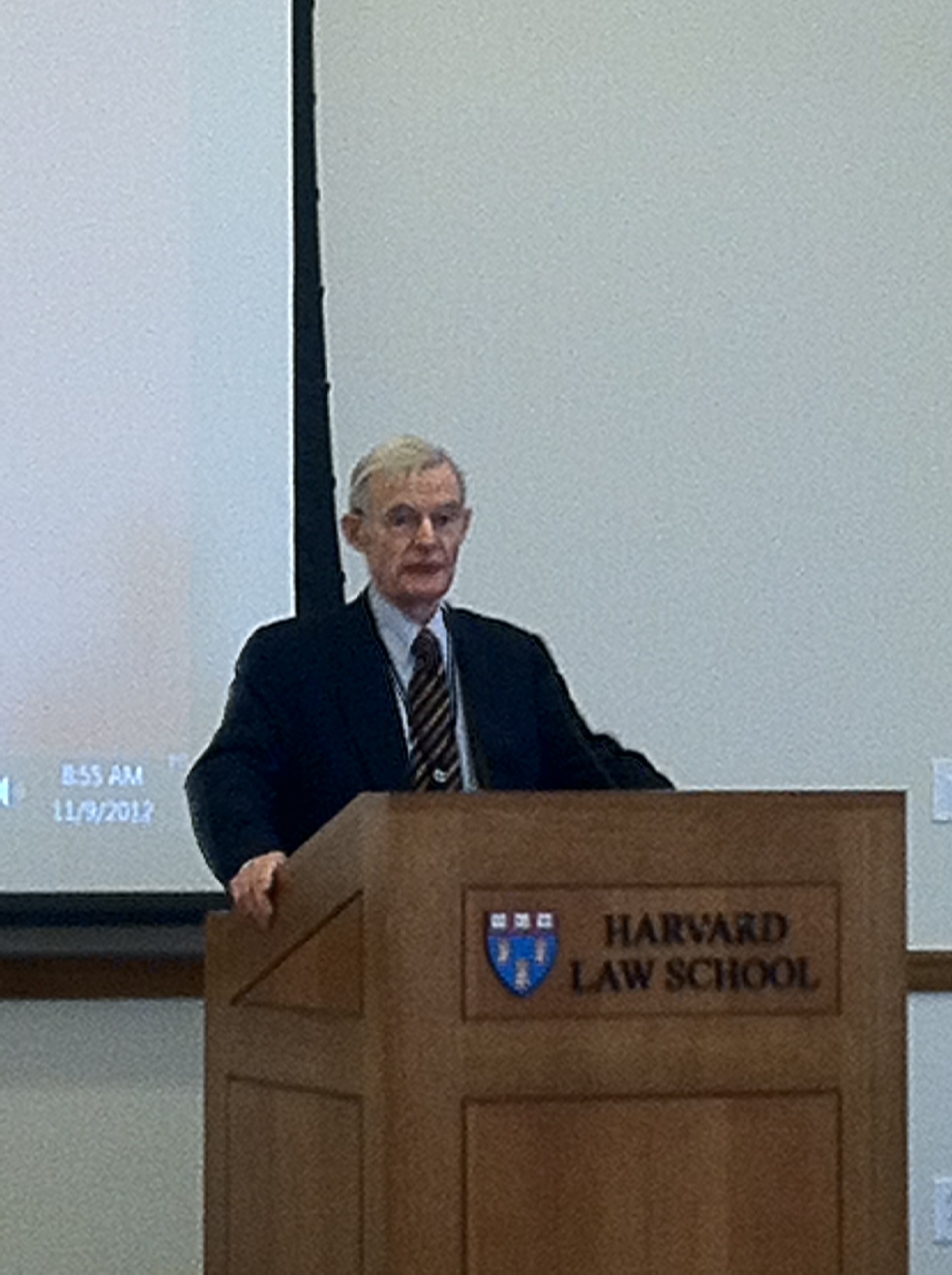
Harvard Law School Tribal Courts Conference — Intergovernmental Cooperation Panel

Carole Goldberg, Bob Anderson, and Wenona Singel:

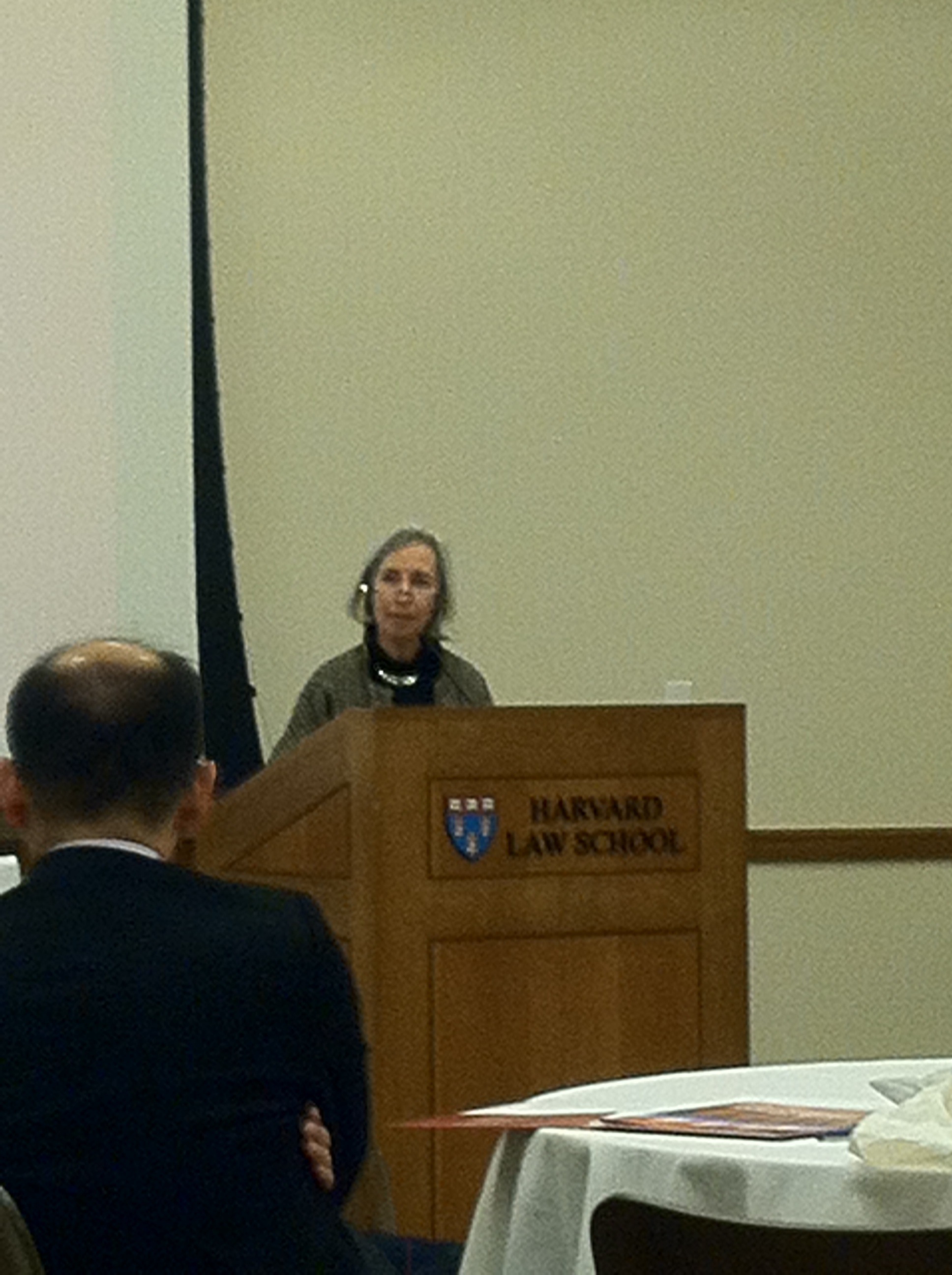
Harvard Law School Tribal Courts Conference — Panel on Tribal Criminal Jurisdiction Theory and Practice

Anita Fineday, Angela Riley, and Ron Whitener:

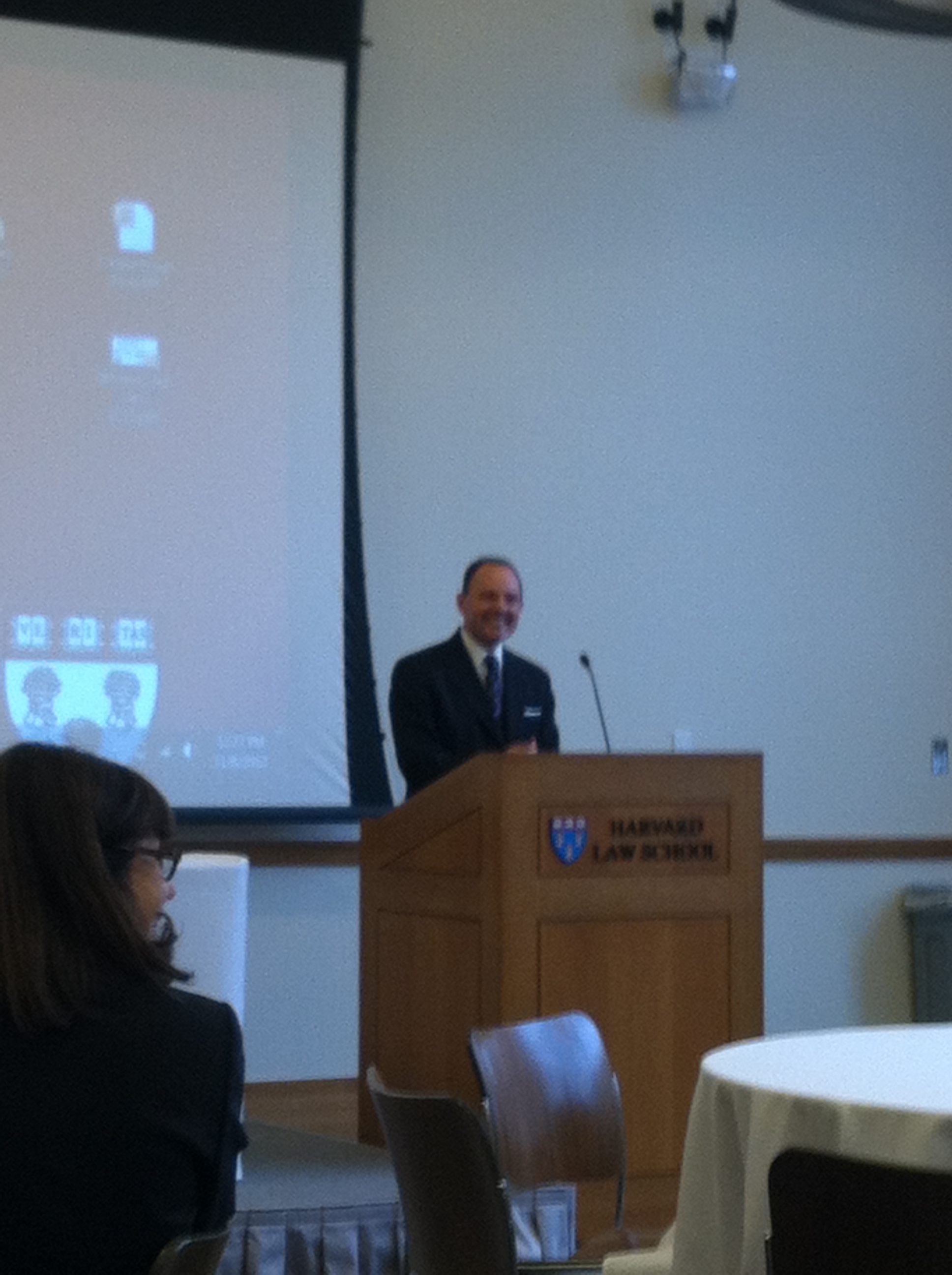
Harvard Law School Tribal Courts Conference — Kevin Washburn Lunch Keynote

Harvard Tribal Courts Conference — Criminal Law Enforcement Panel

Carole Goldberg, Judge Theresa Pouley, and Kristen Carpenter:

Kansas Law Announces 17th Annual Tribal Law and Government Center Conference

The University of Kansas Tribal Law and Government Center announces the 17th Annual Tribal Law and Government Conference.

The conference will take place Friday, March 1, 2013 at the Burge Union on the University of Kansas campus in Lawrence, Kansas. This year’s theme is climate change and its impact on indigenous peoples. CLE credit will be available to attendees. Lunch will be provided.

Confirmed speakers include:

  • Professor Randall Abate, Florida A&M University College of Law
  • Professor Robin Craig, S.J. Quinney College of Law, University of Utah
  • Leonardo Crippa, Indian Law Resource Center
  • Heather Kendall Miller, Native American Rights Fund
  • Professor Rebecca Tsosie, Sandra Day O’Connor College of Law, Arizona State University
  • Dr. Daniel Wildcat, Haskell Indian Nations University
  • Professor Elizabeth A. Kronk, University of Kansas School of Law

The conference will also mark the domestic launch of the book “Climate Change and Indigenous Peoples: The Search for Legal Remedies” (Randall Abate & Elizabeth Ann Kronk eds., Edward Elgar Publishing, 2013).

The annual University of Kansas School of Law Diversity Banquet will follow the conference. This year’s Diversity Banquet is hosted by the KU Native American Law Students Association. Conference attendees are invited to attend the banquet.

More detailed information and registration will be available in early 2013. For additional information, please contact Professor Elizabeth Ann Kronk at (785) 864-1139 or elizabeth.kronk@ku.edu.
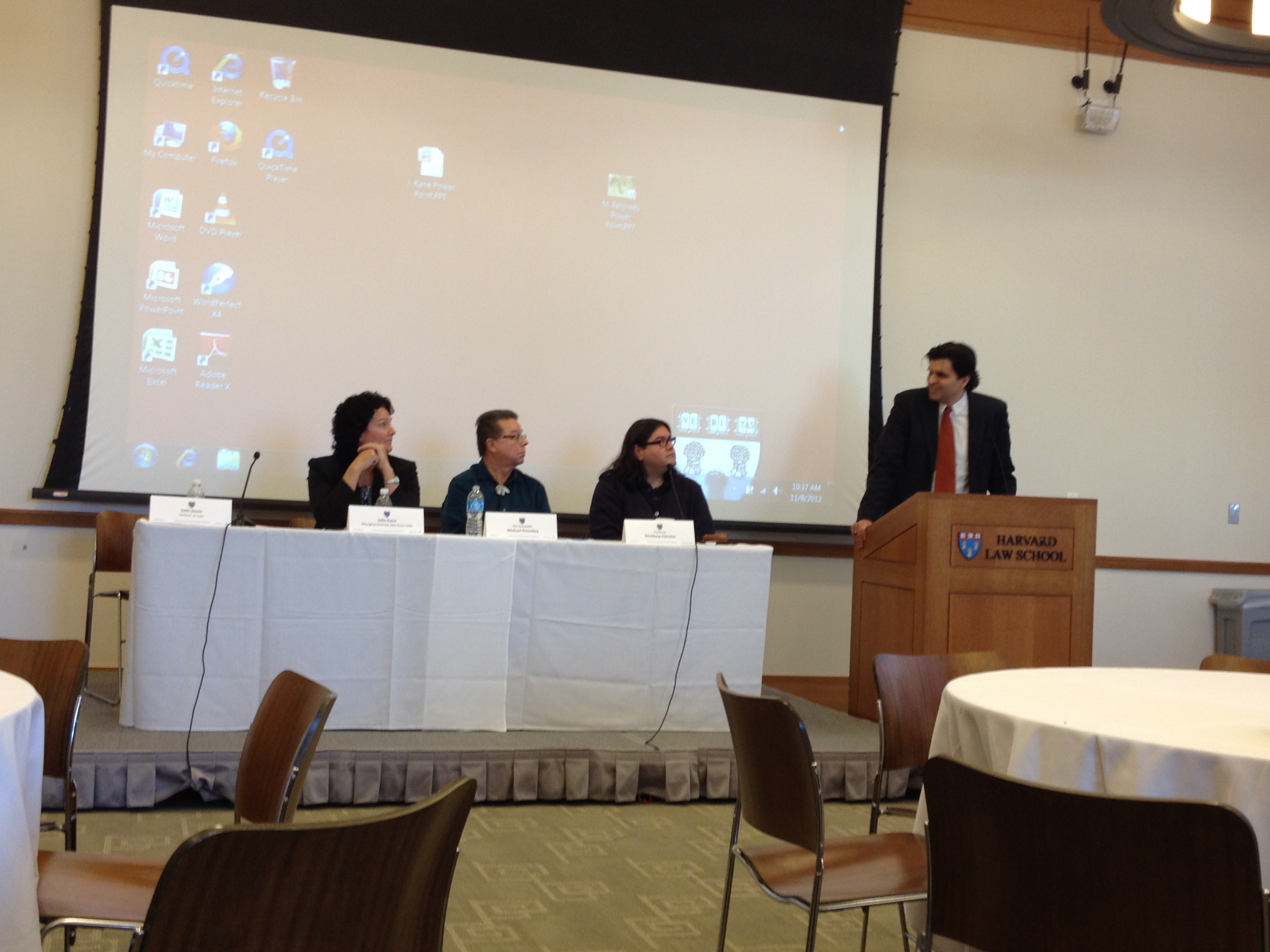
Harvard Law School Tribal Courts Conference Opening Speakers

Bob Anderson, the Oneida chair, welcoming everyone:

And opening keynote speaker Troy Eid, chair of the Indian Law and Order Commission:

Agenda for Harvard Law School Tribal Courts Symposium — This Thursday and Friday

Tribal Courts and the Federal System

Cambridge, MA

November 8th and 9th, 2012

Tribal Courts and Criminal Law: Assessing the Work of the Tribal Law and Order Commission

November 8, 2012

8:30–8:45 am              Introductions and Overview of Conference

Robert Anderson, Oneida Nation Visiting Professor of Law, Harvard Law

School, and Professor of Law, University of Washington School of Law

Seth Davis, Climenko Fellow and Lecturer on Law, Harvard Law School

8:45–9:30 am              Introducing the Work of the Tribal Law and Order Commission (TLOC)

Commission Chairman Troy Eid

9:30–11:30 am                        Improving Criminal Law Enforcement in Indian Country

Professor Carole Goldberg, Professor of Law and Vice-Provost, UCLA; Honorable Theresa Pouley, Tulalip Tribal Court and TLOC Commissioner; Kristen Carpenter, Professor, University of Colorado School of Law

What are the major issues that arise in adjudication of crimes covered by the Major Crimes Act and Indian Country Crimes Act?  What is the relationship between tribal and state authorities in jurisdictions where Congress has authorized state criminal jurisdiction within Indian country?  Who is an Indian for federal criminal jurisdiction purposes?

11:30 am–12:15 pm    Break

12:15–1:45 pm                        Lunch and Keynote Address

Honorable Kevin Washburn, Assistant Secretary for Indian Affairs, U.S. Department of the Interior

2:00–3:30 pm              Tribal Criminal Jurisdiction:  Theory and Practice

Angela Riley, Professor of Law, UCLA; Professor Ron Whitener, University of Washington Public Defense Clinic; Anita Fineday, Annie E. Casey Foundation (former White Earth Tribal Judge)

What are the major jurisdictional issues that tribal courts confront?  How do tribal courts approach sentencing alternatives?  What should be the long-term plan for strengthening tribal courts?  What is being done to provide defense for indigent defendants?

3:30–3:45 pm              Break

3:45–5:00 pm              Intergovernmental Cooperation Among Tribes, States, and the United States

Robert Anderson, Oneida Nation Visiting Professor of Law, Harvard Law School and Professor of Law, University of Washington School of Law; Carole Goldberg, Professor of Law and Vice-Provost, UCLA; Wenona Singel, Associate Professor of Law, Michigan State University

What are the legal and practical relationships between federal, state, and tribal courts and law enforcement officials in the area of criminal law?  What are the opportunities for retrocession at the state level to return criminal jurisdiction to Indian tribes and the federal government?  How can cooperative public safety agreements be a solution to jurisdictional complications in Indian Country?

Tribal Civil Jurisdiction and Sources of Tribal Law

November 9

8:30–8:45 am              Introductions and Overview of Day 2

Robert Anderson, Oneida Nation Visiting Professor of Law, Harvard Law

School, and Professor of Law, University of Washington School of Law

Seth Davis, Climenko Fellow and Lecturer on Law, Harvard Law School

8:45–9:45 am              Tribal Civil Jurisdiction

Judge William C. Canby, Jr., Ninth Circuit Court of Appeals

9:45–10:15 am                        Break

10:15–11:45 am                      Tribal Civil Law Development

Judge Michael Petoskey, Pokagon Band of Potawatomi Indians; Professor Matthew Fletcher, Michigan State School of Law; Julie Kane, General Counsel, Nez Perce Tribe; Seth Davis, Climenko Fellow and Lecturer on Law, Harvard Law School

How do tribal courts approach the task of developing common law?  To what extent do they focus on tribal norms and to what extent do they borrow from state or federal law?  How do tribal courts understand their relationship to tribal councils or other legislative bodies?  How do tribal courts relate to tribal executives?

11:45 am–12:00 pm    Break

12:00–1:30 pm                        Lunch and Closing Address

Honorable Hilary Tompkins, Solicitor, U.S. Department of the Interior, Washington, D.C., The Importance of Tribal Courts in the Federal System

Announcing the MSU ILPC Spring 2013 Speaker Series

As you may know, each spring we invite new book authors and commentators to East Lansing (and now Pojoaque) to discuss the new books. This year we have books by Charles Cleland, Blake Watson, and Rob Williams.

Check out our speakers series page here.

FBA Announcement — Indian Law Section Members May View Nov. 8-9, 2012 Harvard Law School Indian Law Conference Online

More details on the Harvard conference here (HLS Conference Schedule FINAL)

From the FBA:

Dear Indian Law Section Members:

It is with great pleasure that we announce to you a new, free program offering from the Federal Bar Association. Indian Law Section member Professor Robert Anderson, currently serving as the Oneida Nation Visiting Professor at Harvard Law School, has put together a fantastic two-day conference on Tribal Courts and the Federal System. The conference is set to take place in Cambridge, Massachusetts November 8 and 9, 2012, and features a number of tribal leaders and prominent Indian Law scholars and policy-makers. As a service to our members, the Indian Law Section is sponsoring live-streaming of this event via our website at www.fedbar.org. Indian Law Section members will be able to enjoy the entirety of the two-day conference free via the internet broadcast.

A full conference agenda is attached, and also pasted below. This conference will bring together tribal judges and attorneys, tribal, state, and federal government policymakers, and scholars to explore issues Indian tribal courts currently face in criminal and civil enforcement, jurisdiction, and lawmaking. The first of its kind at Harvard Law School, the conference promises to provide expert dialogue on the latest developments in tribal civil and criminal jurisdiction and to increase awareness within the legal community of the unique place of tribal courts in the federal system.

During the first day, the conference will focus upon the work of the Tribal Law and Order Commission, which Congress established in the Tribal Law and Order Act of 2010. Because the Commission’s work focuses upon criminal jurisdiction, the panels on the first day will address criminal law enforcement in Indian Country, tribal criminal jurisdiction, and intergovernmental cooperation in criminal enforcement. We are fortunate to have the new Assistant Secretary for Indian Affairs, Kevin Washburn, to provide the keynote address. The second day will turn to tribal civil jurisdiction, with a half-day session on the federal common law rules affecting tribal adjudicatory and regulatory authority as well as a discussion of tribal lawmaking. The conference closes with an address from the Honorable Hilary Tompkins, Solicitor, U.S. Department of the Interior.

The conference will be an opportunity for tribal judges, attorneys, and officials to meet with federal and state judges and officials as well as academics for focused discussions of pressing issues in tribal civil and criminal theory and practice. We are delighted to be able to make this conference accessible to our membership around the country.

To access the live-streaming broadcast on the day of the event, Indian Law Section members should please visit http://www.fedbar.org/TribalCourts2012. Pre-registration is not necessary for this event. If you require assistance with your Section log-in credentials, please contact Sherwin Valerio at svalerio@fedbar.org.

This conference event replaces, on a trial basis, our annual D.C. Indian Law Conference, which we have traditionally offered in November. We are hopeful that our Section members will find this conference thought-provoking and meaningful and will also enjoy the opportunity to take advantage of this great programming from the comfort of your own homes or offices. Please do not hesitate to contact me if you have any questions or concerns.

Best,

Jennifer Weddle, Indian Law Section Chair

Bravo!!!!

Univ. of Michigan Law School NAPGRA Panel — Updated

Here is yesterday’s panel — student organizer Katherine Carlton, me, Eric Hemenway, Karen O’Brien, and Laura Ramos (thanks to JS for the pic):

Here are some Spartans representing:

And John Petoskey:

The crowd filing in, armed with pizza:

More pics from Katherine. Eric Hemenway in action!

Famous and soon to be famous people in audience — Forrest and Hunter, Simermeyer, Donnelly, Meg Noori, and John.