Here.
NYTs: “A Sacred Place Undone by Trump Must Be Saved by Biden”
Here.
Here.

The National Native American Bar Association (NNABA) Foundation is continuing to accept applications for the 2021 Bar Review Scholarship. This scholarship is intended to alleviate some of the financial strains to ensure that future Native attorneys can successfully devote their mind and spirit to the final hurdle of becoming legal warriors. Applications are due March 1, 2021 to scholarship@nativeamericanbar.org. Please visit www.NativeAmericanBar.org for the full application criteria. Awardees will be honored at the NNABA Annual Meeting.
Additionally, the NNABA Foundation’s 2021 scholarship awards will be given in memory of some of our legal warriors who journeyed on this past year. The hope is that our awardees will carry the spirit and fight of their memorial award as they prepare for the bar exam and honor our legal warriors’ memories as they enter the legal profession.
If you would like to nominate a legal warrior to be honored in this way, please submit their name, bio, and photo (if appropriate) to scholarship@nativeamericanbar.org for consideration by the Scholarship Committee. If you would like to donate to this year’s scholarship awards, you can make donations to the NNABA Foundation at https://www.nativeamericanbar.org/the-national-native-american-bar-association-foundation/.
To post an open Indian law or leadership job to Turtle Talk, send the following information to indigenous@law.msu.edu:
Lewis & Clark Law School
Study Indian Law Remotely This Summer. Offering summer courses via remote learning for the first time during Summer 2021. Law students from any accredited law school will have the opportunity to learn from top Indian Law experts around the country via classes conducted through Zoom. Registration for summer classes begins in February and the add/drop period ends on May 31, 2021. Summer classes are available for academic credit to Lewis & Clark law students, visiting law students, and for auditing by attorneys and non-law students. Please see the description for more information.
The Friends Committee on National Legislation
Paid Fellowship, Congressional Advocate on Native American Policy, may be temporarily remote, Washington D.C. Seeking candidates for a 27-month paid professional fellowship. American Indian and Alaska Native tribal members are strongly encouraged to apply. FCNL’s Congressional Advocate on Native American Policy receives one-on-one training from an FCNL lobbyist with deep experience on Native American policy issues and participates fully in the organization on the Domestic Policy Team. As an FCNL employee, this position receives professional level salary and benefits. For more details and to apply, visit fcnl.org/congressional-advocate. Applications will be accepted until March 17, 2021.
Great Lakes Indian Fish and Wildlife Commission
Division of Intergovernmental Affairs Summer Intern, Odanah, WI or remotely. The internship will entail legal research and writing, collaboration with GLIFWC staff and tribal leadership in meetings on tribal off-reservation wildlife and fishery management issues and participation in cultural activities. We are also intentional about providing value to our interns through mentorship, tailoring projects to the professional interests of our interns and activities related to the intern’s career development. Applications will be received until March 22, 2021 at 4:30 PM CDST. Please see the description for more information.
Lochen Law Offices
Summer Associate, currently remote, Milwaukee, WI. The position is for law students who have successfully completed or are presently enrolled in Constitutional Law—Powers and Federal Indian law, and have a demonstrated interest and/or background in advocating on behalf of Indian tribes. 2Ls and 3Ls based anywhere in the U.S. are encouraged to submit. The closing date is March 31, 2021. Please see the position description for more information.
National American Indian Court Judges Association
RFP, Presentation Proposals. NAICJA invites presentation proposals for the 52nd Annual Virtual National Tribal Judicial and Court Personnel Conference to be held October 19-21, 2021. NAICJA’s Annual Conference offers innovative and timely tribal justice information through high quality presentations by national experts. Deadline to submit is Thursday, March 25, 2021, 5:00 pm MST. Submission form here. Please see the announcement for more information.
Secretary of the Interior
Attorney-Adviser (General), Anchorage, AK. Responsible for providing advice, legal services, litigation representation and support on behalf of the Secretary of the Interior and Interior bureaus, primarily for the Bureau of Indian Affairs (BIA). As an Attorney-Adviser with the U.S. Department of the Interior, Office of the Solicitor, Alaska Regional Office, duties will primarily be dedicated to providing legal services to the BIA-Alaska Region. Accordingly, expertise in general Indian law, Alaska Native law, and contracting and compacting pursuant to the Indian Self-Determination and Education Assistance Act is strongly preferred. Please see the announcement for more information. The closing date for this announcement on USAJobs is March 5, 2021.
University of Maine School of Law
(2) full-time Visiting Professor of Law, Portland, ME. Inviting applications for positions to teach Criminal Law or Property Law (including associated subjects such as Immigration, Natural Resources, and Federal Indian Law) for the 2021-2022 academic year. Salary will be commensurate with qualifications and experience. Members of minority groups, women, and others whose background would contribute to the diversity of the law school are encouraged to apply. Applications must be submitted to the University of Maine System Higher Touch portal here. You may email any questions to mainelawsearch@maine.edu. Please see the position description for more information.
Yurok Tribe
Prosecutor, Tribal Prosecutor Office, Klamath, CA. Main duties will be prosecuting tribal criminal matters and working with local counties on diversion programs as well as assist in the tribe’s MMIW project where appropriate. Full job description is located on the job posting website along with the application. This position is open until filled. Please see the description for more information.
Prairie Island Indian Community
Assistant General Counsel, Welch, MN. The Assistant General Counsel will be responsible for representing the Community in various matters, including those involving: contracts, tribal governance and tribal agencies, employment issues/disputes, land and environment, and more. The Assistant General Counsel position also includes representation of the Community’s Family Services Department in child protection, Indian Child Welfare Act (ICWA), adult guardianship and other matters in the Community’s Tribal Court and other courts as needed. Please see the position description for more information and to apply.
Tulalip Tribes
Attorney – Assistant Prosecutor, Tulalip, WA. Prosecute misdemeanor and felony cases in Tulalip Tribal court. Provide legal advice and support to the Tulalip Police Department. Draft and revise Tribal Codes for the Tribal lawmaking body. Conduct legal research concerning Tribal, Federal and State law. Application closes March 22, 2021. Contact Michelle Sheldon at michellesheldon@tulaliptribes-nsn.gov for more information and see the position description.
Attorney – Child Welfare, Tulalip, WA. Provides effective consultation and legal advice to Tribal Government, Tulalip Tribal Board of Directors, departments, programs and committees of Tribal government, appears in tribal court and superior court on behalf of Tulalip Tribes, and more. Application closes March 22, 2021. For more information contact Michelle Sheldon at michellesheldon@tulaliptribes-nsn.gov and see the position description.
Lower Elwha Klallam Tribe, Elwha Enterprises
Board Members, Elwha Enterprises, WA. The Lower Elwha Klallam Tribe seeks 5-7 initial Board members for its newly formed Elwha Enterprises. Lower Elwha is located on the northern coast of the Olympic Peninsula in Washington state, just west of the city of Port Angeles. Current businesses include small Class II Casino, Food & Fuel Convenience Store, Smoke Shop, retail Cannabis Store, hotel in planning stages. Experience in tribal economic development law highly desired for at least some Board slots. Please see the description for qualifications, contact info, and the application form. Please apply by March 9 for priority consideration.
Sitka Tribe of Alaska Child Advocacy Center Coordinator
Part-Time Child Victim Advocate / Interviewer, Sitka, AK. Interview children at a child advocacy center and serve as a child and caregiver advocate (alternating between roles for cases). Application closes March 5, 2021. To apply, visit www.sitkatribe.org and please see the position description for more information.
The Confederated Tribes of the Umatilla Indian Reservation
Tribal Attorney, Pendleton, OR. Assigned to represent and advise the CTUIR in its NAHASDA, low-come tax credit and other home ownership, development and advising supported by related funding sources. A majority of the work is prompted by the CTUIR Housing Department, the tribal entity administering its Indian Housing Plan and Affordable Housing Activities pursuant to the Native American Housing and Self Determination Act of 1996. Apply via here and see the position description for more information.
PEEBLES KIDDER BERGIN & ROBINSON LLP
(2) Associates, Sacramento, CA. Seeking two associates for our Sacramento office with 3-9 years of experience in corporate law and governance, business transactions and economic development, litigation and dispute resolution. Experience in Federal Indian Law is preferred. Open until filled. Please see the position description for more information.
See posts from February 19, 2021.
Here are the materials in Newtok Village v. Patrick (D. Alaska):
65 Motion to Set Aside Default Judgment
Prior post here.
Update (3/28/21):
Here are the opinion and briefs in Aquinnah/Gay Head Community Association Inc. v. Wamapnoag Tribe of Gay Head (Aquinnah):
Town of Aquinnah Principal Brief
Martha’s Vineyard Amicus Brief
Tribe Response to MVC Amicus Brief
Prior post here.
First Circuit materials in earlier appeal.
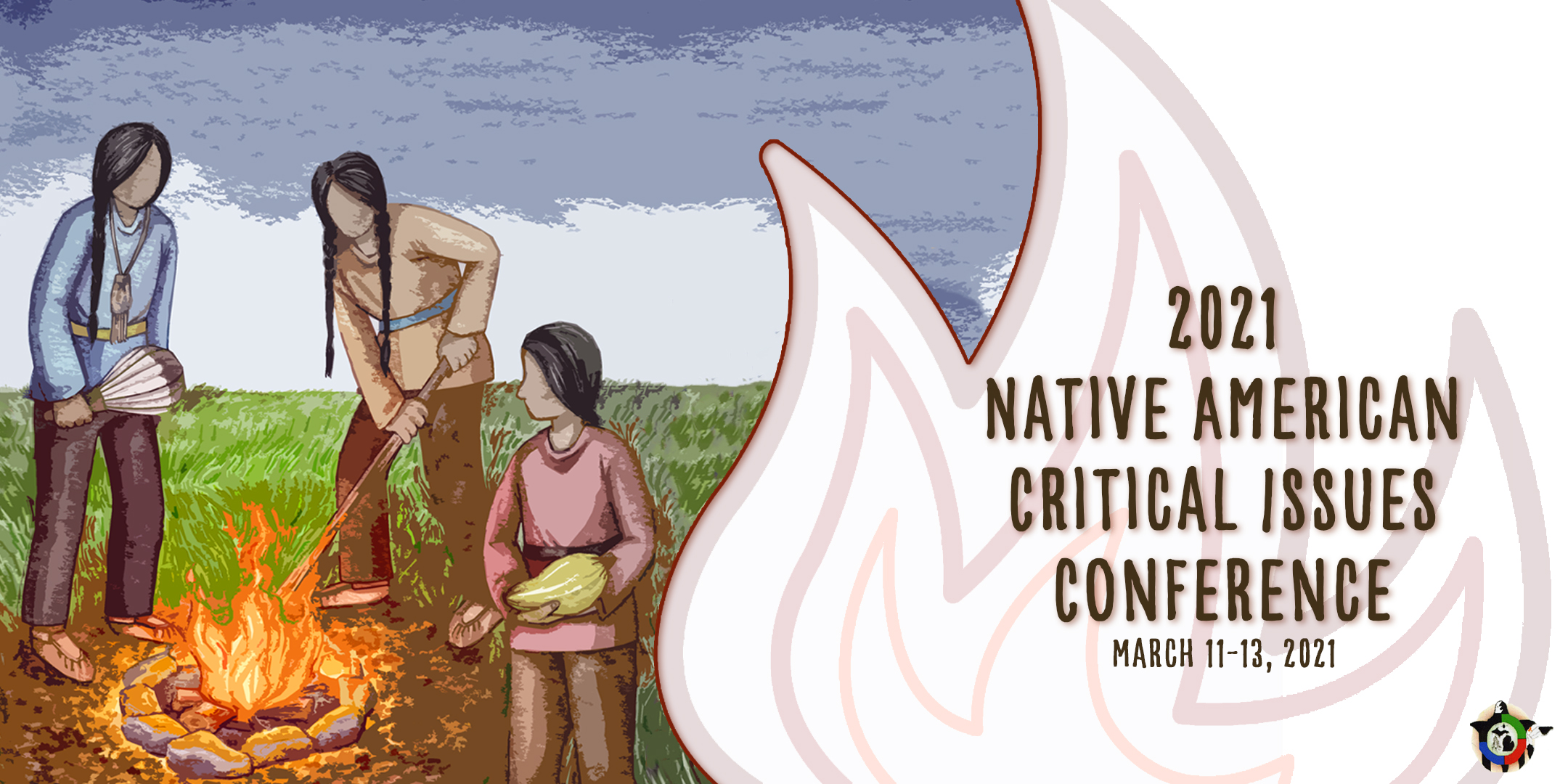
More information at miec.org/conference
*there are a limited number of student registration scholarships available. Contact mreinhar@nmu.edu for more information.
Download the agenda at glance here.
Download the save the date flyer here.
Click here to register for $150 on Eventbrite and receive access to the password protected Participant Portal. The Participant Portal at miec.org contains the Zoom links needed to gain access to the conference. Registered attendees will receive the Participant Portal password by email one week prior to the event.
Vendors: Would you like to be listed as a vendor on the conference website and meet one-on-one with attendees during 2 Vendor Sessions on March 12? Contact Dr. Martin Reinhardt to request a vendor form at mreinhar@nmu.edu by Friday, March 5. Vendor fees are $50.
Congress passed the Indian Child Welfare Act (ICWA) in 1978 to address the widespread practice of state entities removing American Indian and Alaskan Native children from their homes and families. Congress found “an alarmingly high percentage of Indian families are broken up by the removal, often unwarranted, of their children from them by non-tribal public and private agencies and that a high percentage of such children are placed in non-Indian foster and adoptive homes and institutions.”
This publication is a companion to others developed by the National Council of Juvenile and Family Court Judges (NCJFCJ) regarding ICWA for judges, court staff, attorneys, child welfare professionals, and other stakeholders involved in child welfare cases. It focuses on the use of active efforts as an essential tool in the implementation of ICWA and as a best practice in child welfare. It is intended to provide the history behind ICWA and, in doing so, outline both the why and the how of active efforts in ICWA implementation.
Here.
Dylan Hedden-Nicely and Stacy Leeds have posted “A Familiar Crossroads: McGirt v. Oklahoma and the Future of the Federal Indian Law Canon” on SSRN. The paper is forthcoming in the New Mexico Law Review.
The abstract:
Federal Indian law forms part of the bedrock of American jurisprudence. Indeed, critical parts of the pre-civil war constitutional canon were defined in federal Indian law cases that simultaneously provided legal justification for American westward expansion onto unceded Indian lands. As a result, federal Indian law makes up an inextricable part of American rule of law. Despite its importance, federal Indian law follows a long and circuitous road that requires “wander[ing] the maze of Indian statutes and case law tracing back [over] 100 years.” That road has long oscillated between two poles, with the Supreme Court sometimes applying foundational principles that view tribes as sovereigns “retaining all their original natural rights,” and at other times treating tribes as mere “wards subject to a [self-imposed] guardian.”
Supreme Court respect for tribal sovereignty and self-determination reached its zenith in the so-called “modern era” of federal Indian law, spanning from 1959 through the late 1970s. During this era, the Court tended to adhere to federal Indian jurisprudence and solidified a relatively coherent doctrine based upon the foundational principles developed in the 1830s. The late Dean David Getches described the modern era as a time that “encouraged a reinvigoration of tribal governments throughout the country. During this period, tribes gained political influence and economic security as [the federal government] generally promoted a policy of tribal self-determination.”
The Court turned away from its foundational Indian law principles with the onset of the 1980s and the departure intensified as Chief Justice William Rehnquist was appointed chief justice in 1986. Since then, the touchstone of the Supreme Court’s federal Indian jurisprudence has been to employ a “subjectivist” approach whereby it “gauges tribal sovereignty as a function of changing conditions”—demographic, social, political, and economic—and the expectations of non-Indians that may be potentially by the exercise of tribal power. As a result, the Supreme Court became a strikingly hostile place for American Indian tribes as the Court became increasingly willing to divest tribes of governmental powers, not by upholding the enactments of Congress, but through its own interpretation of what tribal inherent governmental rights ought to be.
The appointment of Justice Sonia Sotomayor and, more recently, Justice Neil Gorsuch seems to have brought change to the Court’s direction in Indian law cases. Since then, cases have been consistently decided in favor of tribal litigants by reaffirming treaty rights through the application of foundational principles that focus on the plain language of treaties and the application of the Indian canons of construction. However, to be sure, even the Rehnquist Court did “recite[] and sometimes act[] upon foundation principles,” but those cases were limited to situations where “non-Indian interests [were] not seriously threatened.” All of Indian Country waited for, or perhaps dreaded, a true litmus test.
That test came to the Supreme Court in the form of two Indian law cases—Sharp v. Murphy and McGirt v. Oklahoma—both of which were framed by non-Indian parties to affect the interests of an estimated 1.8 million people in eastern half Oklahoma. Ready or not, Indian Country found its test case, which squarely placed the Court’s competing jurisprudential philosophies— its foundation principles versus its “subjectivist” approach—on a collision course.
In a powerful and uncharacteristically passionate decision, Justice Gorsuch wrote for a 5-4 majority, upholding treaty-based rights to re-recognize the historic reservation boundaries of the Muscogee (Creek) Nation, the fourth largest Indigenous nation in the United States. The decision was the fourth consecutive treaty-rights victory and seemed to solidify a shift toward a consistent approach rooted in foundational principles.
The victory was short-lived. Just weeks after the Court’s decision in McGirt, Justice Ruth Bader Ginsburg passed away, once again shifting the make-up of the United States Supreme Court. As a result, Federal Indian law once again finds itself at a crossroads. The Murphy and McGirt decisions are landmark decisions that bring change to the legal landscape of much of Oklahoma. It remains to be seen whether the perceived new Supreme Court era in Indian law is here to stay.
Highly recommended!!!
Here is the opinion in Cayuga Nation v. Showtime Networks Inc. (N.Y. A.D.):
Cayuga Nation v Showtime Networks (2020-03854)
Lower court materials here.
 Turtle Talk
You must be logged in to post a comment.