Here.

Here.
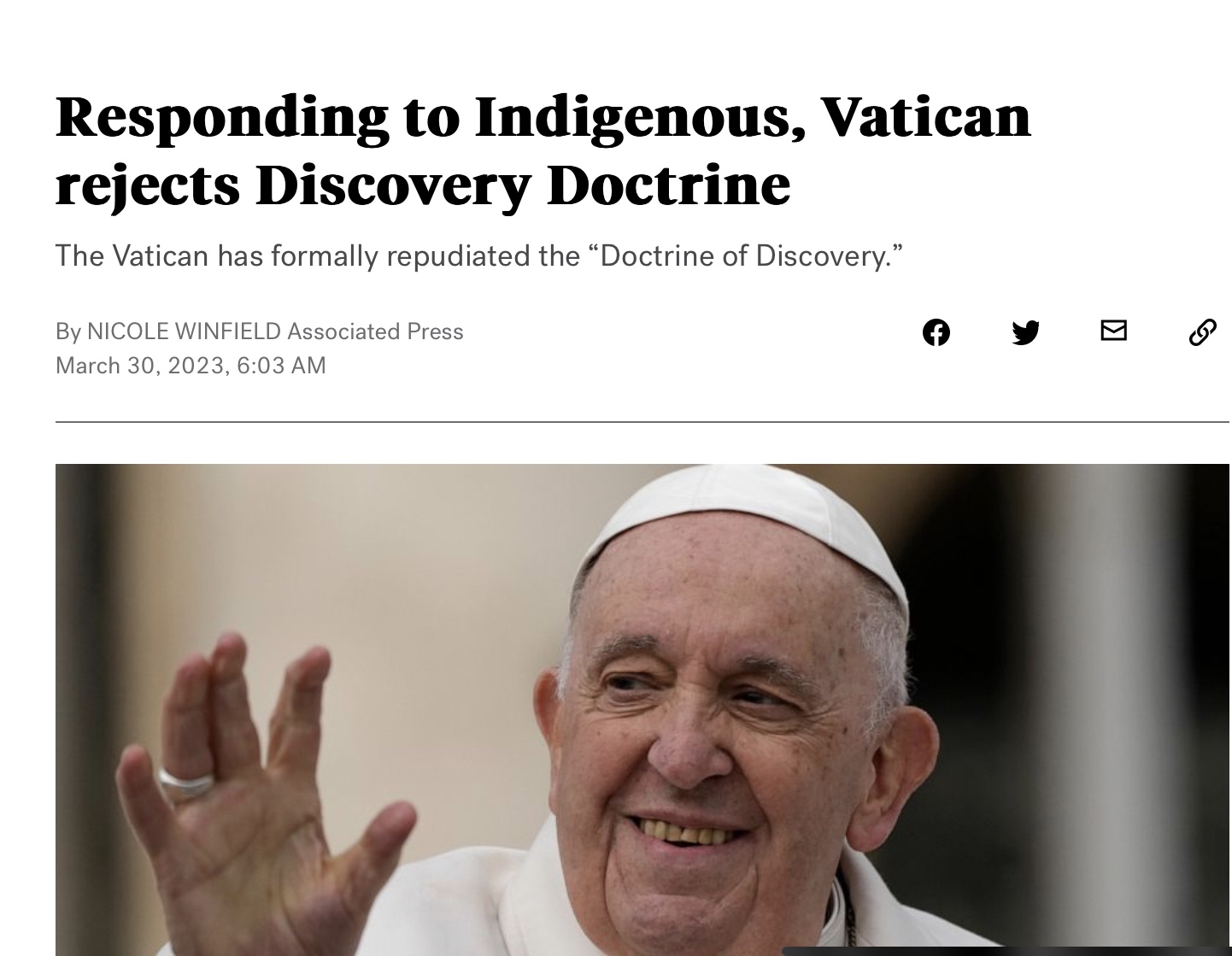
Here.
Profs. Watson, Seed, and Pearl:
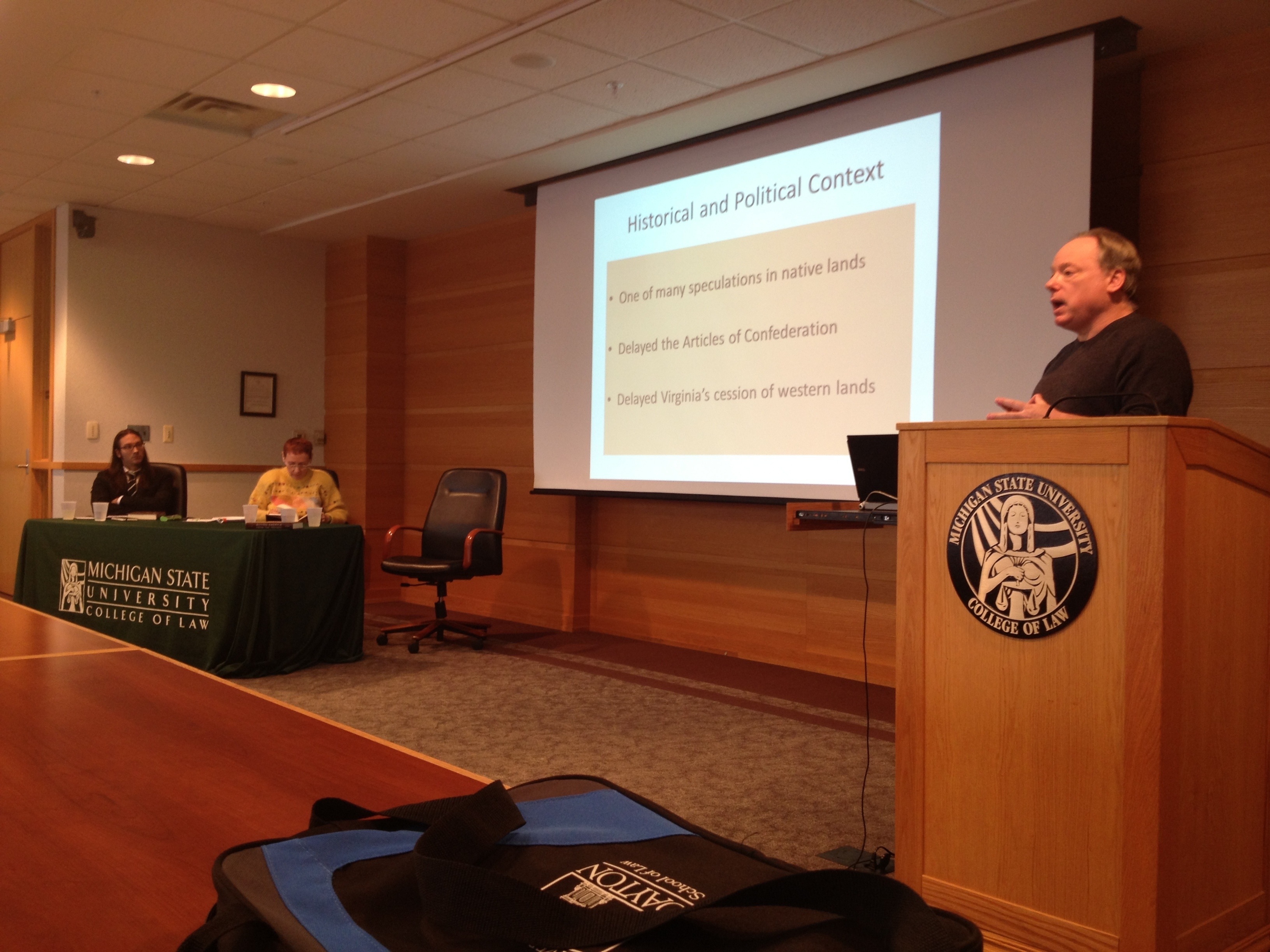
Here:
THE INTERNATIONAL LAW OF COLONIALISM: A COMPARATIVE ANALYSIS
Robert J. Miller
15 Lewis & Clark L. Rev. 847 (2011)
The majority of the non-European world was colonized under an international law that is known as the Doctrine of Discovery. Under this legal principle, European countries claimed superior rights over Indigenous nations. When European explorers planted flags and religious symbols in the lands of native peoples, they were making legal claims of ownership and domination over the lands, assets, and peoples they had “discovered.” These claims were justified by racial, ethnocentric, and religious ideas of the alleged superiority of European Christians. This Article examines the application of Discovery by Spain, Portugal, and England in the settler societies of Australia, Brazil, Canada, Chile, New Zealand, and the United States. The comparative law analysis used in this Article demonstrates that these three colonizing countries applied the elements of the Doctrine in nearly identical ways against Indigenous peoples. Furthermore, the six settler societies analyzed here continue to apply this law today to restrict the human, property, and sovereign rights of Indigenous nations and peoples. This Article concludes that basic fairness and a restoration of the self-determination rights of Indigenous peoples mandates that these countries work to remove the vestiges of the Doctrine of Discovery from their modern day laws and policies.
Rebecca Tsosie
15 Lewis & Clark L. Rev. 923 (2011) Continue reading
Blake Watson has posted his paper, “The Doctrine of Discovery and the Elusive Definition of Indian Title,” on SSRN. It is forthcoming in the Lewis & Clark Law Review.
Here is the abstract:
This article contends that, pursuant to the discovery doctrine developed and adopted by the U.S. Supreme Court, Indian tribes retained possession of their lands after European encounter, but no longer owned their land and no longer held unlimited disposition rights. This “limited possessor” definition of Indian title is particularly difficult to justify in view of contemporary norms of international indigenous rights, and should be rejected along with the doctrine of discovery.
Robert J. Miller, Lisa LeSage, and Sebastián López Escarcena have published “The International Law of Discovery, Indigenous Peoples, and Chile” in the Nebraska Law Review.
Robert Miller has posted his working paper, “The International Law of Colonialism: A Comparative Analysis,” on SSRN.
Here is the abstract:
The majority of the non-European world was colonized under an international law that is known as the Doctrine of Discovery. Under this legal principle, European countries claimed superior rights over Indigenous nations. When European explorers planted flags and crosses in the lands of native peoples, they were making legal claims of ownership and domination over the lands, assets, and peoples they had “discovered.” These claims were justified by racial, ethnocentric, and religious ideas of the alleged superiority of European Christians. This Article examines the application of Discovery by Spain, Portugal, and England in the settler societies of Australia, Brazil, Canada, Chile, New Zealand, and the United States. The comparative law analysis used in this Article demonstrates that these three colonizing countries applied the elements of the Doctrine in nearly identical ways against Indigenous peoples. Furthermore, the six settler societies analyzed here continue to apply this law today to restrict the human, property, and sovereign rights of Indigenous nations and peoples. This Article concludes that basic fairness and a restoration of the self-determination rights of Indigenous peoples mandates that these countries work to remove the vestiges of the Doctrine of Discovery from their modern day laws and policies.
Robert Miller has posted his paper, “Christianity, American Indians, and the Doctrine of Discovery,” on SSRN. It is published in REMEMBERING JAMESTOWN: HARD QUESTIONS ABOUT CHRISTIAN MISSION, Amos Yong, Barbara Brown Zikmund, eds., Pickwick Publications, 2010.
The abstract:
The European countries that explored and colonized North America utilized the international law Doctrine of Discovery to claim the sovereign, property, and human rights of Indigenous peoples. Discovery was developed primarily in the fifteenth century by Spain, Portugal, England, and the Church and was designed to control the acquisition of non-European lands. The assumed superiority of European religions and civilizations played a major role in justifying Discovery. Starting with the fifteenth century papal bulls and the later English Royal charters, the primary goals of colonization were alleged to be “propagating Christian Religion” and bringing “human civility” to the “pagan,” “heathen,” “Infidels and Savages” who “yet live[d] in Darkness and miserable ignorance of the true Knowledge and Worship of God.” The United States Supreme Court expressly adopted the Doctrine of Discovery in 1823 in Johnson v. M’Intosh and expressly relied on Christian religion and Euro-American civilization to justify its decision. The goals of, and the justifications for, Discovery continued to be part of United States Indian policy and Manifest Destiny until nearly the end of the twentieth century.
Miller and D’Angelis have posted their article on SSRN. Here’s the link.
 Turtle Talk
You must be logged in to post a comment.