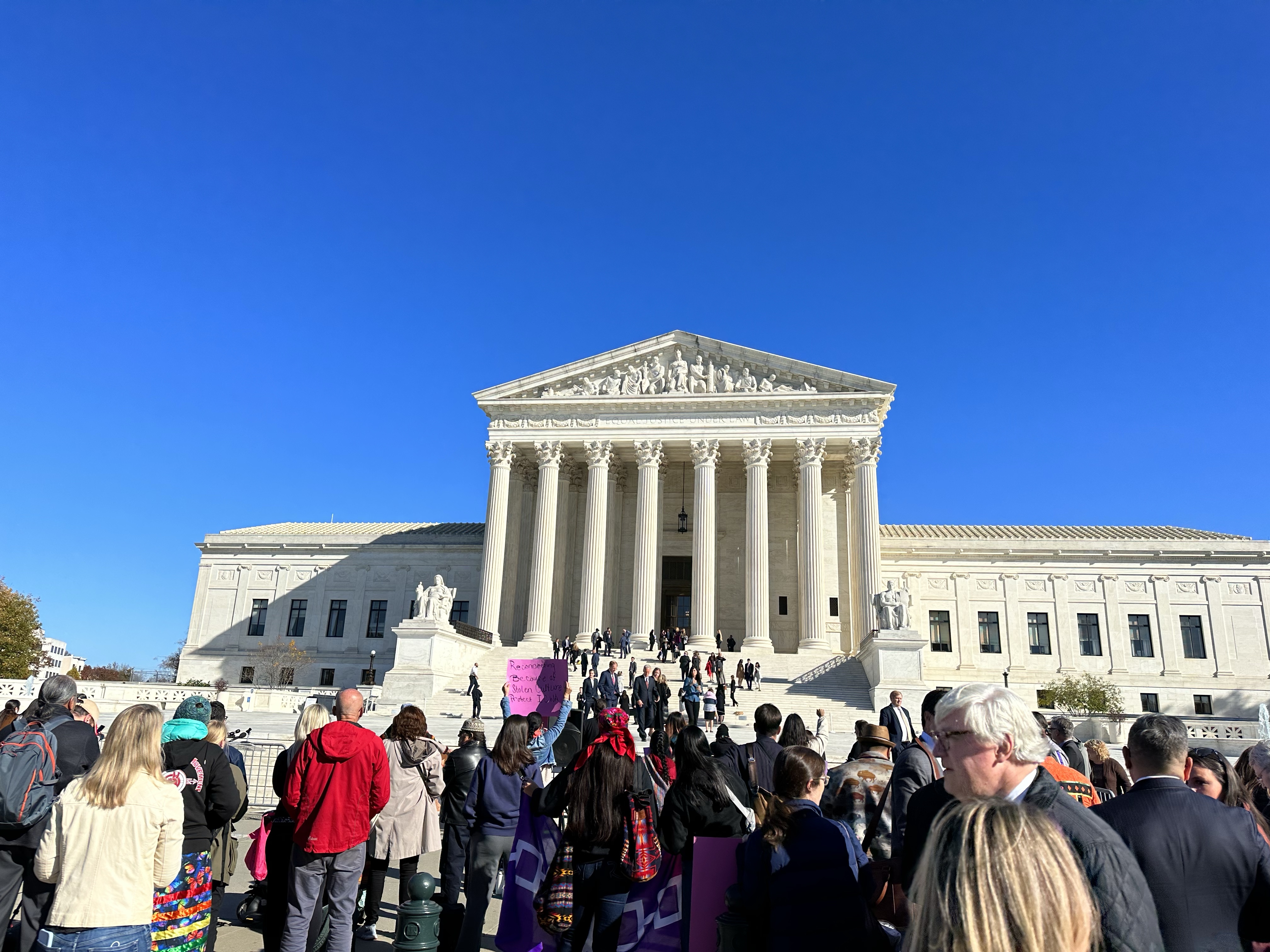
The Connecticut Law Review invites you to their 2023 symposium: Interrogating Haaland v. Brackeen: Family Regulation, Constitutional Power, and Tribal Resilience The litigation that led to Haaland v. Brackeen threatened to take down not only the Indian Child Welfare Act, but vast swaths of federal Indian policy and federal law. Instead, the Supreme Court’s decision left ICWA unscathed and affirmed the constitutional relationship between tribal nations and the United States. But threats to Native families and tribal sovereignty continue. Native children continue to be removed from their communities by a market for adoptable children. A handful of states and interest groups continue to seek ways to challenge tribal authority and federal laws that support it. And because the Supreme Court held that the Brackeen plaintiffs lacked standing to raise their equal protection challenges to ICWA, those claims can be raised another day. Leading scholars, attorneys, and tribal leaders will explore these and other issues raised by the decision in this symposium.
This Comment argues that ICWA protections should apply to human embryos in all states that reject pure property regimes for embryo disposition. Otherwise, personhood regimes would serve as an end-run around ICWA.34 Once personhood regimes treat embryos as persons or create rules implementing family law before the birth of a child, inevitable tensions arise with ICWA. Not applying ICWA protections to these regimes would undermine the spirit of ICWA and create an unacceptable legal loophole to circumvent the rights of tribes, Indian parents, and Indian children. However, ICWA would not have to apply at the embryo-disposition stage in states that adopt pure property regimes because future parental rights are not determined at the dissolution stage. Part II surveys ICWA, its purpose, and its protections. Part III explores the current state of embryo-disposition laws and focuses on the newly passed Arizona personhood disposition regime. Part IV analyzes how ICWA should interact with personhood regime states and examines the risks that personhood states pose to tribes, Indian families, and the spirit of ICWA. Part V concludes that the best way forward is to reject personhood regimes in favor of pure property regimes or stringently impose ICWA protections at the embryo-disposition stage in personhood states whenever substantive family law is adjudicated.
With such somber results expected from the American investigation, tribes deserve a remedy that will make them as close to whole as possible. There are several potential remedies that tribes and families can pursue, such as filing a lawsuit or lobbying for relief in Congress. The United States must listen to Native communities in determining what remedy will provide the most opportunity for healing and reparation. This Comment will attempt to contribute to that dialogue by arguing that, should the affected parties seek relief through litigation, they possess valid wrongful-death or negligence causes of action14 under the Federal Tort Claims Act (“FTCA” or “Act”).
Please check out “Federal Indian Law as Method,” likely forthcoming in the University of Colorado Law Review. Here is the abstract:
This Essay is written in the shadow of a series of noxious attacks on core principles of federal Indian law, most notoriously Haaland v. Brackeen, a challenge to the constitutionality of the Indian Child Welfare Act (ICWA). The Supreme Court did not reach the merits of the equal protection challenges, but during oral argument, several judges expressed skepticism that Congressional Indian affairs enactments that grant privileges or preferences to Indian people could survive scrutiny under an equal protection analysis. Justice Kavanaugh, one of the judges most interested in the equal protection claims, wrote separately to highlight these issues, asserting that “the equal protection issue is serious.” The parties siding with ICWA’s constitutionality argued to the Court that the Mancari case is a guide, whereas the opponents to ICWA’s constitutionality wanted to Court to ignore the case altogether. This Essay is a full-throated defense of the Mancari as a method of constitutional interpretation. Not only is the Mancari method correct, it is also the only justifiable method. This Essay proceeds with a short background on federal Indian law and its default interpretative rules. Next, the Essay surveys the application of and challenges to the Mancari method. Finally, the Essay concludes with a comparison of the methods proposed to replace or displace the Mancari method. This Essay was prepared for the 31st Annual Rothgerber Symposium at Colorado Law School.







You must be logged in to post a comment.