Aila Hoss on Indigeneity, Data Genocide, and Public Health

Aila Hoss has posted “Indigeneity, Data Genocide, and Public Health” in the Iowa Law Review. PDF

Here is the abstract:

Public health datasets will often tell us nothing about Indigenous people. This type of data suppression has been described as data genocide and data terrorism, because it demonstrates the effort to erase Indigenous people. Even when data is available, Tribes and their partners are regularly denied access to public health data from other jurisdictions. The seemingly simple call for more accurate, comprehensive public health data regarding Indigenous communities butts up against complicated issues. Who is considered Native and thus captured in Indigenous data? Why is Indigenous data regularly excluded from datasets? Who gets access to Indigenous data? These questions implicate federal Indian law, colonization, and Tribal sovereignty. So, while better quality data and improved data access are important goals, there is no way to bifurcate the need for public health data with the systematic racism embedded into the laws that impact the analyzing, collecting, and disseminating of this data. This Article aims to outline how Indigeneity interfaces with public health surveillance systems, in the context of both the collection of accurate data and the access to such data. It summarizes existing law and policy that define “Indian” under various frameworks and explores the challenges and limitations of defining Indian, particularly for the purposes of public health surveillance. This Article ends with a series of considerations regarding public health surveillance reform to better support Indian country.


Grant Christensen on Article IV: The New-ish Hope

Grant Christensen has published “Article IV and Indian Tribes” in the Iowa Law Review (PDF). Here is the abstract:

Unlike the first three articles of the Constitution which create the three branches of the federal government and articulate their limited powers, Article IV establishes a set of rules to police the actions of states and knit them together into a single union. Notably absent from Article IV is any mention of the tribal sovereign. Concomitantly, there has been no comprehensive academic discussion addressing how the tribal sovereign complicates the purposes of Article IV. This piece advances a completely new understanding of Article IV and its implications in federal Indian law. It argues that where Article IV advances rights to individual citizens (i.e., a citizen’s right to enforce a court judgment or their claim to the protection of the Privileges and Immunities Clause) then states may not use an individual’s connection to any tribal sovereign as an excuse to deny them the protections of those rights. In contrast, where Article IV speaks to rules designed to ensure states treat each other respectfully (i.e., requests for extradition, claims under the Equal Footing Doctrine, or any attempt to enforce the Guarantee Clause) then Article IV’s rules do not permit states to abridge, abrogate, modify, or erode the inherent rights of tribal nations. As the Court has recently opined, tribal governments themselves were absent from the Constitutional Convention and so constitutional limitations on the inherent powers of state sovereigns do not extend to tribal governments.  

Grant Christensen on Article IV and Indian Tribes

Grant Christensen has posted “Article IV and Indian Tribes,” forthcoming in the Iowa Law Review, on SSRN.

Here is the abstract:

Unlike the first three articles of the Constitution which create the three branches of the federal government, Article IV establishes a set of rules to police the actions of states and knit them together into a single union. Notably absent from Article IV is any mention of the tribal sovereign. Concomitantly, there has been no comprehensive academic discussion thinking about how the tribal sovereign complicates the purposes of Article IV. This piece advances a completely new understanding of Article IV and its implications in federal Indian law. It suggests that where Article IV advances rights to individual citizens (i.e. a citizen’s right to enforce a court judgment or their claim to the protection of the Privileges and Immunities Clause) then states may not use their connection to any tribal sovereign as an excise to deny them the protections of those rights. In contrast, where Articles IV speaks to rules designed to ensure states treat each other respectfully (i.e. requests for extradition, claims under the Equal Footing Doctrine, or any attempt to enforce the Guarantee Clause) then Article IV’s rules do not permit states to abridge, abrogate, modify, or erode the inherent rights of tribal nations. As the Court has recently opined, tribal governments themselves were absent from the Constitutional Convention and so constitutional limitations on the inherent powers of sovereigns do not extend to tribal governments.

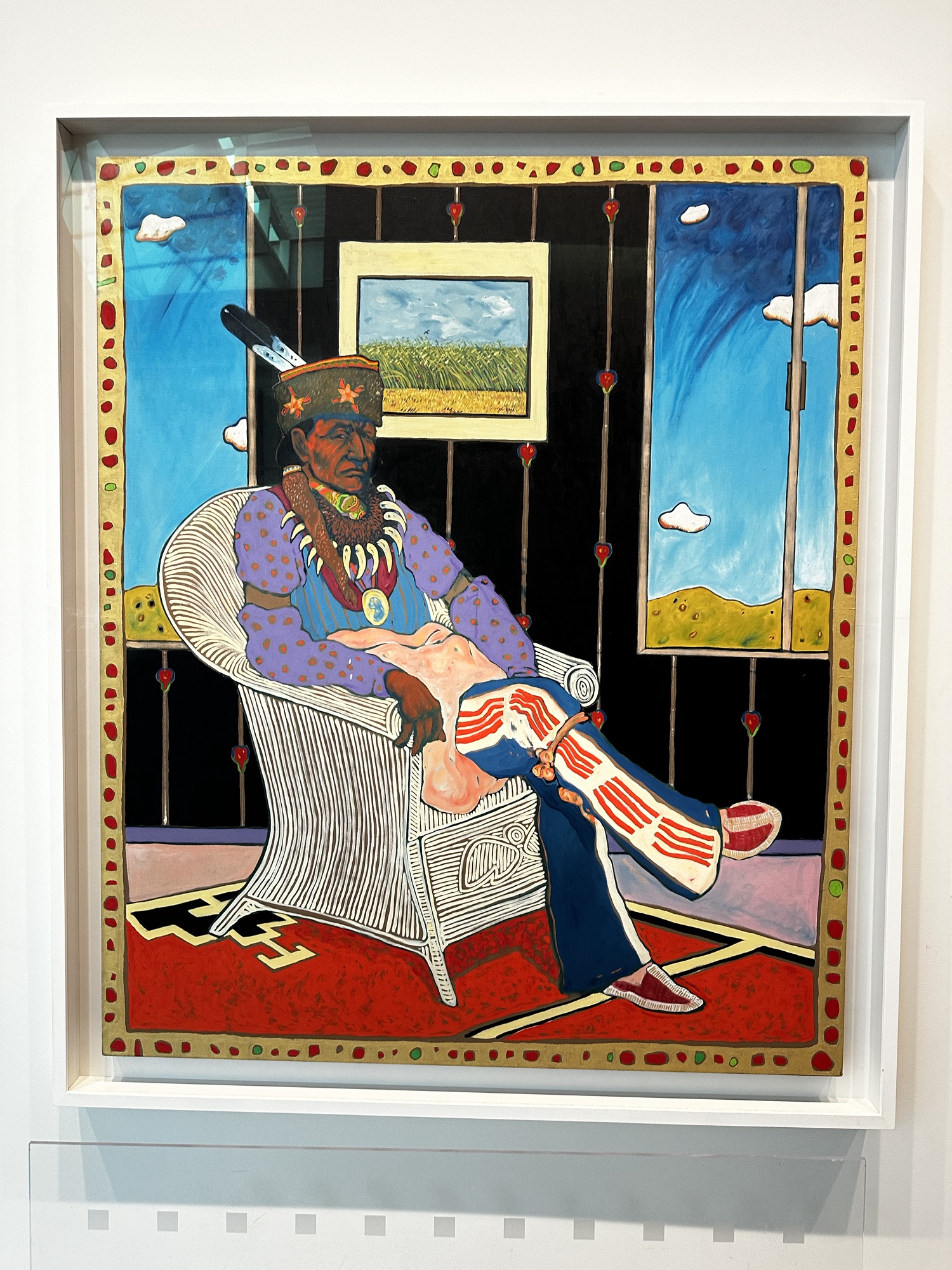
T.C. Cannon

Iowa Law Review Student Scholarship on How NHPA Fails Tribal Interests

Amanda M. Marincic has published “The National Historic Preservation Act: An Inadequate Attempt to Protect the Cultural and Religious Sites of Native Nations” in the Iowa Law Review.

An excerpt:

Beginning in 2016, the Standing Rock Sioux Tribe engaged in a highly-publicized, year-long legal battle with Energy Transfer Partners regarding the construction of the Dakota Access Pipeline (“DAPL”). The Tribe initially argued that the DAPL’s construction would destroy ancient burial sites and potentially poison their only source of drinking water, the Missouri River. The Tribe also argued that the agency involved in the project, the Army Corps of Engineers, did not fulfill the obligations required by the NHPA. For a while, the fate of the DAPL was uncertain, with permits for construction being denied and then granted. After the Army Corps of Engineers granted the permit pursuant to President Trump’s memorandum, construction on the DAPL was completed. After several failed attempts by the Standing Rock Sioux to halt operation of the DAPL, a federal district judge ruled in June 2017 that the environmental impact studies done on the DAPL were inadequate. While this ruling is a small victory for the Standing Rock Sioux Tribe, the NHPA was useless in protecting its cultural sites from significant damage.

Iowa Law Review Note on Possible Carcieri Fixes

Amanda Hettler has published her note “Beyond a Carcieri Fix: The Need for Broader Reform of the Land-Into-Trust Process of the Indian Reorganization Act of 1934” in the Iowa Law Review.

Here is the abstract:

: In Carcieri v. Salazar, the Supreme Court held that under the Indian Reorganization Act of 1934 the Secretary of the Interior can take land into trust only for those tribes that were federally recognized prior to 1934. In light of this decision, many tribes and leaders called for a legislative Carcieri fix. While a fix is necessary, this decision has provided lawmakers with a historic opportunity to reform both the statutory and regulatory frameworks for the land-into-trust program. The current process is inadequate and often leaves state and local governments with little voice in the process. It is often administered inefficiently, harming tribal interests and state and local governmental interests. Congress can and should provide a balanced fix that not only remedies the Carcieri issue, but also reforms the regulations governing this process and sets out new purposes and goals for this program.

Richard Delgado on the Origins of Critical Race Theory

Richard Delgado has posted his paper, “Liberal McCarthyism and the Origins of Critical Race Theory,” on SSRN. It is forthcoming in the Iowa Law Review.

Here is the abstract:

I wrote this piece exploring some of the intellectual origins of critical race theory for a 20-year anniversary of the movement held at the University of Iowa in April, 2009. In it, I look at the role of certain prominent university officers in purging their ranks of white radicals to prepare the way, in the late sixties and early seventies, for the first large group of post-Brown minority students who were starting to arrive around that time. I show how four promising white professors, two of law, one of history, and one of criminology lost their jobs and what they did afterward. I show that they continued to teach and write about left-wing thought in the hinterlands in ways that contributed to the rise of critical race theory. As they say, it is hard to kill an idea.