visit www.indigenouslawconference.com to register, book your stay, or become a sponsor

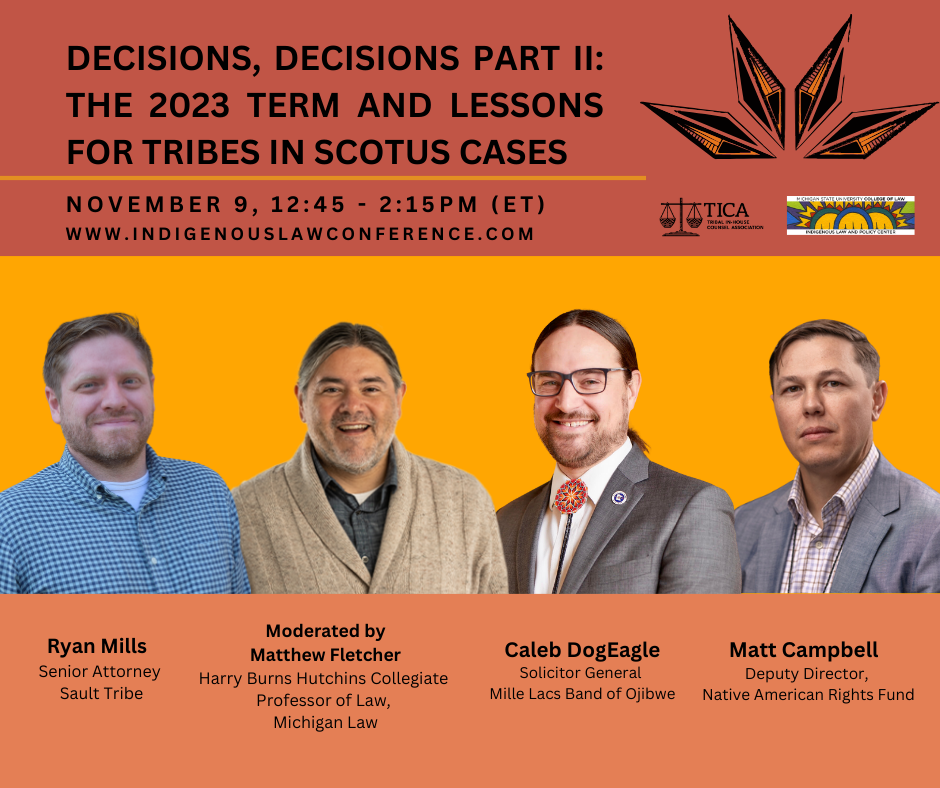



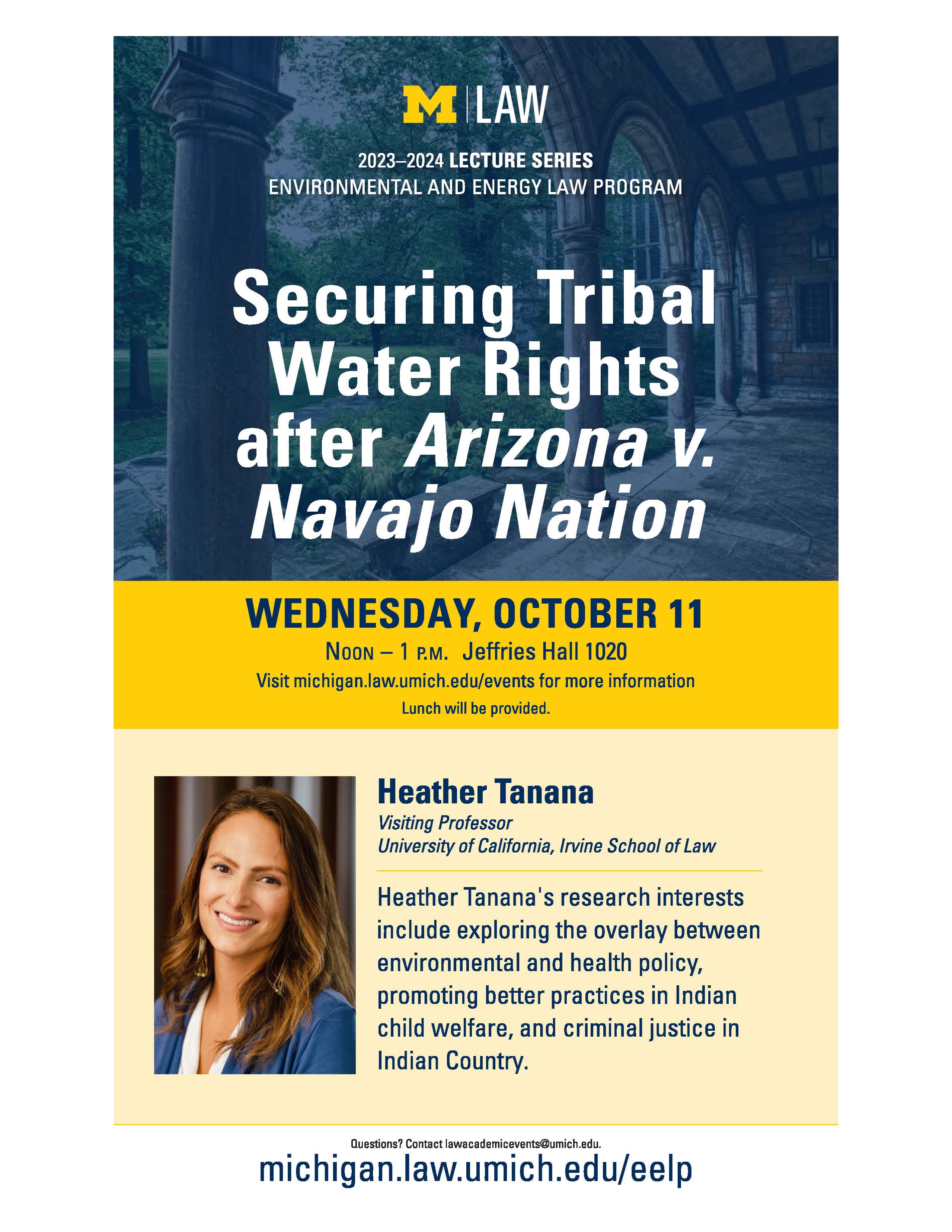
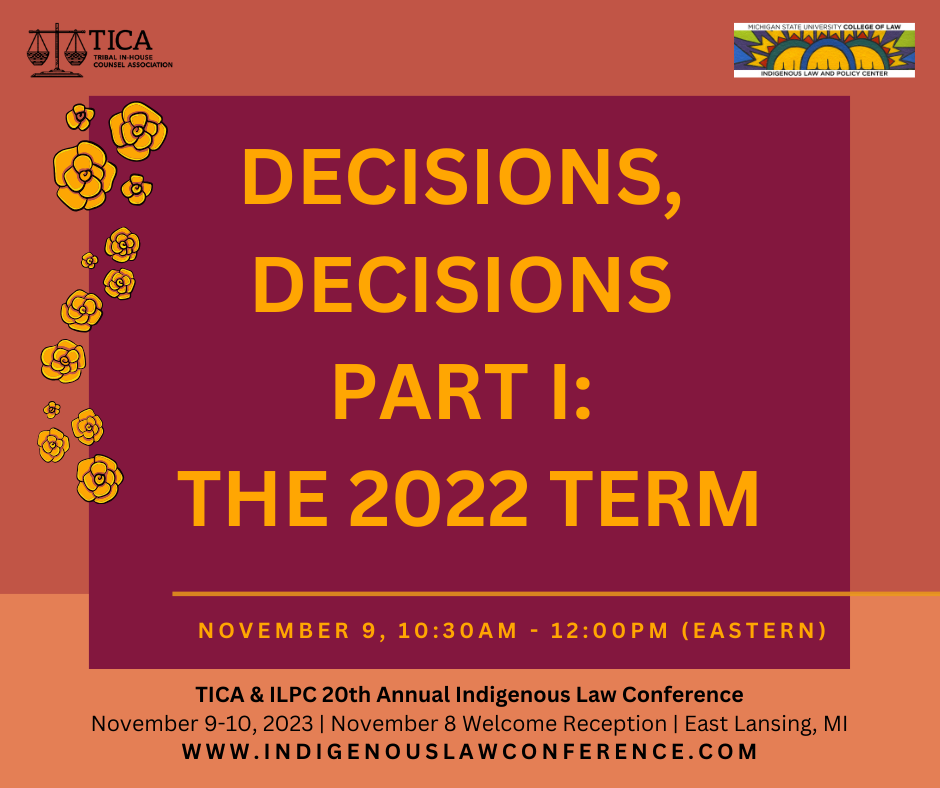

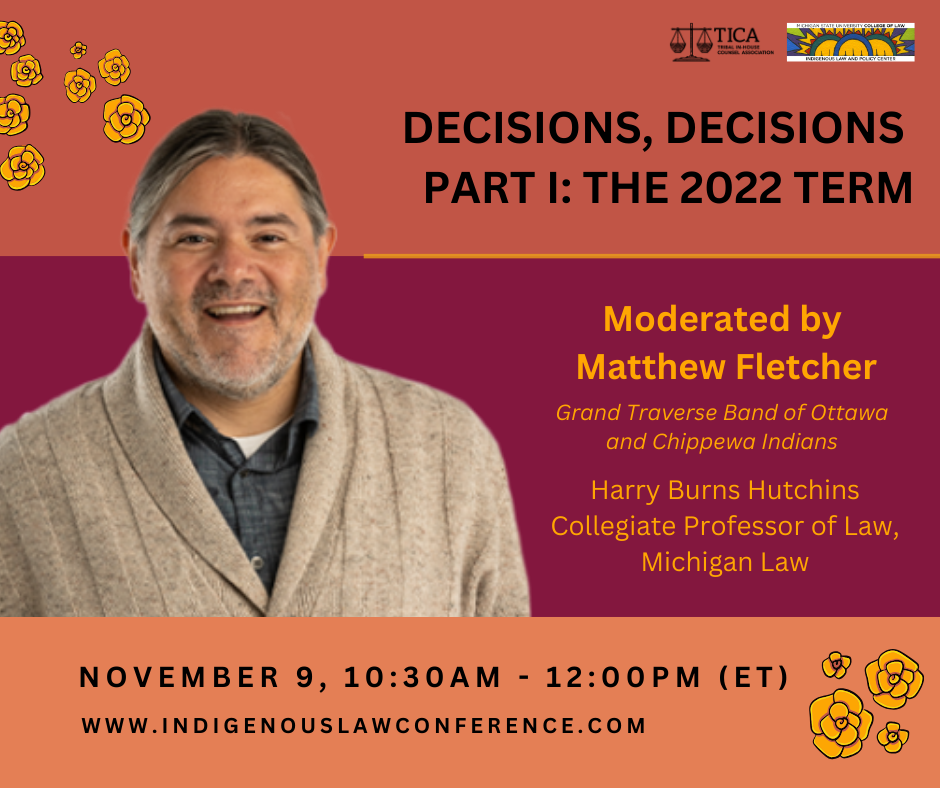

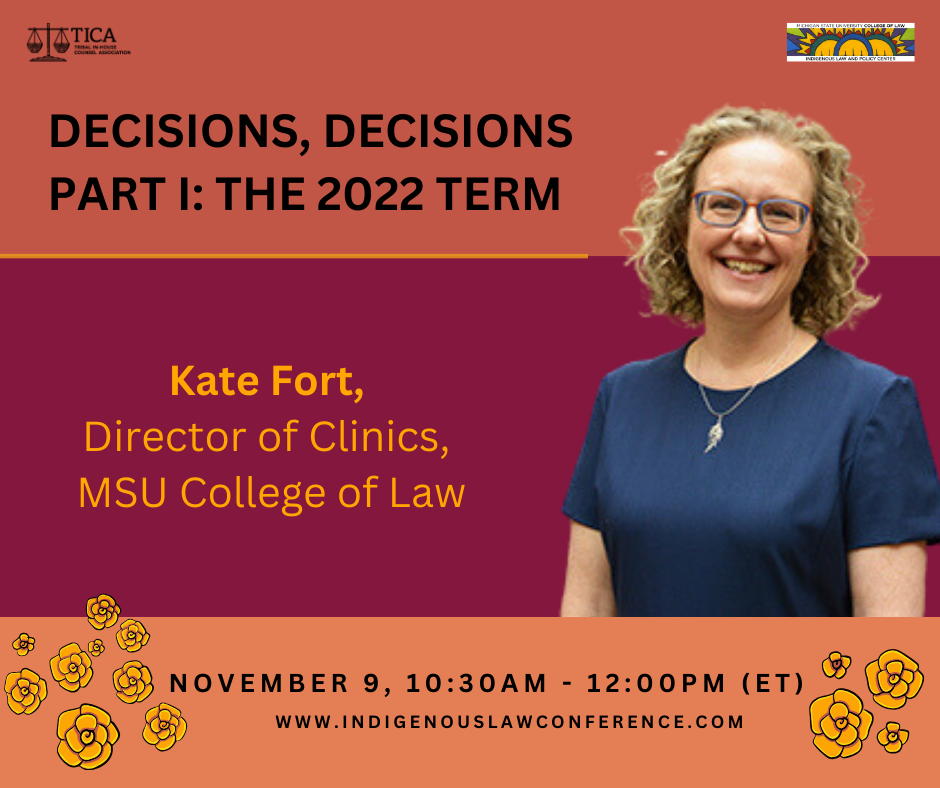

Here:
The Connecticut Law Review invites you to their 2023 symposium: Interrogating Haaland v. Brackeen: Family Regulation, Constitutional Power, and Tribal Resilience The litigation that led to Haaland v. Brackeen threatened to take down not only the Indian Child Welfare Act, but vast swaths of federal Indian policy and federal law. Instead, the Supreme Court’s decision left ICWA unscathed and affirmed the constitutional relationship between tribal nations and the United States. But threats to Native families and tribal sovereignty continue. Native children continue to be removed from their communities by a market for adoptable children. A handful of states and interest groups continue to seek ways to challenge tribal authority and federal laws that support it. And because the Supreme Court held that the Brackeen plaintiffs lacked standing to raise their equal protection challenges to ICWA, those claims can be raised another day. Leading scholars, attorneys, and tribal leaders will explore these and other issues raised by the decision in this symposium.
Here is the petition in Beccera v. Northern Arapaho Tribe:
Question presented:
Whether IHS must pay “contract support costs” not only to support IHS-funded activities, but also to support the tribe’s expenditure of income collected from third parties.
Lower court materials here.
Here is the petition in Beccera v. San Carlos Apache Tribe:
The question presented is the same in both cases.
Lower court materials here.
Here.
Friday, October 6, 2023 | 12:00 pm-2:30 pm ET
Virtual
The Connecticut Law Review invites you to their 2023 symposium:
Interrogating Haaland v. Brackeen: Family Regulation, Constitutional Power, and Tribal Resilience
The litigation that led to Haaland v. Brackeen threatened to take down not only the Indian Child Welfare Act, but vast swaths of federal Indian policy and federal law. Instead, the Supreme Court’s decision left ICWA unscathed and affirmed the constitutional relationship between tribal nations and the United States. But threats to Native families and tribal sovereignty continue.
Native children continue to be removed from their communities by a well-funded market for adoptable children. A handful of states and interest groups continue to seek ways to undermine tribal authority and federal laws that support it. And because the Supreme Court held that the Brackeen plaintiffs lacked standing to raise their equal protection challenges to ICWA, those claims can be raised another day.
Leading scholars, attorneys, and tribal leaders, including Chairwoman Andrews-Maltais, Gregory Ablavsky, Laura Briggs, Seth Davis, Kate Fort, Ian Gershengorn, and Gerald Torres, will explore these and other issues raised by the decision in this symposium.
Approved for 2 Nevada MCLE Credit
September 20, 2023
Virtual
10:00 a.m. – 12:00 p.m (Pacific Time)
Registration is required
Click Here To Register for The Virtual Webinar
~~~~~~~~~
In Person UNLV Student Viewing and Discussion (Lunch Provided)
10:00 a.m. – 12:00 p.m (Webinar Viewing) / 12:00 p.m. – 1:00 pm (Discussion)
Boyd School of Law Room 203
In Person Registration is required
Click Here To Register For the Student Only In Person Discussion
In June, the Supreme Court issued its long-awaited decision in Brackeen v. Haaland upholding the federal Indian Child Welfare Act. Enacted in 1978, the ICWA affirms tribal jurisdiction over state child welfare matters and sets uniform standards for child welfare cases involving Indian children. As the Court recognized, the law was a necessary and largely successful action by Congress to reverse decades of federal and state campaigns to remove Native children from their homes and sever ties between tribes and their children. The Court rejected several challenges to the law that, if accepted, would have had devastating consequences for children, families, and tribal sovereignty.
Brackeen was a major victory for tribes and Native children. The majority opinion by Justice Barrett, and concurring arguments by Justice Gorsuch, addressed questions about Congressional power over Indian affairs, tribal sovereignty, and equal protection. As a follow up to our November 2022 webinar, which explored the various arguments and the impact of a potential decision on tribal courts and jurisdiction, this webinar will bring together experts in the field to explain the decision, its practical and jurisprudential significance, and what it portends for future cases involving the ICWA and tribal sovereignty.
Featured Panelists:
Here:
Question presented:
Whether the federal government can avoid the doctrine of prior exclusive jurisdiction in an ongoing, comprehensive water adjudication under the McCarran Amendment by asserting defenses based on federal law.
The first petition is here.


 Turtle Talk
You must be logged in to post a comment.