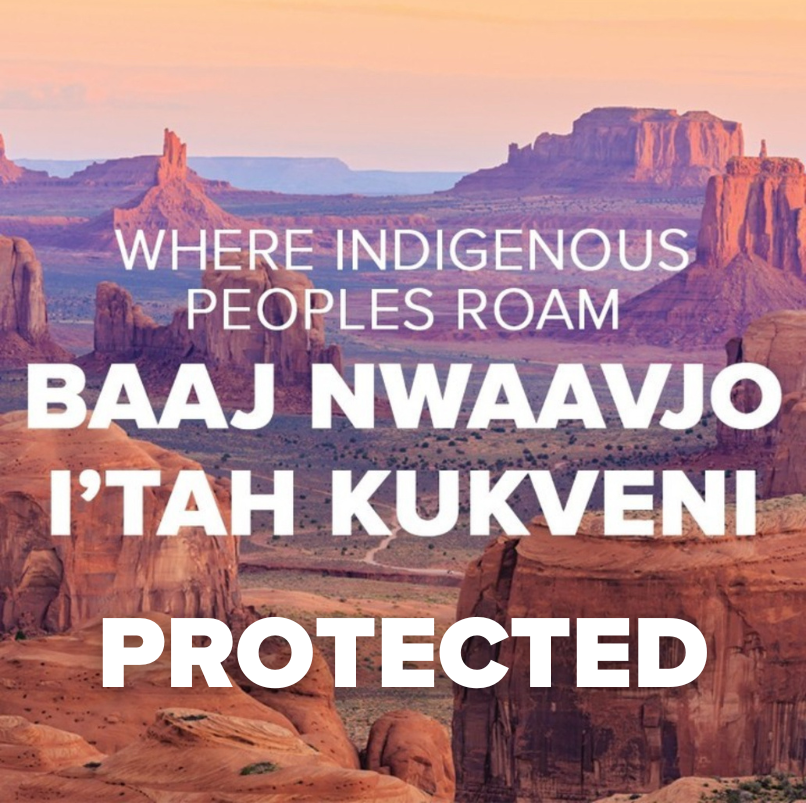
On April 1, 2026, the Ninth Circuit Court of Appeals threw out the Arizona Legislature’s challenge to Baaj Nwaavjo I’tah Kukveni-Ancestral Footprints of the Grand Canyon National Monument. The decision leaves the monument in place and fully protected. You can see the decision here:
In September of 2024, the District Court denied, without prejudice, the Tribes’ motion to intervene in this case, finding the United States adequately represented the Tribes’ interests at that time. Here is that order:
The Ninth Circuit’s April 1 decision affirms the District Court decision dismissing the two consolidated cases filed against the Monument designation.
The National Monument protects thousands of historic and scientific objects, sacred places, vital water sources, and the ancestral homelands of many Indigenous Peoples. Baaj Nwaavjo I’tah Kukveni lands include cultural and sacred places of the Havasupai Tribe, Hopi Tribe, Hualapai Tribe, Kaibab Band of Paiute Indians, Las Vegas Paiute Tribe, Moapa Band of Paiutes, Paiute Indian Tribe of Utah, Navajo Nation, San Juan Southern Paiute Tribe, Yavapai-Apache Nation, Pueblo of Zuni, and the Colorado River Indian Tribes. The Monument receives its name from the Indigenous names given to the area by the Havasupai and Hopi. Baaj nwaavjo (BAAHJ – NUH-WAAHV-JOH) means “where Indigenous peoples roam” in the Havasupai language, and i’tah kukveni (EE-TAH – KOOK-VENNY) means “our ancestral footprints” in the Hopi language.
Learn More: Arizona Legislature v. Biden
 Turtle Talk
You must be logged in to post a comment.