Here:
Some controversy involved.
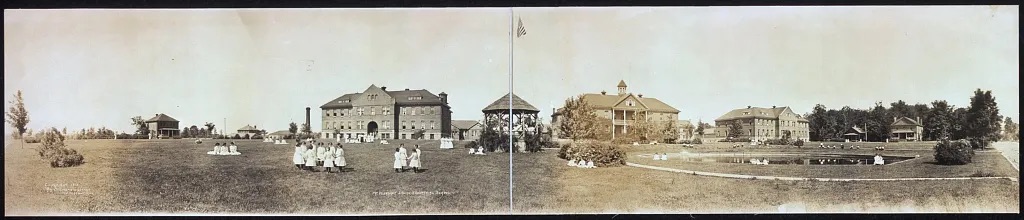
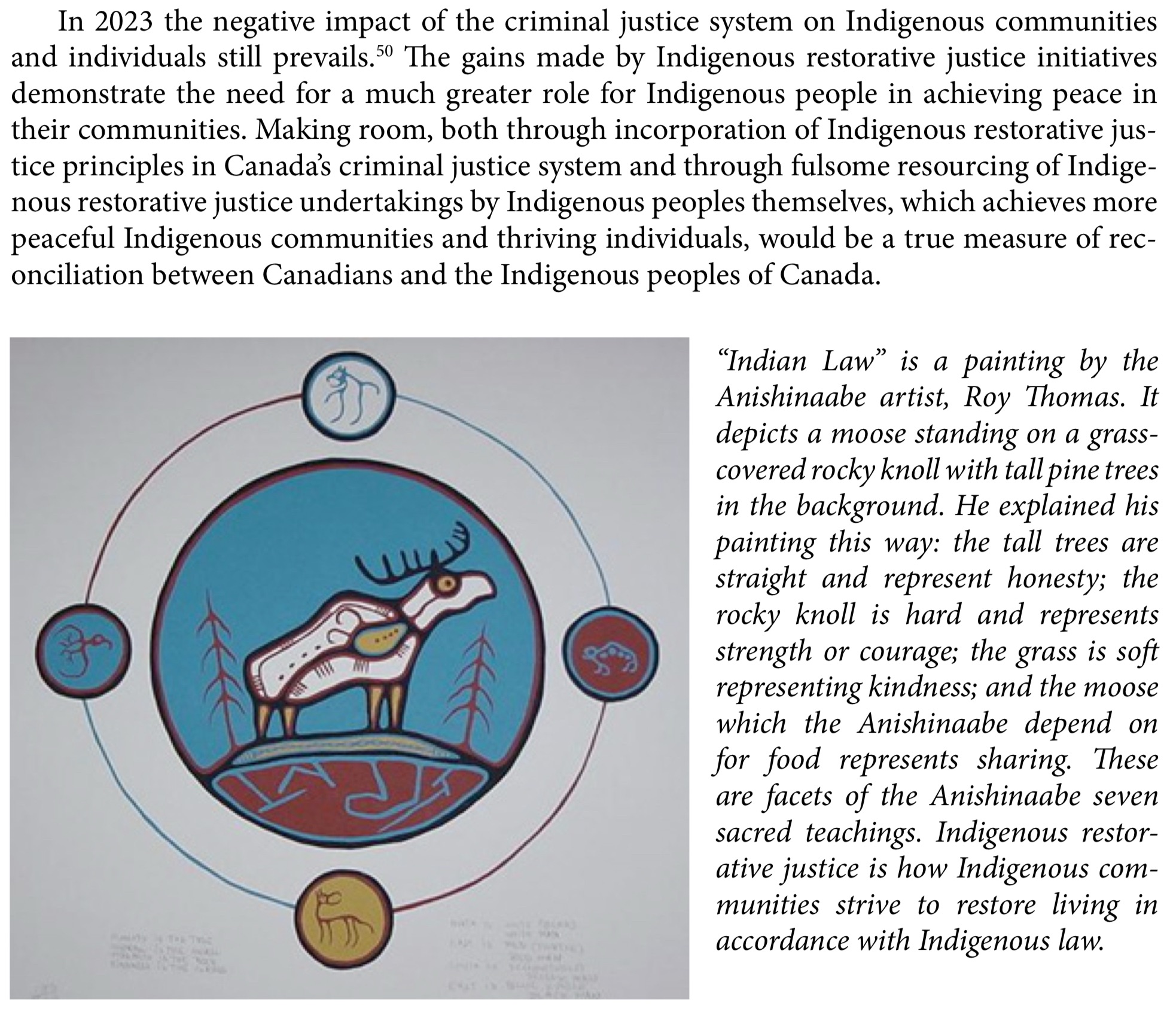
The Honourable Leonard S. Tony Mandamin has published “Emergence of Contemporary Indigenous Restorative Justice in Canada” in Constitution Forum constitutionnel.
Excerpt:
Here is “Indigenous Kinship as a Replacement for Tribal Citizenship Theory? Thoughts on the American Experience,” a blogpost for the American Journal of Comparative Law.

Prof. Mills’ original article can be found here.
Here.

Aaron Mills has published “First Nations’ Citizenship and Kinship Compared: Belonging’s Stake in Legality” in the American Journal of Comparative Law.
Here is the abstract:
Many First Nation individuals appear to accept that debates about belonging to First Nations political community are properly framed as debates about citizenship. Interlocutors frequently identify the ongoing significance of kinship, but fold it into their conception of citizenship. This Article resists citizenship’s orthodoxy. Kinship is not a unique feature of First Nations citizenship, but rather is its own model of belonging to a political community: a model internal to First Nations law, understood on its own terms. There are, then, two models of belonging to First Nations political community, citizenship and kinship, within and over which debates about belonging play out.
For First Nations political communities using their own systems of law, kinship is a source of fundamental legal interests, just as citizenship is a source of fundamental rights and freedoms in modern liberal democracies. However, comparativists, legal theorists, and political theorists have struggled to appreciate this reality because internal (or settler) colonialism disconnects kinship from legality conceptually and thus institutionally. Those connections must be reestablished.
To that end, this Article shows that, functionally, kinship is a full answer to citizenship. The argument is made in two interwoven parts, each of which turns on the picture of kinship as a structural feature of First Nations law, understood on its own terms. First, kinship is citizenship’s political equal insofar as it offers a justificatory account of belonging to a political community; second, kinship is citizenship’s legal equal insofar as it, too, serves as a foundation for fundamental legal interests. The gravamen of this Article is, thus, twofold. First, one is not hearing what First Nations law says about belonging if one is only willing or able to listen in the language of citizenship. Second, the stakes in one’s choice of model are significant: citizenship and kinship structure legality in fundamentally different ways.

Here is “Nanaboozhoo and Derrick Bell Go for a Walk,” published in the B.U. Law Review Online, now posted on SSRN.
Here.
Abstract:
For too long, tribal judiciaries have been an afterthought in the story of tribal self-determination. Until the last half-century, many tribal nations relied on federally administered courts or had no court systems at all. As tribal nations continue to develop their law-enforcement and police powers, tribal justice systems now play a critical role in tribal self-determination. But because tribal codes and constitutions tend to borrow extensively from federal and state law, tribal judges find themselves forced to apply and enforce laws that are poor cultural fits for Indian communities—an unfortunate reality that hampers tribal judges’ ability to regulate and improve tribal governance.
Even where tribal legislatures leave room for tribal judges to apply tribal customary law, the results are haphazard at best. This Article surveys a sample of tribal-court decisions that have used customary law to regulate tribal governance. Tribal judges have interpreted customary law when it is expressly incorporated into tribal positive law, they have looked to customary law to provide substantive rules of decision, and they have relied on customary law as an interpretive tool. Reliance on customary law is ascendant, but still rare, in tribal courts.
Recognizing that Indian country will continue to rely on borrowed laws, and aiming to empower tribal courts to advance tribal governance, this Article proposes that tribal judges adopt an Indigenous canon of construction of tribal laws. Elevating a thirty-year-old taxonomy first articulated by Chief Justice Irvin in Stepetin v. Nisqually Indian Community, this Article recommends that tribal judges seek out and apply tribal customary law in cases where (1) the relevant doctrine arose in federal or state statutes or common law; (2) the tribal nation has not explicitly adopted federal or state law on a given issue in writing; (3) written tribal law was adopted or shifted as a result of the colonizer’s pressure and interests; and (4) tribal custom is inconsistent with the written tribal law, most especially if the law violates the relational philosophies of that tribal nation. Tribal judiciaries experienced at applying tribal customary law will be better positioned to do justice in Indian country.

Kekek Jason Stark has published “Gwayak Ateg Onaakonigewi Dibenjigewin: Decolonizing Jurisdiction in Anishinaabe Tribal Courts” in the Nebraska Law Review.
Here is the abstract:
It is generally understood as a matter of federal Indian law that determinations of tribal law should properly be interpreted by tribal courts. This is because tribal courts do not always adhere to the same legal philosophy as their settler colonial counterparts. Many tribal courts subscribe to traditional law, which is an “essential source” of tribal jurisprudence. Anishinaabe communities have maintained a rich body of traditional tribal law since time immemorial. However, these customary law principles are only recently being included in modern-day Anishinaabe tribal court determinations. This Article builds upon the Anishinaabe law principles articulated in recent opinions and provides an overview of Anishinaabe tribal court jurisdictional cases in analyzing the efficacy of Anishinaabe customary law. Part I provides a brief introduction. Part II provides an overview of traditional Anishinaabe governance. Part III provides an overview of federal law that has been forced upon Anishinaabe communities in an attempt to further the colonizing project of assimilation. Part IV examines the principles of Anishinaabe jurisdiction. In doing so, this Article sets out traditional Anishinaabe law principles of jurisdiction as an example of how Anishinaabe Tribal Nations can define their own interpretations of law and jurisdiction. Part V analyzes how the principles of traditional Anishinaabe law are being balanced with the principles of federal Indian law under Montana and its progeny in Anishinaabe jurisdictional cases. The final Part shows that Anishinaabe tribal courts should be proactive and utilize Anishinaabe customary law in the recognition of their sovereignty apart from the federal courts’ articulations of tribal court jurisdiction. As provided in this Article, Anishinaabe tribal courts have the opportunity to define tribal jurisdiction from a tribal perspective in their tribal court opinions. For a tribal court to properly maintain its tribal character while adapting to the Anglo system of jurisprudence, it must build the system upon tribal concepts. In doing so, Anishinaabe tribal courts can ensure that their analysis remains Anishinaabe in character furthering tribal self-government and self-determination, and that its opinions are not being colonized by federal court determinations of tribal customary principles. In this way, Anishinaabe tribal courts will be able to fully implement the principles embedded in gwayak ateg onaakonigewi dibenjigewin.
Highly recommended!

Kekek Jason Stark has published “Exercising the Right of Self-Rule: Tribal Constitutions and Tribal Customary Law” in the Mitchell Hamline Law Review. PDF
Here is an excerpt:
In the context of the development and implementation of Tribal constitutions, Tribal Nations must ask themselves whether the federal government was playing a trick on Tribal Nations by imposing the Indian Reorganization Act (IRA) and its corresponding constitutions and Anglo-American governing principles upon Indian country. Are these documents and corresponding governing principles actually “shit,” dressed up as “smart berries” under the guise of making Tribal Nations “wise” in the image of Anglo-American law? Ninety years after the enactment of the IRA, it is time Tribal Nations become wise and return to traditional constitutional principles based on Tribal customary law and unwritten, ancient Tribal constitutions.
As always with KJS, highly recommended.

Here:
Front Matter
Tribal Law Journal
Introduction to Johnson v. M’Intosh
Justin C. Lauriano
Dissenting Opinion?
Richard Collins
Nakomidizo: An Anishinaabe Law Response to Two-Hundred Years of Johnson v. M’Intosh and the Doctrines of Discovery and Implicit Divesture
Kekek Jason Stark
The International Law of Colonialism: Johnson v. M’Intosh and the Doctrine of Discovery Applied Worldwide
Robert J. Miller
Bizindan Miinawa (Listen Again)
Matthew L.M. Fletcher
Environmental Justice is a Civil Rights Issue
Secretary Deb Haaland

 Turtle Talk
You must be logged in to post a comment.