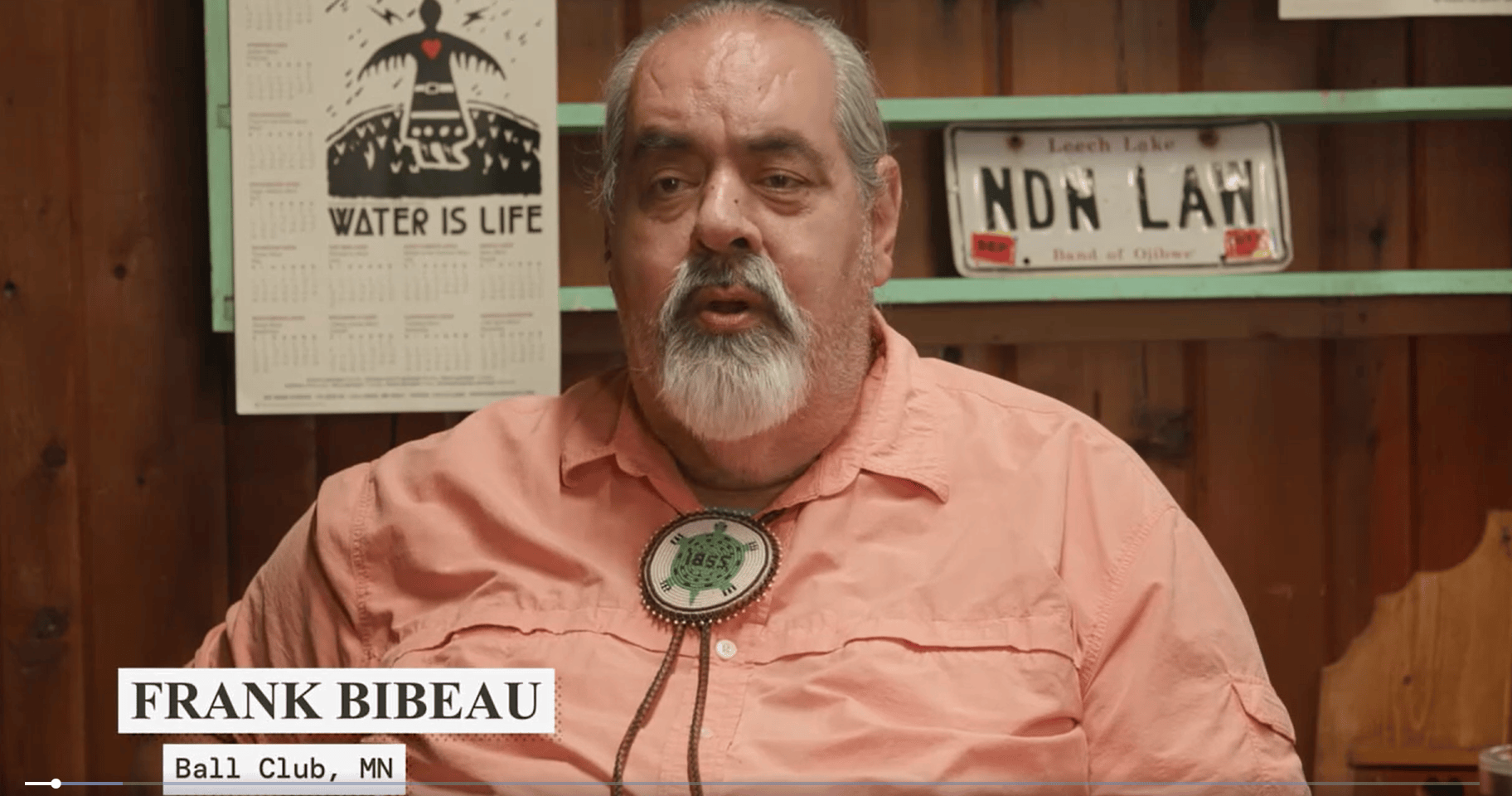
Minnesota is shaped by a long history of treaties between the United States and the Ojibwe (Chippewa), agreements that continue to influence land, rights, and sovereignty today. In a conversation with tribal attorney Frank Bibeau, this 27-minute documentary traces the major treaties that defined northern Minnesota and explains how treaty rights still function as living law.
Highly recommended. More great work on Anishinaabe Inaakoniewin from Prof. Stark.
Here is the abstract:
In the field of tribal law, the term justice is a commonly used term, yet the term has often gone undefined. So how is justice as an Indigenous concept defined? What does justice as an Indigenous concept entail? When is a dispute (or a tribal court action) justiciable? This article will address these questions. As evidenced from the story of The Woman Who Married A Beaver we can think of justice as inherently tied to our preexisting obligations and responsibilities to one another through the implementation of thoughtful decisions, made on behalf of the people through the achievement and maintenance of harmony, balance, and reciprocal kinship relationships. Utilizing this understanding, this article examines the concept of Indigenous justice through four basic principles: harmony, relationality, inclusivity; and responsibility. This article proceeds to illustrate examples of how the justiciability concepts of standing, ripeness, mootness, and the political question doctrine apply in tribal forums and provides tribal courts and tribal law practitioners recommendations for the future. In summary, this article urges tribal practitioners and tribal courts to utilize the principles embodied in the concept of Daabidawise Onaakonigewin (justice). As such, tribal practitioners and tribal courts will be able to recognize the reciprocal kinship relationships, responsibilities, duties, and obligations of all those that encompass Indigenous justice.
Highly recommended. Any work, especially great work like this, that connects Indigenous philosophies to federal Indian law is valuable work.
Here is the abstract:
It is time for federal submerged lands law to face a day of reckoning. This reckoning is necessary because assumed state sovereignty of submerged lands lacks a legal basis in basic property law, the Constitution, the federal trust relationship, and Indigenous law. Instead, it stems from antiquated rulings formulated, in Justice Gorsuch’s words, within the “atmosphere” of colonialism. In many instances, the historical record reflects that Tribes had neither ceded aboriginal title to such beds when a particular state was created, nor had Congress clearly abolished such title, as the law requires.
Reckoning is a strong word, but so is the authority and opportunity that comes with sovereign bed ownership. For many tribes, their creation stories, ceremonies, food sources, economies, environmental health, and cultural touchstones center upon specific waters believed to be included within their homelands, hunting and fishing grounds, and gathering places. But reckoning is not the end of the story. In the spirit of reconciliation, this article provides a reassessment of Indigenous title to submerged lands and argues that these lands are spaces of common governance in which the three sovereigns—federal, tribal, and state—share authority to manage a vital resource on which all peoples depend.
Part I begins with a discussion of why submerged lands ownership is fundamental to tribal culture and sovereignty. Part II then confront the atmosphere of colonialism that has excluded tribes from water spaces. We summarize the flawed legal test from United States v. Holt State Bank—the case most often used to determine Indian title to the submerged lands of navigable waterways—and explain why the test is both unlawful and inadequate to fulfill the United States’ trust obligations to tribes. In Part III, we propose a reckoning—a legal test better aligning with the Court’s newer jurisprudence in cases like Minnesota v. Mille Lacs Bandof Chippewa Indians and Herrera v. Wyoming. Ultimately, we advocate for the joint sovereign enterprise of placekeeping—caretaking the cultural, historical, ecological, economic, and social well-being of these spaces that serve as lifeways for us all. Through a corrected legal test to submerged lands, we will begin rebuilding the waterway “bundle” as an integrated legal whole.
Citizens of the Sault Ste. Marie Tribe of Chippewa Indians, Michigan’s largest federally recognized Tribe with more than 50,000 citizens, will vote on a proposed new Constitution that would significantly restructure its Tribal government.
The Tribe’s current Constitution, adopted in 1975, vests governing authority in a Board of Directors and provides for a Chairperson to be elected by the voters of the Tribe who then serves as a member of the Board. The proposed Constitution would establish three co-equal branches, including a 12-member Tribal Council, an executive branch led by an independently elected Tribal Ogemaa, and a constitutionally established judiciary consisting of a Trial Court called the Court of Gweyakwaadziwin (Honesty) and a Supreme Court called the Court of Nbwaakawin (Wisdom). It also expressly provides that the Tribal citizens are the source of governmental authority and that powers not granted to the government are reserved to the citizenship.
The proposal also includes a detailed Bill of Rights protecting, among other things, religious and cultural beliefs; speech and press; privacy against unreasonable searches and seizures; criminal process rights; equal protection, application, and opportunity under the law; whistleblower protection; the right to own, bear, and use arms; and property rights. It also expressly addresses sovereign immunity and waivers of immunity, suits against elected officials and employees acting in their official capacity or within the scope of their authority, and the right of citizens to bring Tribal Court actions to enforce constitutional rights.
Anishinaabe language and law are reflected throughout the proposed Constitution. The Preamble invokes Anishinaabe Bimaadziwin (the Anishinaabe way of life) and the Seven Grandfather Teachings, and Tribal courts would have jurisdiction over matters arising under Tribal customs as well as the Tribe’s Constitution, treaties, and laws.
The proposal also constitutionalizes the Mackinac Band as a seventh historical band for citizenship purposes, resolving a longstanding difference between the existing Constitution which does not include the Mackinac Band, and the Tribe’s Membership Ordinance, which does.
This lecture considers conserving and upholding Anishinaabe law as it relates to the more-than-human world. It suggests that we must continually renew our broadest legal commitments to protect and preserve what sustains us. Protecting clans and the animals from which they derive is close to the heart of Anishinaabe law (ode’naakonige). This law is embodied through Anishinaabe treaties with our evolutionary progenitors, our clan relatives. These treaties with the more-than-human world were incorporated into treaties with other First Nations. From an Anishinaabe perspective, these obligations were, in turn, eventually imported into treaties with the Crown. Anishinaabe treaties with the more-than-human world continue to inform how Anishinaabe people practice constitutional law through consultation protocols, legislation, and participation in court proceedings.




You must be logged in to post a comment.