Texas v. Zinke (ICWA Challenge) April Update

There were some thirty entries on the Texas v. Zinke docket this month. Relevant documents are on the case page.

Since our last update, the feds filed another motion to dismiss. The plaintiffs’ seperated into private and state parties for briefing–so the state plaintiffs have filed one brief, and the individual plaintiffs filed another (up to 70 pages each). Both, however, filed a combined opposition to the government’s motion to dismiss and motions for summary judgment.

Ohio and Goldwater have filed amicus briefs on the opposition to the motion to dismiss.

Navajo Nation motioned to intervene for the purpose of a Rule 19 dismissal.

The federal government and the plaintiffs are going back and forth on the scheduling of additional briefing, but there are no orders yet.

Boston Globe Profile of Dawnland Doc

Here is “Reclaiming a culture, reclaiming a life.”

Film festival site.

Oklahoma Court of Appeals on Reason to Believe ICWA Case

Here is the opinion.

This case went to trial–a unique aspect of Oklahoma child welfare law–on January 23, 24, and 25, where the Mom testified about her work in getting the children enrolled in the Choctaw Tribe. When Mom appealed the termination of parental rights based on lack of ICWA compliance, the

¶10 State filed an objection and response asserting, inter alia: “At the time of trial, the evidence and record showed the children were not members of an Indian tribe.” It claimed that “the only other way the children could be defined as Indian children implicating the application of ICWA was if the children were ‘eligible for membership [in a tribe] of which the biological parent is a member.’ See BIA Regulations §23.108(a).” State argued that, because Mother testified she is a member of the Cheyenne Arapaho Tribe and the children are not eligible to be members of that tribe, “but that she was trying to enroll the children as Choctaw (of which she could not be a full member given her membership in Cheyenne Arapaho), there was no reason to believe the children met the definition of ‘Indian Child’ at the time of trial given the evidence and testimony in the record.” It argued that the record in the case showed that the children were not tribal members at the time of trial and the record only reflected their membership after Mother filed the motion for new trial.

(emphasis added)

Therefore,

¶28 Although it is clear the trial court and State may not have been affirmatively informed of the children’s membership in the Choctaw Nation until February 3, 2017, this date is not determinative of the date ICWA became applicable. We reiterate that the trial court and State had reason to know at trial that ICWA may very well apply and this warranted further investigation. Despite the Choctaw Nation’s previous communication about the children’s membership status, Mother’s detailed testimony about establishing her own membership and the children’s membership raised red flags that further inquiry at trial was needed despite the Choctaw Nation’s earlier communication.

¶29 We recognize that that does not mean that IWCA applied to the case from the date it was filed in 2011. ICWA became applicable on the date the children became eligible for enrollment3 or the date they enrolled, which was January 20, 2017. At the latest, ICWA applied as of January 20, 2017, a date before trial started. ICWA’s provisions, including the heightened burden and expert witness requirements, were applicable at trial.

The distinction between when a court has reason to know a child might be an Indian child and then when ICWA applies (prospectively, Oklahoma has frustratingly stated in the past, In re M.H.C.2016 OK 88381 P.3d 710) is a question we get a lot.

HHS in the News, and in Regulations, and in Lawsuits

Late last week, this article from Politico started making the rounds:

But the Trump administration contends the tribes are a race rather than separate governments, and exempting them from Medicaid work rules — which have been approved in three states and are being sought by at least 10 others — would be illegal preferential treatment. “HHS believes that such an exemption would raise constitutional and federal civil rights law concerns,” according to a review by administration lawyers.

The Tribal Technical Advisory Group sent a letter to Administrator Verma, linked to in the article and also posted here. The Dear Tribal Leader letter from CMS is attached as an appendix to that letter. As the article states, the letter says “Unfortunately, we are constrained by statute and are concerned that requiring states to exempt AI/ANs from work and community engagement requirements could raise civil rights issues” with no further explanation.

Centers for Medicare & Medicaid Services (CMS) is a division of the Department of Health and Human Services (HHS). So is the Administration for Children and Families (ACF), which has recently called into question the Final Rule on collecting additional data on children in foster care, including important elements on ICWA and also LGBTQ+ kiddos.

Since the election, there have been articles describing VP Pence’s interest in HHS:

On Monday, President Donald Trump nominated Alex Azar, a former Indianapolis-based drug executive and longtime Pence supporter as Health and Human Services secretary. If confirmed, Azar would join an Indiana brain trust that already includes Centers for Medicare & Medicaid Services Administrator Seema Verma and Surgeon General Jerome Adams. Two of Verma’s top deputies — Medicaid director Brian Neale and deputy chief of staff Brady Brookes — are former Pence hands as well, as is HHS’ top spokesman, Matt Lloyd.

Finally, in late March, Texas, which had added two additional states as plaintiffs in the first amended complaint–Indiana and Louisiana–amended their complaint in Texas v. Zinke to include HHS and Secretary Azar as defendants in the ICWA lawsuit, where Count IV claims ICWA’s placement preferences violate the Equal Protection Clause of the Constitution.


Tribal Consultation on the Proposed AFCARS Changes

Here is the letter sent today: Tribal Consultation Notification 4-16-2018

This is on the proposed changes to the Adoption and Foster Care Analysis and Reporting System (AFCARS), the way the feds collect from the states on adoption and foster care. This is specifically about removing ICWA data elements added in last year’s final rule because of the burden of collecting information about ICWA compliance and Native kids in care.

Both consultations will be done by phone, and if there are not enough participants “may end early”. Maybe tribal leaders or their designees would like to consult about how to weigh that “burden” of gathering information so tribes and states know what is happening with Native kids in foster care for the full 90 minutes:

Tribal Consultation seeking input on the ANPRM and potential changes to AFCARS will be held through two teleconference calls on the following dates and times.

Tuesday, May 15, 2018 @ 2:00 pm – 3:30 pm (EDT).

Please register here: https://acf.adobeconnect.com/efdd2gqe733x/event/registration.html

Wednesday, May 16, 2018 @ 2:00 pm – 3:30 pm (EDT)

Please register here: https://acf.adobeconnect.com/enhysqrbcyal/event/registration.html

For both consultations, the call-in number and passcode are: 877-917-3403, Passcode: 2498350. (Please note, if there are a small number of participants on the call, the call may end sooner than 3:30 p.m.)

Both Tribal consultation teleconference calls are open to all tribal leaders or their designees and may address any aspect of the ANPRM’s request for comments on AFCARS data collection, including data elements relating to ICWA that would reported by states and all other AFCARS elements that would be reported by both states and tribes operating title IV-E programs. Overall, we are interested to hear both recommendations on data elements to retain with a justification for using the data at the national level and recommendations on any data elements to remove because they may be either overly burdensome for title IV-E agencies to report or may not be reliable or necessary at the national level.

In addition to participating in the tribal consultation conference calls, the Children’s Bureau encourages tribal leaders to submit comments in writing in response to the ANPRM, as only written comments may be included in the regulatory record. The deadline for the receipt of written comments in response to the ANPRM is June 13, 2018.

There is also a briefing webinar:

The briefing webinar to learn more about AFCARS will be held on Wednesday, April 25, 2018 from 2:00 pm – 3:30 pm (EDT). If you are interested in participating in this webinar, please register at:

https://acf.adobeconnect.com/afcars/event/event_info.html

Because:

We recognize that while states have many years of experience in reporting AFCARS data, tribes may not be as familiar with AFCARS. To prepare for consultation, the Children’s Bureau is offering a briefing webinar for tribal leaders and/or members of your staff. The briefing webinar will be an opportunity for tribal leaders and members of your staff to learn more about AFCARS, including current data reported by states since the 1990’s and the changes to AFCARS that were promulgated in December 2016, but have not yet been implemented.

If only well over 60 tribes and tribal organizations had submitted comments in support of the additional data elements explaining in great detail why they are needed in the last comment collection on this issue in 2016 . . .

A non-tribal specific information session/briefing webinar earlier this month was problematic on ICWA (at best). There are a number of groups working on written comments, including model versions for tribes. When they are available, we will make sure to post that information. If you’d like to post comments now, here is the comments page.

Previous posts on AFCARS here.
California ICWA Attorneys Pro Hac Waiver Proposal

And the biggest ICWA state joins the movement! Comments on this are due June 8, 2018.

Here is the proposal to change the rules to waive associating with local counsel and remove the limit on the number of times appearing (fees are intact, but are being addressed in another forum–post on how to show support for that forthcoming).

Deadline for Comments: June 8, 2018 5:00 PM (Pacific)
Submit Comment Online or, email: invitations@jud.ca.gov

Here is our current ICWA attorney pro hac page. Contact me if you would like any draft model comments.


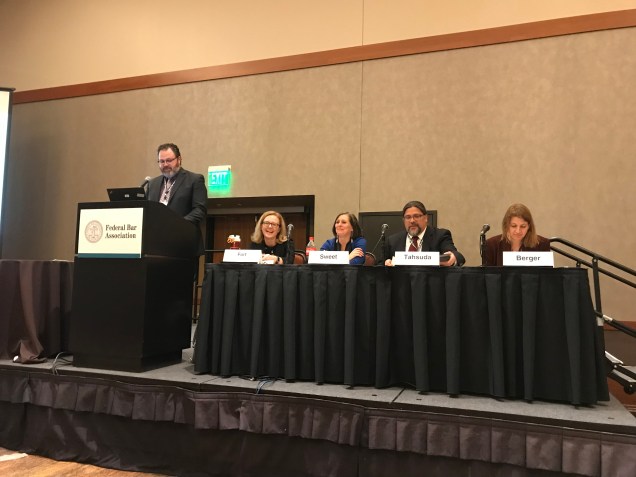
FBA Indian Law Conference ICWA Panel

Trent Crable, Kate Fort, Victoria Sweet, John Tahsuda, Bethany Berger

7FEFFE80-BEF7-4E69-BC27-9F96DF805798

25th Annual ICWA Conference (California), June 4-6

ICWA Conference - Save the Date

(Word is I’m speaking at this one.)

Update in Texas v. Zinke (federal ICWA case)

Here are the updated filings in the federal ICWA case in Texas:

The federal government filed a motion to dismiss, here.

But THEN, Plaintiffs filed (another) amended complaint–here.

It’s about 8 pages longer than the previous complaint, and adds the Department of Health and Human Services, the Secretary of the Department, and the United States as defendants. While the complaint still requests the court find all of ICWA unconstitutional and unenforceable, it also broadens the discussion beyond 1915 placement preferences to the collateral challenge provisions in 1913 and 1914. The complaint also still contends that certain provisions of IV-B and IV-E (parts of the Social Security Act) are not enforceable–those that purportedly link state compliance with ICWA to federal funding.

The feds will file another (slightly longer) motion to dismiss, and it will be here as soon as it is available.

However, the court has ALSO granted the tribal motion for intervention, available here.

Dismissal of the Watso v. Piper Case

There have been a long series of federal cases in Minnesota involving tribal court child welfare jurisdiction over non-member children residing on the reservation (Watso, Nguyen). Most recently, Watso v. Piper was dismissed. The magistrate’s decision (that was upheld), is particularly well written.

Magistrate Report

Memorandum Opinion and Order

Watso v. Jacobson here

Americans for Tribal Court Equality here