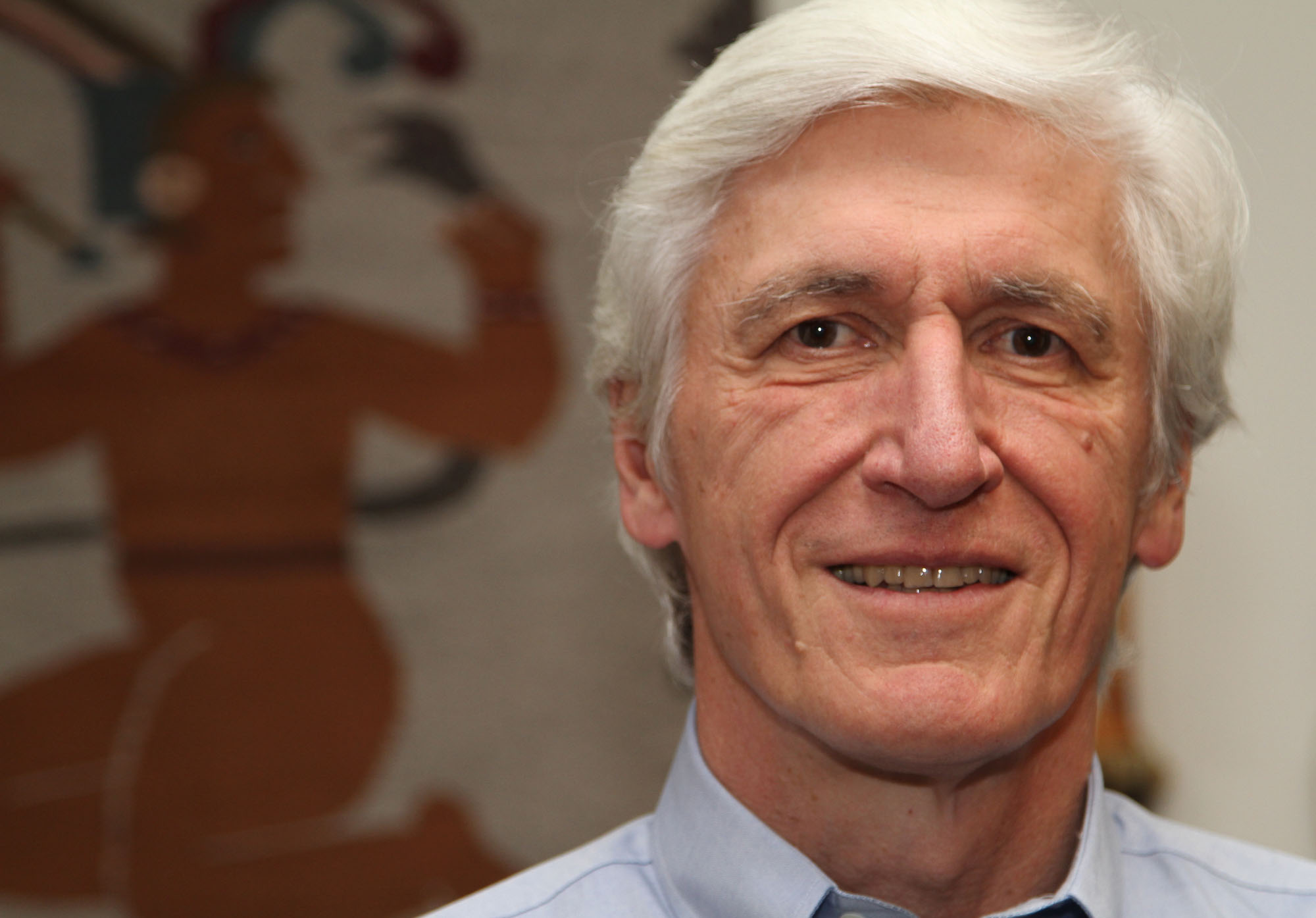
UN Special Rapporteur to Visit Sinte Gleska University on the Rosebud, May 1-2, 2012

United Nations Special Rapporteur on the Rights of Indigenous Peoples to hold Consultation at Sinte Gleska University, 

Sicangu Lakota Oyate/Rosebud Sioux Tribal Nation, South Dakota, 

May 1st – 2nd, 2012

The United Nations Special Rapporteur on the Rights of Indigenous Peoples, Professor James Anaya, will hold a consultation with Indigenous Peoples at Sinte Gleska University, Sicangu Lakota Oyate/Rosebud Sioux Tribal Nation, May 1st and 2nd, 2012, as part of his first official visit to the United States.  Traditional Treaty Councils, Tribal Governments representatives, Tribal Colleges and concerned Indigenous Peoples of all Nations are invited to attend this historic consultation, which is co-sponsored by Sinte Gleska University and the International Indian Treaty Council (IITC).

The purpose of the Special Rapporteur’s visit to the United States is to examine the situation of Indigenous Peoples in light of the inherent rights recognized and affirmed in the United Nations Declaration on the Rights of Indigenous Peoples. This and other consultations held around the country from April 23th – May 4th will provide an opportunity for Indigenous Peoples to share information with the Special Rapporteur on conditions that currently exist in the United States.

The Special Rapporteur, through meetings and consultations with federal, state and Indigenous governments and representatives, will assess ways in which the UN Declaration on the Rights of Indigenous Peoples and the rights it affirms are currently reflected in U.S. law and policy, domestically and internationally.  He will identify areas of needed reform in light of the Declaration which contains the internationally recognized “minimum standards for the dignity, survival and well-being of the Indigenous Peoples around the world”. Following the visit, the Special Rapporteur will prepare a report containing his observations which will be made public and presented to the United Nations Human Rights Council.

Issues addressed at this consultation will include:

1)    Treaties, land and resource rights

2)    Cultural Rights, language and protection of Sacred Sites

3)    Self-determination and self-government

4)    Food Sovereignty and environmental protection

5)    Education and health; social and economic rights

6)    Indian Child Welfare and removal of Indian Children from communities and families.

Representatives of Indigenous Nations, organizations and communities will have the opportunity to make oral submissions to the Special Rapporteur within the constraints of time. Representatives who wish to make a statement should register by email at shawn.bordeaux@sintegleska.edu, indicating the topic that they wish to address. Those who pre-register will be placed on a presenters list which will be posted prior to the meeting.   Participants can also register on site at Sinte Gleska University on May 1st, 2012. Please note that it may not be possible for all those wishing to make a statement to do so. A more detailed agenda will be disseminated and posted in the near future. A community dinner will be provided the evening of May 1st.

In addition to oral testimony, Indigenous Peoples, Nations, and organizations can submit written testimony to: indigenous@ohchr.org. For guidance on how to present written information to the Special Rapporteur, please visit: http://unsr.jamesanaya.org/comm/submitting-information-to-the-special-rapporteur. Written information to supplement the oral presentations will also be accepted at the consultation.

For additional information on this consultation and the Special Rapporteur’s US visit, log onto IITC’s web page: http:///www.treatycouncil.org or see IITC on Facebook.

For more information on the United Nations Special Rapporteur on the Rights of Indigenous Peoples and for updates on the visit of the Special Rapporteur to the US, please visit: http://unsr.jamesanaya.org/.
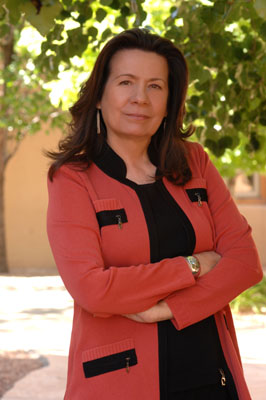
New Scholarship on Selective Endorsement of UNDRIP by Settler Countries

Sheryl Lightfoot has published an article called “Selective Endorsement without Intent to Implement: Indigenous Rights and the Anglosphere” just published in the International Journal of Human Rights (Vol. 16, No. 1 Jan 2012.) — here: LIghtfoot IJHR 16.1 2012
Professor Lightfoot writes (and I am quoting from her):
analyzed the verbal commitments to the UNDRIP made by all four English-speaking settler countries. This analysis finds that they all engaged in a similar pattern of behavior that I call “selective endorsement.” The four of them each expressed how important Indigenous peoples’ rights are to international human rights. But, rather than accepting the UNDRIP as the internationally agreed upon set of standards, this group of countries attempted to unilaterally re-write those standards so that the four of them were already meeting international expectations without further changes to their domestic laws and policies.

News Coverage of CERD Review of Canada

We mentioned this here.
Coverage from the Montreal Gazette here.

Canada’s international reputation came under fire in Geneva on Wednesday as a UN expert panel delivered scathing criticisms over the government’s treatment of First Nations and recent changes to the country’s immigration system.

Members on the Committee on the Elimination of Racial Discrimination, all of them human-rights experts from around the world, questioned why headway has not been made in resolving the disparities between First Nations communities and the rest of the country.

“This problem should not continue the same way as it has in the past,” said Noureddine Amir, vice-chairman of the Committee on the Elimination of Racial Discrimination. “How long will this be ongoing?”

The treatment of natives jumped back onto the federal political agenda after the Red Cross delivered humanitarian aid to the First Nations community of Attawapiskat in northern Ontario late last year.


Information on CERD Review Session on Canada

MEDIA ADVISORY
UN Committee urged to examine discrimination against Indigenous peoples during review of Canada’s human rights record
16 February 2012

On February 22 and 23, Canada’s record on combating discrimination will be examined by a high level body of the United Nations. The Committee on the Elimination of Racial Discrimination (CERD) is the independent expert body that monitors compliance with the international treaty of the same name.
The review session is being held at the United Nations in Geneva. The session will be webcast by the United Nations at http://www.ccprcentre.org/home/215

Call for Submissions on Indigenous Peoples’ Participation at UN

The Office of the High Commissioner for Human Rights welcomes submissions on the paper being prepared by the Secretary General on indigenous peoples’ participation at the United Nations by 9 April 2012.  See Human Rights Council resolution 18/8 (2011):

13. Requests the Secretary-General, in cooperation with the Office of the High Commissioner, the Office of Legal Affairs and other relevant parts of the Secretariat, to prepare a detailed document on the ways and means of promoting participation at the United Nations of recognized indigenous peoples’ representatives on issues affecting them, given that they are not always organized as non-governmental organizations, and on how such participation might be structured, drawing from, inter alia, the rules governing the participation in various United Nations bodies by non-governmental organizations (including Economic and Social Council resolution 1996/31) and by national human rights institutions (including Human Rights Council resolution 5/1 of 18 June 2007 and Commission on Human Rights resolution 2005/74 of 20 April 2005), and to present it to the Council at its twenty-first session;

For information, please see: http://www.ohchr.org/EN/Issues/IPeoples/Pages/ConsultationonIPparticipationintheUN.aspx.

UN Special Rapporteur to Visit US This Year

Here is the text of the announcement:

United Nations Special Rapporteur on the Rights of Indigenous Peoples to carry out official visit to the United States from 23 April to 4 May 2012
The United Nations Special Rapporteur on the Rights of Indigenous Peoples, Professor James Anaya, will carry out an official visit to the United States of America from 23 April to 4 May 2012.
The aim of the Special Rapporteur’s visit to the United States is to examine the human rights situation of the indigenous peoples of the country, that is, American Indians/Native Americans, Alaska Natives and Native Hawaiians. During the visit, the Special Rapporteur will hold meetings and consultations with federal and state government officials, as well as with indigenous nations and their representatives, in various locations.
Of particular relevance to the visit are the implications of the United States’ endorsement, in December 2010, of the United Nations Declaration on the Rights of Indigenous Peoples. The Special Rapporteur will assess the ways in which the standards of the Declaration are currently reflected in U.S. law and policy, both domestically and abroad, and identify needed reforms or areas that need further attention in light of the Declaration.
The results of this assessment will be reflected in a preliminary report that will be submitted to the United States for its comments and consideration. A final version of the report will be circulated publicly and presented to the United Nations Human Rights Council. The report will include recommendations to the United States, indigenous governing bodies and, possibly, other interested parties on how to address issues of ongoing concern to indigenous peoples.
The Special Rapporteur has tentatively planned to visit locations in the Southwest, Midwest, Alaska, and Washington, D.C. Further information and updates about the agenda of the Special Rapporteur as it becomes available will be made public on the websites of the Special Rapporteur maintained by the Office of the High Commissioner for Human Rights: http://www.ohchr.org/EN/Issues/IPeoples/SRIndigenousPeoples/Pages/SRIPeoplesIndex.asp x: and the University of Arizona: http://www.unsr.jamesanaya.org
Background information on the Special Rapporteur and his mandate from the UN Human Rights Council is available on these web sites.
The Special Rapporteur invites indigenous peoples and organizations, and other interested parties, to send information relevant to the visit to the United States or any other aspect of his mandate to: indigenous@ohchr.org

Commentary: Using the UN Declaration to End the Epidemic of Violence Against Native Women

Jana L. Walker is a Senior Staff Attorney and the Director of the Indian Law Resource Center’s Safe Women, Strong Nations project.

The UN Declaration on the Rights of Indigenous Peoples signals a new means to change federal law and policy to restore safety to Native women, to strengthen Indian nations and advance their jurisdiction over crimes within their territories, and to end the cycle of violence in Native communities.

The right to be safe and live free from violence is one of the most fundamental and important human rights recognized internationally.  Continue reading →

Ecuadorean Natives Prevail in Second Circuit against Chevron

Here is today’s opinion: Chevron v Naranjo.

The court’s syllabus:

Defendants-appellants – residents of the Ecuadorian Amazon and their American attorney – challenge a preliminary injunction issued by the district court that prohibited them from enforcing or preparing to enforce a potential Ecuadorian judgment against plaintiffappellee anywhere outside of the Republic of Ecuador. Because New York’s Uniform Foreign Country Money-Judgments Recognition Act, N.Y. C.P.L.R. §§ 5301-5309, does not authorize affirmative relief of this kind, but only recognizes a defense available when a would-be judgment-creditor first attempts enforcement in New York, we VACATE the injunction and REMAND to the district court with instructions to DISMISS the plaintiffappellee’s complaint.

And some news coverage from How Appealing.

This item explains the import of the decision:

If Chevron was still hoping for a ruling from New York’s federal courts that would make it impossible for Ecuadorean plaintiffs to collect their $18 billion judgment against the oil company, Thursday’s long-awaited opinion by the U.S. Court of Appeals for the Second Circuit puts an end to that strategy. The appellate panel’s30-page opinion — which explains the court’s Sept. 2011 order lifting the worldwide injunction barring enforcement of the Ecuadorean judgment — gives Chevron the chance to argue once again that the Ecuadoreans can’t collect in New York, under the state’s Uniform Foreign Country Money-Judgments Recognition Act. But in no uncertain terms, the Second Circuit advised that even if Chevron eventually persuades a New York judge that the Ecuadoreans procured their judgment through fraud, that judge cannot bar enforcement of the judgment outside of the United States.

Powerful New Yorker Profile on Ecuadorean Indigenous Environmental Suit against Chevron

Here.

We posted on the multi-billion dollar judgment against Chevron in Ecuador here.

Commentary: Tribes Lead Efforts to Implement UN Declaration

by Robert T. Coulter*

Photo for Robert T. Coulter
Robert T. Coulter is Executive Director of the Indian Law Resource Center. He is a member of the Citizen Potawatomi Nation and has more than 30 years of experience in the field of Indian law.

It has been just a year since President Obama announced the Administration’s support for the UN Declaration on the Rights of Indigenous Peoples and promised action to implement at least some of those rights.  Across the country, tribal governments are seizing the Declaration and using it creatively to protect their lands and resources, and especially their rights to cultural and sacred sites.

For example, the Navajo Nation has used the Declaration in its efforts to protect the San Francisco Peaks, and the Seneca Nation has pointed out Article 37 (“Indigenous peoples have the right to the recognition, observance and enforcement of treaties”) in its efforts to resolve a 60-year occupation of Seneca territory by the New York State Thruway that violates the 1794 Treaty of Canandaigua. Continue reading →