New Book by Rob Williams: “Savage Anxieties”

Book website here. From the site:

From one of the world’s leading experts on Native American law and indigenous peoples’ human rights comes an original and striking intellectual history of Western civilization and the idea of the savage that sheds new light on how we understand ourselves and our contemporary society. Throughout the centuries, conquest, war, and unspeakable acts of violence and dispossession have all been justified by citing civilization’s opposition to the savagery of the tribe. Robert Williams, award winning author, legal scholar, and member of the Lumbee Indian Tribe, proposes a wide-ranging reexamination of the history of the Western world, told from the perspective of civilization’s war on tribalism as a way of life. In Savage Anxieties, Williams shows us how the language of savagery used by the West to talk about the human rights of the world’s indigenous peoples is in dire need of reappraisal.

Buy it.

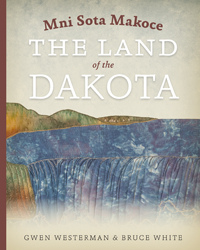
New Book — “Mni Sota Makoce: The Land of the Dakota”

Book website here.

More details about the book: and the authors from the website:

Much of the focus on the Dakota people in Minnesota rests on the tragic events of the 1862 U.S.–Dakota War and the resulting exile that sent the majority of the Dakota to prisons and reservations beyond the state’s boundaries. But the true depth of the devastation of removal cannot be understood without a closer examination of the history of the Dakota people and their deep cultural connection to the land that is Minnesota. Drawing on oral history interviews, archival work, and painstaking comparisons of Dakota, French, and English sources, Mni Sota Makoce tells the detailed history of the Dakota people in their traditional homelands for at least hundreds of years prior to exile.

“Minnesota” is derived from the Dakota phrase Mni Sota Makoce, Land Where the Waters Reflect the Clouds—and the people’s roots here remain strong. Authors Gwen Westerman and Bruce White examine narratives of the people’s origins, their associations with the land, and the seasonal round through key players and place names. They consider Dakota interactions with Europeans and offer an in-depth “reading between the lines” of historical documents—some of them virtually unknown—and treaties made with the United States, uncovering misunderstandings and outright deceptions that helped lead to war in 1862.

Dakota history did not begin with the U.S.– Dakota War of 1862—nor did it end there. Mni Sota Makoce is, more than anything, a celebration of the Dakota people through their undisputed connection to this place, Minnesota, in the past, present, and future.

Gwen Westerman is professor of English and Humanities at Minnesota State University, Mankato.

Bruce White is author of We Are at Home: Pictures of the Ojibwe People.

Foreword by Glenn Wasicuna

Available September 2012 from Minnesota Historical Society Press

Paper, 296 pages, 50 B&W illustrations, 15 color images, $16.99

Pre-Order on Amazon, Powells, or B&N

For more information on the U. S. -Dakota War of 1862, please visit www.usdakotawar.org

Interview with Gwen Westerman about her artwork.

Bruce White’s website


Frank Pommersheim on the Crazy Horse Malt Liquor Case

Frank Pommersheim has posted Part III of his South Dakota Law Review trilogy, The Crazy Horse Malt Liquor Case: From Tradition to Modernity and Halfway Back.

Here is the abstract:

Tasunke Witko, or Crazy Horse as he is known in English, is a revered nineteenth century warrior and spiritual leader of the Oglala Band of the Lakota (or Sioux) Nation. He is renowned for both his skills as a warrior and his high spiritual concern for the welfare of his people. He also often seems to stand apart as a mysterious, even mystical, individual. His picture was never taken by a photographer. He never went to Washington, D.C. to meet the “white fathers.” He never signed a treaty with the United States government. He never claimed to be a chief or tribal leader. He was ultimately killed in 1877, when he was held captive pursuant to his “surrender” at Camp Robinson in Nebraska. This, too, is shrouded in mystery.

Marren Sanders Takes Another Look at US/Tribal Relations

Marren Sanders has posted “De Recto, De Jure, or De Facto: Another Look at the History of U.S./Tribal Relations” on SSRN.

Here is the abstract:

The history of relations between the United States and Native nations is often divided by scholars into specific eras defined by the Congressional policy in force at the time. Each federal policy had profound consequences for tribes and their sovereign ability to manage their lands and resources. This article surveys the history of U.S./tribal relations through the lens of the Professors Joseph Kalt and Joseph William Singer’s scheme of tribal sovereignty. Part I looks at how tribal sovereign rights to manage their people, lands, and resources have been recognized in varying degrees since the time of first contract with European nations and at how, when viewed as a whole, the history of federal Indian law fits precisely under the Kalt/Singer scheme. Part II examines the concept of de facto sovereignty and includes examples of how tribes are taking back control over their own futures.

Michigan Law Prof. Richard Lempert Responds to Richard Sanders on “Academic Mismatch” at UMLS

Lempert’s article, “University of Michigan Bar Passage 2004-2006: A Failure to Replicate Professor Sander’s Results, with Implications for Affirmative Action,” is here. And here is the abstract:

In a recent issue of the Denver Law Review, Professor Richard Sander presents data on race-based affirmative action that purportedly supports his theory that any benefits African Americans enjoy from affirmative action are more than offset by detrimental effects of academic mismatch. Specifically, he references a yet unpublished study in which he claims to have found that for the years 2004-2006 the bar passage rate of African-American graduates of the University of Michigan Law School is 62 percent for first time takers rising to only 76 percent after multiple takes. This paper shows that these results are quite implausible given the best data we have on African American bar passage rates at schools similar in selectivity to Michigan, and then reports the results of an effort to replicate Professor Sander’s methods with more complete data. The replication yields quite different results as it indicates that during the years Professor Sander studied the bar passage rate for Michigan Law School’s African American alumni was about 78% on first attempt with a lower bound estimate exceeding 90% where there had been an opportunity for repeat test taking. Moreover, the data are quite inconsistent with the predictions of mismatch theory. Hispanic students, many of whom benefited from affirmative action, had about the same bar pass rates as white students who did not, and Asian students who did not benefit from affirmative action had bar pass rates not much different from those of African American students who did benefit.

Lempert makes note of some of Sanders’ research methods; the one I find particularly troublesome is this:

During that debate for the first time I learned that [Sanders] had identified the race of UM’s bar takers through the use of UM’s first year student facebooks, which meant I could attempt to replicate the results of his research.

Can’t believe Sanders gets away with that kind of racial profiling.

New Scholarship on the Ethics of Opposing Certiorari

Aaron Tang recently (ok, in June) posted, “The Ethics of Opposing Certiorari Before the Supreme Court,” a paper he published in the Harvard Journal of Law and Public Policy.

Here is the abstract:

As the Supreme Court’s docket grows smaller and an emerging class of “Supreme Court experts” snags a greater portion of that docket with every passing year, the value associated with each rare opportunity to argue before the Court continues to rise. The rising value has driven the legal academy to pay greater attention to the arduous process of persuading the Court to take on a case through its certiorari review. Elite Supreme Court practices have focused on the certiorari process as well, because the number of merits cases to which they will have access — and substantial fees — ride on the success of the petitions for certiorari they file. The stakes have gotten so high with respect to the Court’s decisions on “cert” petitions that the popular website SCOTUSblog now has a regular “petitions to watch” column discussing certiorari petitions with a high chance of being granted and conducts live chats on mornings when the Court issues orders to provide instant analysis on newly granted cases.

Persuading the Court to grant a petition for certiorari, however, is not the only way for an advocate to land an elusive Supreme Court oral argument. After all, the attorneys who prevail at the petition for certiorari stage take on only half of the sum total of oral arguments available. The other half belongs to the attorneys who lose at the petition stage and who, as a result, will be called before the Court to defend the merits of the judgment below. This Article’s core premise is that greater attention must be paid to this set of Supreme Court oral advocates and the incentives they face. Attorneys who lose at the opposition stage may nevertheless enjoy a personal “win” in the form of an opportunity to argue at the Supreme Court. As a result, there is the potential for an ex ante ethical dilemma for attorneys tasked with opposing certiorari. This dilemma, in turn, might well have important downstream effects on clients who prevailed below and who, unlike their attorneys, would therefore prefer not to be in the Supreme Court at all. This Article analyzes the potential ethical dilemma in opposing certiorari before the Supreme Court, relying chiefly on survey responses from more than one hundred Supreme Court practitioners.

Worth a read for tribal attorneys looking for Supreme Court counsel to defend a cert petition.

Three New Indian Law Articles in Idaho Law Review

Here:

Thad Blank, Time to Recommit: The Department of Justice’s Indian Resources Section, the Trust Duty, and Affirmative Litigation, 48 Idaho L. Rev. 391 (2012).

Benjamin J. Fosland, A Case of Not-So-Fatal Flaws: Re-Evaluating the Indian Tribal Energy and Self-Determination Act, 48 Idaho L. Rev. 447 (2012).

Katheryn A. Bilodeau, The Elusive Implied Water Right for Fish: Do Off-Reservation Instream Water Rights Exist to Support Indian Treaty Fishing Rights, 48 Idaho L. Rev. 515 (2012).

New Scholarship on Whaling Rights of the Makah

Thomas A. Martin has posted “Whaling Rights of the Makah” on SSRN.

Here is the (incredibly, far too long) abstract:

The Makah Indian Tribe (‘Makah’ or ‘Tribe’) is a federally recognized tribe located on the northwestern tip of the Olympic Peninsula, with a current population of 1,356. The Makah have hunted whales for over two millennia. Continue reading

Mark Killenbeck on the History of the Commerce Clause

Mark Killenbeck, author of several excellent legal histories, including one on M’Culloch v. Maryland and another on the Tenth Amendment, has posted his short history of the Interstate Commerce Clause, “A Prudent Regard to Our Own Good? The Commerce Clause, in Nation and States.”

Here is the abstract:

This lecture was delivered on May 23, 2012, as part of the Supreme Court Historical Society’s annual Leon Silverman Lecture Series. My goal was to discern what key founders envisioned when they crafted and approved the Commerce Clause and explore how it has been interpreted and applied by the Court. I take as my starting point themes struck by James Madison in his Vices of the Political system of the U. States, in which he noted a “want of concert in matters where the common interest requires it,” a flaw “strongly illustrated in the state of our commercial affairs,” to the point that “the national dignity, interest, and revenue [have] suffered from this cause.” Madison’s lament was not, however, about the need to guard against an overbearing federal government. Rather, he was concerned about the corrosive effects of a “a mistaken confidence” in “the justice, the good faith, the honor, the sound policy, of . . . several legislative assemblies” whose actions were marked by “caprice, jealousy, and diversity of opinions.” Madison also counseled against excessive reliance on interpretations grounded solely in the drafting and ratification debates, speaking of the need to “liquidate and ascertain” meaning over time, recognizing, as did Chief Justice John Marshall, that the Constitution was “intended to endure for ages to come, and consequently, to be adapted to the various crises of human affairs.” A close and careful reading of both Madison and Marshall – in particular, Marshall’s opinion for the Court in Gibbons v. Ogden (1824) – suggests, accordingly, that sharp departures from the original understanding of the Commerce Clause occurred long before Wickard v. Filburn (1942), and that there is substantial support for an expansive reading of the nature and scope of the commerce power in the words and intentions of the founders.


New Scholarship on Congress’ Authority to Recognize a Native Hawaiian Polity United by Common Descent

Derek Hoohauoli Kauanoe and Breann Swann Nuuhiwa have posted “We are Who We Thought We Were: Congress’ Authority to Recognize a Native Hawaiian Polity United by Common Descent” on SSRN. It is forthcoming in the Asian-Pacific Law & Policy Journal.

Here is the abstract:

In an attempt to fulfill the federal government’s moral imperative, the United States Congress has spent more than a decade considering several proposed versions of the Native Hawaiian Government Reorganization Act (colloquially referred to as the “Akaka Bill”), which seeks to restore a small measure of Native Hawaiian self-governing authority by providing a process for the formal federal acknowledgment of a reorganized Native Hawaiian governing entity. The proposed Act changes significantly with each new Congress, but from its initial introduction in 2000 to the present, the Act has consistently required that the initial reorganization of the Native Hawaiian polity be carried out by the Native Hawaiian community, united by common Native Hawaiian descent without regard to blood quantum.