Due to the increasing pressures of the climate change crisis, federal and state governments are beginning to acknowledge that Indigenous-led stewardship and control over Tribal aboriginal homelands is a crucial component of addressing climate change. In the United States, Tribal nations have a long history of responsible land stewardship, with environmental conservation and respect for the world’s biodiversity being an inextricable piece of Tribal customs, traditions, and knowledge. This Article strives to pay due respect to traditional land stewardship and its important role in the past, present, and future.
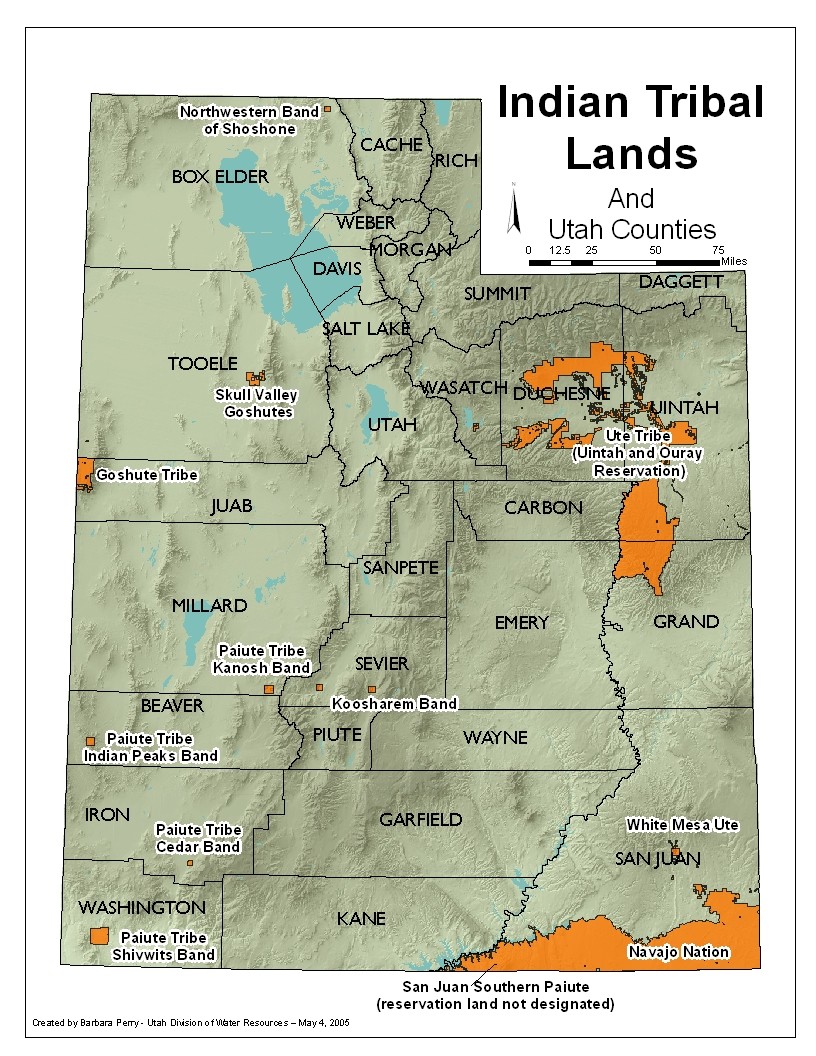
Part I of this Article starts with an overview of the history of forcible dispossession of Native American land, and provides initial thoughts on the myriad of meanings that the expression “Land Back” can hold. The United States has a long history of forcibly removing Native American Tribes from their ancestral homelands and relocating them to smaller plots of land, with some estimates indicating Tribal nations ultimately lost 98.9 percent of their aboriginal homelands post-contact. Part II will discuss how this change in land tenure and land use can be linked to climate change, with Indigenous communities often at the frontline of climate change events. Additionally, areas predominantly occupied by Indigenous peoples are frequently more prone to experience extreme weather conditions, such as extreme heat, drought, greater wildfire risks, and extreme flooding, the latter of which has caused the relocation of some coastal Indigenous communities.
Although modern Indian land use is manifold, traditional Indigenous stewardship is rooted in careful management of the ecosystem. Indigenous peoples across the globe remain the stewards and protectors of most of the world’s biodiversity, while standing at the forefront of the opposition to extractive industries. According to a report conducted by the Indigenous Environmental Network, Indigenous-led movements in resistance to oil and gas projects have stopped or delayed greenhouse gas emission equal to nearly one-quarter of the annual total U.S and Canadian emissions. The leadership demonstrated by Indigenous peoples to combat the climate crisis is indicative of the cultural value system that justifies land restitution.
Parts III, IV, and V of this Article explore the efforts being made on the federal, state, and Tribal level to return land to its original caretakers and discusses practical ways that Tribal governments and organizations are achieving Land Back through mutual goals of conservation and repatriation. While the preferred method used by the federal and state governments and their respective agencies has been to extend opportunities for Tribal co-management, this is not enough to curb the urgency of the impending climate disaster, the effects of which have been, and will continue to be, felt first and foremost by Indigenous peoples. It is time for Land Back. There is no clearer argument for Land Back than to prevent irreparable harm to the planet—a cause that is unquestionably in the greatest good for all people.
The ability to shape one’s built environment has always been tied to the idea of sovereignty, both at the levels of individual people and units of communal self-governance. Modern tribal infrastructure is overwhelmingly influenced by a top-down approach where money comes from the federal government and credit for infrastructure projects in tribal communities is a source of pride for distant politicians. This Essay explores the history between infrastructure and sovereignty and proposes that tribes aremore than capable of planning for their communities, and are likely better at it than the U.S. government.
Here is Bizindan Miinawa (Listen Again), available on SSRN and prepared for the Tribal Law Journal’s symposium on Johnson v. McIntosh.
An excerpt:
Are any United States Supreme Court cases real? Johnson v. McIntosh was fake as John Wayne’s teeth. That one was a property dispute, remember? Two wealthy, privileged, and powerful white people squared off over thousands of acres of land acquired from Indigenous nations who called the vast valley of Eagle River home. On one side, you had a former United States Supreme Court justice; on the other, you had a wealthy political benefactor/beneficiary — imagine if a case called Stephen Breyer v. Harlan Crow about Indian land ownership was pending in the Roberts Court’s 2023 Term. No tribal nations or Indigenous peoples to be seen or heard from, or in more modern practice were not allowed to participate. Both attorneys were secretly paid for by the same company — imagine if Stephen Breyer’s attorney (say, Neal Kaytal) was secretly retained by the Trammel Crow Company (or even better, by Club For Growth, his political action committee) to oppose Harlan Crow’s attorney, who would probably be Paul Clement or Ty Cobb. And of course, the property claims at issue barely overlapped, if at all, thanks to stipulations of the parties at the trial level that formed the basis of the factual dispute. It was a sham case.
This Comment argues that ICWA protections should apply to human embryos in all states that reject pure property regimes for embryo disposition. Otherwise, personhood regimes would serve as an end-run around ICWA.34 Once personhood regimes treat embryos as persons or create rules implementing family law before the birth of a child, inevitable tensions arise with ICWA. Not applying ICWA protections to these regimes would undermine the spirit of ICWA and create an unacceptable legal loophole to circumvent the rights of tribes, Indian parents, and Indian children. However, ICWA would not have to apply at the embryo-disposition stage in states that adopt pure property regimes because future parental rights are not determined at the dissolution stage. Part II surveys ICWA, its purpose, and its protections. Part III explores the current state of embryo-disposition laws and focuses on the newly passed Arizona personhood disposition regime. Part IV analyzes how ICWA should interact with personhood regime states and examines the risks that personhood states pose to tribes, Indian families, and the spirit of ICWA. Part V concludes that the best way forward is to reject personhood regimes in favor of pure property regimes or stringently impose ICWA protections at the embryo-disposition stage in personhood states whenever substantive family law is adjudicated.
With such somber results expected from the American investigation, tribes deserve a remedy that will make them as close to whole as possible. There are several potential remedies that tribes and families can pursue, such as filing a lawsuit or lobbying for relief in Congress. The United States must listen to Native communities in determining what remedy will provide the most opportunity for healing and reparation. This Comment will attempt to contribute to that dialogue by arguing that, should the affected parties seek relief through litigation, they possess valid wrongful-death or negligence causes of action14 under the Federal Tort Claims Act (“FTCA” or “Act”).
Increases in computing power have contributed to tremendous improvements in Artificial Intelligence (AI). Despite increasing deployment of AI by public, private, and nonprofit organizations, consideration of AI on American Indian reservations remains in its infancy. In this paper, we suggest that consideration of Internet policy on tribal lands should be expanded beyond consideration of barriers to broadband access to include responsible adoption of emergent technologies, including AI. To facilitate such consideration, we consider the prospects and challenge for deployment of AI in public, private, and nonprofit applications on Indian reservations in the United States. Our particular focus is on how specific aspects of reservations offer unique opportunities as well as challenges for deployment of AI. We also argue that an important frontier in the Indigenous Data Sovereignty movement is to develop principles for responsible use of AI on reservations.
Of note, the paper asserts that AI might be especially useful for tribal courts: “Rightly or wrongly, people may have more confidence in AI than tribal judges.”OUCH.
You must be logged in to post a comment.