Torey Dolan on American Indian Geopolitical Rights

Torey Dolan has posted “American Indian Geopolitical Rights” on SSRN.

Here is the abstract:

American Indian people hold a unique legal position under the United States Constitution and within American law based on Indian status. This unique relationship at times reflects the cultural, spiritual, and legal ties to land that are unique to American Indians and represent aberrations in American law. This fundamentally impacts the lives and interests of American Indians, including in matters of representational democracy. This paper seeks to contextualize the proscriptive legal ties that American Indians have with land under law, termed herein “Indian Geopolitical Rights.” This paper argues that American Indian Geopolitical Rights reflect not only significant cultural interests of American Indians, but that American Indians have substantive rights that are tied to place that impacts how Indians engage with democratic systems and conceive of political representation. As such, the needs of American Indians necessitate a consideration of Indian geopolitical rights in the development, maintenance, and implementation of local, state, and federal electoral systems. This paper argues that Indian geopolitical rights are incumbent upon states, that election law doctrine is currently ill-equipped to protect Indian geopolitical rights, and incorporating Indian geopolitical rights is consistent with the U.S. Constitution and its principles of federalism.

Grant Christensen on the Right to Protest in Indian Country

Grant Christensen has published “The Right to Protest in Indian Country” in the Columbia Law Review.

Here is the abstract:

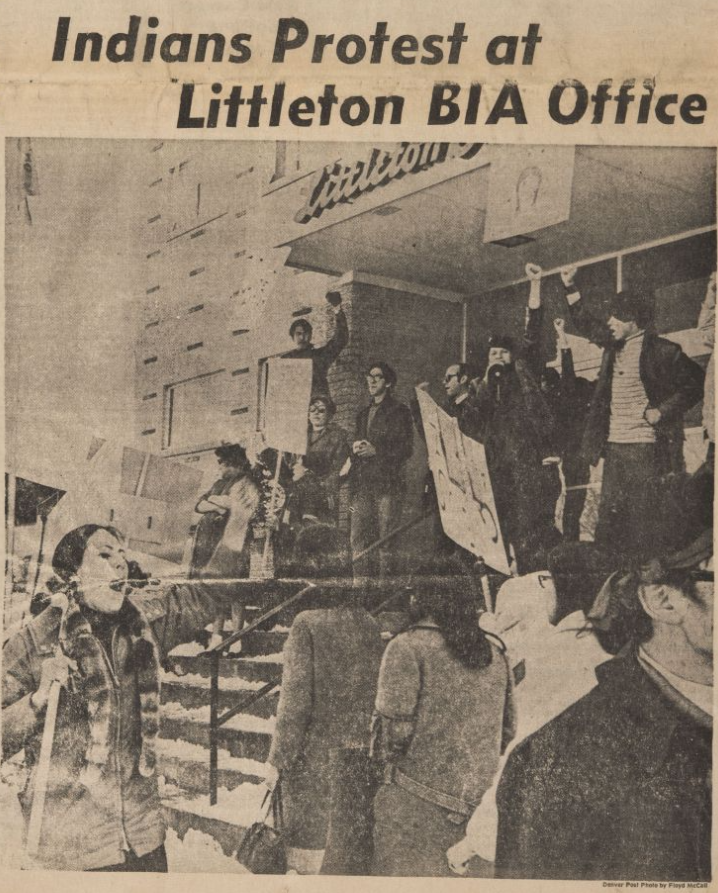
From April 2016 until February 2017, thousands of people gathered along the Cannonball River on the border of the Standing Rock Sioux Reservation to protest the construction of the Dakota Access Pipeline. In response, state officials tried to close down roads leading to the Reservation, considered legislation that would immunize drivers who struck protesters with vehicles, and arrested hundreds of peaceful demonstrators. The #NoDAPL protests built upon a legacy of resistance by Indigenous communities against the actions of the United States. While the history of Indigenous resistance predates the nation’s founding, the power to police protest activities on tribal lands has changed markedly.

This Symposium Piece considers the right to protest in Indian country. It confronts the framework that apportions regulatory and adjudicatory power over protest activity occurring on tribal land and suggests that such regulation ought to be left entirely to the tribal sovereign. Alternatively, it argues that state regulation of protest activity in Indian country is an infringement on tribal governments’ right to make their own laws or is otherwise preempted by overwhelming tribal and federal interests. This Piece further recognizes that while the United States could impose regulations on protest activity, there are strong prudential factors that suggest it should defer regulation to the tribal sovereign. By subjecting the right to protest in Indian country solely to regulations imposed by tribal government, the United States would be respecting tribal sovereignty.

Stanford Law Review Symposium: Promises of Sovereignty

Here:

Mantle
Symposium – 2025 – Promises of Sovereignty Tribal Sovereignty, Justice Gorsuch, and the Letter of the Law by  Desmond Mantle  on  July 23, 2025 I meant what I said, and I said what I meant. An elephant’s faithful, one hundred percent!  —Dr. Seuss, Horton Hatches the Egg Introduction This Comment seeks to defend Justice Neil Gorsuch’s approach to statutory interpretation, arguing against pragmatist efforts to reduce the Supreme Court’s reliance on textualism and against efforts by fellow self-proclaimed textualists…Volume 77 (2024-2025)
Kinsbury
Symposium – 2025 – Promises of Sovereignty What We Talk About When We Talk About (Indian) Sovereignty: Montana and the Application of General Statutes to Tribes by  Annelisa Kingsbury Lee  on  July 23, 2025 Montana v. US is a case about tribal civil jurisdiction. Yet it has had a second life in a surprising context: federal statutes of general applicability that do not mention tribes. This Comment explores the circuit split on these silent statutes and shows that Montana is the doctrinal lynchpin for every court that has considered…Volume 77 (2024-2025)
Cui
Symposium – 2025 – Promises of Sovereignty Separation-of-Powers Formalism and Federal Indian Law: The Question of Executive Order Reservations by  Isaac Cui  on  July 23, 2025 Introduction The creation of Indian reservations largely coincided with and was facilitated by the development of presidential authority to withdraw public lands for Indian purposes. Of the roughly 42.8 million acres of total tribal trust lands in 1951, slightly over 23 million were set aside through executive order. That number far dwarfs any other method…Volume 77 (2024-2025)
Schilfgaarde
Symposium – 2025 – Promises of Sovereignty Tribal Revestiture by  Lauren van Schilfgaarde  on  July 23, 2025 I. Implicit Divestiture Presumes Cultural Incompatibility Tribes have a precarious political posture in relation to the United States. Tribes are distinctly sovereign and extra-constitutional, but are also without meaningful external infrastructure to define and protect their legal status in relation to the United States. That is, the U.S. recognizes Tribes as “domestic dependent nations,” but…Volume 77 (2024-2025)
Riley
Symposium – 2025 – Promises of Sovereignty Indigenous Rights to Culture: What’s Next? by  Angela R. Riley  on  July 23, 2025 Introduction For more than two centuries, the United States has maintained—in law and in practice—a colonial system designed to destroy Indigenous peoples’ culture. My work has explored this phenomenon from a property lens, explaining how attacks on Indigenous cultures traverse and encompass all categories of property, including real, tangible, and intangible. From a property perspective,…Volume 77 (2024-2025)
Mills
Symposium – 2025 – Promises of Sovereignty The Supreme Court’s Old Habits in a New Era? Native Nations, Statehood, and an Indigenous-led Future for Natural Resources by  Monte Mills  on  July 23, 2025 Introduction After rising from the depths of eras in which the United States intended to eliminate Native Nations, tribal sovereignty remains ascendant. With respect to natural resources, the governance of Native Nations has expanded to more fully occupy the legal space reserved in treaties with the United States. Across the country, Native Nations have built…Volume 77 (2024-2025)
Lewerenz
Symposium – 2025 – Promises of Sovereignty Federal Indian Law in a Time of Judicial Self-Aggrandizement by  Dan Lewerenz  on  July 23, 2025 Introduction The Supreme Court is accumulating power. Call it “concentrating power in the court,” a “judicial power grab,” or (as a growing number of scholars are calling it) “judicial aggrandizement” or “judicial self-aggrandizement.” Each of these ideas describes a Supreme Court that is upsetting accepted notions of the separation of powers—accumulating power for itself, often…Volume 77 (2024-2025)
Fletcher
Symposium – 2025 – Promises of Sovereignty Against Judicial Generalists by  Matthew L.M. Fletcher  on  July 23, 2025 There is something irritatingly wrong with Indian law practice at the Supreme Court. Oral argument at the Supreme Court is a bitterly unpleasant affair for Indigenous people and tribal advocates for a lengthy variety of reasons. It is canonical that tribal advocates must attempt to avoid Supreme Court review; the strategic thinking is that the…Volume 77 (2024-2025)
Davis
Symposium – 2025 – Promises of Sovereignty Can the Roberts Court Find Federal Indian Law? by  Seth Davis  on  July 23, 2025 Introduction Imagine the lost world of “lawfinding.” In that world, there was a general common law for federal judges to find. And in that world, each statute had a “single, best meaning” for judges to unearth with the traditional tools of statutory interpretation. Of course, we are not going back to that world. Too much…Volume 77 (2024-2025)

UNLV Gaming Law Journal Special Section on Indian Law

Here:

PDF

Editor’s Note
Valerie Andalibi-Alvarenga

PDF

Introduction
Danielle Finn

PDF

Beyond Bingo: How Class II Bingo-Based “Slot Machines” Are Reshaping Tribal-State Dynamics
Kelsey Henderson

PDF

Economic Development for Native Nevada: How Indian Gaming Can Further Tribal Self-Determination
Makai Zuniga

PDF

Keynote Speech from the 2025 Indian Nations Gaming & Governance Program Symposium
Patrice Kunesh

Amanda Stephan on Navigating Tribal Law Research

Amanda K. Stephen has published “Navigating Tribal Law Research” in the Washington State Bar Journal.

My favorite excerpt:

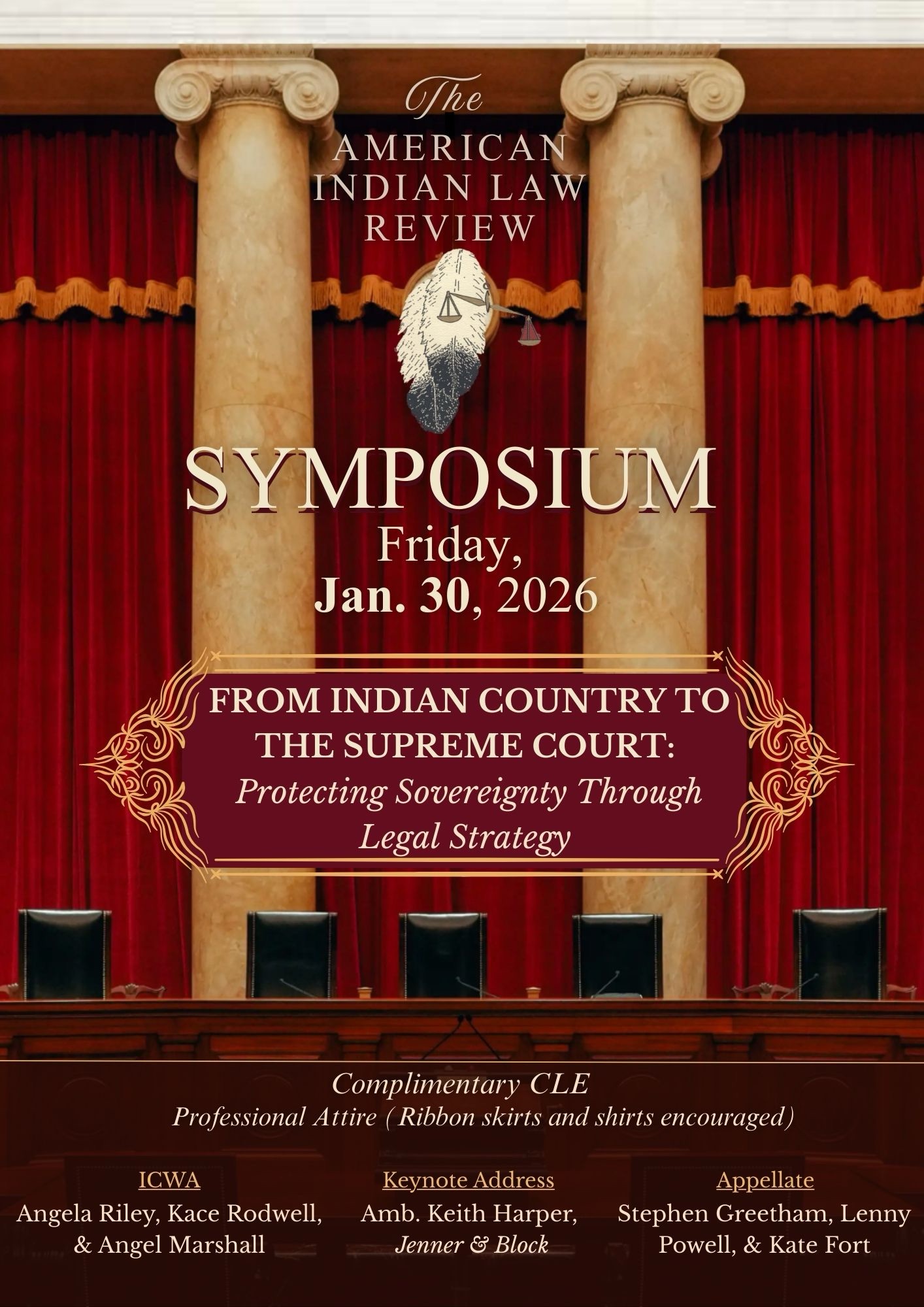
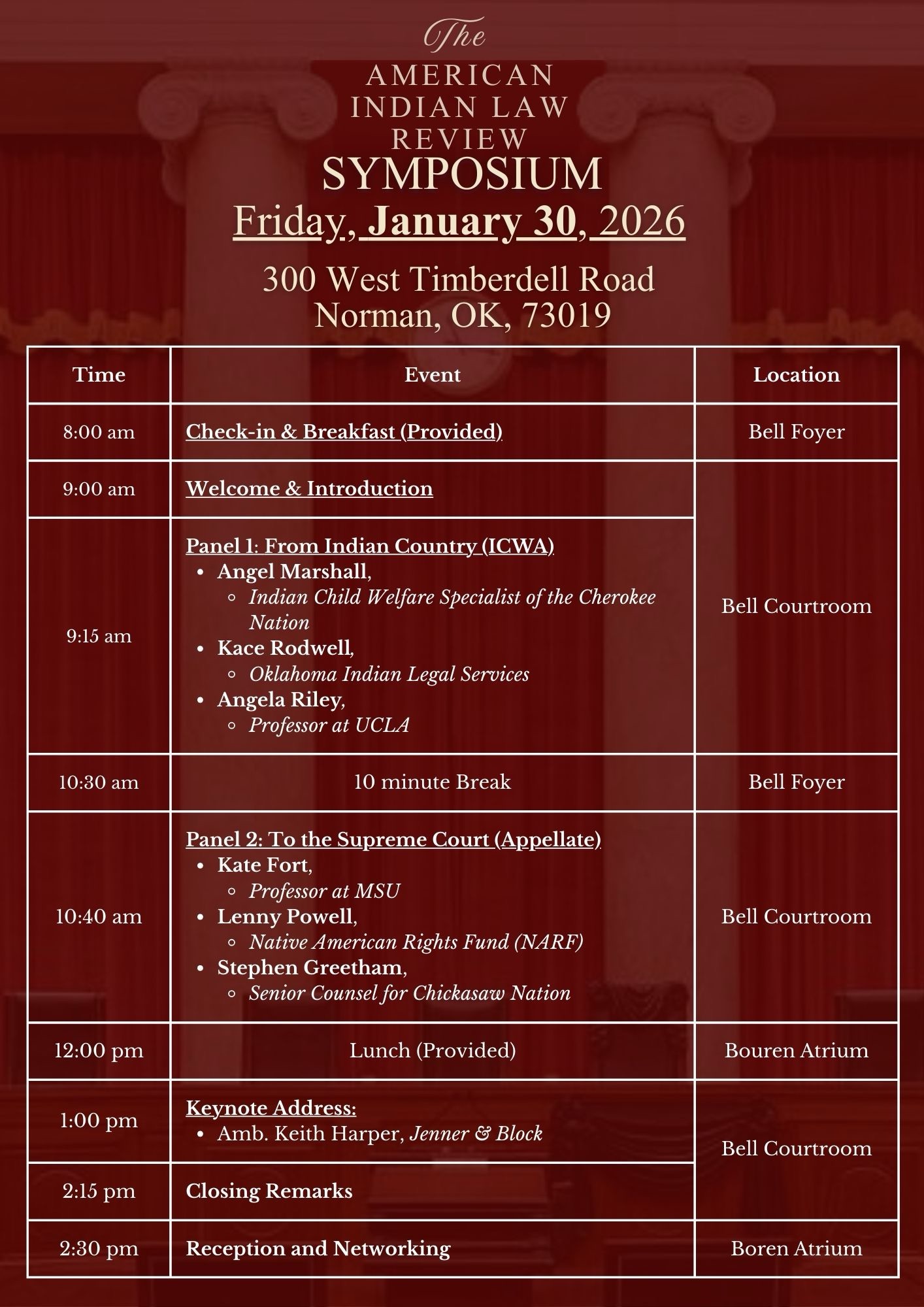
American Indian Law Review Call for Papers & Symposium Announcement

John P. LaVelle’s Compendium of Exhibits From the Papers of Supreme Court Justices

Here:

John P. LaVelle, Compendium of Exhibits From the Papers of Supreme Court Justices, 88 Mont L. Rev. Online (2025).

Fletcher and Wenger on Indian Country Health Care Policy for 2S/IQ/TGD Communities

Matthew Fletcher and Dr. Hannah Wenger have posted “Issues of Contemporary Health Policy and Law for Two-Spirit, Indigiqueer, Transgender and Gender-Diverse Communities in Indian Country” on SSRN.

Here is the abstract:

This policy brief asks a hypothetical question in a political environment in which the U.S. federal government and many states disfavor the delivery of gender-affirming medical care (GAMC) to 2S/IQ/TGD persons, even to the point of criminalizing such care. It further assumes that a tribal nation is willing and capable of delivering GAMC. The answer to the hypothetical question depends on many factors, including (1) whether the state law is authorized by an Act of Congress such as Public Law 280, (2) whether the state law is a criminal law or a civil-regulatory law, and (3) whether the patient or health care professional is a tribal citizen, a nonmember Indian person, or a non-Indian person. The answer here also assumes that the relevant state law does affirmatively criminalize the provision of GAMC and, further, that federal law prohibits the use of federal money by tribal nations to provide GAMC. 

Kekek Stark on Tribal Law Interpretations of the Indian Civil Rights Act

Kekek Stark has posted “The Utmost Rights and Interests of the Indians: Tribal Law Interpretations of the Indian Civil Rights Act” on SSRN.

Highly recommended.

Here is the abstract:

It has been more than fifty years since Congress enacted the Indian Civil Right Act (hereinafter “ICRA”) and more than forty years since the United States Supreme Court in Martinez articulated that the tribal courts are the proper forum for the adjudication of ICRA claims. In the decades since, tribal courts have developed a rich body of intertribal common law pertaining to the implementation of the ICRA. This comes after over a century of assimilative policies in which the federal government attempted to eradicate native culture and traditions and subjected Indians to the deprivation of individual rights by federal and state judicial systems.So how are tribes doing in the implementation of the ICRA? Specifically, how are tribal courts balancing the promotion of tribal sovereignty with the protection of individual rights? Does the ICRA establish a mandate to tribal governments to assume and require judicial review of any allegedly illegal action by a tribal government? Can a Tribe accused of violating these primary rights also be the judge of its own actions and at same the time comply with federal law? This article will examine these questions in detail. In doing so, Part I provides a brief introduction. Part II details the implementation of individual rights protections prior to the enactment of the ICRA. Part III provides an overview of the passage of the ICRA. Part IV examines federal court encroachment into tribal court determinations of individual rights protections. Part V provides an overview of the ruling in Martinez. Part VI details tribal court interpretations of the ICRA associated with tribal sovereign immunity, tribal council actions, equal protection, due process, and criminal protections. Part VII concludes by offering recommendations for tribal courts in their ongoing review of the ICRA. 

Tribal Law Journal, Volume 25 (2025)

Here:

Articles

PDF

SELF-DETERMINATION IN THE IMPLEMENTATION OF TREATY RESERVED RIGHTS
Kekek Jason Stark

PDF

Don’t Throw the Book: Customary Tribal Laws Can Heal Rather Than Punish Addiction
Coleman Griffith

PDF

Fulfilling an Obligated Duty to the Diné by Incorporating and Defining a Core Principle, Tó’eí’iiná até (Water Is Life) into the Navajo Nation Tribal Water Code: Making a Connection to the Diné in the “Checkerboard” Area.
M. Tyanne Benallie

PDF

Stop Killing the Klamath: Rights of Nature Protections with Tribal Law, the National Historic Preservation Act, and Collaborative Management Strategies for a Tribe on the Front Lines of Climate Change
Juliette A. Jackson