New Student Scholarship on Oklahoma Choctaw Constitutional Interpretation

Crispin South has posted “Transplanted Rights in the Choctaw Nation: Threats to Sovereignty and Potential Solutions,” forthcoming in the Texas Journal on Civil Liberties & Civil Rights, on SSRN.

Here is the abstract:

The constitutions of Federally Recognized Indian Tribes are varied, but nearly all contain a bill of rights. The Choctaw Nation’s Constitution, like that of several other Tribes, rather than specifically enumerating rights, instead contains a single catch-all provision, protecting the same rights available to citizens of the State of Oklahoma. Recently, the Choctaw Nation’s Constitutional Court adopted a broad interpretation of this provision, potentially allowing non-Tribal sovereigns, like the State of Oklahoma, to indirectly control the laws and public policy of the Tribe. This is a serious threat to the Tribe’s sovereignty, touching on issues of transplanted law raised by Indian Law scholars Elmer Rusco and Wenona Singel. To address this threat, the Choctaw Nation, and other Tribal Nations with similar constitutional provisions, ought to adopt a practice of selectively incorporating rights. Under this approach, only those rights fundamental to the Tribal structure of liberty and democracy would be incorporated, thus preserving the Tribe’s right to be different from the State, and the United States. Little has been written regarding these “transplanted rights” provisions in Tribal constitutions, and nearly nothing has been published proposing judicial and legislative solutions to the problems raised by these provisions. This note fills this gap in the literature by proposing judicially focused solutions, legislative solutions, and solutions involving constitutional reform.

Stephen Pevar Book Talk

Taylor Mills on Self-Indigenization and the Indian Child Welfare Act

Dr. Taylor Elyse Mills has published “Protecting the Next Seven Generations: Self-Indigenization and the Indian Child Welfare Act” in Genealology.

Here is the abstract:

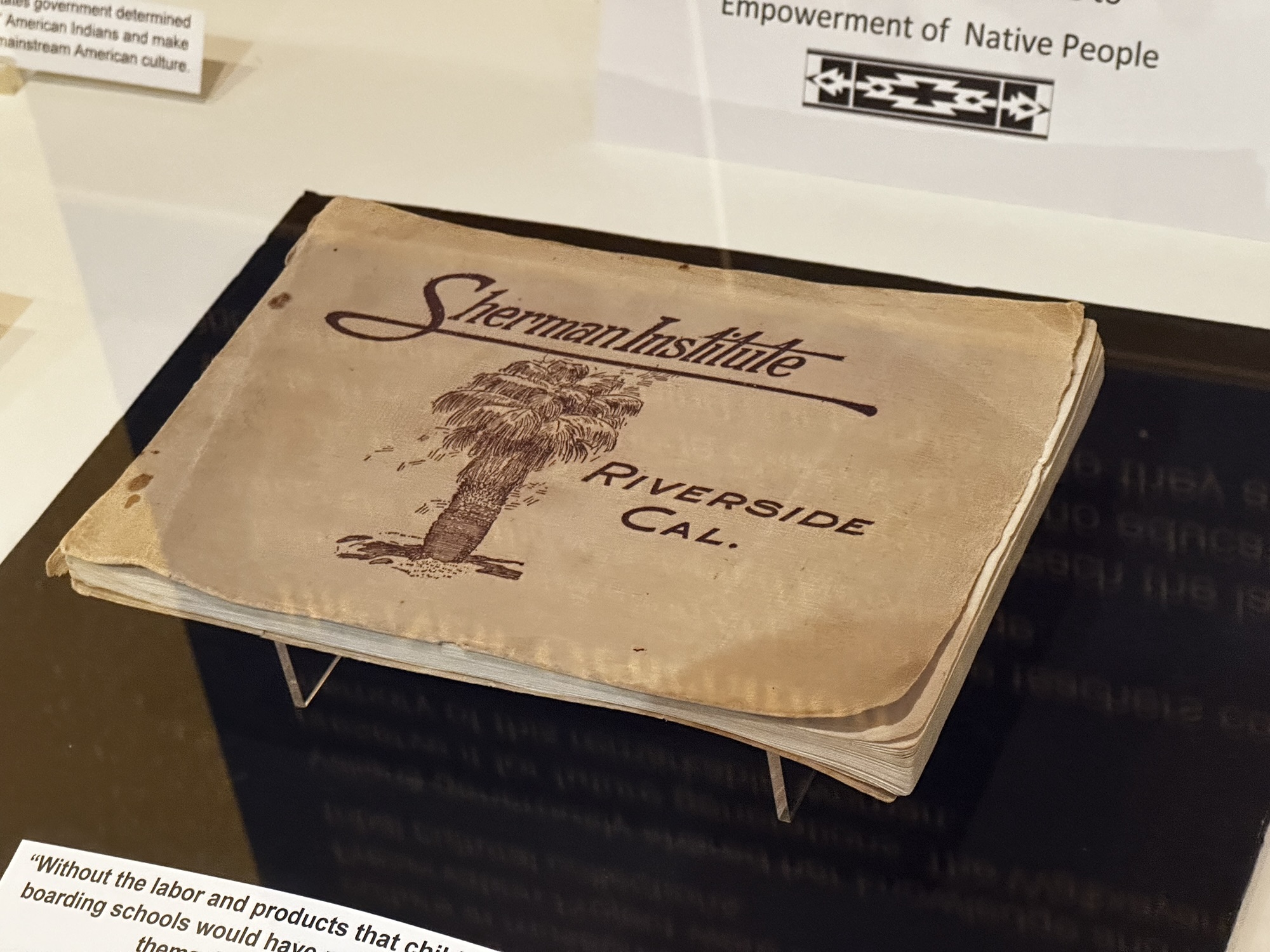
In 1978, the United States enacted the Indian Child Welfare Act (ICWA) “to protect the best interest of Indian Children and to promote the stability and security of Indian tribes and families by the establishment of minimum Federal standards for the removal of Indian children and placement of such children in homes which will reflect the unique values of Indian culture.” The ICWA was codified to address centuries of genocidal government policies, boarding schools, and coercive adoptions that ruptured many Native families. Now one of the strongest pieces of legislation to protect Native communities, the ICWA was designed to ensure that Native foster children are placed with Native families. Implementing the ICWA has not been smooth, however, as many non-Native foster parents and state governments have challenged the ICWA. While the ICWA has survived these legal challenges, including the recent 2023 Haaland v. Brackeen Supreme Court case, the rise of non-Natives claiming Native heritage, also known as self-indigenizers or “pretendians,” represents a new threat to the ICWA. This Article presents a legal history and analysis of the ICWA to unpack the policy implications of pretendians in the U.S. legal context. This Article demonstrates how the rise of pretendians threatens to undermine the very purpose of the ICWA and thereby threaten the sovereignty of Native peoples. By legally sanctioning the adoption of Native children into non-Native pretendian homes, the ICWA can facilitate a new era of settlers raising Native children, rather than preventing this phenomenon as intended. In response, this Article offers concrete policy recommendations to bolster the ICWA against this threat.

Michael Doran on Exceptionalism and Assimilationism in Federal Indian Law

Michael Doran has published “Exceptionalism and Assimilationism in Federal Indian Law” in the Stanford Journal of Civil Rights and Civil Liberties. PDF

Abstract:

This article argues that federal Indian law is located at the intersection of two competing paradigms: exceptionalism, under which Indian law is considered fundamentally different from the rest of U.S. public law; and assimilationism, under which differences between Indian law and the rest of U.S. public law are minimized or denied. The Supreme Court’s failure to resolve the conflict between these two paradigms produces doctrinal inconsistencies (although not, as some prominent scholars maintain, doctrinal incoherence). This article further argues that the conflict of these paradigms ultimately derives from two rival conceptions of Native sovereignty. First is the idea of autochthonous Native sovereignty – that is, an inherent sovereignty that predates contact and colonization, that does not depend on the U.S. Constitution, and that persists unless and until voluntarily surrendered or involuntarily extinguished. Second is the idea of heterochthonous Native sovereignty – that is, a sovereignty that derives primarily from the federal government and that generally remains subordinate to the demands of ordinary federalism under the U.S. Constitution. Finally, this article argues that the assimilationism paradigm should be rejected in favor of unambiguous commitments to autochthonous Native sovereignty and Indian law exceptionalism.

Kirsten Carlson on Statutes and Special [Tribal] Interests

Kirsten Matoy Carlson has posted “Statutes and Special Interests” on SSRN.

Here is the abstract:

Who really decides what statutes say? Most Americans think that special interests play an outsized role in our lawmaking processes. Yet empirical studies have produced little evidence that special interests get everything, or even most of, what they ask for from Congress. This article takes an innovative new approach in tackling the difficult question of how advocates influence legislation. It presents the first, comprehensive empirical study of how advocates influence the law through amendments in the legislative process. The article analyzes an original dataset of 2137 witnesses testifying at referral hearings on 108 Indian related bills in the 97th and 106th Congresses. The analysis identifies amendments as an important yet previously undocumented way in which advocates influence legislation. It uncovers a rarely observed relationship between legislative advocates and sitting members of Congress. Comparison of advocates’ testimony on bills to amendments proposed by committee members reveals similar and even identical language, providing compelling evidence that groups persuaded legislators to introduce amendments valued by the group. The analysis also demonstrates how advocate influence at the hearing and mark up stage of the legislative process frequently shapes the law by dramatically increasing the likelihood of legislative enactment. These findings reveal an important mechanism that advocates can use to change the law. Further, they challenge prevailing narratives about power by demonstrating how underrepresented groups can leverage the legislative process in their law reform efforts.

Highly recommended!!

Sam Winder on Federal Prosecutions of Indians

Samuel Winder has published “Trial By Ambush: The Prosecution of Indians in Federal Court” in the Loyola of Los Angeles Law Review. PDF

Here is the abstract:

This Article addresses the Federal Rules of Criminal Procedure’s unjust impact in the prosecution of Indians in federal court. As the rules of engagement used by federal prosecutors and defense attorneys in federal court when prosecuting Indians under the Major Crimes Act and the General Crimes Act, the Federal Rules of Criminal Procedure differ from those of Civil Procedure with regard to discovery procedures. Specifically, the Federal Rules of Criminal Procedure are unjust because they do not allow defense attorneys to conduct pretrial interviews or depositions of prospective witnesses whose evidence the United States will introduce at trial or use in the process of plea negotiations. Pretrial interviews and depositions prevent a party from being caught by surprise or ambushed in federal court.

Unlike federal courts, several tribes in New Mexico provide the mechanism for conducting pretrial interviews of trial witnesses. New Mexico state courts require pretrial interviews. New Mexico’s criminal procedural rules are similar to the procedural rules in Florida state courts. The states of Indiana, Missouri, and Vermont require depositions in criminal proceedings. In addition, military courts require depositions.

Indians were not involved in the enactment of the Major Crimes Act or the Federal Rules of Criminal Procedure, which have had a significant impact on the lives of Indians, both victims and defendants. This Article argues that the Federal Rules of Criminal Procedure should be modified to require pretrial interviews or depositions to ensure that Indians prosecuted in federal court are not unjustly ambushed.

Call for Papers—Edited Book: Indigenous Theories of International Law

Here:

Two New Papers by Dylan Hedden-Nicely

Journal Water:  Water Governance in an Era of Climate Change: A Model to Assess the Shifting Irrigation Demand and Its Effect on Water Management in the Western United States

https://doi.org/10.3390/w16141963

Harvard Environmental Law Review: Rebalancing Winters: Indigenous Water Rights and Climate Change in the Western United States

https://papers.ssrn.com/sol3/papers.cfm?abstract_id=4932971

Montana Law Review and the Public Land and Resources Law Review Call For Papers

Here:

Tribal Law Journal Symposium on Johnson v. McIntosh

Here:

Front Matter
Tribal Law Journal

Articles

PDF

Introduction to Johnson v. M’Intosh
Justin C. Lauriano

PDF

Dissenting Opinion?
Richard Collins

PDF

Nakomidizo: An Anishinaabe Law Response to Two-Hundred Years of Johnson v. M’Intosh and the Doctrines of Discovery and Implicit Divesture
Kekek Jason Stark

PDF

The International Law of Colonialism: Johnson v. M’Intosh and the Doctrine of Discovery Applied Worldwide
Robert J. Miller

PDF

Bizindan Miinawa (Listen Again)
Matthew L.M. Fletcher

PDF

Environmental Justice is a Civil Rights Issue
Secretary Deb Haaland