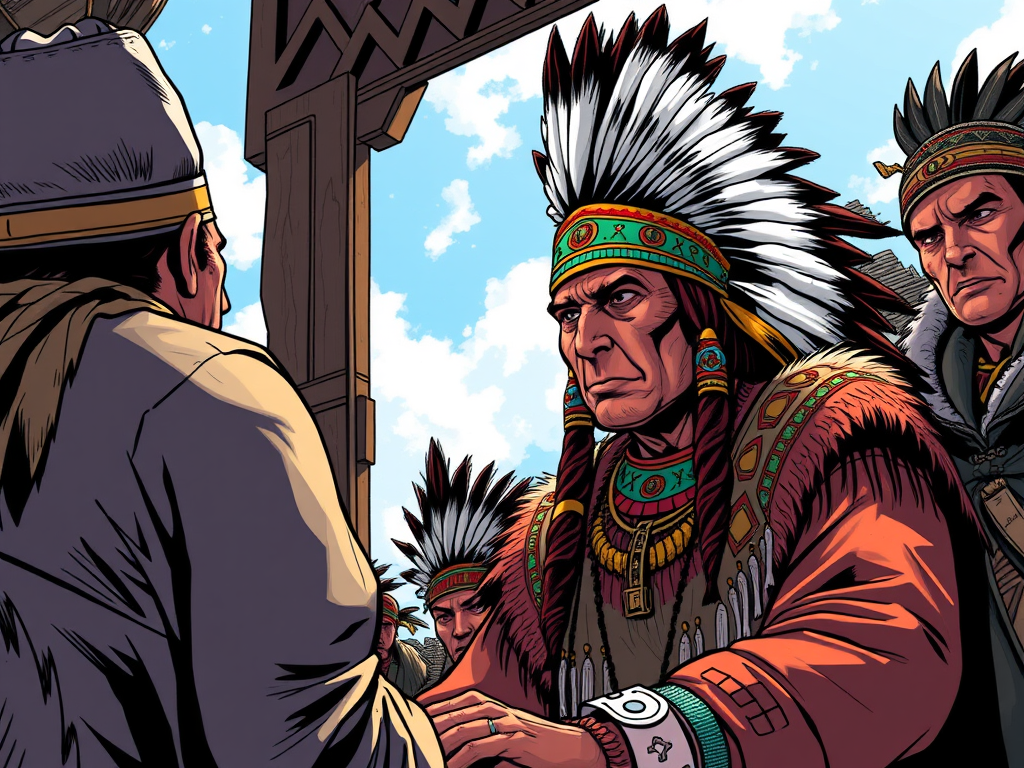
Fletcher on AI and Tribal Court Practice

Here is “AI and Tribal Court Practice,” soon to be published in the American Journal of Trial Advocacy.

Here is an excerpt:

American Indian tribal court practice resides at the intersection of two difficult legal problems. First, because tribal justice systems are usually very young and dynamic, awareness and analysis of tribal law is underdeveloped. Second, because tribal nations are not governed by state or federal law, tribal law is culturally unique. Tribal court practitioners often find that even routine legal matters will involve questions of first impression in the jurisdiction. All of this is to say tribal court jurisprudence is intensely jurisgenerative.

Because tribal law is often unsettled or indeterminate, the costs of discovering and applying this law are occasionally high. Most tribal law involves tribal constitutional or statutory interpretation or the application of federal and state court precedents, which is not terribly costly to perform. But applying tribal customary or traditional law, also known as tribal common law, can be much more difficult. Today, legal practice is knee-deep in reliance on artificial intelligence (AI). More practitioners are using AI to conduct legal research and even to draft pleadings. Assuming a practitioner reasonably utilizes AI generators, the use of AI can be beneficial. One assumes that the larger the corpus of law (statutes, cases, regulations, etc.), the greater value AI can provide in cutting out the relevant legal wheat from the irrelevant legal chaff.

This Article offers preliminary thoughts on how tribal court practitioners can use AI to research and apply tribal law using a common legal issue—tribal sovereign immunity. This Article analyzes written research memoranda and pleadings generated by AI. As a result, this Article concludes there is great potential for the use of AI in tribal court practice, but there are definite and indefinite pitfalls.

Aila Hoss on Indigeneity, Data Genocide, and Public Health

Aila Hoss has posted “Indigeneity, Data Genocide, and Public Health” in the Iowa Law Review. PDF

Here is the abstract:

Public health datasets will often tell us nothing about Indigenous people. This type of data suppression has been described as data genocide and data terrorism, because it demonstrates the effort to erase Indigenous people. Even when data is available, Tribes and their partners are regularly denied access to public health data from other jurisdictions. The seemingly simple call for more accurate, comprehensive public health data regarding Indigenous communities butts up against complicated issues. Who is considered Native and thus captured in Indigenous data? Why is Indigenous data regularly excluded from datasets? Who gets access to Indigenous data? These questions implicate federal Indian law, colonization, and Tribal sovereignty. So, while better quality data and improved data access are important goals, there is no way to bifurcate the need for public health data with the systematic racism embedded into the laws that impact the analyzing, collecting, and disseminating of this data. This Article aims to outline how Indigeneity interfaces with public health surveillance systems, in the context of both the collection of accurate data and the access to such data. It summarizes existing law and policy that define “Indian” under various frameworks and explores the challenges and limitations of defining Indian, particularly for the purposes of public health surveillance. This Article ends with a series of considerations regarding public health surveillance reform to better support Indian country.

Fletcher’s April Fool’s Day Visit to Yale, Courtesy of the YLJ

With Megan Gupta and Ashlee Fox
With Gerald Torres, too
Bobby and Ryan’s mural at the Yale NACC
One of Yale’s ghosts

New Student Scholarship on Tribal Disenrollments

John K. Crawford (Forest County Potawatomi) has published “Disenrollment as Citizenship Revocation: Promoting Tribal Sovereignty by Embracing International Norms” in the Yale Law Journal.

Here is the abstract:

This Note argues that Indian tribes can best address disenrollment by viewing the problem through the lens of international norms regarding citizenship revocation. Tribal officials and members, advocates and journalists, and scholars and practitioners of federal Indian law typically understand disenrollment, which is when a tribe severs its governmental relationship with certain members, as a practice unique to Indian Country. However, while tribes’ unique legal status facilitates disenrollment, this practice can nevertheless be understood as a form of citizenship revocation, which is when a state deprives certain persons of their previously held citizenship. By understanding disenrollment as citizenship revocation, tribes can draw from a wide body of existing literature about states’ citizenship-revocation regimes when considering limitations on their power to disenroll. If tribes choose to address disenrollment by embracing international norms regarding citizenship revocation, they will not simply invoke tribal sovereignty, as sometimes occurs under the current status quo, but instead promote it by advancing good governance and aligning their sovereignty with state sovereignty.

This is no reflection on the quality of this paper, which seems excellent, but I have a limited number of Yale pics. And this one is straight fire.

New Book: “Beyond Blood Quantum: Refusal to Disappear”

Buy here from Fulcrum Books.

Jason Robison on Yellowstone River

Jason Robison has posted “Equity Along the Yellowstone,” published in the University of Colorado Law Review, on SSRN.

Here is the abstract:

As one of three major rivers with headwaters in the sublime Greater Yellowstone Ecosystem, the Yellowstone and its tributaries are subject to an interstate compact (a.k.a. “domestic water treaty”) litigated from 2007 to 2018 in the U.S. Supreme Court in Montana v. Wyoming. Four tribal nations exist within the 71,000 square‑mile Yellowstone River Basin: the Crow, Eastern Shoshone, Northern Arapaho, and Northern Cheyenne. Yet, the Yellowstone River Compact, ratified in 1951, more than a decade before the self‑determination era of federal Indian policy began, neither affords these tribal sovereigns representation on the Yellowstone River Compact Commission nor clearly addresses the status of their water rights within (or outside) the compact’s apportionment. Such marginalization is systemic across Western water compacts. Devised as alternatives to original actions for equitable apportionment before the U.S. Supreme Court, this Article focuses on the Yellowstone River Compact and its stated purpose of “equitable division and apportionment,” reconsidering the meaning of “equity,” procedurally and substantively, from a present‑day perspective more than a half‑century into the self‑determination era. Equity is a pervasive and venerable norm for transboundary water law and policy contends the Article, and equity indeed should be realized along the Yellowstone in coming years, both by affording the basin tribes opportunities to be represented alongside their federal and state co‑sovereigns on the Yellowstone River Compact Commission, as well as by clarifying the status of and protecting the basin tribes’ water rights under the compact’s apportionment.

American Indian Law Review, Vol. 48, Issue 2

Here:

How Poor Is Poor Enough? How Jurisdictional Differences in Implementing the Right to Counsel Affect Indigent Native Americans
J. Santana Spangler-Day

PDF

Benefit Corporations—A Tool for Economic Development and Fostering Sovereignty in Tribal Business Structures
Madelynn M. Dancer

Notes

PDF

The Amplified Federal Obligation: Why Dobbs v. Jackson Women’s Health OrganizationAmplifies the Federal Government’s Obligation to Provide Comprehensive Reproductive Health Care in Native American Communities
Rebecca M. Kamp

PDF

Oklahoma v. Castro-Huerta—Using Sentencing Inequities to Address the Oliphant in the Room
Dillon M. Sullivan

Special Feature

PDF

A Tribal Court Blueprint for the Choctaw Freedmen: Effect of Cherokee Nation v. Nash
LeeAnn Littlejohn

John Beaty on Tribal Eminent Domain

John Beaty has published “Tribal Eminent Domain: Sovereignty Gaps and Policy Solutions” in the New Mexico Law Review. PDF

Abstract:

This Article addresses the existence and scope of the tribal power of eminent domain. American Indian Tribes are sovereign entities within the United States and can exercise many traditional government powers. However, centuries of actions by the United States’ executive, legislative, and judicial branches have eaten away at the fabric of tribal sovereign powers. Currently, the scope of tribal sovereign authority is unclear with regards to eminent domain, the practice of a sovereign taking private property for public use. Eminent domain is important to many tribal governmental interests, including infrastructure development and fighting the fractionation of land interests. Although eminent domain is considered a quintessential sovereign power, scholars, courts, and tribes are unsure of the existence and scope of inherent eminent domain. This Article uses first principles, statutory enactments, tribal practice, and case law to argue that tribes retain some form of eminent domain. However, that power has limited application to nonmembers living on tribal land, hampering its effectiveness as both a practical tool and sovereign power. To fill the gaps, this Article proposes two statutes Congress can adopt, one reaffirming the existence of tribal eminent domain power and one delegating federal eminent domain power. By addressing the limits of tribal eminent domain, Congress can support tribes in their sovereign capacity as governments and allow tribes to fulfill their important policy priorities.

Grant Christensen on Article IV: The New-ish Hope

Grant Christensen has published “Article IV and Indian Tribes” in the Iowa Law Review (PDF). Here is the abstract:

Unlike the first three articles of the Constitution which create the three branches of the federal government and articulate their limited powers, Article IV establishes a set of rules to police the actions of states and knit them together into a single union. Notably absent from Article IV is any mention of the tribal sovereign. Concomitantly, there has been no comprehensive academic discussion addressing how the tribal sovereign complicates the purposes of Article IV. This piece advances a completely new understanding of Article IV and its implications in federal Indian law. It argues that where Article IV advances rights to individual citizens (i.e., a citizen’s right to enforce a court judgment or their claim to the protection of the Privileges and Immunities Clause) then states may not use an individual’s connection to any tribal sovereign as an excuse to deny them the protections of those rights. In contrast, where Article IV speaks to rules designed to ensure states treat each other respectfully (i.e., requests for extradition, claims under the Equal Footing Doctrine, or any attempt to enforce the Guarantee Clause) then Article IV’s rules do not permit states to abridge, abrogate, modify, or erode the inherent rights of tribal nations. As the Court has recently opined, tribal governments themselves were absent from the Constitutional Convention and so constitutional limitations on the inherent powers of state sovereigns do not extend to tribal governments.  

Texas Journal of Civil Rights and Civil Liberties Seeks Indian Law Paper [they have a spot left!]

Here:

The Texas Journal of Civil Rights and Civil Liberties is seeking a final article for our spring special issue on Indigenous Rights. Articles from legal scholars, practitioners, or individuals with unique expertise on legal issues pertaining to Indigenous Rights are all welcome. If you have any articles on Indigenous issues, please submit them to us via scholastica or to this email (tjclcrsubmissions@gmail.com). Article length can vary (typically from 30-60 pages) and so can topics. Our priority deadline for submissions is February 20, and we will consider submissions after this only if we have still not found our final piece. Any questions or concerns can also be sent to the TJCLCR submissions editor at this email: tjclcrsubmissions@gmail.com.