Tanner Allread on Indigenous Constitutionalism

W. Tanner Allread has published “Indigenous Constitutionalism” in the Harvard Law Review.

Highly recommended. This is highly original and thoughtful scholarship on tribal law and the important role it plays in American legal theory.

Here is the abstract:

By standard accounts, there are fifty-four constitutions across the federal, state, and territorial governments of the United States. But in fact, there are 230 other governmental constitutions that currently govern peoples and territories within the United States. These constitutions not only flow from a sovereignty that existed prior to the United States but also came out of a legal movement that asserted its independence from both the U.S. Constitution and state constitutions. This Article tells the story of these constitutions — the constitutions of Native nations. Having existed for over two centuries with an archive of thousands of constitutional documents and amendments, tribal constitutions have been left out of the narratives of American constitutional history while being obscured within the fields of American constitutional law and federal Indian law. This Article corrects these oversights and calls for the recognition of a tradition of “Indigenous constitutionalism” in the United States. This Article’s aims are both theoretical and historical. On one hand, it conceptualizes Indigenous constitutionalism as a distinct and shared constitutional practice through which Native nations claim and exercise self-governance while embedded in the wider constitutional — and colonial — landscape of the United States. On the other hand, this Article draws Indigenous constitutionalism’s features from the two-hundred-year history of tribal constitutions. It explores, for the first time, three major eras of tribal constitutional development: the first constitutions during the early nineteenth-century period of Indian Removal, the explosion of constitutions under the Indian Reorganization Act in the early twentieth century, and the movement for tribal constitutional reform that has stretched from the late twentieth century to today. But this Article also brings theory and history together to rethink the prevalent narratives surrounding tribal law, federal Indian law, and American constitutionalism. Indigenous constitutionalism reveals the fundamental and persistent questions around which a tribal constitutional law framework can be constructed. It also revises the origin stories of federal Indian law, demonstrating that the field did not coalesce in isolation from tribal law but was actually cocreated with tribal constitutions. Finally, by placing tribal constitutions into conversation with other American charters, Indigenous constitutionalism disrupts and expands the category of constitutionalism itself. This Article demonstrates that tribal constitutions — unique among American constitutions — showcase how these documents can appear in many forms, function as external-facing declarations of sovereignty, and exist alongside other forms of fundamental law.
Harvard Law Review Feature on Lexington Insurance Co. v. Smith

Here, authored by Kieran Murphy. PDF

An exceprt:

First, tribal courts are not, as Judge Bumatay suggested, “subordinate to the political branches of tribal governments.”68 For support, Judge Bumatay cited to Duro v. Reina,69 which cites to the 1982 edition of Cohen’s Handbook of Federal Indian Law.70 But tribal courts have changed since 1982: The 2024 edition of Cohen’s Handbook states that “[t]he structure of tribal courts is often similar to that of state courts” and “[p]rinciples of judicial independence have strong and growing roots in tribal courts.”71 Increasingly, tribes are “professionaliz[ing] the[ir] judiciar[ies]” in ways that “insulate them from tribal political pressure.”72

The Suquamish Tribe itself is illustrative. Judges are appointed by the Suquamish Tribal Council, which may alter judges’ powers or set salaries only at the time of judicial appointment.73 And judges are removable by a two-thirds vote of the Tribal Council, but only for “misfeasance in office, neglect of duty,” “incapacity,” or “convict[ion] of a criminal offense.”74 Judicial independence is thus a central feature of the Suquamish judiciary, as it is in many tribal courts.

Next, contra Judge Bumatay’s assertion that “tribal courts don’t rely on well-defined statutory or common law” but on values “expressed in [their] customs, traditions, and practices,”75 tribal law is “written, knowable, and publicly available.”76 Tribal constitutions, codes, and judicial opinions, including those of the Suquamish Tribe, are available from tribal governments, often online.77 While it is true that some tribal courts use traditional, nonadversarial practices to resolve internal disputes,78 those courts do not typically apply them to nonmembers, but instead use common law from the Anglo-American tradition.79 And tribes have little incentive to apply unknown or unfair tribal law to nonmembers given the Supreme Court’s anxiety about that possibility.80

Finally, Judge Bumatay misunderstood tribal law when he wrote that “because the tribes lie ‘outside the basic structure of the Constitution,’ the Bill of Rights, including the rights of due process and equal protection, doesn’t apply in tribal courts.”81 As Judge Smith noted in her Suquamish Tribal Court opinion, the “Indian Civil Rights Act . . . guarantees the right of due process under the law.”82 Furthermore, “[t]he test for due process in tribal courts is no different than for state or federal courts.”83 Federal courts ensure that a tribal court’s exercise of personal jurisdiction over nonmembers complies with the Fourteenth Amendment.84 And the criminal procedure protections of the Bill of Rights are inapplicable, as tribal courts may not exercise criminal jurisdiction over non-Indians.85

Judge Bumatay specified only one constitutional concern: “[W]ithout any constitutional backstop, tribal suits are almost exclusively tried before tribe-member judges and all-tribe-member juries.”86 For support, he cited to a footnote in Oliphant v. Suquamish Indian Tribe,87 which states that tribes are “not explicitly prohibited from excluding non-Indians from the jury” and that the Suquamish tribal code provides “that only Suquamish tribal members shall serve as jurors in tribal court.”88 But Oliphant does not say that tribal courts employ “almost exclusively . . . tribe-member judges and . . . juries.”89 To the contrary, many tribal juries do include nonmembers,90 while some do not rely on juries for civil cases at all.91 And tribes, including the Suquamish Tribe, regularly hire judges who are nonmembers or non-Indian altogether.92

Student Note on Hawai’ian Water Law after the Wildfires

The Harvard Law Review has published “Kānāwai From Ahi: Revitalizing The Hawai‘i Water Code in the Wake of the Maui Wildfires.” PDF

An excerpt:

Native Hawaiians have been skeptical of corporate landowners’ alleged concerns over disaster preparedness and characterization of traditional water rights. They blame the prioritization of corporate water interests, the privatization of water, and the harms of colonialism for the severity of the fires. And they worry that Lahaina’s destruction could be used to furtively pass “unpopular laws and policies” that prioritize commercial uses and exacerbate political inequality.
As Chandler-‘Īao’s box of water-permit applications illustrates, the Maui fires represent an inflection point for Hawaiian water law. But we did not arrive at this point overnight. Rather, the fires were the byproduct of a century of colonialism that imposed a resource-management regime that razed the environment and externalized its harms on kānaka maoli. Because of this legacy, Maui was “a ticking time bomb” for wildfires. When it is remembered that the ancient Hawaiian system of watershed management was sustainable before it was ravaged by colonialism, Maui’s current state is even more heart wrenching.

Angela Riley on Indigenous Property Rights for Jagenenon

Angela R. Riley has published “Before Mine!: Indigenous Property Rights for Jagenagenon,” a review of Michael Heller and James Salzman’s book, “Mine!: How the Hidden Rules of Ownership Control Our Lives,” in the Harvard Law Review. PDF

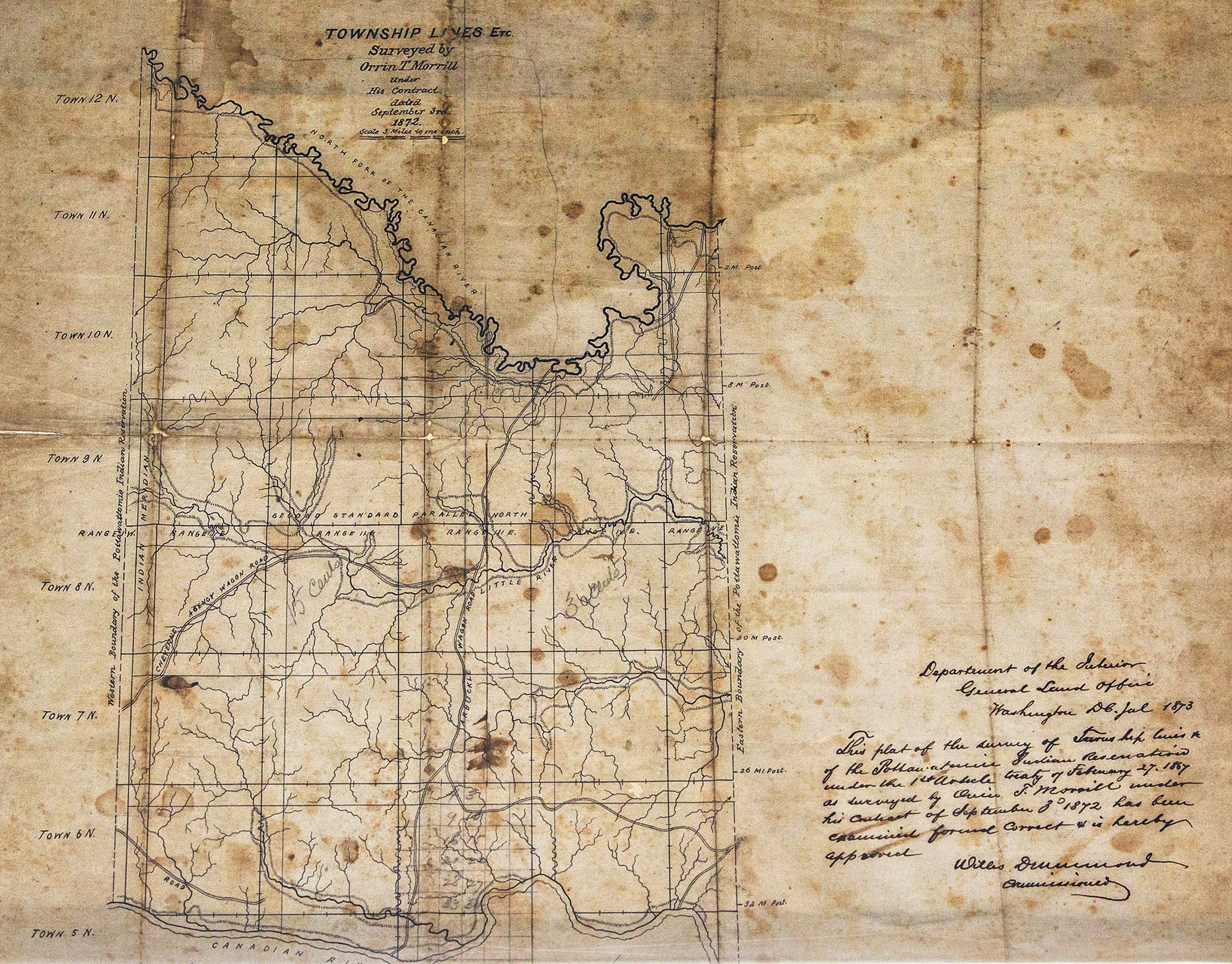
Plat of Pottawatomie Indian Reservation. 1873

Harvard Law Review Casenote on Silva v. Parrish

Here.

Link to the opinion here.

Harvard Law Review on Climate Change and the Third Indian Canon

Here is “Indigenous Interpretations: Invoking the Third Indian Canon to Combat Climate Change,” chapter 2 of Developments in the Law: Climate Change. Chapter 2 begins on page 1568 (page 47 of the pdf).

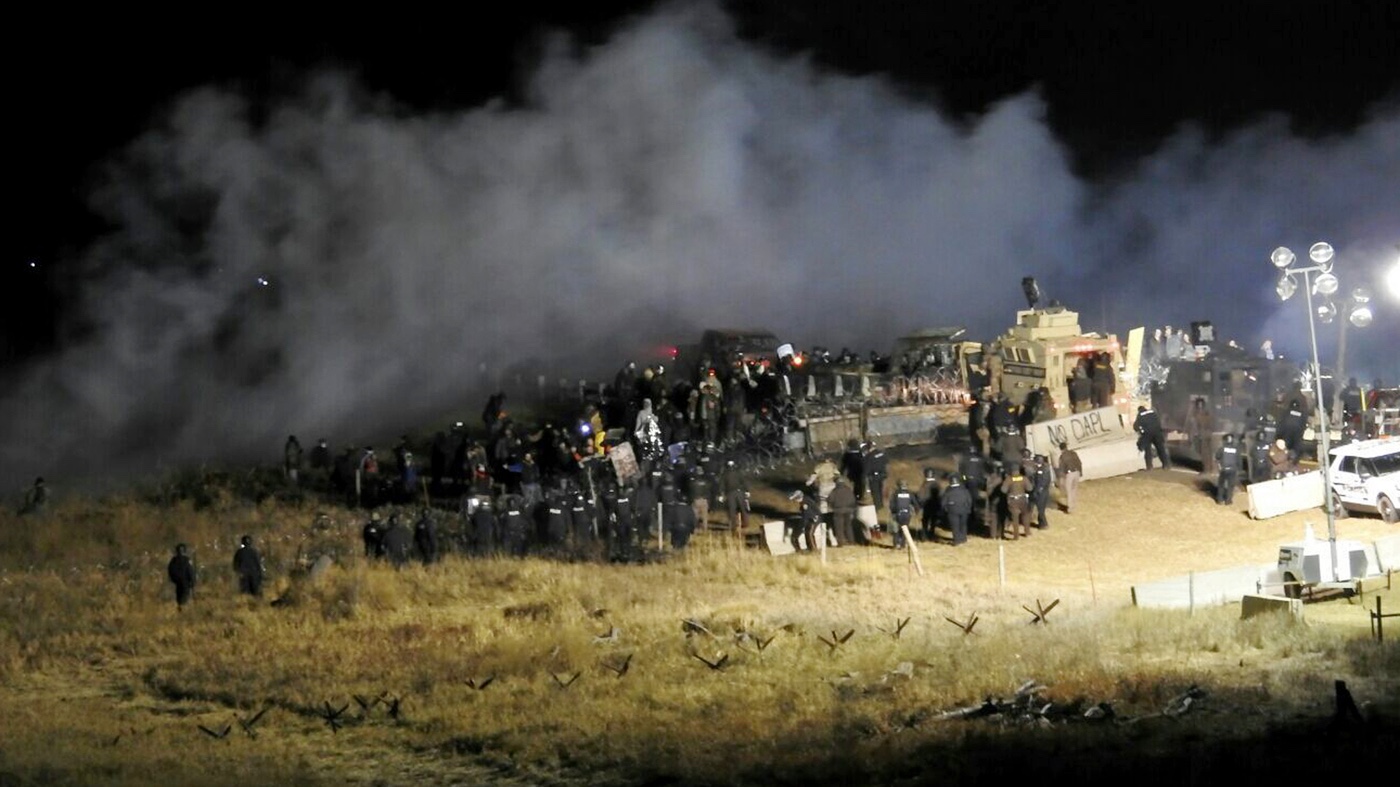
Harvard Law Review Case Note on Standing Rock Decision

Here.

Case materials here.

Morton County Sheriff’s Department

Harvard Law Review Note on United States v. Cooley

Here.

PDF

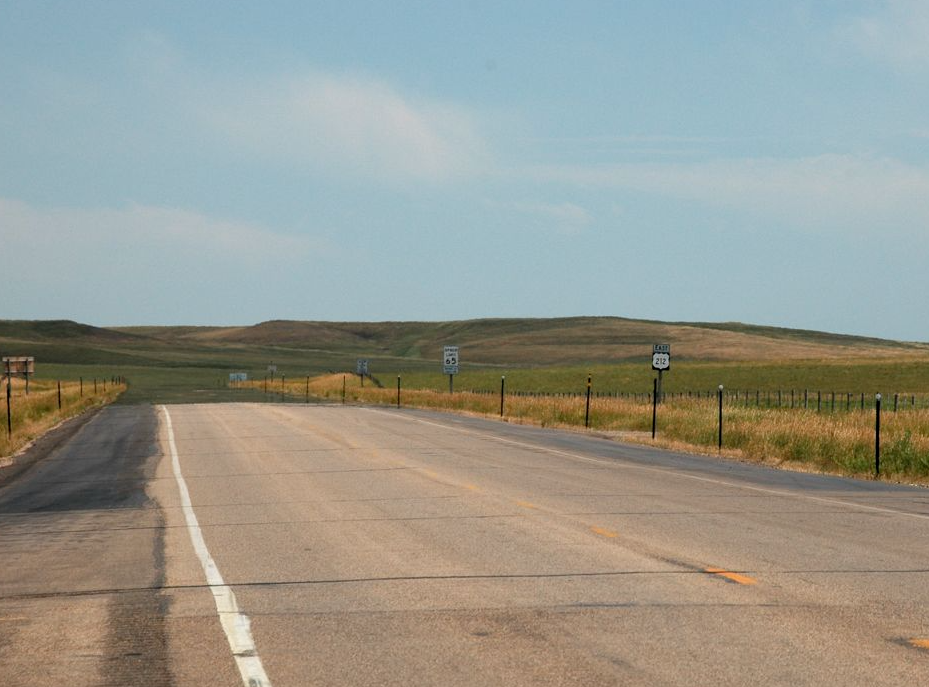
Highway 212

Harvard Law Review Casenote on Williams v. Medley Opportunity Fund II [tribal payday lending]

Here is “Williams v. Medley Opportunity Fund II, LP: Third Circuit Rules that Tribal Payday Lenders Cannot Compel Arbitration.”

We posted the materials on this case here.

Kristen Carpenter’s Book Review of McNally’s “Defending the Sacred” in the Harvard Law Review

Kristen A. Carpenter has published “Living The Sacred: Indigenous Peoples and Religious Freedom” in the Harvard Law Review, reviewing Michael McNally’s “Defend the Sacred: Native American Religious Freedom Beyond the First Amendment.”