Here:

Fletcher’s paper on tribal amicus briefs in the Supreme Court is here.
Congratulations to all!!!!
Here:
21st Annual National NALSA Moot Court Competition
Results:
Best Team
Highest Brief Score
Best Oral Advocate
And here are the teams that advanced to the elimination rounds: Continue reading
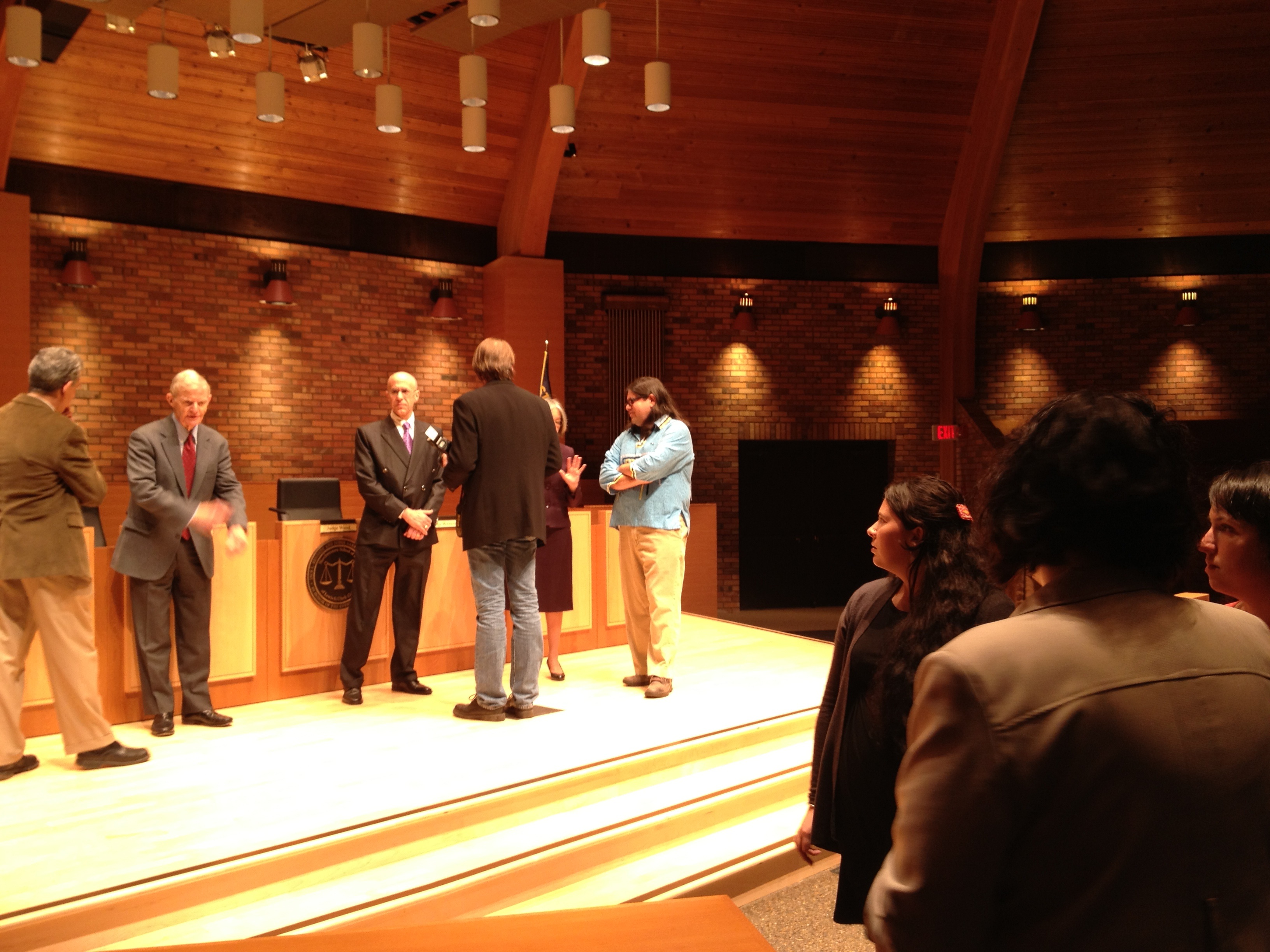

The final teams are from Columbia and University of Hawaii. An all women final!! Congratulations to both teams.
At Sam Deloria’s mention, I found a copy of the long out of print 1970 novel by Martin Cruz Smith (better known for the Arkady Renko mysteries), “The Indians Win”, and read it. It’s a short read. And fun. The edition I have includes commentary from the author who states he researched Indians for a couple months, then wrote the novel in one month. Not to give away the plot (spoiler alert), but in this fictional world, the Indians win. Yeah, the ‘Nishnaabes don’t get much play — it’s all Sitting Bull and Stand Watie and Wovoka — but the Potawatomis get a few good ones in.
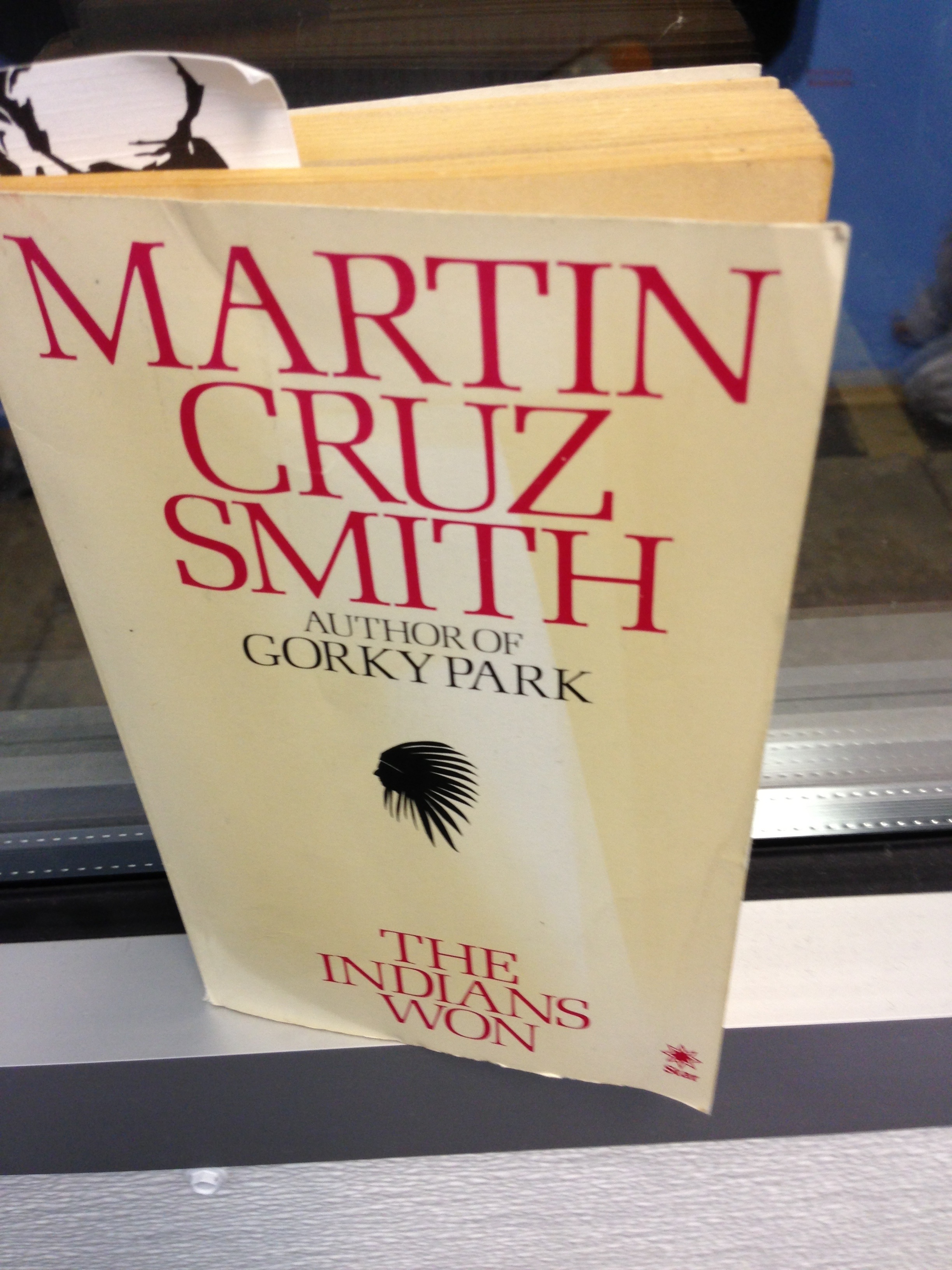
For those not in the know about this novel, here is a quick plot summary. In 1876, rather than Custer’s Last Stand being the Indians’ last stand, all the remaining Indian tribes of the plains and the far west band together. Armed with European arms smuggled down from Canada through Dakota, the Indians win a bunch of military clashes with a post-Civil War American military that doesn’t put up much of a fight. It all ends up with … You guessed it … The Indians winning. Speculative fiction at its early 1970s best and funnest. The best part of the subplot is the 1952 declaration by the “Indian Nation” that they have bomb, but are unwilling to prove to the world they have the bomb by testing it because to do so would unnecessarily injure Mother Earth.
It reminds me of the National NALSA moot court competition. Year after year, law students gather to compete in a fictional world that could be like the one where “The Indians Win.” If you’re like me and you think of this reality as one reality in a universe of infinite parallel … universes, then why can’t the Indians win after all? How else could a dude like me marry the most beautiful and brilliant Odawa woman in the world?
In the end, I say this — have a great competition, law students. The National NALSA Moot Court Competition should be fun. Anything, absolutely anything can happen. US News rankings fly right out the window. Make friends, renew old friendships, network like crazy, and crush your opposition with an iron boot.
Our own Victoria Sweet — the 2013-14 ILPC Fellow — has organized an amazing legal symposium — “Battle for the North: Is All Quiet on the Arctic Front?” She put together an amazing line-up of international scholars — and the leader of the US Coast Guard will unveil a new strategic approach to the Arctic at the conference.
Here is the symposium website. And here is the description:
This symposium will highlight the current concerns and questions surrounding the Arctic. The event will raise awareness of and encourage discussion about various topics such as: international security concerns; indigenous people in the Arctic region; environmental law; regulation, governance and management of Arctic lands and resources; exploration, exploitation, and transportation of oil, gas, and minerals; and the law of the sea.
Papers will be published in the Michigan State International Law Review.
Agenda:
| 5:00 p.m. | Check In: Kellogg Hotel & Conference Center, Big Ten C |
|---|---|
| 5:30 p.m. | Reception |
| 6:00 p.m. | Dinner |
| 7:00 p.m. | Opening Remarks Victoria Sweet, Executive Editor, Michigan State International Law Review Bruce W. Bean, Professor and Michigan State International Law Review Faculty Advisor, Michigan State University College of Law, International Law Review Faculty Advisor |
| 7:15 p.m. | Keynote Lawson Brigham, “The New Maritime Arctic: Global Connections and Complex Challenges” |
| 7:45 p.m. | The Impacts of Climate Change Moderator: Jennifer Carter-Johnson, Assistant Professor, Michigan State University College of Law Sumudu Atapattu, “Climate Change, Indigenous Peoples and the Arctic: The Changing Horizon of International Law” Avi Brisman, “Climate Change and the Future of the Arctic: Cultural and Environmental Considerations” |
| 8:30 p.m. | Closing Remarks |
| 8:00 a.m. | Breakfast and Registration: MSU College of Law Castle Boardroom |
|---|---|
| 8:45 a.m. | Opening Remarks Dean Joan W. Howarth, Dean, Michigan State University College of Law |
| 9:00 a.m. | Keynote Rear Admiral Frederick J. Kenney Jr., “The U.S. Coast Guard and the Challenge of the Arctic” |
| 9:35 a.m. | Arctic Governance Moderator: Michael Lawrence, Associate Dean, Michigan State University College of Law Waliul Hasanat, “Reforming the Arctic Council against Increasing Climate Change Challenges in the North” Tanja Joona, “ILO Convention 69 and the Governance of Indigenous Nordic Lands” Tony Penikett & Adam Goldenberg, “Devolution & Democracy – Equal Citizenship in Canada’s North” Danielle Sibener Pensley, “Subsistence as Resistance: Implications of Environmental Ethics for Property Law” |
| 10:45 a.m. | Coffee Break |
| 11:05 a.m. | Shipping & The Law of the Sea Moderator: Beverly Moran, Visiting Professor, Michigan State University College of Law, (visiting from Vanderbilt University College of Law) Erik Franckx, “The Northern Sea Route Shipping Season 2012: A First Assessment” Donald R. Rothwell, “International Law and Arctic Shipping” Ingvild Jakobsen, “The Adequacy of the Law of the Sea and International Environmental Law to the Arctic Ocean” |
| 12:05 a.m. | Lunch |
| 12:40 p.m. | Keynote Timo Koivurova, “Final Battle over the ‘Final’ Hydrocarbon Province – the Arctic” |
| 1:15 p.m | Indigenous Peoples’ Resources and Lands Moderator: Wenona Singel, Associate Professor, Michigan State University College of Law Dorothee Cambou, “Control over Resources: A Prerequisite for the Realization of the Arctic Indigenous Right to Self-Determination” Tim Heleniak, “The Migration of Arctic Populations” Susann Funderud Skogvang, “Legal Questions Regarding Mineral Exploration and Exploitation in Indigenous Areas: Examples from Sami Areas in Norway” Rutherford Hubbard, “Risk, Rights and Responsibility: Navigating Corporate Responsibility and Indigenous Rights in Greenlandic Extractive Industry Development” |
| 2:25 p.m. | Coffee Break |
| 2:45 p.m. | Natural Resources Moderator: Noga Morag-Levine, Professor, Michigan State University College of Law Andrew van Wagner, “A Heating Competition for Unclaimed Resources” Vladimir Gladyshev, “Delimitation Issues: Cutting up the Arctic Pie” Nikolas Sellheim, “The Neglected Tradition? – The Crafting of the EU Seal Products Ban and Commercial Sealing” Betsy Baker, “Governance of the Marine Arctic for Resource Development” |
| 3:55 p.m. | Coffee Break |
| 4:15 p.m. | Arctic Security Moderator: John Reifenberg, Professor, Michigan State University College of Law Adele Buckley, “Arctic Nuclear-Weapon-Free Treaty Ratification by Non-Nuclear Weapons States Models Cooperation and Presses Nuclear Weapon States to New Strategy” Natalia Loukacheva, “Polar Law, Arctic Security and Geo-Political Trends” Zhixiong Huang, “Governance of the Arctic: The Role of China” |
| 5:15 p.m. | Closing Remarks |
The Udall Foundation is currently recruiting Native American and Alaska Native students to apply to our Internship program.
Please feel free to forward the message to students and faculty and any relevant listservs.
This ten-week summer internship in Washington, DC, for Native American and Alaska Native students who wish to learn more about the federal government and issues affecting Indian country.
The internship is fully funded: the Foundation provides:
Interns work in congressional and agency offices where they have opportunities to research legislative issues important to tribal communities, network with key public officials and tribal advocacy groups, experience an insider’s view of the federal government, and enhance their understanding of nation-building and tribal self-governance.
The 2013 application is available at www.udall.gov. The complete application package must be postmarked by January 31, 2013, at the Udall Foundation.
Additional Resources:
If you have any questions additional questions, please contact me directly at 520-901-8561 or at bravo@udall.gov.
Victoria Sweet, MSU Law ’13, will be one of the students presenting at this event:

Ci-miigwetch to Kristin Wickler and the rest of the Stanford NALSA and the Stanford Civil Rights and Civil Liberties Journal.
Wenona

Matthew
The Fletcher Room (we weren’t in there but it would have been awesome!)

The announcement:

The Columbia Law Native American Law Students Association is proud to present the 12th Annual
Indian Law Writing Competition
The purpose of the competition is to recognize excellence in legal research and writing related to Indian law, actively encourage the development of writing skills of NNALSA members, and enhance substantive knowledge in the fields of Federal Indian Law, Tribal Law and traditional forms of governance. The competition is open to matriculated law students at any point in their law school career and regardless of race or tribal membership status. Eligible topics are Federal Indian law and policy, Tribal law and policy, International law and policy concerning indigenous peoples, and Comparative Law (i.e intertribal or government-to-government studies). Existing work is welcomed.
• First Prize – $1000.00 – Sponsored by Sonosky, Chambers, Sachse, Endreson & Perry, LLP
& Publication in the Columbia Journal of Race and Law.
• Second Prize – $500.00 – Sponsored by SNR Denton US LLP
• Third Prize – $250.00 – Sponsored by Shanker & Kewenvoyouma, PLLC
• The Federal Bar Association has donated registrations for each awardee to the 38th Annual Indian Law Conference. (Awardees are responsible for their own travel and lodging costs.)
All awardees will be recognized at the National NALSA yearly conference.
Submission Deadline: 5:00 pm EST, Friday January 18, 2013.
All submissions must be electronically submitted to NNALSAWritingCompetition@gmail.com.
Visit the NNALSA Web Site at http://nationalnalsa.org/events/writingcomp/ for official rules and submission form.
NNALSA Moot Court
Lewis & Clark is excited to announce that the 2013 Moot Court Competition Problem has been released. The competition problem can be found here. You can also register for the competition on our website.
The competition rounds will be held on February 22-23, 2013 and will require close to 200 judges to execute. There are three rounds of competitions to determine which teams will advance to the final rounds on Saturday. If you are interested in judging during the competition, please just click here and fill out this form.
If you have any questions, feel free to contact nalsa@lclark.edu. Good luck and we look forward to seeing you in February!


You must be logged in to post a comment.