The Washington Supreme Court has upheld a state law allowing tribal fee lands used for economic development projects to be exempt from state taxes provided that the tribe pays a payment in lieu of tax. (PILT). The case concerned Muckleshoot-owned lands and Muckleshoot filed an amicus brief in the case. Here is the opinion in City of Snoqualmie v. King County Executive Dow Constantine.
taxation
Ninth Circuit Rules against Yakama/King Mountain in Tax Dispute with Federals
Here is the opinion in Confederated Tribes and Bands of the Yakama Indian Nation v. Alcohol and Tobacco Tax and Trade Bureau.
Briefs and lower court materials here.
Court Permanently Enjoins County from Taxing Poarch Band’s Trust Lands
Briefs in Tulalip Tribes Quil Ceda Village Taxation Suit
Here are the materials in the case now captioned Tulalip Tribes v. State of Washington (W.D. Wash.):
72-washington-motion-for-summary-j
74-tulalip-motion-for-partial-summary-j-govt-services-outside-boundaries
115-tulalip-reply-in-support-of-74
117-washington-reply-in-support-of-72
Complaints etc. here.
Pueblo of Acoma Sues to Prevent Tax Sale of Indian Lands
Here are the materials so far in Pueblo of Acoma v. Padilla (D. N.M.):
News coverage here.
Federal Court Won’t Allow Seminole to Try to Fight Tax on Remand from Eleventh Circuit
Here are the materials in Seminole Tribe of Florida v. State of Florida Dept. of Revenue (S.D. Fla.):
Federal Court Dismisses Comenout Suit
Here are the materials in Comenout v. Pierce County Superior Court (W.D. Wash.):
New York Prevails over UPS in Indian Country Smokes Case
Here are the materials in State of New York v. United Parcel Service (S.D. N.Y.):
An excerpt:
The fundamental reason why plaintiffs are entitled to summary judgment and defendant is not is that when UPS was transporting unstamped cigarettes (how many is “TBD”), it was transporting contraband. Pre-amendment § 471 confirms that stamps were required, that taxability was presumed, and that the burden of proving otherwise was on UPS. UPS has not carried this burden. UPS is not entitled to rely on the judicially imposed injunctions or stays of enforcement obtained by Indian tribes, nor is it entitled to rely upon forbearance. It is also of no moment that there were difficulties in determining when tax was required to be paid or not, and it is also of no moment that the State had stood down on collection from reservation retailers altogether. At the end of the day, the situation — which may have advantaged reservation retailers — placed UPS in a precarious position; without its own statutory exemption or legal assurance, and in the absence of information as to ultimately taxability of the cigarettes they were shipping, transporting shipments was a risky business indeed. But this was a business risk. UPS could choose to undertake such risk or not. One thing has [38] always been clear: UPS has never had exemption from the CCTA.
Counterclaims against US and Poarch Band Dismissed in Tax Dispute
This is a continuation of Poarch Band of Creek Indians v. Hildreth, recently decided by the Eleventh Circuit.
Here are the materials in Poarch Band of Creek Indians v. Moore (S.D. Ala.):
An excerpt:
After due and proper consideration of all issues raised, and a de novo determination of those portions of the recommendation to which objection is made, the recommendation of the Magistrate Judge made under 28 U.S.C. § 636(b)(l)(B) and dated August 10, 2016 is ADOPTED as the opinion of this Court with the following exceptions. The Court does not adopt the recommendation to deny the Plaintiff’s Motion to strike Defendant Moore’s affirmative defenses numbered 4 and 5, but rather grants the motion to strike defenses 4 and 5 for the reasons set forth in Plaintiff’s Objections (Doc. 79). The report and recommendation is adopted in all other respects.
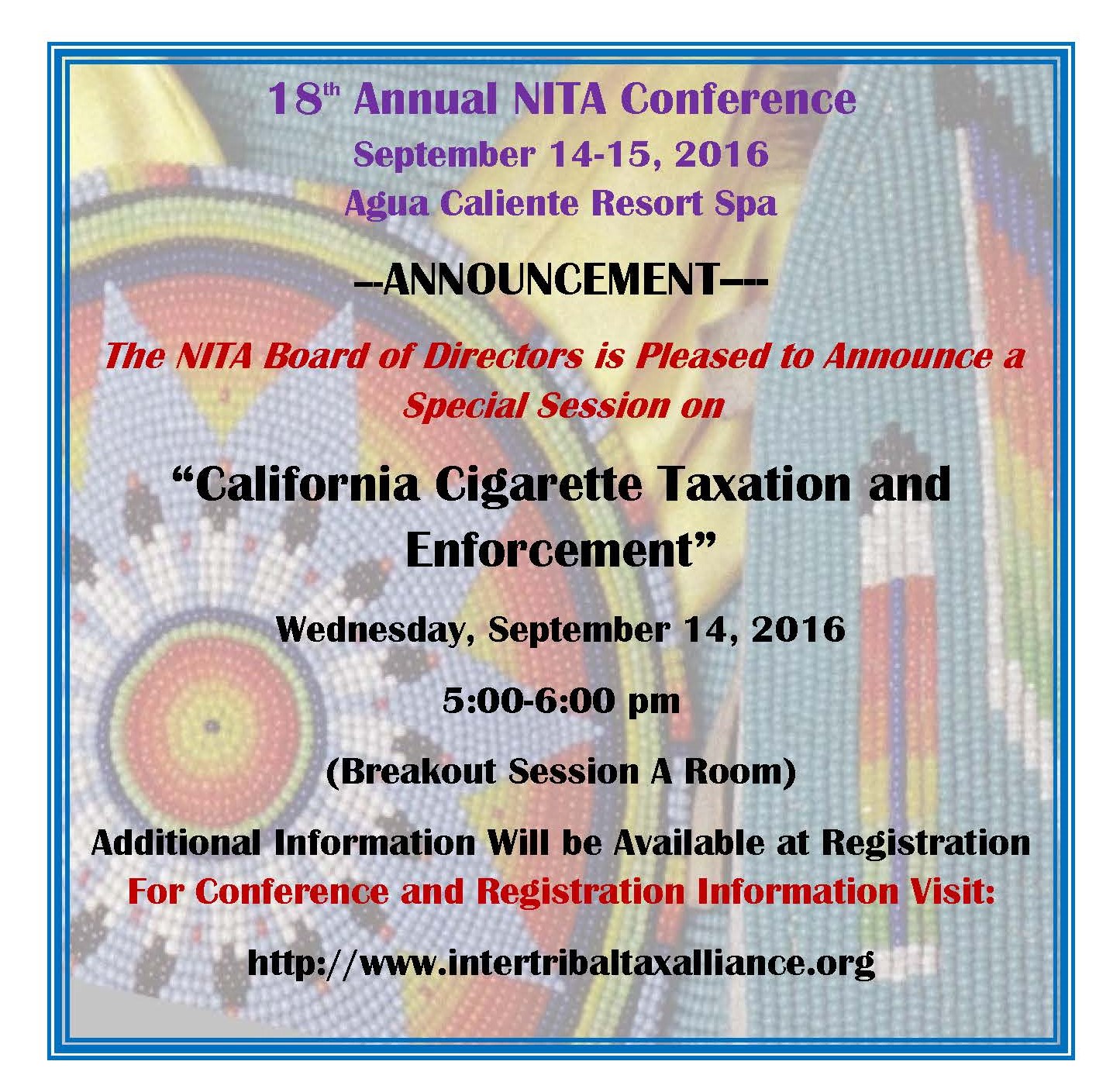
NITA Special Session for CA Tribes on Cigarette Taxation and Enforcement
 Turtle Talk
You must be logged in to post a comment.